Cornell receives $30M to launch Canine Health Center
Earlier this month, Cornell University announced that it has received a $30 million gift from Margaret and Richard Riney, helping to launch the college’s incoming Cornell Margaret and Richard Riney Canine Health Center at the College of Veterinary Medicine. The center is set to “improve the health and well-being of dogs through world-class research, outreach and engagement with dog lovers,” according to a recent press release.
“We know personally the importance and benefits of the relationships humans form with animals, especially with our pets,” Richard Riney told the Cornell Chronicle. “We wanted to support far-ranging research initiatives that may help dogs live their best lives, while recognizing that research into the canine condition can help to advance human medicine.”
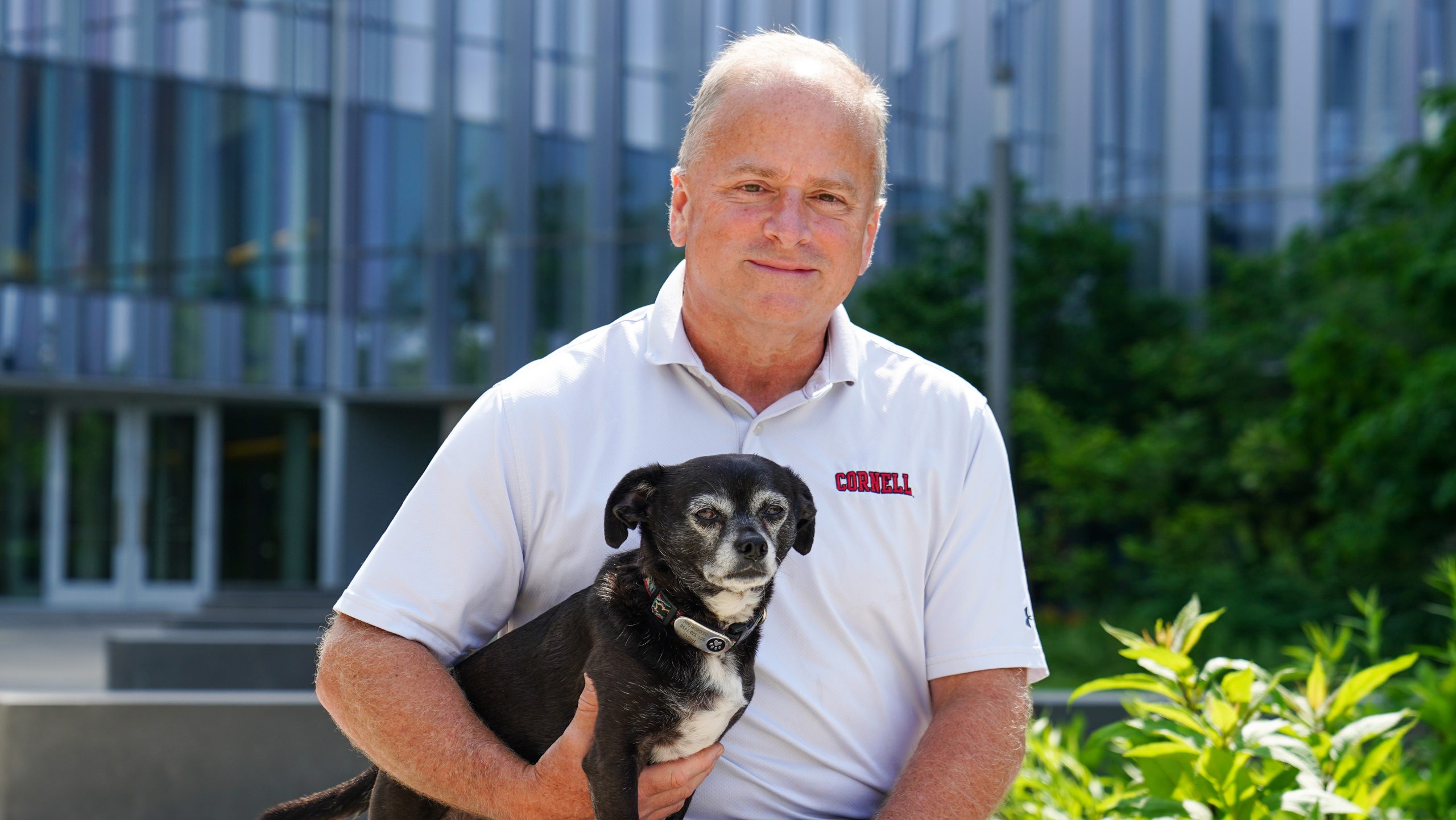
While the gift greatly accelerates the center’s launch, the Canine Health Center has been in the works for several years, as Dr. David Lee, associate dean for external programs at the Cornell University College of Veterinary Medicine, explained.
“We’ve had the Cornell Feline Health Center for almost 46 years,” he said. “Cornell’s long been one of the most trusted sources for feline-health-related information. If you Google just about any feline disease, you will likely be directed to a Cornell page with information on that. So, we knew we wanted to do the same thing with dogs starting back to as far as 12, 13 years ago [when] we started to talk about this and started to develop a model. … [We had] some really pivotal gifts early on to start the process and flesh this out a bit more.”
This past year, many factors coalesced to make now the best time to launch the center. For one, the pandemic has meant that many dog-owners and dog-lovers are spending more time at home, often with their furry companions. So, there’s been a lot more focus on canine health over the past two years.
“People are much more engaged in animal health now,” Lee said. “They want to advocate for their own pets. They’re online looking for information. They’re better informed but definitely looking for sources that they can trust for that information. There really hasn’t been a significant resource like that, particularly from an academic institution. And so, we saw this was the right project, the right time, the right people in place. And fortunately, we were connected with the right donor as well.”
Lee said that Cornell is one of the best universities to tackle this sort of project, as “no other school has the infrastructure in place, the depth and breadth of expertise that we have in our faculty.”
“I would say right now that leadership at the university and college level here is incredibly entrepreneurial, … making it much easier to collaborate across departments, across colleges, even across the university,” he said. “So, it’s a fantastic time to do something like this, which … really focuses all of our canine health activity one under one virtual umbrella, if you will.”
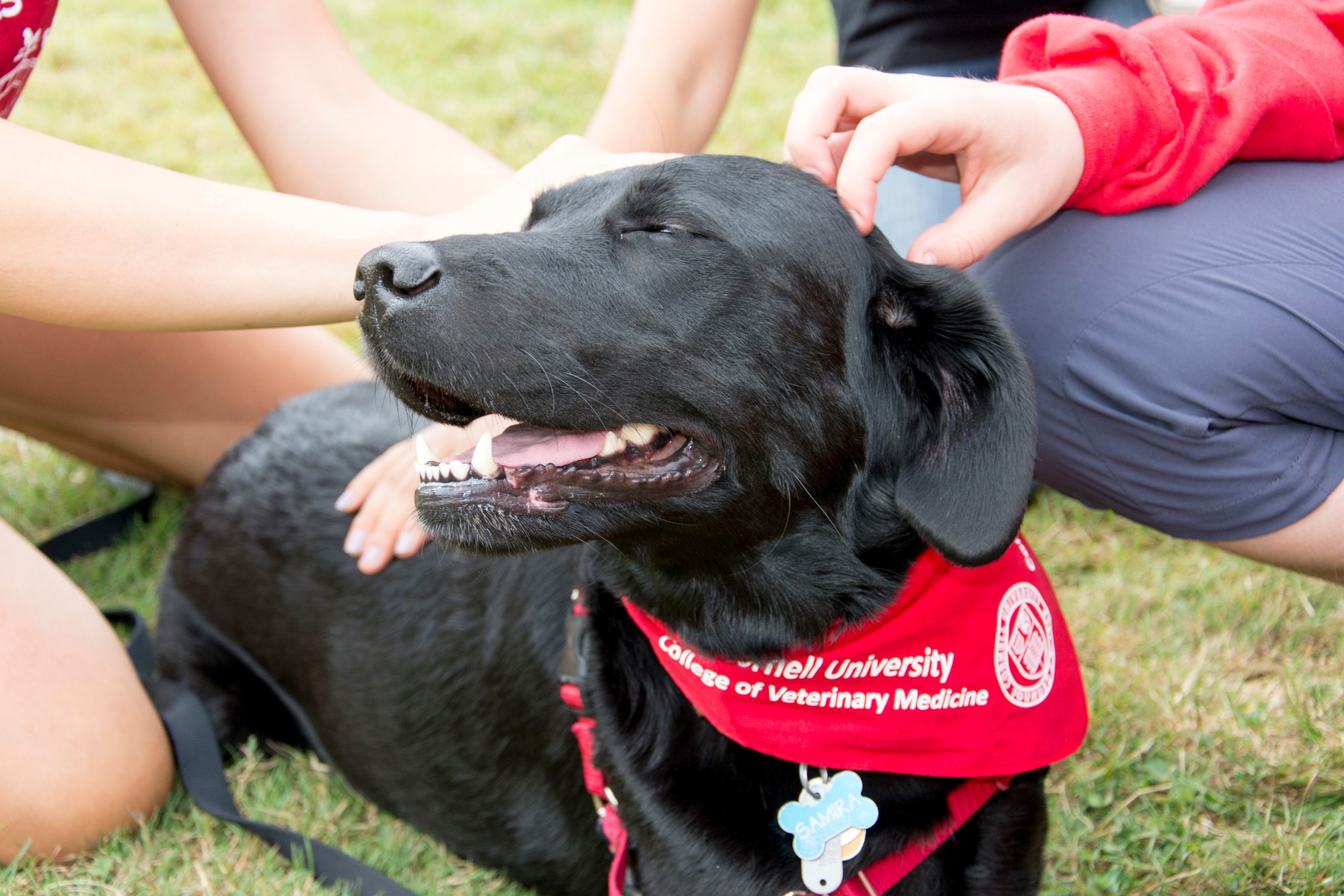
According to a recent press release, the funding provided by the Rineys will “initially endow a significant internal grants program for canine health-related research, with particular emphasis on studying cancer, genetics and genomics, infectious diseases and immunology — building on Cornell’s current program strengths.”
“The internal grants are important because we have faculty, brilliant faculty with a lot of great ideas, and a lot of those people, they spend a lot of their time writing grants,” Lee said. “External grants are very competitive and limited. And so, oftentimes, great ideas never get to see the light of day because they don’t have that initial support to test them out. So, the internal grants are really important, we think, in advancing animal health much more quickly than would be otherwise. And that was our goal. And so, this gift gets us there really pretty much overnight.”
With any grant worries out of the way, Cornell staff behind the center’s launch can now focus on building “a community of dog-lovers that are interested in helping advance canine health and want to participate and contribute for generations to come,” Lee said.
“So, this is a huge each step forward,” he said. “But at the same time, we still have a lot of work to do. And we’re moving forward to grow this program even bigger to help dogs live longer, healthier lives.”
Lee said that particular areas of focus for the center will be dogs’ behavior and canine cancer research.
“The main reason why dogs are in shelters is because of behavior problems,” Lee said. “So, we want to build out our program there. We’re going to be looking at a cancer program to help dogs live healthier lives, detect cancer earlier and treat it more effectively. So, there’s lots of opportunities within this program that to say, ‘wow, we’ve got these strengths, and we can put them together in different ways.’”
Once completed, the center’s website will feature lots of resources for dog-lovers, including health-related videos, online seminars and articles pertaining to dogs’ needs. In addition, online venues will help facilitate two-way communication between the center’s staff and members of the public.
“We’re in the process now of building out the webpage,” Lee said. “We really want it to be dynamic and really reflect the community, make it easy for people to access our researchers, to learn about the research in real time, and be able to actually weigh in and inform us so we understand their concerns and see how we can adjust. So, we’ll be constantly building on that at the same time we’re building an online database of health information for them.”
While the majority of the gift funds will endow the internal research grant program, Lee said the gift also endows three faculty positions, including a health center director.
“We really want that to be a global search, somebody with a global reputation for advancing canine health that can come in and have a vision for where researching to go in five years, 10 years, 20 years and start to build that team for the future,” he said.
The benefits to the incoming Canine Health Center are far-reaching, Lee said, well beyond the university.
“The college has always been a great resource for the surrounding community for central New York [and] the state of New York,” Lee said. “But we also want to raise awareness of what we do here to a bigger global community and leverage the strength of appealing to a whole community of dog lovers. Within the community, anything that allows us to grow our program benefits the local area here, benefits our faculty and staff, as well as dogs, of course.”
For more information about the health center, visit vet.cornell.edu/departments-centers-and-institutes/canine-health-center.
Jessica Wickham is the managing editor of Tompkins Weekly. Send story ideas to them at editorial@vizellamedia.com.
Related Articles

AmeriCU proudly connects students with annual scholarship opportunity
AmeriCU scholarship program awards $1,000 to students pursuing college or vocational education. Applications are open through March 15.

Trumansburg schools consider regionalization as TST BOCES plan advances
Trumansburg school regionalization remains undecided as TST BOCES outlines goals for shared services and student learning.