
Cornell students help children with disabilities learn math
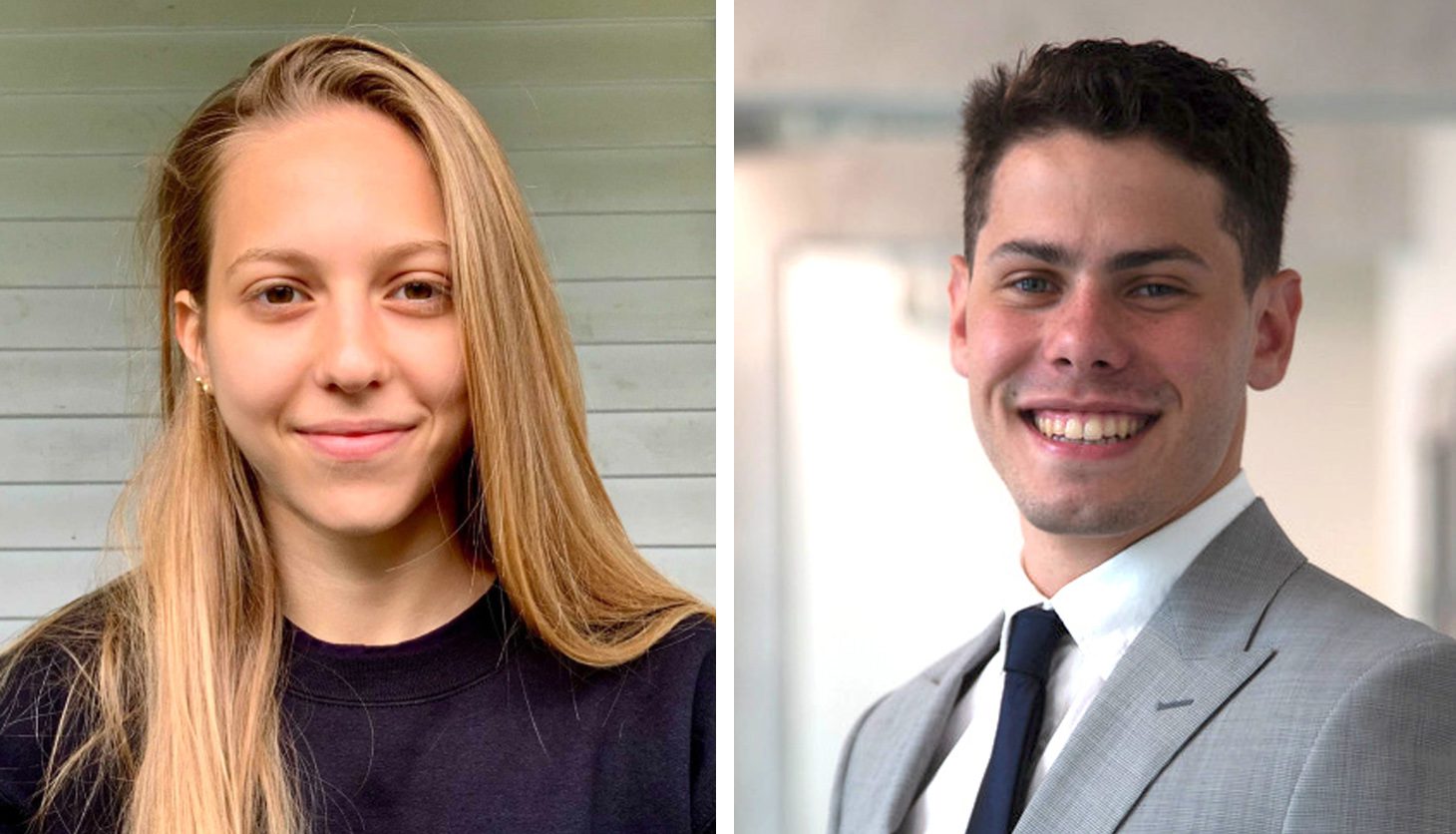
Last winter, Cornell University rising junior Adele Smolansky founded AI-Learners, an online platform that helps children with neurological disabilities learn mathematics through fun and engaging games. Now, a little less than a year later, she and the rest of her team are making the final preparations to fully launch the platform, helping to bring a much-needed resource to kids in Tompkins County and beyond.
AI-Learners’ origin story begins back when Smolansky was in high school, when she was first learning how to code.
“I wanted to do something with my new skills, so I decided to create some very simple computer games,” Smolansky said.
Smolansky’s younger sister was born with Rett syndrome, a rare, severe neurological disorder. So, when Smolansky was looking to apply her newfound skills, she decided to talk with her sister’s therapists to figure out a way to pursue her passion while helping her sister at the same time.
“I’ve also been a math tutor my entire life,” she said. “So, combining my love for teaching and wanting to help my sister and kids like her, I decided to start something small in high school.”
The high school venture was relatively short lived, but when COVID-19 hit, Smolansky saw an opportunity to revive it.
“I worked with a really small team last summer,” she said. “We were all virtual. We were just working on small games, building up infrastructure for AI-Learners. And then, in the fall, we applied for the Cornell eLab Accelerator Program, and we got in. And … that was really when things took off.”
By the fall of 2020, AI-Learners had its name, and a team of about 15 students worked on customer discovery, feeling out the overall community interest in this kind of service. The team spoke with a wide array of parents, therapists, teachers, professors and doctors to get a range of viewpoints, and they “saw that this was a real product that people wanted,” Smolansky said.
Now, just a few months later, the team size has doubled, with 30 Cornell students helping to bring AI-Learners to life.
Cornell rising junior Mick Bronsky, chief operations officer of AI-Learners, was part of the original group of 15. He and Smolansky met prior to the company’s founding through their business fraternity on campus, he said, and like Smolansky, he has a personal passion for the work, having worked with children with disabilities since he was just 10 years old.
“It’s something that I care about, that Adele cares about, and it’s our way of giving back to the community,” Bronsky said. “Adele’s a genius coder, and to be able to use that to get in front of the right people so that we can help them learn math, there’s nothing more rewarding than helping people that you care about and that your team cares about.”
Bronsky and Smolansky agreed that among the biggest challenges to getting AI-Learners off the ground was recruitment, but after a lot of hard work and consultation with their Cornell professor, they found a method that brought on people who were just as passionate about AI-Learners’ goals as they were.
From there, the next hurdle was team organization.
“Finally, after a lot of iteration, we have a pretty solid team organization where we have four clear teams within AI-Learners, where it’s the business team, game development team, software team and design team,” Smolansky said.
Bronsky said that the level of organization in AI-Learners’ team structure is in stark contrast to a typical startup, especially with how young the company is.
“It doesn’t seem like a startup. It’s very put together,” he said. “We have an HR system, which is kind of unheard of for a startup. But we have systems in place that are centralized, just like well-established businesses.”
Smolansky attributes their relatively fast growth to the dedication of her team members, many of whom also have personal connections with children with disabilities, and that passion shone through when they pitched the idea to potential customers.
Since AI-Learners was conceived during COVID-19, working around pandemic challenges was always part of the plan. Smolansky said that while there were some initial difficulties in trying to work virtually while also having in-person time, the pandemic as a whole had a positive effect on AI-Learners’ development.
“What the pandemic has also shown us is that you can get very individualized learning online, and especially for kids with disabilities that need this individualized learning, if we can create a tool for them to really get that experience, then parents and teachers have been telling us that that is something that they do want,” she said. “So, I think it’s just really shown us that online education is really powerful. And it does individualize the experience for more students.”
Thanks to the team’s efforts, AI-Learners is only a few months away from its projected full launch. Right now, AI-Learners’ website, ai-learners.com, is active, with an interactive guide to help visitors navigate through the available features like demo versions of the games the team is currently working on, as well as other features.
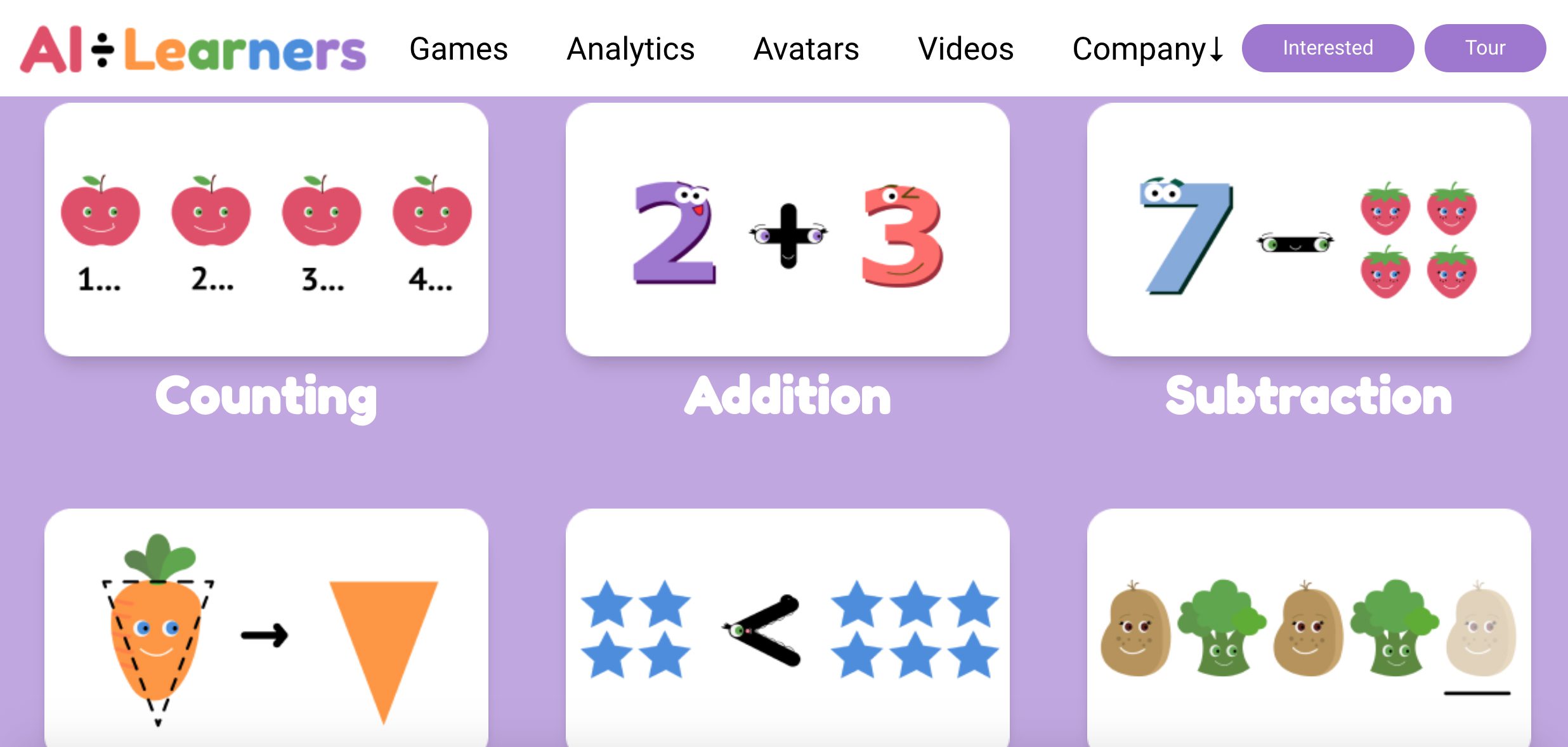
“What we’re doing right now is we’re going through each of those and asking various strategic questions to get the feedback to understand how to make it the best it could possibly be so that when we launch, … when it gets in the hands of these people, everyone’s able to use it and they’re able to enjoy it to the maximum,” Bronsky said.
Among the finishing touches is letting users create their own accounts, which allow students to create avatars and educators to track a student’s progress.
Once the website is completed, educators can go through the signup process, in which they answer a series of questions about their student’s disability and current knowledge levels. AI-Learners’ algorithm then uses that data to gauge the student’s initial mathematical abilities and provide a short diagnostic test, through which students can create their avatars.
Based on how the student is playing, AI-Learners will recommend new games to them, sometimes adjusting the difficulty to accommodate the student’s needs.
“We don’t have set math levels because kids with disabilities often don’t practice within a set curriculum, whether it be kindergarten, first grade, second grade,” Bronsky said. “Instead, the algorithm’s able to — based on their answers, based on their disability, based on the severity of their disability and quick tests at the beginning — really understand what their level is and meet them there. … That really allows students to start at their own level and build from there.”
AI-Learners will also have an educator view, where users can go to an analytics page to see how their student is performing, with graphics showing week-by-week progress.
Bronsky and Smolansky said that the whole website will be curated specifically for children who often struggle to learn through traditional teaching methods, with games that have no extra distractions and a plethora of awards, songs, animations and fun videos to maintain student engagement.
Smolansky and Bronsky expect the website to be completed by early next year, with the remaining months expected to be filled with more recruitment and development. In the end, they hope to create a resource for families to help kids learn math in ways that work best for them.
“Technology is a super powerful tool, and I’m able to benefit from it and really help my education,” Smolansky said. “And a lot of kids with disabilities aren’t in that same position. And they aren’t able to use some of the current websites that are online because they weren’t made for them. So, we really want to help kids with disabilities get that right technology so that they could get the education that they deserve.”
Related Articles

Meinig Fieldhouse built to protect iconic red-tailed hawks
The Meinig Fieldhouse hawks project shows how Cornell protected Big Red and other red-tailed hawks during construction.

TC3 reaches transfer agreement with Hobart and William Smith Colleges
TC3 transfer agreement guarantees acceptance and scholarships for graduates entering bachelor’s degree programs at Hobart and William Smith Colleges.
AmeriCU proudly connects students with annual scholarship opportunity
AmeriCU scholarship program awards $1,000 to students pursuing college or vocational education. Applications are open through March 15.