
County budget process begins, tax levy goal at 2.2 percent increase
By Jamie Swinnerton
Tompkins Weekly
Last week the Tompkins County legislature took another early step in the long, ongoing process of creating a budget for next year. According to a press release, the legislature approved two different budget-related resolutions at the meeting last Tuesday, May 15. One was a tax levy resolution that directs new county administrator Jason Molino to prepare a recommended operating and capital budget that can be supported with a tax levy increase of 2.2 percent, which is beneath the County’s estimated 2019 tax cap of 2.87 percent. The spending targets that county departments and agencies use to prepare their own budgets, and the tax levy guideline, were approved unanimously, with legislator Leslyn McBeal-Clairborne excused.
Molino expects that the 2.2 percent increase in the tax levy will support a maintenance-of-effort for county departments and address other critical needs and priorities.
“As in the past, departments and agencies will have the ability to request funding in excess of their 2019 spending targets, allowing the Legislature to consider exceeding the Administrator’s Recommended Budget. Departments and agencies must submit their 2019 budget requests to the County Administrator by July 13,” according to the release. “The $1.08 million increase in the levy would represent an estimated increase of $13.00 for the owner of a median-valued $178,000 county home. The approved fiscal targets hold targets steady for County departments and include a 2 percent increase in target for not-for-profit County agencies.”
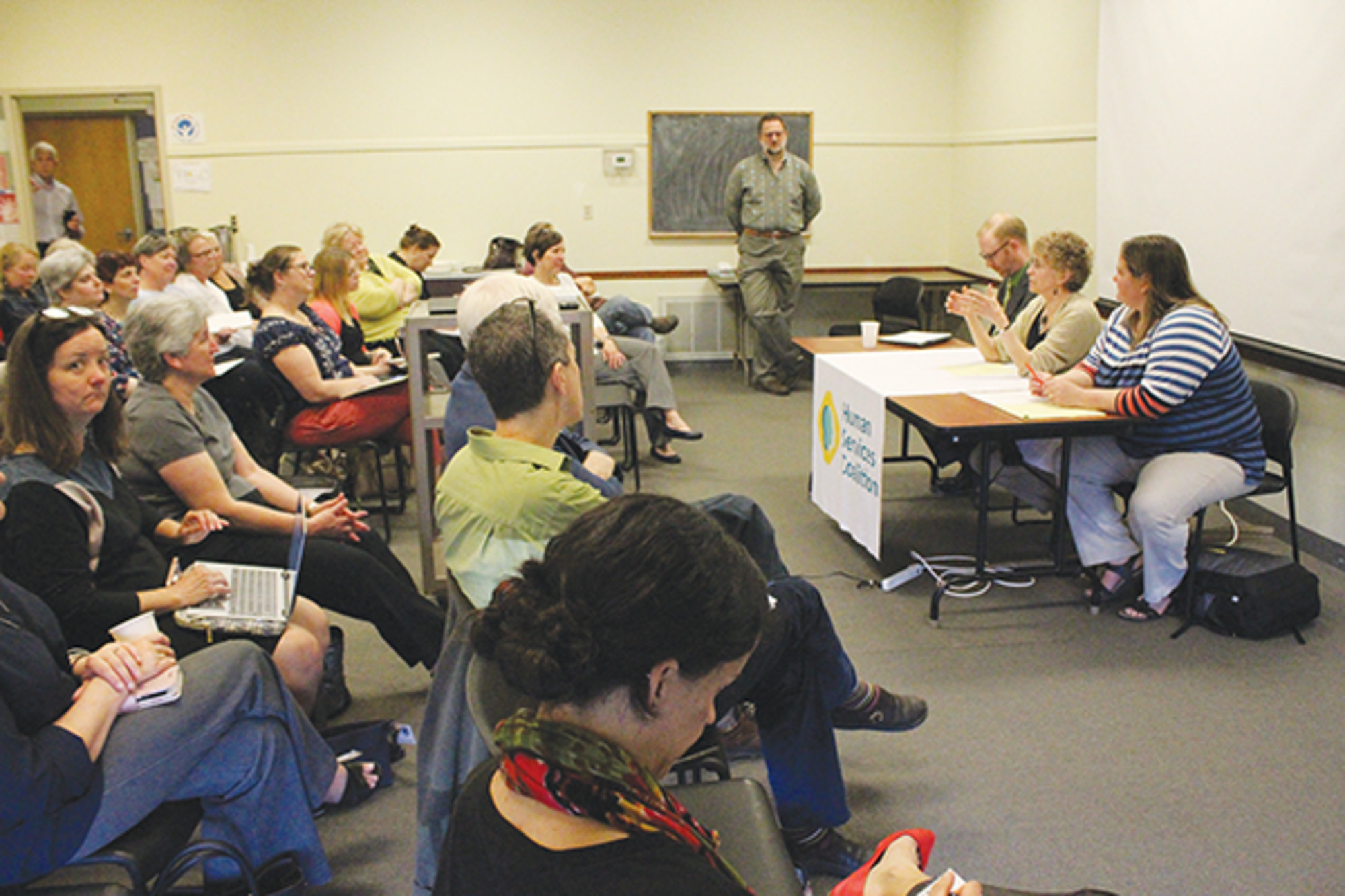
Before the legislature vote, a preliminary budget forum was held on May 9 at Cornell Cooperative Extension to engage the community in the process at the beginning. County administrator Jason Molino, as well as county chair Martha Robertson and county legislator Shawna Black, presented a preliminary sketch of the 2019 budget based on available information.
“Unemployment is relatively low, which is usually a good sign,” Molino started off the presentation. “It usually is an indicator that your economy is moving in the right direction.”
Tompkins County, Molino said, is on average a little lower than New York City and a little lower than New York State when it comes to the unemployment rate. The numbers have been fairly consistent for the last 10 years.
“Inflation rate is relatively manageable,” Molino said of the 2.4 percent inflation rate. “Too high inflation is bad, too low inflation is not good either.”
This past March was a 14-year high for consumer confidence across the country, Molino said, citing data from a regular study done by the University of Michigan to determine what factors influence consumer’s confidence.
“This is positive, from our perspective, because consumer confidence has a direct impact on sales tax revenue,” Molino said. “Sales tax is your second largest revenue for the county. Lower sales tax numbers, higher property tax numbers. There’s a correlation there.”
Sales tax in Tompkins County has shown growth for the last five quarters but this past March growth was lower than March of last year. But, as Molino made clear to those in attendance, there is no way to predict what sales tax will look like in the future because it is not always consistent with the economy. Sales tax can be impacted by countless factors, from local construction projects to the price of gas.
While Molino did mention large market measurements like the Dow Jones Industrial, he chose not to spend a lot of time on these numbers. “Generally, a well-performing market is good for the economy in general,” was his reasoning for not going into precise detail about market indicators. He expected to see some market correction in the next 18 months which means the county could see some stability, slower growth, or no growth for a period of time.
Caseloads for SNAP (supplemental nutrition assistance program) Benefits, a federal program that the county administers, have generally been declining and have been since 2016, but are still higher than pre-recession years. Temporary Assistance for Needy Families (TANF) caseloads, another federal program, are also down 25 percent from 2008. SNAP and TANF caseloads are indicators of need, but since they are federal programs the decline in caseloads does not come with local savings. After five years on TANF, families can move to a New York State safety net of temporary assistance, Molino said. Over the last 10 years, the state safety net has seen an 11 percent increase in cases. This cost is shared between the state and the county, with the county paying a larger share at 71 percent.
Retirement rates in New York are dictated by the state and are an unfunded mandate the county does not control but do have a significant impact on the county budget. Due to more stability of management at the state level, it is projected that retirement rates will go down, and have been for several years.
“Right now, we expect stability in 2019,” Molino said. “There is a slight projection of a decrease in retirement rates. But what I explained to the legislature is that one year, to me, isn’t enough to make a consistent approach t say it’s going to decline. If it continues into 2020 and 2021 we might say ‘Alright, there’s a trend.’”
The county budget, around $180 million, will likely be affected by the state budget, which has yet to be finalized. These early projections could change.
Related Articles

5 things to do in Tompkins County this weekend
Plan your visit and discover what’s happening this weekend.


Tompkins Chamber announces Rob Montana as new vice president
Rob Montana, community leader and communications professional, has been appointed vice president of the Tompkins Chamber, where he will help drive economic growth, workforce development, and community engagement.