
County, city work to implement new public safety reforms
Earlier this year, Tompkins Weekly discussed the then-recent passage of the Reimagining Public Safety Report by the Tompkins County Legislature and the City of Ithaca Common Council (full article at t.ly/vk8b). Now, several months later, city and county leaders are in the implementation stage, working to fulfill the goals set out in the report by the Reimagining Public Safety Collaborative.
Recent efforts
While it’s only been a few months since the passage, there are two major steps leaders have taken to start to tackle a yearslong process — the county’s approval of the Community Justice Center and the city of Ithaca’s naming of the Reimagining Public Safety Working Group.
In late April, the county Legislature’s Public Safety Committee passed a resolution to establish the Community Justice Center (CJC), described in the report (available at t.ly/2znJ) as a joint city-county body to implement final recommendations and engage community members. And a month later, the Legislature as a whole voted in favor of the CJC.
During the Legislature’s approval of the CJC, it also passed two resolutions calling for civil service reforms — one calling for the state to loosen restrictions on recruitment to allow officers to better represent the communities they serve and another calling for the state to reform a law that makes it difficult to address officer misconduct.
“In order to attract, to retrain, retain officers of color and other minorities groups and LGBTQ+ community, plus military veteran status, those from lower socioeconomic status, all those different things, this strategy is intended to be comprehensive,” said Deanna Carrithers, county chief equity and diversity officer. “The number-one priority is increasing our responsibility to government. And by attracting those folks, making sure that it’s a welcoming place of belonging, we can do that.”
Interim County Administrator Lisa Holmes explained the benefit of the second resolution.
“When there are officers that are going through a disciplinary process and are out for extended times on administrative leave while we go through a very formal, state-mandated civil service process, there are fewer officers active on the force that are able to respond to public safety needs and emergencies,” Holmes said. “So, providing that level of flexibility, while still enabling officer due process in the process, would be a really welcomed change and important to just address things in a more timely and equitable fashion.”
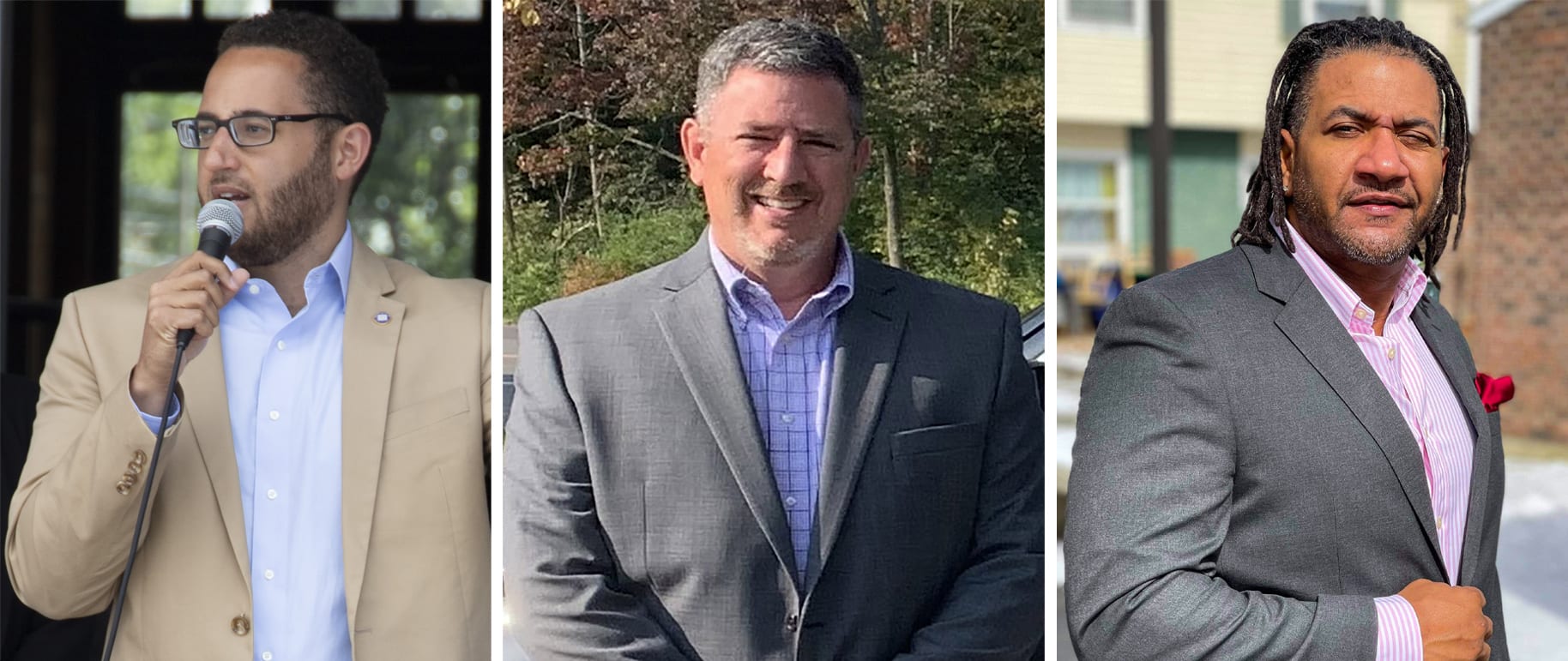
Late last month, Ithaca Mayor Svante Myrick, with help from Ithaca Director of Human Resources Schelly Michell-Nunn, selected the members of the Reimagining Public Safety Working Group, which will coordinate the implementation of the reforms passed by the Ithaca Common Council.
The working group is composed of 15 members, led by former Ithaca Common Council member Eric Rosario, and includes three police officers, three current Common Council members and community leaders representing marginalized communities in the city.
“Our community is complicated and diverse, and the issue of policing itself is very complicated and [has a] fraught history,” Myrick said. “So, I wanted people who have seen and interacted with law enforcement from a bunch of different perspectives. And I really wanted to center the experience of people of color because, of course, that is the challenge facing American policing right now and the Ithaca Police Department is how to build better relationships with the community of color.”
A “living document”
Throughout this process, many community leaders have described the reform plan as a “living document,” meant to be shaped by continuous feedback from leaders and residents and adapted to new situations and challenges. As such, it’s no surprise that the implementation stage has already brought with it plenty of new feedback and needed adjustments to help make lasting change.
Carrithers said that after the plan’s passage, county and city leaders did an internal assessment to discuss what went well and what should be done differently moving into the implementation stage.
“We went back to all of our departments and tried to have deliberate conversations with them around how can we make this process more inclusive for our community and for our departments?” she said. “We’re taking that feedback, and now, we’re able to be better off as a result of those engagement efforts internally to make sure that our external engagement efforts are more fully realized.”
Feedback from residents and leaders alike remains mixed, as sources expressed. Travis Brooks, deputy director of the Greater Ithaca Activities Center and one of the members of the Reimagining Public Safety Working Group, expressed some disappointment in the process as a whole, especially given his experience as a person of color and as someone who’s often worked with other people of color.
“We talked to hundreds and hundreds of people — people of color, people that typically would have interactions with policing — and most of everybody wanted some sort of policing, but they wanted it to feel and, in some cases, look very different,” Brooks said. “Afterwards, we had a ton of people saying that the community doesn’t want policing, that the community doesn’t want this. … There was a lot of misrepresentation of some people about what the community wanted.”
Brooks said that the relatively short time frame allotted by Gov. Andrew Cuomo to pass the plan meant that the process felt inherently rushed, placing a lot of importance on the implementation stage.
Tompkins County Sheriff Derek Osborne also expressed some concerns regarding the plan’s passage. He said that since the plan passed, many of his officers have expressed that they’re feeling a lack of support from the community as a whole, a feeling that has prompted many to leave the force altogether.
“We typically have 26 deputies; we’re down to 14 now, which I have never seen ever at the Sheriff’s Office,” he said. “With the different protests and all that and the general sentiments about law enforcement together, a lot of my officers feel like they’ve been lumped in with anything bad that’s happened nationwide with law enforcement, when they don’t necessarily feel like they’ve done anything wrong.”
Myrick, Holmes and Carrithers all said that since the plan’s passage, their colleagues have largely expressed support for next steps and an interest in more participation. But they cautioned that while that eagerness is good, these changes won’t be instant.
“One area of feedback has been, ‘Let’s do this. Let’s just do it. Let’s make it happen quickly,’” Myrick said. “And I think it’s going to be really, really important for us to make sure that this happens well, as well as quickly.”
Sources said that this implementation stage centers around reaching out to as many people as possible to get plenty of feedback. Much of that means using new methods to educate the public about the plan, many of which weren’t possible several months ago with pandemic restrictions and safety concerns.
“It’s a great inspiration to us to think about how we can reimagine how we offer services, and I think this next phase that we’re in does provide some great opportunities for us because the COVID restrictions have lifted, and we can do more to engage the community in person,” Holmes said.
What’s next?
As alluded to, implementing all the goals set out in the Reimagining Public Safety Report is a process expected to take at least through 2024 to complete, and even then, the county’s public safety system will likely remain a work in progress.
Some of the remaining steps, as outlined by former County Administrator Jason Molino, include developing a public safety community dashboard, revising the Civil Service Exam process to diversify law enforcement personnel and, at the city level, creating a new public safety department from the ground up. Myrick said that last item will likely take the longest.
“This will take years to see the full changeover to the new department,” he said. “The new unarmed positions, position descriptions, making sure we have the right training in place is going to be the work not of months but of years. But we’re making good progress.”
Brooks said he’s hopeful that the new department will bring some much-needed change to the city.
“I think there’s a lot of officers that would like to see something different, but a lot of, I think, what happens that’s negative [is] officers will say, ‘It’s part of the training. This is what we’re taught to do,’” Brooks said. “So, we have an opportunity to change that at its core and usher in a new culture in policing. And … I think we’ll have a very good and robust police department who will not tolerate the old way of doing things.”
Overall, sources said that the city and the county are generally on a good track to implement the changes within the timeline set out. Getting there involves including a wide variety of interest groups, as several sources expressed.
“I just hope that we can move forward in a positive way,” Osborne said. “I think we just have to be careful moving forward in how we respect all parties involved and try to seek change in a positive way that doesn’t leave anybody out and doesn’t necessarily shed a negative light on people.”
Related Articles
Street Beat: What are you looking forward to in the new year?
We asked five random people. Here’s what they had to say.

5 things to do in Tompkins County this weekend
Plan your visit and discover what’s happening this weekend.