
County meeting student housing targets but falling short on workforce housing goals
As Eliot Benman, Housing and Community Development planner, summarized the findings of the Tompkins County 2022 Housing Snapshot on Nov. 1, there were ups and downs in terms of targets met and areas in which the county did well or not so well in the last six years. But one thing was clear: when it comes to creating enough workforce housing, Tompkins County is falling short.
The study, which was presented to the Tompkins County Housing and Economic Development Committee at its most recent meeting, is part of the Tompkins County planning process, which began with the 2016 housing needs assessment.
This is the fourth time the county has issued a housing snapshot since 2018, and it is part of the 10-year Tompkins County Planning Process for Housing, a process that comes to a close in 2025.

MANAGING EDITOR
“As we reviewed the findings, we found a lot of things that were pretty much a continuation of what we saw in past snapshots,” Benman said. “So, we wanted to focus more on the new and emerging trends we are seeing.”
“There has been a steady increase in the cost of rents, but we have also seen similar income gains,” Benman said. “We have seen an increase in those paying more than 50% of their income in housing.”
From 2011 to 2021, the median rent for a one-bedroom apartment increased by almost 35%, while renter income increased by almost 30%, Benman pointed out.
“Rents rose faster in the second half of the last decade and also rose faster for larger units,” he said. The report states that nearly 60% of Tompkins County renter households are cost burdened by their housing, which means they are spending more than 30% of their income on housing costs.
“That number hasn’t shifted much in that decade, but we did see a significant increase in the percentage of renter households who are severely burdened,” Benman said. That percentage rose from 32.7% to 37.9% between 2011 and 2021.
In the for-sale housing market, the county saw a “dramatic increase” of more than 40% in median sales price, Benman said.
“We’re seeing an expensive and competitive market with restricted supply,” he said, adding that the number of new listings from 2019 to 2022 dropped “quite a bit, total,” while the number of sales remained about the same.
The median home sale price in Tompkins County rose from about $230,000 in 2019 to $325,000 in 2022, while the percentage of the list price received by the seller increased from 96.8% to 103.4%.
“The county is, going forward, going to have to grapple with national trends,” Benman said. “That will be a challenge to housing production and affordability, for mortgages and loans, materials and labor costs and shortages. So, these have happened already and are anticipated in future years to cause delays. It is? going to be a challenge in terms of meeting our housing targets in the coming years.”
In the report, it is estimated that about 3,200 new homes were created from 2016 to 2022. Of those, about 608 are single family, and 2,583 are multifamily. The large majority of multifamily homes were built in Development Focus Areas, which are the Ithaca urban core, the villages and the rural hamlets. In contrast, just 20% of single-family homes were constructed in those areas.
Benman also noted that 83% of new housing was located in one of four areas: City of Ithaca (43%), Town of Ithaca (18.2%), Town of Lansing (12.4%) and Village of Lansing (8.2%).
Benman said the county has fallen way behind on its target for ownership workforce housing, that is, housing for residents of all income ranges who are among the local workforce within the local housing market.
While the target number of new ownership units between 2016 and 2025 was 3,800, only 628 new single-family homes (some of which may be rentals, the report states) and condominiums were built by the end of 2022.
The target for single-family homes was 3,000; just 608 were built. The target for condominiums is 800 by 2025; so far, only 20 new condominium units have been created.
All of the condominiums that were created during that timeframe sell for $300,000 or more. The target is 350 condo units that would sell for between $150,000 and $199,999 (no such units were built) and 450 units that would sell for more than $200,000.
When it comes to rentals, the target for new rental units that are affordable for those earning up to 100% of the area median income is 2,000, to be created from 2016 through 2025. As of 2022, 466 new, income-restricted rental units were created. This excludes supportive and senior affordable rentals. About 314 workforce units are planned or under construction currently, according to the report.
In the area of housing for the county’s growing number of seniors, the county also did not achieve its goal.
The county produced 68 affordable senior units, compared to a goal of 100 to 200.
Three projects, Cayuga Village at Cayuga Meadows, built in 2017, Cayuga View, built in 2018, and Blue Heron Patio Homes, built in 2021, created a combined 139 senior housing units in the county.
For supportive housing, the local housing market did achieve the established goal of 100 permanent supportive housing beds.
The county is still far from reaching its goal of 100 single-room occupancy beds for those with an income that is less than 30% of the area median income by 2025; only four beds have been created in that category.
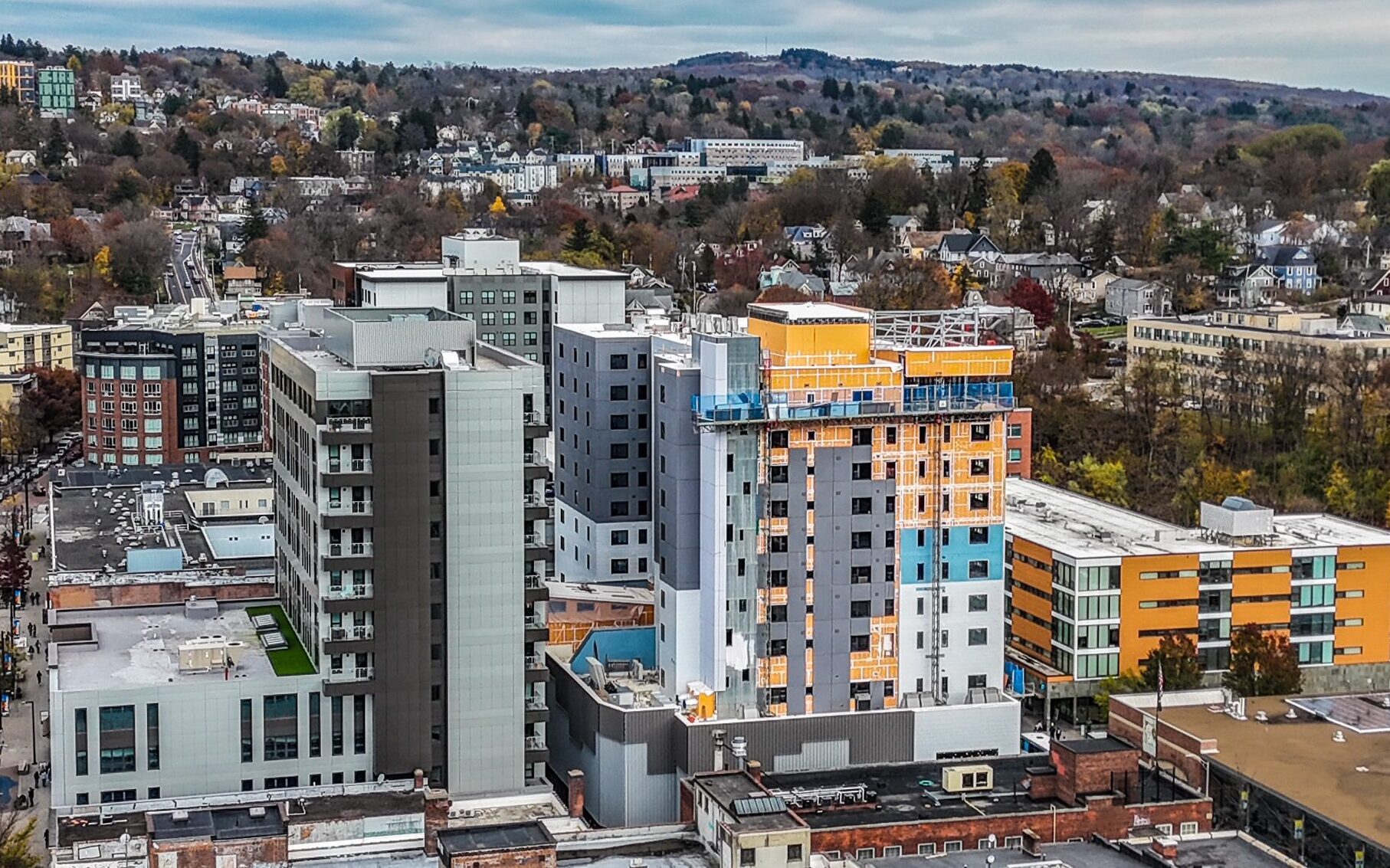
One category in which the county surpassed its targets was student housing. By 2020, the county already had 1,479 new on-campus and off-campus purpose-built student beds to meet the deficit in this area that was identified in 2016, meeting the goal of 1,400 to 1,500 new beds.
It was estimated that 3,516 new beds would be needed to meet an increase in college enrollment, and though enrollment did grow (but did not increase as much as projected), a total of 3,623 student units were created from 2016 to 2022.
“A big part of that was the North Campus residential expansion,” Benman said, referring to a student housing development constructed in 2022.
“There are quite a few student housing projects in the pipeline,” he added.
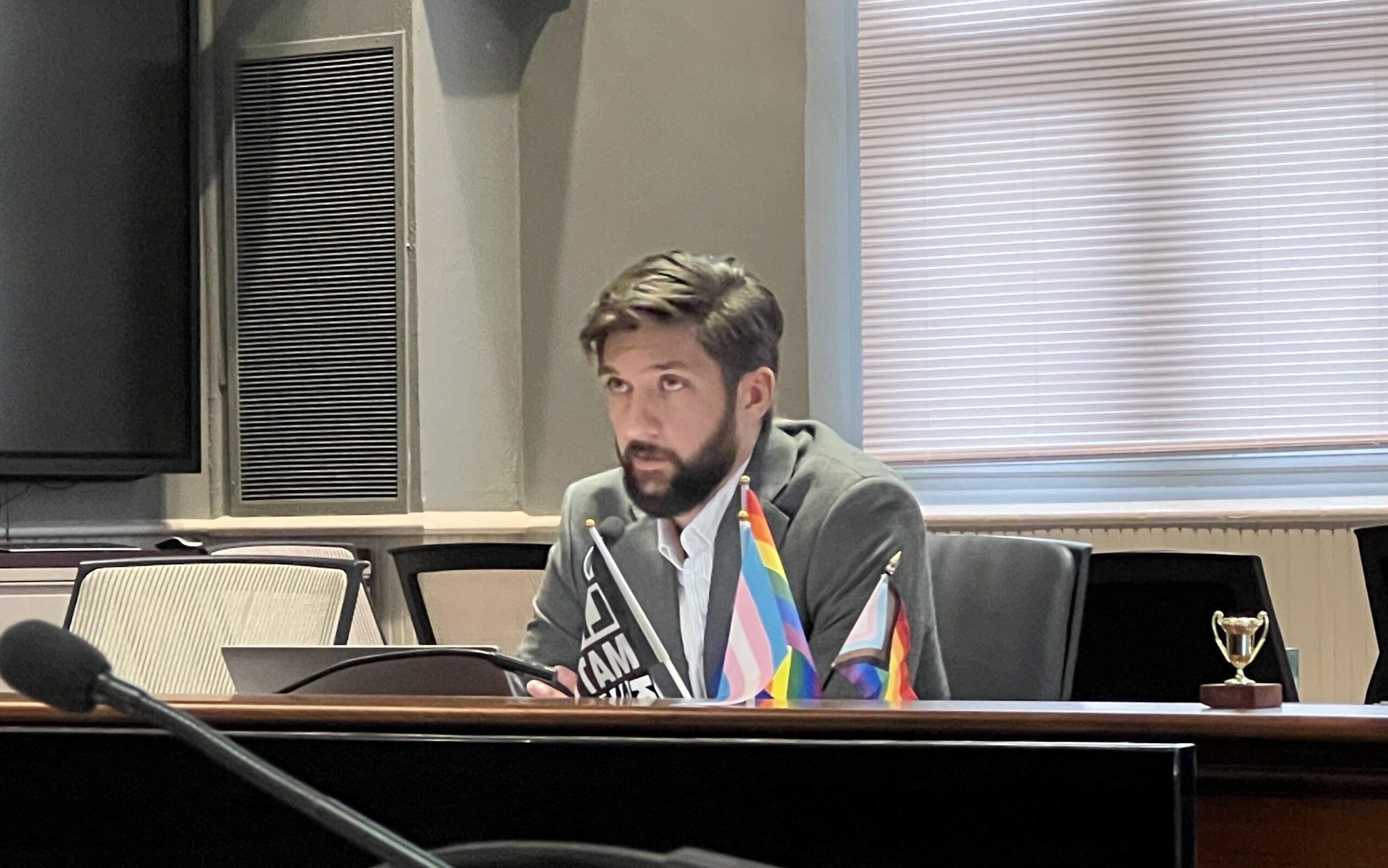
Veronica Pillar, a member of the Tompkins County Legislature Housing and Economic Development Committee, asked how student housing affects the market for the rest of the population.
“I am concerned about whether more student housing meets most of other people’s housing needs,” she told Benman at the meeting. “[The idea that] the student housing will fix all of our problems, to what extent is it a myth, and to what extent is it real?”
“Student housing is always an important piece of the puzzle,” Benman said. “The pattern could be that students are moving from shared living situations into units where they are living with fewer students, or living alone. … But if we’re not complementing that with addressing the workforce housing side of things, I think it’s unsurprising that you’re going to see a transformation in the local workforce housing situation.”
Mike Sigler, member of the Tompkins County Legislature Housing and Economic Development Committee, reiterated Benman’s assessment that when it comes to workforce housing, the county is lagging behind.
“Is there any way we can attack that?” Sigler asked. “For the IDA [Tompkins County Industrial Development Agency], with big projects we can waive sales tax. Do you think there is any way we can do that for developers, for builders, for single-family homes?”
“I don’t know if there are any easy answers, because those houses would have been built if there are,” Benman said, adding that there is currently a housing task force that has been organized by the Chamber of Commerce to specifically look at workforce housing production.
“We have heard some ideas from our community partners, such as the idea of perhaps applying IDA incentives, such as the PILOT incentive for single-family rental units that are around their own lots, but the PILOT is applied across the board, so you’re not immediately creating ownership units. But there is potential down the line for converting those to single-family ownership,” Benman said.
“So, those are some of the creative solutions that we’ve been hearing,” he added. “It’s definitely a recurring theme, talking to community partners in terms of what’s missing, so we are putting our heads together and trying to think of solutions.”
“What I would like to know, and this is not for a response today,” said Greg Mezey, chair of the committee, “is how can we maybe take this information and within the next two years, what might be some levers that we can pull as a legislature or ways in which we could advocate across the community and the county and within different organizations to help try to bump some of these numbers up by the close out of this 10-year planning period.”
Editor’s Note: This article has been changed from its original version to correct a misrepresentation of the county’s supportive housing and senior housing numbers and goals. Tompkins County regrets the errors.
Author

Related Articles
Holiday traditions bring community cheer
Tompkins County holiday traditions light up homes, farms, and schools with festive cheer and community spirit.
The gift of an experience: Local businesses offer hands-on holiday fun
Holiday experience gifts in Tompkins County include candle making, gourd crafts, and pottery workshops for creative seasonal fun.
Code Blue shelter opens amid praise, concerns and ongoing debate
Ithaca’s Code Blue shelter opens with larger space, showers, and case management to help residents during cold weather.