
County officials work to address homelessness issues
In the face of new challenges, and with nighttime temperatures continuing to drop, Tompkins County staff and officials are working to secure safe shelter for residents in need this winter.
St. John’s Community Services, the non-profit organization that ran the county’s year-round homeless shelter, informed county officials on October 16 that it will no longer be running the Ithaca facility at 618 W. State St. as of Nov. 16, according to Dan Klein, Tompkins County Legislature Chair.

Managing Editor
This impending closure of the county’s only year-round homeless shelter nearly caused County Administrator Lisa Holmes to issue a countywide state of emergency, Klein told Tompkins Weekly, but the county was able to find some promising alternatives to the shelter and thus avoided the need to make the declaration.
As a temporary solution, the county plans to rent hotel rooms to house the people in need of a place to stay. Klein declined to provide the name of the hotel from which the county will be reserving rooms, saying that the county is still in contract negotiations with the hotel.
He also said for privacy and safety, it is the county’s policy not to give the names and addresses of the shelters and the business that owns the building.
Klein did say the county will be purchasing a large number of rooms at one hotel as well as a smaller amount of rooms from several others.
“We will use one main hotel to house most of the population, but there are classifications of people who require not being put in the same location as others,” Klein said. “Families with kids need a separate facility, and sex offenders aren’t allowed to be housed in the same general population, so we always need more than one location.”
The county is planning to use one hotel as the main location because the county is looking to provide services to those who may need it, and having them all in the same location makes that easier, Klein added.
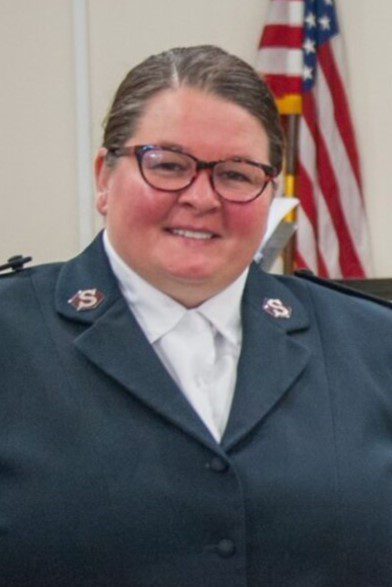
Stacy McNeil, commanding officer at the Salvation Army Ithaca Corp, said that in 2019 her organization developed a community outreach director position. Recently, she said, Ithaca has seen a housing surge due to the opening of the Asteri apartments downtown, which provide housing to recently unsheltered people.
In addition, Village Grove in Trumansburg will have units for domestic violence survivors and homeless veterans when it opens; construction is expected to wrap up by the end of the year.
McNeil said the number of people living in the area’s known homeless encampments, including The Jungle in Ithaca, has decreased to four or five individuals that she is currently aware of, and that this is largely due to the new housing.
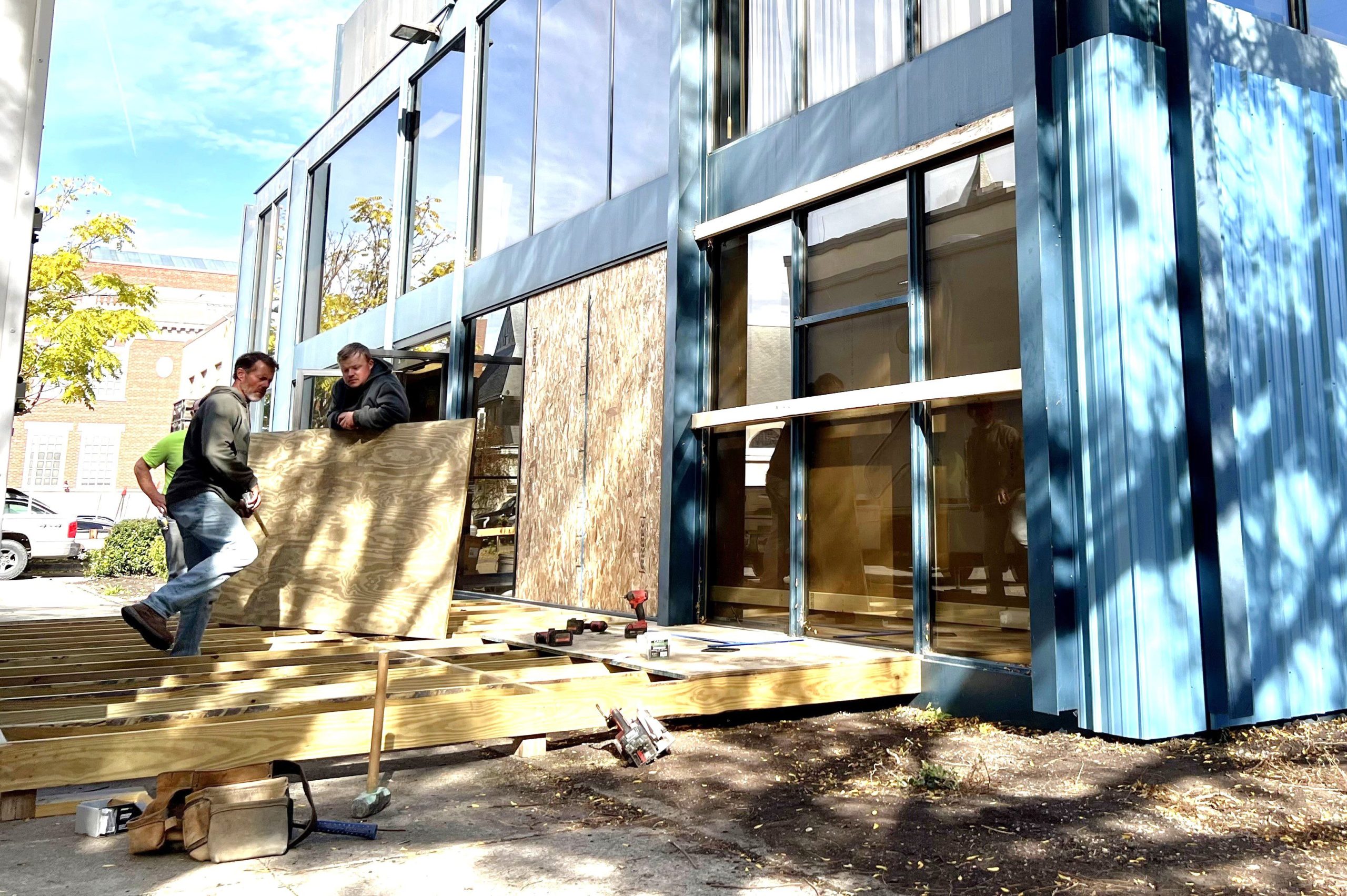
The shelter on State Street was not the only service St. John’s was providing. The company also ran a Code Blue shelter but informed the county about two months ago that it would not continue to run the emergency shelter. In response, the county is opening a Code Blue shelter in a county-owned former bank, located at 300 N. Tioga St. in Ithaca.
Eventually the county plans to demolish the building and build the Tompkins County Center for Government on the site, but on a sunny afternoon last week, workers were busy constructing a deck on the main entryway of the building with the goal of opening the shelter by the first week in November.

“We were already scrambling to get the Code Blue shelter open by November 1, and now we have to take over the main shelter or find someone else to do it,” Klein said. For now, the county will handle the situation with the solution of the hotel rooms he said.
The rooms will be pre-purchased by the county in anticipation that someone will likely be staying there, Klein said. In addition, the county may pay for hotel rooms for individuals on an as-needed basis, he added.
The Code Blue shelter, which is mandated by the state of New York to provide emergency shelter for unhoused people when the temperature is below 32 degrees, was formerly located at the Ithaca Econo Lodge across from the Cayuga Shopping Mall off Triphammer Road.
“That building is in bankruptcy, and with its future uncertain, we didn’t know if we could count on a regular season again,” Klein said. “With them unavailable, we were really in a bind.”
“We [the county] have to provide a warm space for people, only during the cold weather, and it is meant to be low-barrier, no questions asked,” Klein said. “Anyone who shows up on a cold night gets in.”
The state provides $2 million in funding for Tompkins County’s Code Blue shelter, an amount that Klein said is the highest allocation to a single municipality in the state for Code Blue services. He explained that this is because most Code Blue shelters only provide a warm, safe place to escape the cold while Tompkins County takes it a step further by also providing overnight beds for people.
“It seems to me that Tompkins County has, and deserves, the reputation that it provides a lot of services and is a tolerant place; we are kinder than you might find on average in other surrounding areas,” Klein said. “I believe all of those factors lead to some people coming here. If you’re in a situation where you’re going to be homeless, better to be in Tompkins County than other counties.”
The permanent shelter that was run by St. John’s on State Street is a different program. Individuals who want to be a part of that program are required to go through the Tompkins County Department of Social Services, and they have to meet certain requirements in order to receive shelter.
The county is currently conducting soil testing for a site that it plans to purchase with the intention of building a new, permanent emergency homeless shelter, which will have 100 beds, according to the current plans.
The county is also in the process of hiring a consultant to guide the county through the real estate transaction and the construction of the shelter.
“We believe a consultant will be on board with us next month,” Klein said. “We’re still two years away from having that shelter, at least.”

Once the shelter is complete, it could include a Code Blue shelter in addition to providing regular, longer-term shelter, said Gregory Mezey, chair of the Tompkins County Legislature Housing and Economic Development Committee.
“To my knowledge, there is nothing that prohibits Code Blue services being provided in the context of a larger homeless emergency shelter-type facility,” Mezey said.
The current housing market is a major contributing factor to Tompkins County’s homelessness, Klein said.
“At its core, homelessness means not enough houses for people,” Klein said.
“The county has a relatively small role in increasing the supply of housing, but we do have some role,” he added. “It’s something we should and will pursue in whatever ways we can. Things attributed to the root cause of homelessness are mental health issues and addiction issues, and that is the case here and is the case all over the country, so we, the county, need to do the best we can to provide mental health treatment. Even though we cannot do enough, we have to do our part— what we can to reduce the causes of homelessness.”
McNeil said the Salvation Army has shifted its focus from providing services to the currently unhoused to supporting the newly housed as they transition to their new lives.
At Founders Way, a newly constructed affordable and supportive housing development on West Buffalo Street in Ithaca, the Salvation Army assists the residents of seven units dedicated to the support of homeless youth and six that are reserved for domestic violence survivors.
She said the Salvation Army plans to help the new residents of the housing complex Village Grove, which is taking applications for residents, in an effort to set them up for success.
“I think we often just assume that someone can be successful, which is what we want for them, and sometimes they don’t have the right tools,” McNeil said. “I definitely think that we can do better in equipping people to do better in housing.”
“This is a very complex issue, and it requires a tremendous amount of compassion and commitment from service providers and county staff, and it goes without much thanks,” Mezey said. “I think it’s important that people are reminded there are people that are engaged in this work on a regular basis, and our appreciation as a community should be sent in their direction, especially this time of year, when there are increasingly complex housing situations.”
Author

Related Articles

Holiday traditions bring community cheer
Tompkins County holiday traditions light up homes, farms, and schools with festive cheer and community spirit.

The gift of an experience: Local businesses offer hands-on holiday fun
Holiday experience gifts in Tompkins County include candle making, gourd crafts, and pottery workshops for creative seasonal fun.
Code Blue shelter opens amid praise, concerns and ongoing debate
Ithaca’s Code Blue shelter opens with larger space, showers, and case management to help residents during cold weather.