
County Rotaries share challenges, progress since 2020
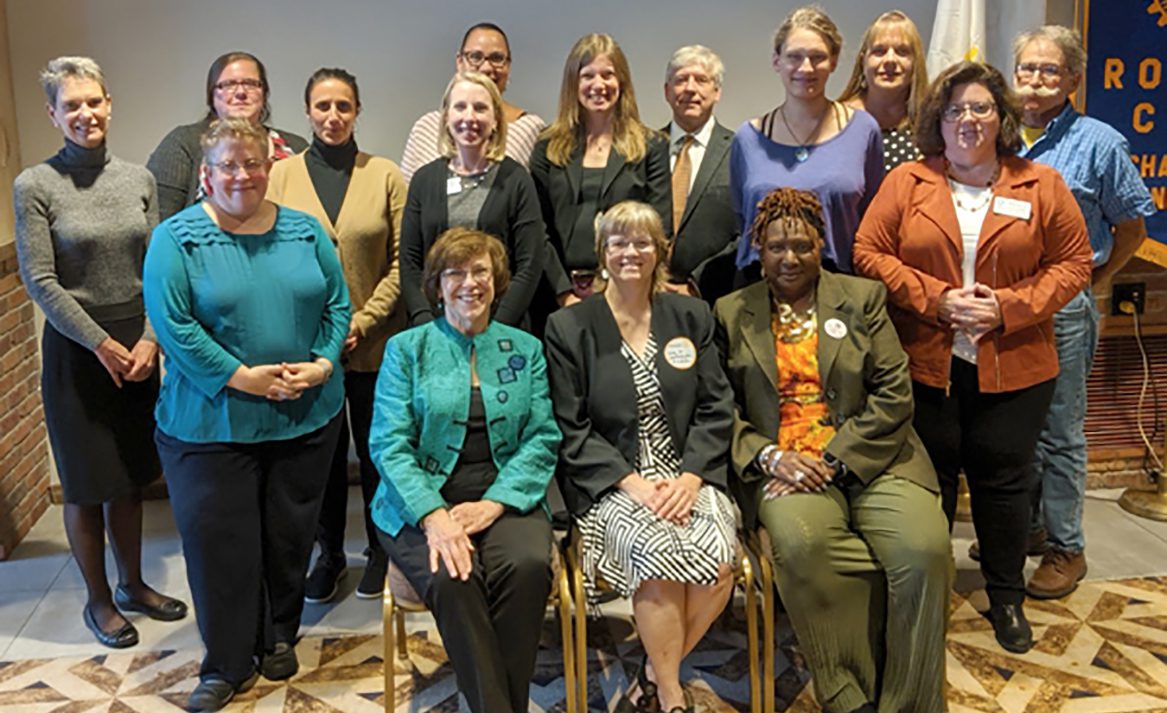
Tompkins County is no stranger to Rotary Clubs. Ithaca’s club is the largest, and there are several smaller clubs working to support their local communities and Rotary at large. But no matter the size, all local clubs have been impacted by the pandemic, with many still grappling with lingering challenges. So, we spoke with area club leaders to discuss recent work and current struggles.
As far as recent progress, all sources said that most club operations have been easier this year compared to 2020.
“I’m very hopeful that our COVID days are, by and large, behind us,” said Mary Kane, president of the Ithaca Rotary Club. “And so, the club is now moving back into live meetings every week. And I’m calling them in person plus, instead of hybrid, because I’m really allergic to that word, as I think most people are. And so, we’re calling it in person plus, and we’re going to be reinstituting lunch meetings, and I’m just very, very, very excited that we’ve been able to make those plans.”
Ithaca Rotary used to meet every Wednesday at Coltivare in Ithaca before the pandemic hit but had to move to remote meetings because of the pandemic. Now, its meetings will be every Wednesday at 12:15 p.m. at the community center at St. Catherine of Siena Church as well as livestreamed virtually. Kane said club members are glad for the return to in-person meetings.
Recent work for area Rotaries is widespread. At Ithaca, for example, Rotarian and former President Frank Towner said that the club hasn’t slowed down much during the pandemic.
“We were able to pull together all the projects we usually do in that time period,” he said. “Share the Warmth was one; that was in December and January. And then Jean McPheeters does … toiletries and home products for people who don’t have them. We bring in towels and soaps and deodorants and sheets and stuff for the house. That was done. We’ve had Rotary cleanups, highway cleanups and the Road Rally.”
At the Trumansburg Rotary Club, longtime Rotarian Tom Overbaugh explained some of his club’s usual work, which has continued throughout the past couple of years.
“One of our main fundraisers is our chicken barbecues,” he said. “That’s where most of our income comes … for doing our projects and for giving grants out to different organizations in the community. And also, [the] club and its members separately contribute to the Rotary Foundation, which is a foundation that Rotary International has set up, and that provides the funds for all kinds of projects all around the world like water wells, humanitarian efforts, hospital equipment and things of that nature.”
Groton Rotarians also contribute to international and local efforts, with the most recent being the club’s annual golf tournament and fundraiser at Stonehedges Golf Course and Banquet Facility. President Nasar Khan said that the club has been able to hold the event throughout the pandemic, albeit with plenty of extra safety precautions.
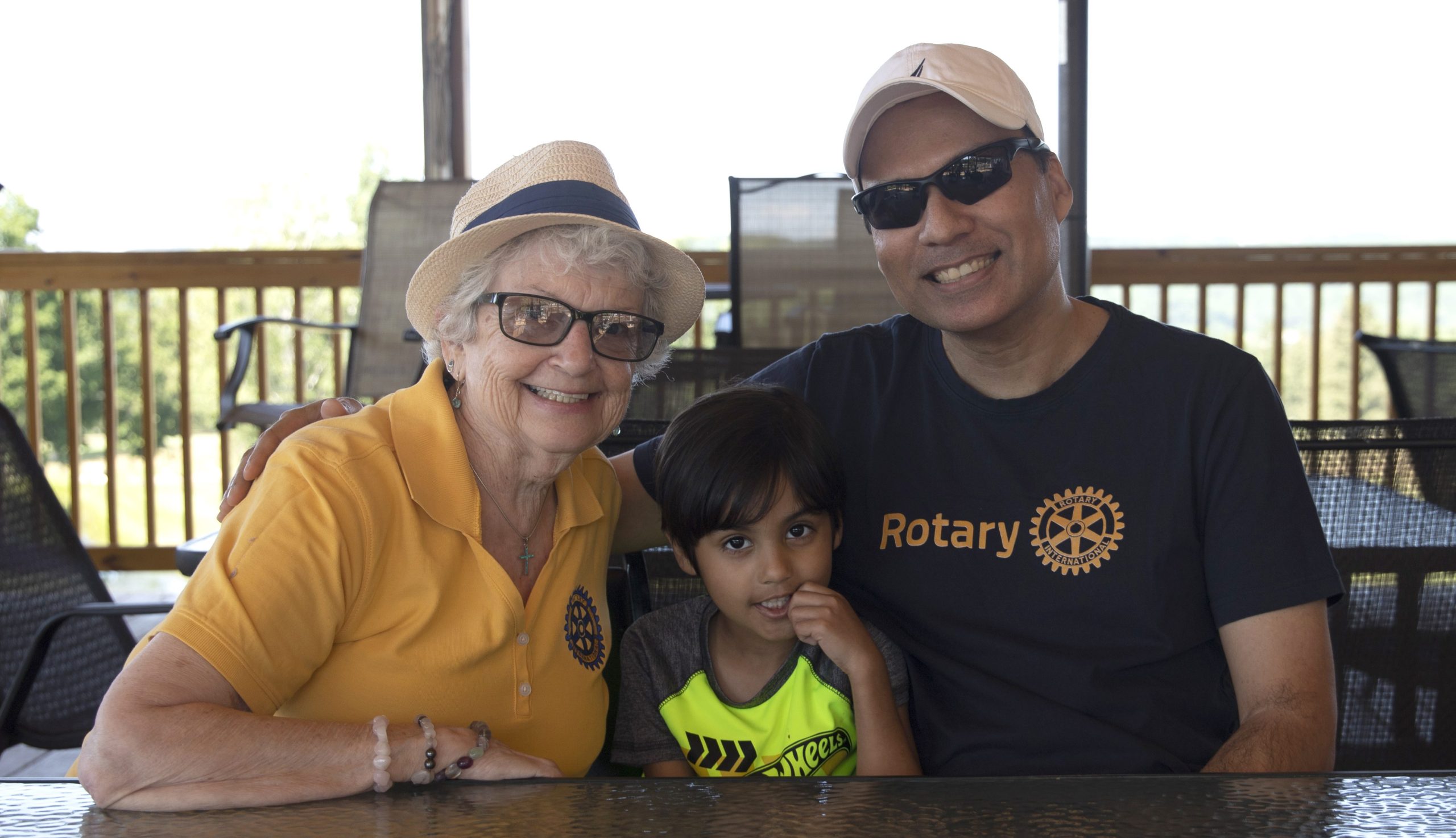
“With golf, it is a little bit easier,” he said. “You’re far apart. You’re out on the golf course. So, you’re not in a room or you’re not enclosed. So, we were still able to do it with limited, obviously, participation.”
Even though operations have largely gotten easier for area Rotaries, there are still many lingering challenges Rotarians are facing. Across the board, sources said the biggest challenge is membership.
“Every year, as a club, you want to increase your membership or at least maintain it,” Towner said. “We had … 160 members. Now, we have 140, give or take. So, is that a lot [lost]? No, we still got a lot of people; we’re still the biggest club in the district. But we want to up our game. We want to get back to where we were.”
Forney shared a similar experience at the Groton Rotary Club.
“I think every civic-minded organization is having the same problem — and I don’t think it’s just COVID — in getting people to join,” she said. “It’s like, people do not want to volunteer.”
As for the reason behind the drop in both volunteerism and membership, sources offered some possible explanations. Khan, for example, said that volunteerism has been steadily decreasing for many years now, but COVID-19 exacerbated the situation.
“COVID has kind of made things worse, I guess, even more daunting for people to come out and participate,” he said. “But I think over the years, you could just see the volunteer[ism] has kind of, I think, dwindled down. It’s universal. It’s not just us or in our community.”
Kane shared Khan’s sentiment, saying that the past couple of years have seen a lot of “system fragility,” which has greatly affected potential and current volunteers.
“People are exhausted,” she said. “I think people are a little more … weary and wary of sort of committing themselves to something when they think they’re going to have to protect themselves and their energies for something that’s going to come down the pike.”
In light of this challenge, clubs shared ways they plan to try to increase membership. For Kane, who started her tenure this month, she said she wants to get the club even more involved in the community and hopefully inspire more people to join.
“If you are a do-gooder, and there are a lot of us out there, Rotary is a great place for you because there’s so much to do and so much support to do it within this structure,” she said. “So, I think what I’d like to do is try to appeal to the good do-gooders in the community that don’t really know where to go to be able to help and start really thinking about that sort of promotion of the club as a place to belong and to be able to make a difference. … And what I hope is that we’re able to help people feel a sense of confidence in coming together, being together and taking action together so that there is really a sense of belonging and momentum and being able to do something with others that you can’t do by yourself.”
Overbaugh said that he and other Trumansburg Rotarians are going to focus especially on bringing in younger members for a fresh, new perspective. He said he’s seen other Rotary Clubs use an organizational structure that attracts younger people, so Trumansburg could do the same.
“The younger generation, … statistics say that they like to serve, but they like to serve on their own time,” he said. “So, because of that, they don’t join. They’re not joiners, but they are doers. … In the United States, some [Rotary Clubs] never meet except after projects. And those are ones that I’ve read about are younger Rotarians, usually, I’m going to guess 40 years and younger, and they’ll come up with an idea and spread it around via email or text or in different mediums and they do their organizing on that, set a date, and then they show up. Just another way of serving.”
For more information about the clubs included in this story, visit Ithaca Rotary’s website at portal.clubrunner.ca/2079, Trumansburg Rotary’s website at portal.clubrunner.ca/3583 and Groton Rotary’s website at grotonrotaryclub.org/index.html.
Jessica Wickham is the managing editor of Tompkins Weekly. Send story ideas to them at editorial@VizellaMedia.com.
Related Articles
Scottland Lights: 15 years bringing Christmas in lights and music to Groton
Scottland Lights Groton offers 15 years of synchronized Christmas lights and music, a beloved holiday tradition in the Groton community.
Crystal Young prepares to become Groton’s new town supervisor
Groton town supervisor Crystal Young shares her plans to continue community service, green energy initiatives, and local improvements starting January.
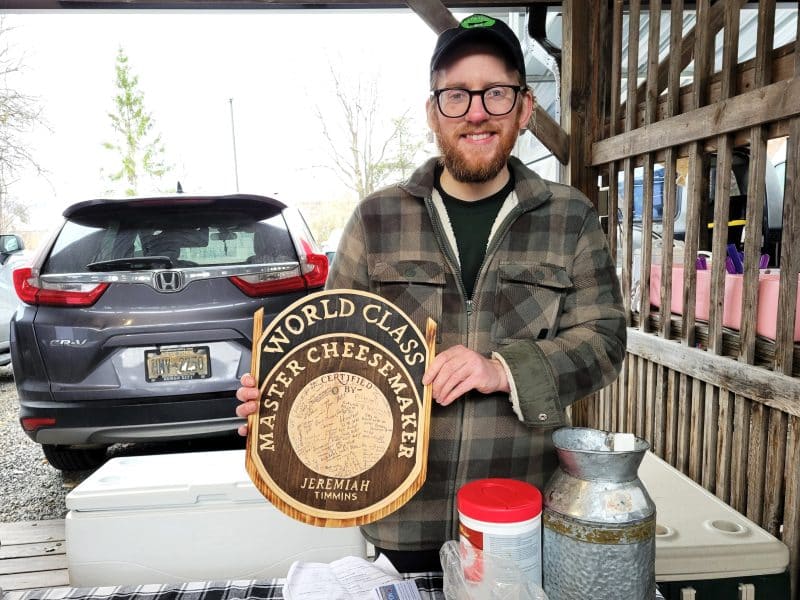
Groton’s Jeremiah Timmins of Old Chatham Creamery garners international award
Old Chatham Creamery’s cheddar ranks in the top 14 at the 2025 World Cheese Awards, a major honor for the Groton creamery.