
Court ruling leaves local congressional candidates in limbo
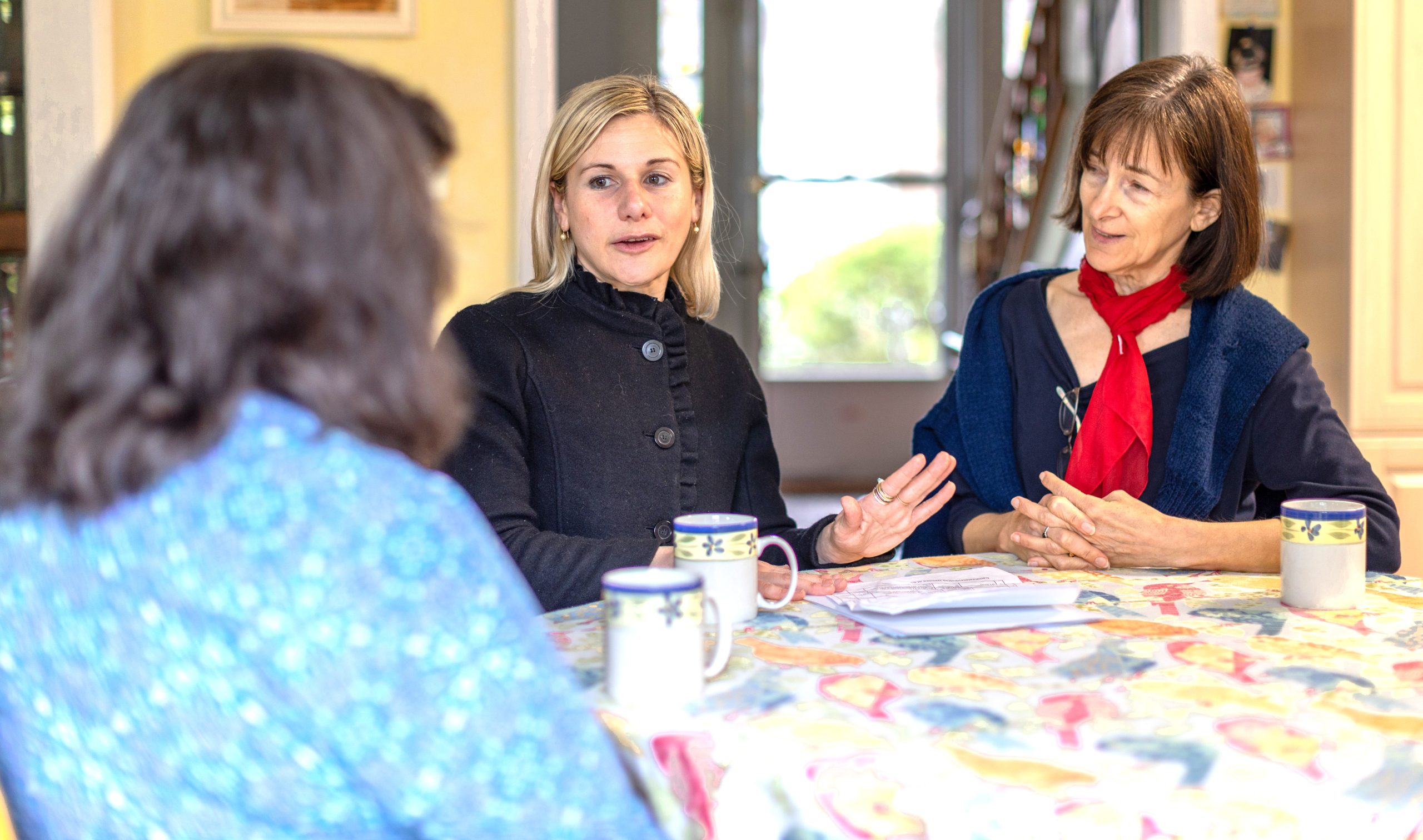
Last month, the New York State Court of Appeals, the state’s top court, ruled that the new state congressional and Senate district maps, which were redrawn earlier this year, were unconstitutional.
Tompkins Weekly covered the redistricting back in March (tinyurl.com/y4t4bysh), and with constituents and candidates alike now in limbo, we spoke with candidates in the newly redrawn Congressional District 22 — which included all of Tompkins and Onondaga counties along with parts of neighboring counties like Seneca and Cayuga — to hear how they’re coping with the news.
The decision and reaction
As reported by the Associated Press (tinyurl.com/yxg8owxe), the maps were ultimately finalized by the Democrat-led State Legislature after members of the New York State Independent Redistricting Commission couldn’t agree on a singular map following the 2020 Census.
The recent court ruling deems these maps too partisan, meaning they were gerrymandered to give Democrats an unfair advantage, putting them in violation of a 2014 state constitutional amendment. District lines are now being handled by an expert known as a special court master, with Senate and congressional primaries expected to be held in August rather than June.
Among District 22 candidates, most said that they were surprised by the news.
“I didn’t think that the court would go that way,” said Republican and Tompkins County candidate Mike Sigler. “It was obvious to us watching it that the lines were unconstitutional. That didn’t stop me when the lines were not favorable. I still thought it’s a winnable race. I still do think that that particular district is winnable. Now, we’ll see what the courts decide to do.”
Brandon Williams, another Republican and Cayuga County native, shared Sigler’s sentiment.
“I was pleasantly surprised because I was not confident that the courts would rule in a fair way,” he said. “I think there is a lot of evidence and broad agreement that the maps that were drawn were severely gerrymandered, and no more so than the New York 22nd District. And so, that seemed to be pretty obvious, and actually, [the court’s decision] helps restore faith, I think, in our judicial system, particularly in New York state, that this could be overturned.”
On the Democratic side, candidates were a bit mixed in their reactions. Syracuse’s Chol Majok, for example, said while an advantage is nice on the surface, there was a bigger issue at play.
“As somebody that believes in the American democracy, I believe that the way we enhance our democracy is if we allow competition to happen,” he said. “When we create policies, stronger policies come out when there is bipartisan[ship], and the way I looked at this map, it wasn’t really bipartisan. It favored us as Democrats, and I have seen other Republicans doing what they do in terms of gerrymandering. It doesn’t make it right.”
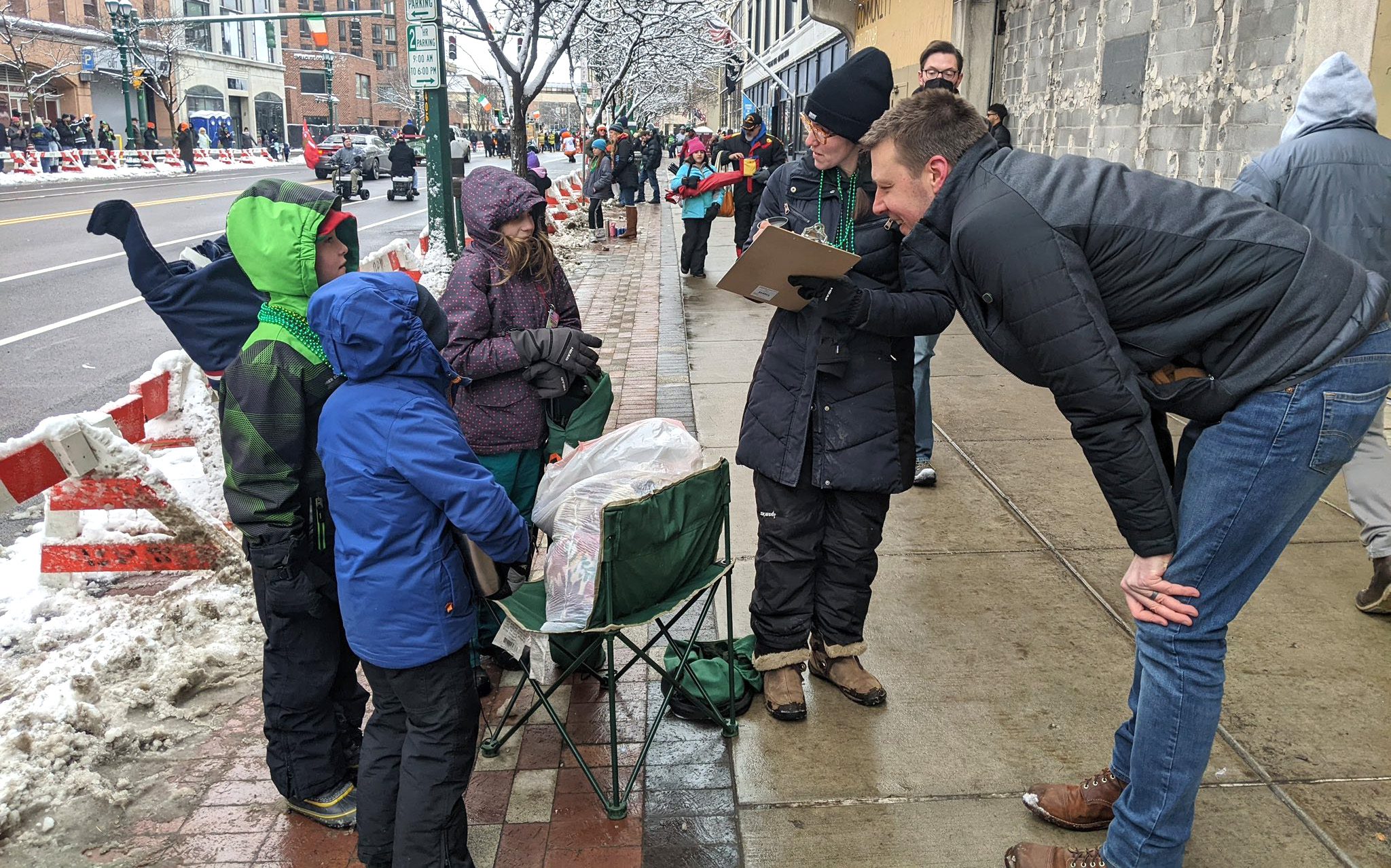
Josh Riley, fellow Democrat and Ithaca native, shared Majok’s assessment.
“I think the one main lesson that this proves is that we really need federal legislation establishing a standard for how redistricting happens,” he said. “Having politicians pick their voters instead of having voters pick their political leaders is sort of the opposite of how it’s supposed to work.”
Sarah Klee Hood, a Democrat from Vernon, said that the recently drawn maps “opened an opportunity for us to be able to bring programs and services so desperately needed to our district and our region,” and she wishes the timing of the challenge was better.
“I assumed that there would be a challenge,” she said. “I was surprised that it happened [after] so long. In my mind, we let a few months get lost in the shuffle. I think that if there was going to be a contest, it should have been a couple months ago, closer to when the lines were released, so that we could hopefully have maintained the June primary and known our folks and our community better.”
Implications, challenges and voter feedback
Regardless of party, local candidates agreed that there are both benefits and significant drawbacks to the court’s recent ruling. Ithacan and Democratic candidate Vanessa Fajans-Turner, for example, said the decision — especially the primary delay — risks confusing potential voters.
“Every moment of confusion with regard to government can be a moment that convinces people [who] are on the fence about participating in our democratic process to check out,” she said. “And in my mind, that’s the opposite direction we want people to go. We want people to feel excited about getting behind the candidate and about getting engaged with the democratic process, starting to feel like you’re building back confidence and integrity piece by piece, representative by representative.”
Several candidates also drew attention to the fact that late August, the projected time for the primaries, is right at the end of summer, which is a very busy time, especially for parents.
“A lot of people go on vacation in late August,” Sigler said. “They’re getting ready to start school. I think your turnout numbers [will] definitely be harmed by this move, particularly if we’re going to have two primaries — one for the governor race and the other statewide races. … That’s an awful lot of voting for people, especially for people who aren’t really used to voting in primaries.”
And it’s not just voters who are left confused. Other candidates said that the court’s ruling will greatly complicate their campaign efforts.
“It extends our financial overhead runway for two additional months,” Klee Hood said. “Right now, we’re not really able to reach out to specific voters. I’m still remaining with the current NY22 footprint that we have, but likely, that’s going to change, and it’s not going to hold the same constituents and the same community. And it’s almost like you’re having to start over, rebuilding your brand, rebuilding your base. And it costs money. And it costs a lot of time.”
Despite these challenges, other candidates are a bit more optimistic about the news, seeing it as an opportunity to further strengthen their campaigns.
“I entered the beginning of February with no political organization, no political experience whatsoever,” Williams said. “And I now get the opportunity to restart my campaign with more than 100 volunteers, with having raised a significant amount of money and having had, now, three months of experience building a campaign organization and learning how to win a congressional race.”
Majok shared a similar mindset.
“I am all about meeting new people, and for me, I would have liked the primary to be in June,” he said. “But since this has happened, what this does for me is that it will allow me to meet new folks and give me a chance to even talk to more of our people. So, for me, that fight still continues.”
Moving forward
With little other option, local congressional candidates said they’re largely focused on moving forward with their campaigns in whatever way they can. Several candidates also mentioned plans to help educate voters ahead of the primaries to ensure as large a turnout as possible.
“For our campaign, knowing that there’s some uncertainty around redistricting, we have decided to focus on the things that we can control, and that is talking with as many voters across upstate New York as possible and really just continuing to focus on the most important issues,” Riley said. “For us, we’re really just trying to stay focused on connecting with voters and focusing on the issues.”
Fajans-Turner shares Riley’s focus on issues in light of the court’s decision, saying she’s “really focused on what matters, no matter what the district lines are, which is registering Democrats and voters across this region.” She and others interviewed encourage registered voters to get involved and make their voices heard when the time comes.
“People in this region are hungry for change in leadership and a sense that they can [believe in] and be connected to somebody who has their back,” Fajans-Turner said. “I hope that people who hear this news and feel confused reach out to our campaign, reach out to everyone that is representing and helping get out the vote and ask questions, rather than assuming the politicians are turning their backs. And this too shall pass. We will have districts. We will have elections, and I want everyone to be a part of them.”
Jessica Wickham is the managing editor of Tompkins Weekly. Send story ideas to them at editorial@VizellaMedia.com.
Related Articles
Holiday traditions bring community cheer
Tompkins County holiday traditions light up homes, farms, and schools with festive cheer and community spirit.
The gift of an experience: Local businesses offer hands-on holiday fun
Holiday experience gifts in Tompkins County include candle making, gourd crafts, and pottery workshops for creative seasonal fun.
Code Blue shelter opens amid praise, concerns and ongoing debate
Ithaca’s Code Blue shelter opens with larger space, showers, and case management to help residents during cold weather.