Covert Mom: the yardbirds
By Mariah Mottley
Late Tuesday night, the phone rang. It was Linda Drowns, calling from Iowa. Our chicks had shipped and would arrive early Thursday morning.
This time of year in Ithaca chicks are ubiquitous. They are at Agway, Tractor Supply, and on Craigslist. Sean and I always order from Glenn and Linda Drowns of the Sandhill Preservation Center in Calamus, IA. We love hardasses.
On his website, Drowns explains that although standard business philosophy dictates that the primary goal of a business is to make money and that a “true business” markets a product with hopes of great sales, he notes: “Our preservation center operates with a slightly different philosophy. While making money is not a bad thing, our first and primary goal here is for genetic preservation of both seeds and poultry. While our catalog is loaded with many things found nowhere else, some of which are very worthy of mass production, they may never reach that market because they don’t have a catchy name or are particularly easy to produce. We maintain those seeds and those poultry varieties even if a year goes by with maybe only one or two inquiries about them…”
This is the sort of stubbornness and confidence in one’s mission that inspires eternal loyalty in our family. The Drownses don’t take phone or email orders. Paper only. Due to the vagaries of the farm and heritage breeds, it is also not always clear when your order will ship, or whether the breed you ordered will even be available. What is clear is that Glenn breeds good birds. The suspense is just a bonus.
We mailed our paper order months ago, when the snow was still on the ground, after a heated debate at Gimme! Coffee about which breeds to select. We like old, we like interesting stories, and we like survivors. Sean wanted Spangled Orloffs and insisted on Egyptian Fayoumis. Orloffs are large and rangy, with muffs, or beards, that make them look like wolves. Fayoumis mature quickly, are good foragers, and with their barred markings they’re hard to spot by predators. They are also said to be resistant to avian flu. These same traits make them terrible pets: they are fast as hell, you can’t tempt them with food, you can’t see them once they’ve escaped, and they have their own ideas about where to sleep. The last batch eschewed the chicken house in favor of the tree outside our bedroom, and the rest of the flock followed them. The crowing began around 3 a.m.
I like pretty hens who face off with dogs and can survive a winter spent roosting in a pine tree. I am partial to Iowa Blues, and have been impressed with the can-do attitude of Buckeyes, one of the only breeds to have been developed by a woman and who are known to keep rodents out of barns. Both are excellent mothers. I insisted on a few Dominiques, who arrived here on the Mayflower and have a similar barred pattern to Fayoumis. One year, our dog chewed a bit on a Dominique hen until he realized that my screams of rage and the firewood that I was throwing at him meant he had committed a faux pas. Mrs. Stumpy, as we named her, survived the mauling with only a little nerve damage. She was a stolid and straightforward little chicken who survived many winters with us. I cried when she finally died of old age.
The roosters have a shorter tenure, so I like to give them special names. My greatest achievement in this area was the year we raised Jersey Giants. I named our rooster The Situation, in honor of Mike Sorrentino’s abdominal muscles on the television show Jersey Shore. This year’s order also included turkeys, one of which I plan to name The Donald.
I thanked Linda Drowns for her work and hung up.
“What’s the story?” Sean called up from downstairs.
“Thursday,” I yelled back down.
On that day, my son and I drove to the Post Office while Sean lined a Rubbermaid container with newspapers and a heat lamp. Ours was not the only chick delivery, and the sound of cheeping echoed out of the door as Clint, the postman, handed me our box out on the loading dock.
Headed home, my son peeked through the holes at the 25 two-day-old birds inside. “That one looks like a chipmunk,” he said. “It has stripes, I’m going to name it Dale.”
The fields by the side of the road were green as we passed, a hawk sat on a power line above us. The world seems full of possibility when you have a box of chicks on your lap.
Related Articles

Affordable housing hiding in plain sight
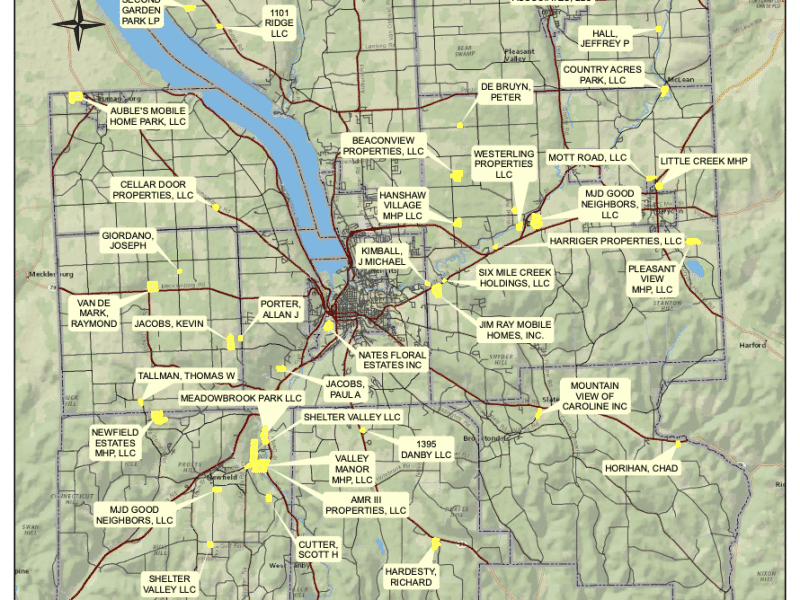
Tompkins County Housing tackles affordability with MHCs. Explore solutions for 298 vacant pads in 2025!