COVID one year later: county forever shaped by pandemic
March 14 marks the one-year anniversary of the Tompkins County Health Department announcing the first reported case of COVID-19 in the county, and the fight is still very much ongoing. Tompkins Weekly asked local health leaders to reflect on the past year of the pandemic, and their experiences show that the county has come a long way in the fight against COVID-19, but we still have a long way to go.
Progress
Sources interviewed for this story universally shared the view that we’ve made considerable progress over the past year, particularly comparing the beginning months of the pandemic to recent months.
Several sources cited the county’s community-minded approach to the pandemic as a source of pride. As Public Health Director Frank Kruppa described, the county has displayed incredible adaptiveness in just a year’s time, mostly thanks to many systems working together.
“We didn’t know anything a year ago, and we were all kind of just reacting in the moment as we got dribs and drabs of information,” he said. “But ultimately, as we were able to synthesize and put together guidance and get it out to our community, people reacted, and they did what we asked them to do. And I think that that really says a lot about our community.”
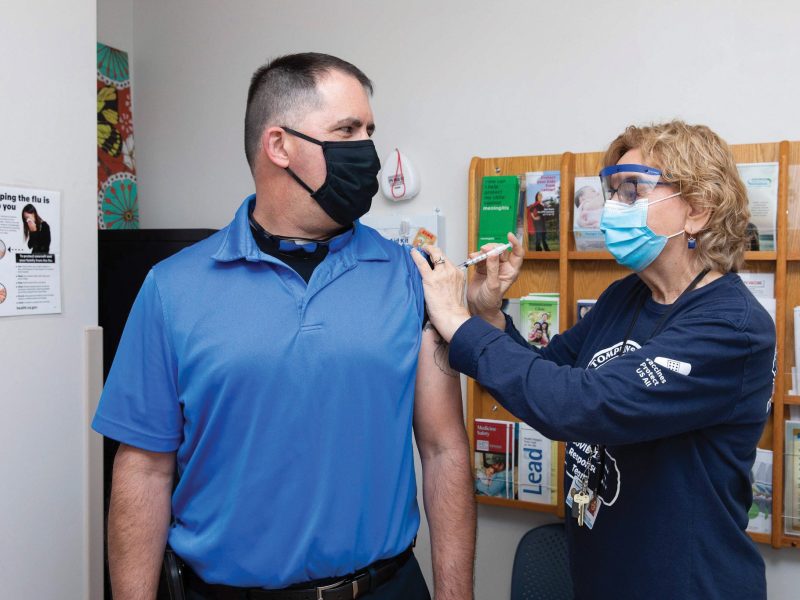
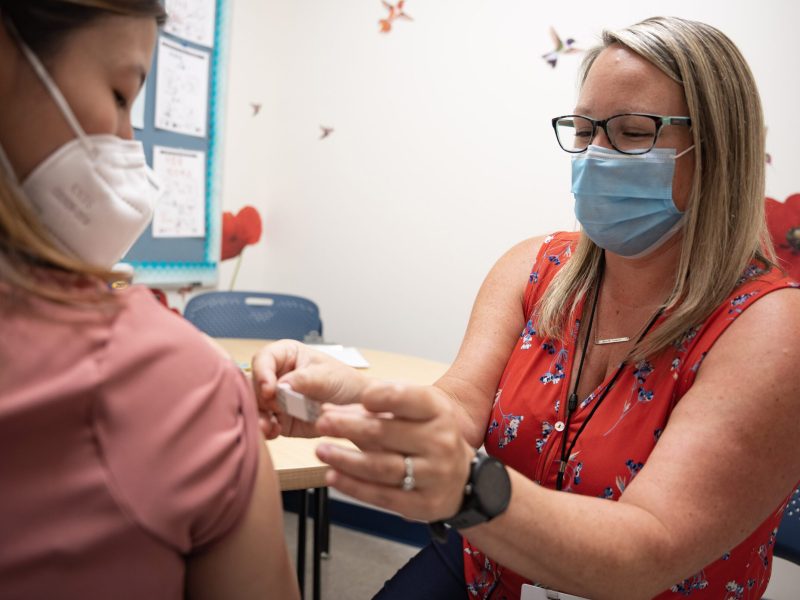
A more recent example of this model is the county’s vaccination program. One of the biggest efforts to get the county vaccinated happened last month when the Greater Ithaca Activities Center (GIAC) helped to organize a vaccine pop-up at Beverly J. Martin Elementary School in Ithaca.
GIAC Executive Director Leslyn McBean-Clairborne spoke highly of the pop-up, particularly the way it was able to assuage many residents’ — particularly people of color’s — fears of the vaccine.
“For people who trust us and know us [and] have a relationship with us that has been developed over years, it felt comfortable to them,” she said. “People who have doubts about the vaccine felt comfortable and a certain degree of safety — like, ‘OK, GIAC is doing this, and it’s being held at a place that we know that’s historic, especially to the Black community, at BJM. It feels safe.’ And so, people came out of the woodwork.”
March 8 marked another big day for the county’s vaccination efforts. On March 8, Tompkins County residents officially surpassed 20,000 first COVID-19 vaccination doses, according to the New York State Department of Health. Kruppa explained how the county was able to reach that milestone so quickly relative to other counties in the state.
“In the first couple of weeks of January, we were receiving a lot of vaccine, more than many folks around us because we were ready and we were able to accept it and we were able to quickly get it into people,” he said. “And that has really carried forward. The state saw that, and they’ve really been rewarding us by providing more vaccine each week, more than probably we would have gotten if we had not demonstrated that early success.”
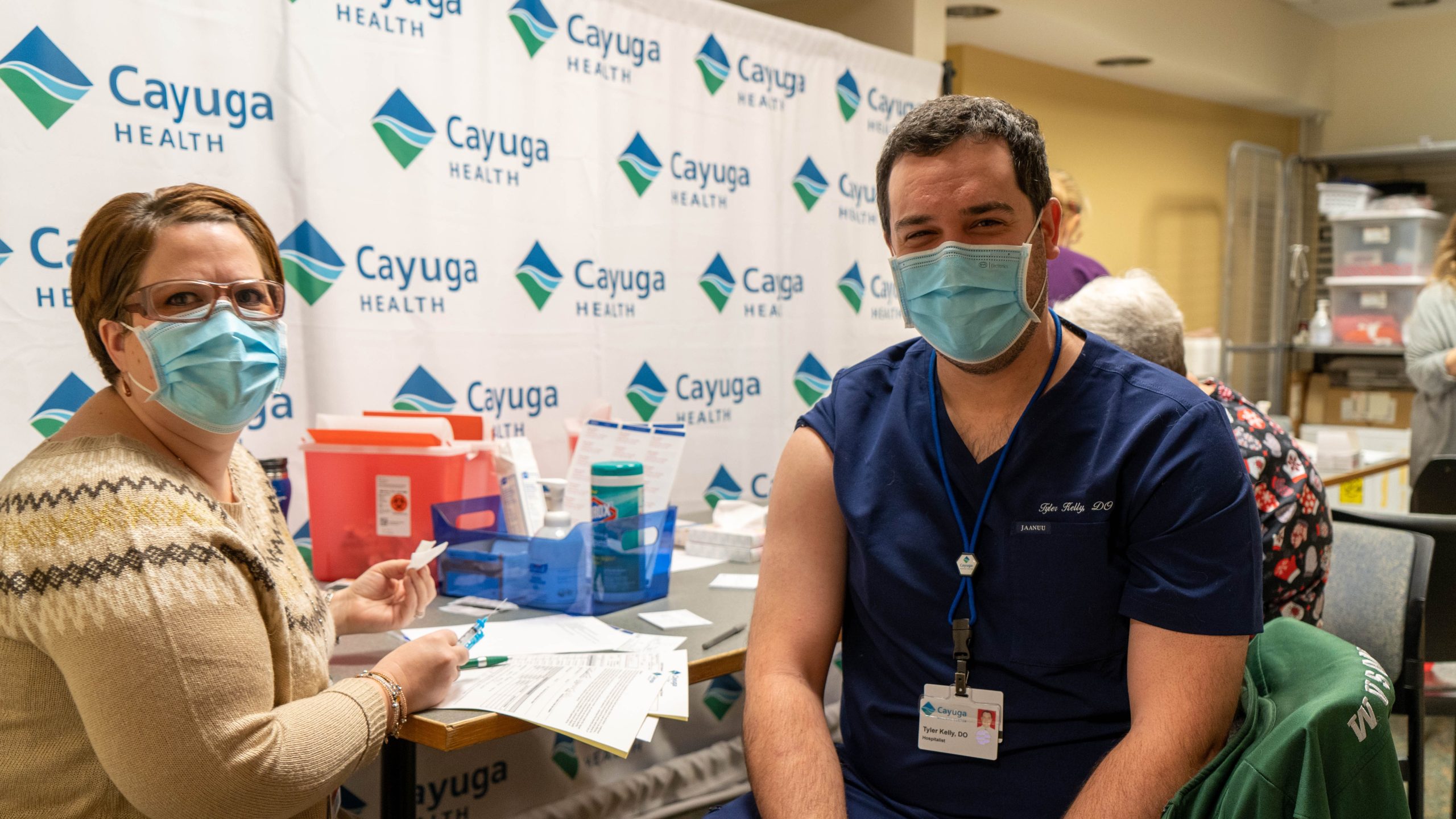
And the arrival of the Johnson & Johnson vaccine in the state is a good sign that progress will only increase in the coming weeks. As Dr. David Evelyn, vice president of medical affairs at Cayuga Medical Center, explained, the new vaccine will help address the supply shortage problems the county has been facing.
“Now [that] the Johnson & Johnson vaccine is available, the state has more leeway in terms of moving vaccine around, and so, we seem to be getting a little bit more,” he said. “And the federal government has guaranteed the supplies to the state moving forward for several weeks. So now, we’re feeling more comfortable about scheduling clinics out for a few weeks, as opposed to just scheduling out a week in advance because we didn’t know how much we were going to get.”
Challenges
While significant progress has been made, there’s still much work ahead, as sources explained. For one, many residents are still expressing skepticism toward the COVID-19 vaccine, as Kruppa and McBean-Clairborne shared.
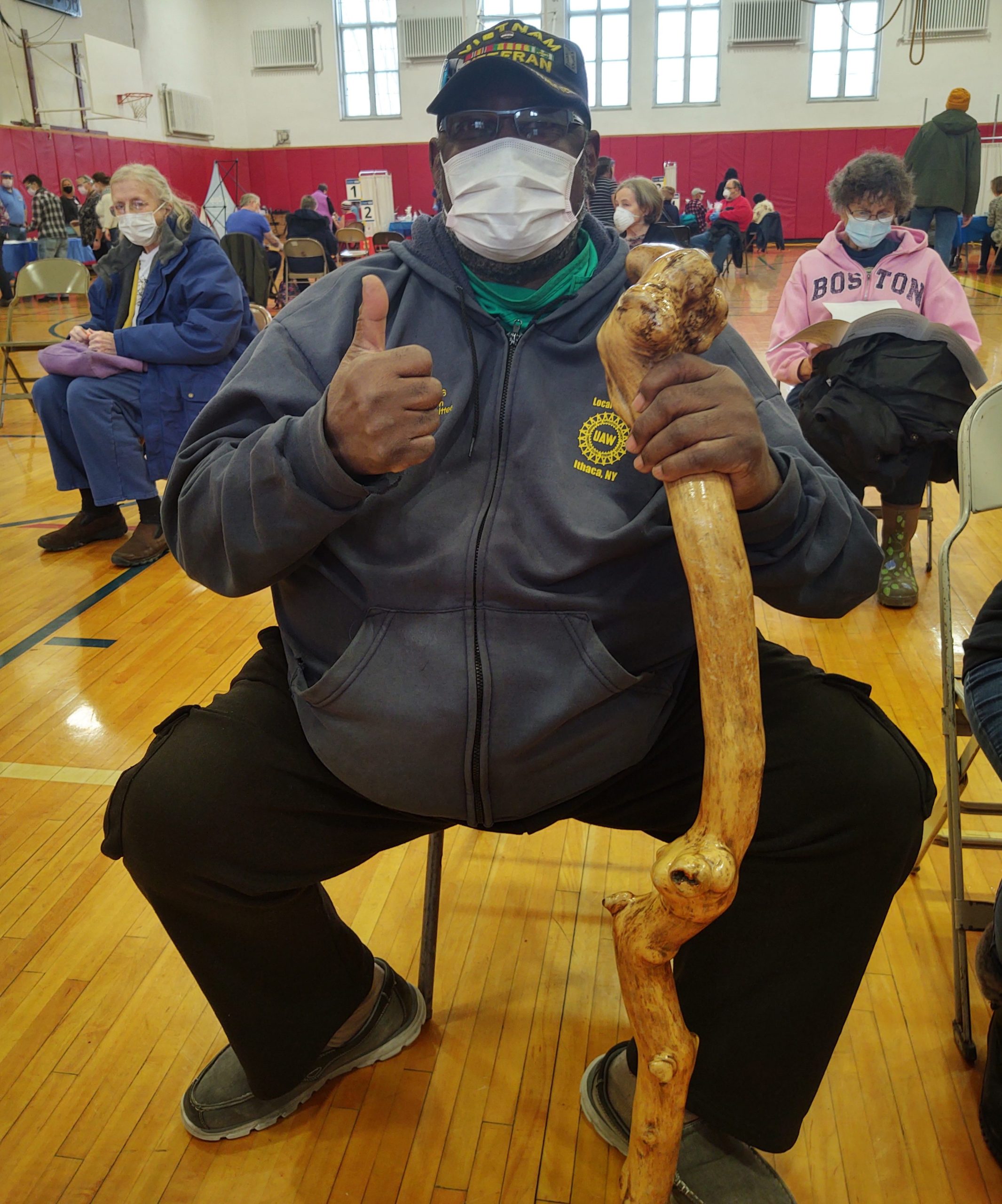
“There’s no secret that communities of color, particularly the Black community, are very wary of the vaccine and suspicious — ‘Do we want to do it? Do we not want to do it?’” McBean-Clairborne said. “I had my own concerns, like, ‘Should I, shouldn’t I? Let me wait and see what happens.’ And I had to suck it up and say, ‘Let’s do this. Let’s see what happens’ so that I, as a community leader, can say to folks, ‘this has worked.’”
And challenges continue for frontline health care workers. Dr. Andreia de Lima, hospitalist at Cayuga Medical Associates, said that the past year has been hard on medical staff across the board, particularly with having to deal with multiple waves of the disease.
“Before you can take a full breath, you go back into it, and that’s the way it’s been the whole year,” she said. “So, we’ve seen the nurses working really, really hard in the [emergency departments], all the COVID units, because it’s not just the physical work — it’s the emotional toll, as well, of dealing with a disease that can be so severe. And although we know more now, we still don’t know enough.”
And it’s not just health workers facing challenges, Evelyn said.
“The obvious people to talk about are the providers and the nurses, but it’s also the aids, the people who go to take blood from patients, the people who go in and clean the rooms that have COVID patients,” he said. “It really has been a huge team effort. And it takes a huge toll on all those individuals.”
And health workers outside of Cayuga Health are also facing challenges.
American Red Cross’s Alan Turner, regional chief executive officer and interim executive director in the Southern Tier, explained that over the past year, Red Cross workers have had to contend with a “double whammy” of the pandemic and an increase in natural disasters both increasing the demand for blood. On top of that, the pandemic has prevented blood donations from being conducted in mass like in years past.
“We’ve asked people who haven’t given blood before to consider giving blood because the need is real,” Turner said. “Blood only has a finite shelf space. Depending on how it’s being used, it could be seven days to 40 days, and that’s it. And we need to have that blood recycled, and blood can only come from donors.”
Looking Ahead
Even though there are still plenty of challenges health care leaders are dealing with right now, sources interviewed for this story all expressed a sense of optimism for what’s to come.
Several sources cited ways the pandemic has forever shaped many systems throughout the county as a sign that much of the progress over the past year will continue post-pandemic. Kruppa referenced the way the pandemic has shined a light on the inequities in the health care system.
“All of the things that we’ve seen with COVID, how it has disproportionately impacted people of color and individuals of low socioeconomic status, those are all things that existed with other diseases before here. But I think now, everyone sees that more clearly,” he said.
Turner and Evelyn both referenced the improvements in telehealth as a long-lasting change.
“Telehealth was something that started before COVID, and there was some acceptance by patients and by providers, but no one was really sold on it,” Evelyn said. “The whole COVID experience has totally sold both providers and patients on the concept of not every doctor visit needs to be in person. And so, I think that we’re going to see an explosion of telehealth in many, many different types of venues going on in the future.”
Moving forward, while there is finally light at the end of the tunnel, sources urged residents to remain vigilant so the county can continue its progress and recover as quickly as possible. This includes wearing masks, social distancing and other hygiene measures.
Visit tompkinscountyny.gov/health and cayugamed.org for COVID-19 updates and information on the county’s testing and vaccination programs. For more information about the Red Cross, visit redcross.org/local/new-york/western-new-york/about-us/locations/southern-tier-chapter.html.