
Democratic View: Pot reform doesn’t go far enough
As we look forward to summer and possibly seeing more light at the end of the pandemic tunnel, I’d like to remind you of another scourge that continues today. Fifty years ago, on June 18, 1971, Richard Nixon declared drug abuse as “public enemy number one” in the United States. Since then, the war on drugs has become an invasive, discriminatory and unsuccessful attempt to end unauthorized drug use in the U.S.
The “all-out offensive,” as Nixon described it, has not ended the use of banned substances and never will. Instead, it has ruined countless lives, killed millions of people in the U.S. and abroad and caused far more harm than the drugs themselves. It is not a war on drugs; it is a war on people. The unequal distribution of the pain caused by the drug war has had a disproportionate impact on communities of color, especially African Americans.
Attempts to control drugs in the U.S. go back to 1914 with the passage of the Harrison Narcotics Tax Act, which instigated the system of drug control we have today. In 1918, Congress began the process of banning the manufacture and sale of alcohol that became the 18th Amendment to the Constitution enacted in 1920.
Prohibition turned many adult Americans into criminals, allowed Henry Ford to victimize his workers, spawned speakeasies and blind pigs that encouraged more women to drink and increased the alcohol content of the drinks.
The Iron Law of Prohibition refers to the accepted reality that once a substance is banned, it will be replaced by something even stronger. Because of the negative impacts of Prohibition, the amendment was repealed in 1933.
The drug war in the 20th century increased spending on crime, enforcing of laws, building of prisons and incarceration of people of color. The racist actions of Harry Anslinger, the legendary commissioner of the Federal Bureau of Narcotics (now the Drug Enforcement Administration), and the draconian drug laws of the 1970s, led by none other than New York Gov. Nelson Rockefeller, escalated the war with mandatory minimum sentences for possessing even small amounts of banned substances.
Not until 2009 were these laws repealed. During the 1980s, many of us can recall the Reagan campaign to “just say no” to drugs, during which the Partnership for a Drug-Free America (funded largely by the alcohol and tobacco industries) continued the demonization of those using banned substances.
The mass incarceration of the 1990s, which is finally being publicly noticed (See Michelle Alexander, “The New Jim Crow”) but too slowly being addressed, has led the U.S. to have a greater percentage of its citizens imprisoned than any country in the world by far, about half of whom are in federal prisons due to drug-related offenses.
One of the few positive incremental steps taken in the 1990s was the institution of drug courts, such as the one that opened in Ithaca in 1998.
The recent attention to the overdose epidemic that impacts a wide group of Americans has forced more Americans to reconsider the drug war. Many news stories highlight tragedies of families in middle America who have lost loved ones.
These are real tragedies promoted and encouraged by the drug war. More white Americans are being impacted than ever before, and there’s finally discussion about considering drug use as a public health issue instead of a criminal issue.
This discussion is way past due: past when mostly Americans of color were overdosing and criminalized and past when we incarcerated people of color at higher rates than white people who committed similar drug offenses.
The Drug Policy Alliance summarizes it this way: “The drug war has produced profoundly unequal outcomes across racial groups, manifested through racial discrimination by law enforcement and disproportionate drug war misery suffered by communities of color.”
In the January column of the Tompkins Weekly Democratic View, Assemblywoman Anna Kelles wrote that she supports the Marihuana Regulation and Taxation Act as a human rights issue, a position I fully support as a first step. We need more steps, leaps and giant bounds to end the drug war.
In the November 2020 election, and by a wide margin, Oregon became the first state to decriminalize possession of small amounts of all drugs and greatly increase access to treatment, recovery, harm reduction and other services. Drug reform usually takes incremental steps in New York. Why not change the pattern and take the lead again but in a reverse direction from the draconian Rockefeller drug laws?
I call on our legislators to pass the torch on reform and to redeem us from our past mistakes. Help end America’s half-centurylong war on drugs that has led to the criminalization and punishment of millions and has disproportionately harmed communities of color. Start the conversation and then act on decriminalizing drugs in New York state.
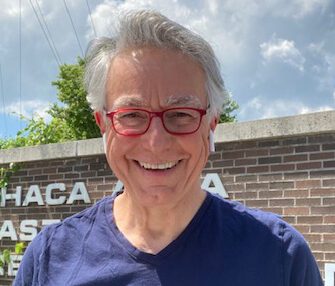
Stewart Auyash is an associate professor of public health at Ithaca College, where he has researched and taught about drug policy for four decades. He also studies and teaches about public health communication, pandemic preparedness and media representations of public health.
Related Articles
Democratic View: Rural Healthcare Is At A Breaking Point. Here’s How We Fix It.
Josh Riley outlines the rural healthcare crisis and proposes bipartisan solutions to protect hospitals, workers, and seniors in Upstate New York.

Democratic View: When hope is not enough: An urgent call to action in support of our immigrant neighbors
Stacey Dimas urges immediate action to support immigrants in Ithaca, highlighting local resources and volunteer opportunities.

Democratic View: It’s time to end hostility and embrace humanity
Shawna Black urges communities to end political hostility by promoting civility, dialogue, and safety for public servants.