
Developer, residents talk Varna Freese Road project
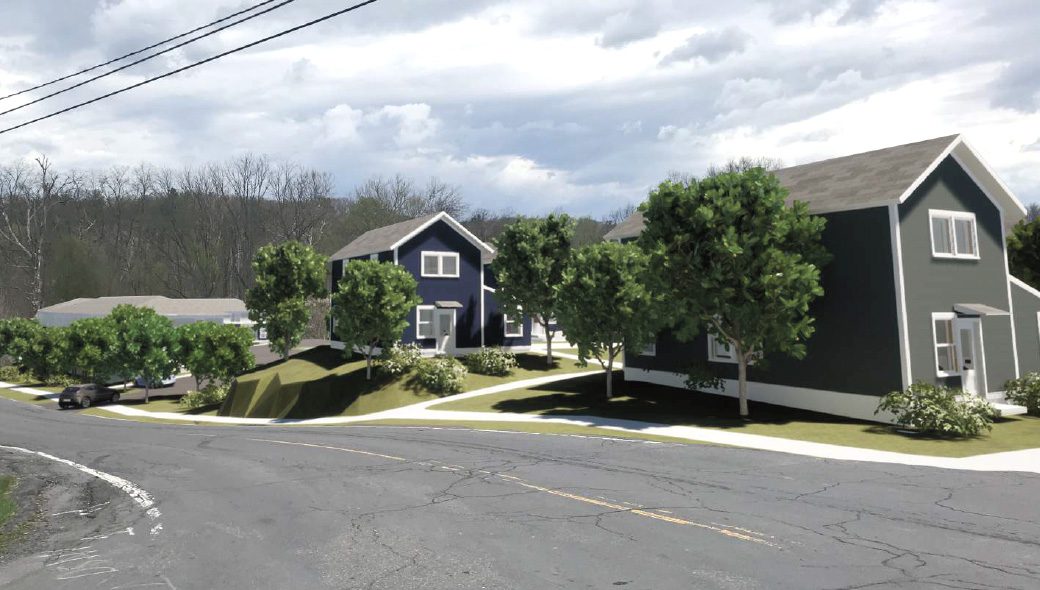
The housing project planned on the corner of Freese Road and Route 366 (Dryden Road) was at the center of the Town of Dryden Planning Board’s Sept. 24 meeting.
During the public forum on the project, residents spoke both for and against the project, with some sharing concerns about issues like traffic and density and others saying the project is beneficial for the overall community.
Those involved in the project — Maifly Development, STREAM Collaborative and Marathon Engineering — responded to this feedback and provided additional details on the planned development to address residents’ concerns.
The planned development at 5 and 9 Freese Rd. in Varna includes 32 townhomes, 15 single-family homes and a community center, with open space and integrated footpaths connecting each area. The project is expected to cost around $5 million and has been the subject of considerable debate since Maifly applied for the permit in March.
Previously, the site was going to be developed by Tiny Timbers in a project called The Cottages at Fall Creek Crossing, planned by local businessman and longtime resident Buzz Dolph with STREAM Collaborative. While the project was approved, no for-sale homes were ever built, and the property and the home plans were put up for sale earlier this year.
Maifly, managed by Cornell University alum Matt Durbin, recently took over the project, making several changes to the original Tiny Timbers plan like more parking and pocket parks. During the Planning Board’s public forum, Dolph voiced his support for Maifly’s adjustments as well as things it kept consistent with his original plan.
“I’m really very excited that Maifly chose to keep the subdivision on the top of the hill and to put single-family houses up there,” Dolph said. “I think that that’s in keeping with what the Planning Board had approved when I approached them.”
Dolph also voiced support for the project’s effects on the county’s affordable housing crisis.
“I think that the whole project is in the best interest of Dryden,” Dolph said. “It’s certainly in the best interest of the county because of a housing crisis. I believe firmly that the main thing that drives housing costs down are more houses. And there aren’t enough houses right now. And that’s one of the main reasons why we are in the midst of a housing crisis, both affordable and nonaffordable.”
Resident Deborah Cipolla-Dennis, who also spoke during the public forum, shared Dolph’s support, adding that the project would also help businesses thrive in the area.
“Tompkins County really needs housing, and this project, yes, it’s a lot, but it is well within the zoning and is well within the laws of Dryden,” she said. “I know that Varna really wants to have mixed use. And I see that, but the fact of the matter is that businesses are not going to come to Varna until there is a higher population there. It’s just not sustainable.”
Resident Bruno Schickel also shared Cipolla-Dennis’ view when he spoke at the public forum.
“Varna needs people,” he said. “If you have more people living there, you will develop much more of a village sense and be able to attract some services and businesses that will come in. … If Varna can increase its population, it will become a thriving, wonderful community.”
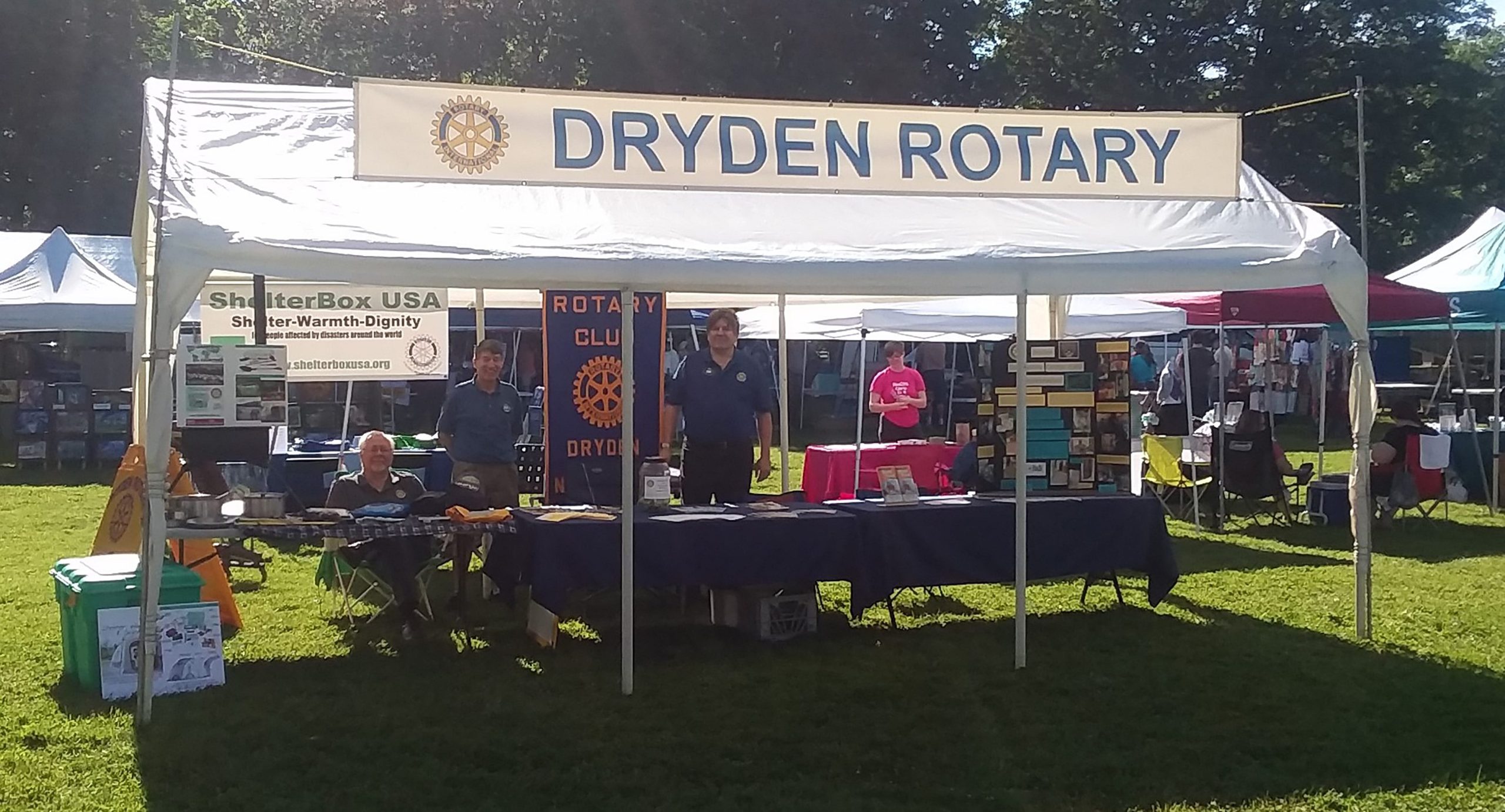
While some residents were supportive, others voiced considerable concern for the development. In a letter to the Planning Board, residents Laurie Snyder, 36 Freese Rd.; Kim Klein, 14 Freese Rd.; and Nat Lakin, 13 Freese Rd., all shared concerns regarding the development’s proposed housing.
“As to the stated goal of increasing ‘affordable housing’ in Tompkins County, this housing development does nothing to achieve this goal,” they said in the letter. “There is no space allocated for children to play. And the rents will be too high for families working in Ithaca.”
Snyder, Klein and Lakin also expressed concern about the multi-story apartment buildings proposed for the uphill portion of the site, where there is unstable, soft soil, and the house at 13 Freese Rd., which will have to be replaced as part of the project. Both of these areas were touched upon by other residents who spoke during public comment.
Lakin, who has lived at 13 Freese Road for nearly a decade, said in a separate letter to the Planning Board that the home has a long history in the area, and he doesn’t want to see it replaced.
“This charming old house, despite the neglect it’s endured, is solid and so important as a symbol of what an American town is — a place with a visual history and culture,” he said. “Razing old places like this for short-term revenue is stupid. … Preserving the historical integrity of small towns in America is a morally sound thing to do; destroying it is not.”
Lakin also voiced another concern shared by others at the meeting in regard to the project possibly leading to pollution of Fall Creek.
“Dense developments like this one built on 20 to 30 feet of miscellaneous rubble are destined to produce structurally problematic housing and negative environmental consequences for the neighborhood and Fall Creek, only 100 feet away,” said David Weinstein, 51 Freese Rd., in a letter to the Planning Board.
Another common area of concern was traffic, as the new housing units would bring more residents to an already-busy intersection that currently lacks traffic signals and to an area surrounding the Freese Road Bridge, which is planned to be replaced.
“Given the still unconfirmed status for the Freese Road Bridge replacement and the addition of at least 90 cars with daily commutes to be added along with the 2,000 cars averaging for current commute, access from the parking area to Freese Road may be difficult during commuting hours,” Jim Skaley of 940 Dryden Rd. said in a letter to the Planning Board. “Furthermore, assuming the traffic lights are required for the new bridge, this could further add congestion at this site.”
After the public forum, Durbin, Adam Fishel from Marathon Engineering, David Kruse from SRF and Associates, Gretchen BeVard from GMB Consulting Services and Noah Demarest from STREAM Collaborative spoke with the Planning Board, responding to Board members’ and residents’ concerns about the project.
Among the most-discussed items were methods of reducing the traffic around the site through possible traffic signals and other measures and decreasing the density of cars and pedestrians at the site by providing sufficient parking and sidewalks and laying out the buildings in such a way that balances their sizes across the entire site.
In a letter to the Planning Board from early September, Marathon Engineering also addressed several other areas of concern or confusion, like improving the visual appeal of the current and rather barren site through the use of pocket parks, natural areas, decorative trees and a development sign with seasonal paintings.
Further, Marathon Engineering said that all buildings would be within the height and weight limit that the soil can support, the developers would take measures to ensure the project fits in with the overall culture and landscape of Varna and Dryden.
The next Planning Board meeting is scheduled for Oct. 14 at 6 p.m. via Zoom and will focus around the town’s Comprehensive Plan. Visit the Planning Board’s website at dryden.ny.us/board-commission-list/planning-board for more information and links to join the Zoom meeting.
Related Articles
Dryden Fiber looks back on another year of service
Dryden Fiber reflects on a year of growth as the municipal internet provider expands service across Dryden and Caroline.
Holiday traditions bring community cheer
Tompkins County holiday traditions light up homes, farms, and schools with festive cheer and community spirit.
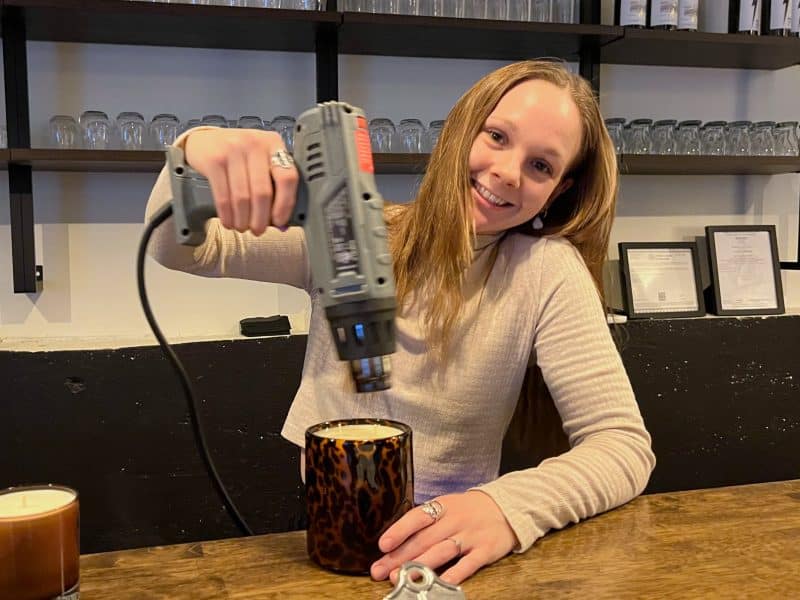
The gift of an experience: Local businesses offer hands-on holiday fun
Holiday experience gifts in Tompkins County include candle making, gourd crafts, and pottery workshops for creative seasonal fun.