
Development projects move forward despite pandemic
Summer is traditionally a big season for development in Tompkins County. Tompkins Weekly has covered many of these projects, and while we would still check in on these projects if the pandemic weren’t happening this summer, COVID-19 has certainly complicated this summer’s look into development.
In our dive into how development has been faring during the pandemic, three main narratives emerged. For privately or locally funded projects, those in the planning stages reported almost no delays or challenges caused by the pandemic, while those in the construction stages reported slight slowdowns and challenges, though nothing major.
The real disparity comes with state-funded housing projects, which are facing significant challenges caused by COVID-19 negatively affecting the state’s economy. Because an article on every project in the county would be far too long, we’ll be focusing on a few that help speak to the general outlook on development in the age of COVID-19.
First, let’s look at projects not funded by the state that are in the planning stages, like City Harbor and Asteri Ithaca.
As covered in our waterfront piece, City Harbor is a project by Costa Lamrou, Scott Whitham and others that includes a full-service restaurant, a Guthrie Medical Center office building, a pedestrian promenade and improved boating and golfing amenities.
As Lambrou explained, City Harbor has mostly proceeded as planned, with virtual meetings being the biggest change. City of Ithaca Deputy Director of Planning Lisa Nicholas added that she and her colleagues have worked hard to make that change as smooth as possible.
“We’ve tried really, really hard to not miss a beat with the approval process so that it doesn’t become even more onerous,” Nicholas said. “We found ways to replace in-person public participation with online public participation, and I think we’ve done a really good job of that.”
Any delays to the project have been related to municipal approval or the Department of Transportation facility currently on the waterfront. If anything, Lambrou said, the pandemic has emphasized the need to move the project into the construction phase as soon as possible.
“We’re still moving ahead as fast as we possibly can on the City Harbor project, just because it’s mostly residential,” he said. “And we’re tied to Guthrie Medical, and they want to build as soon as possible, especially considering we’re in the middle of a medical crisis in this country, in the world, so they’re ready to build yesterday.”
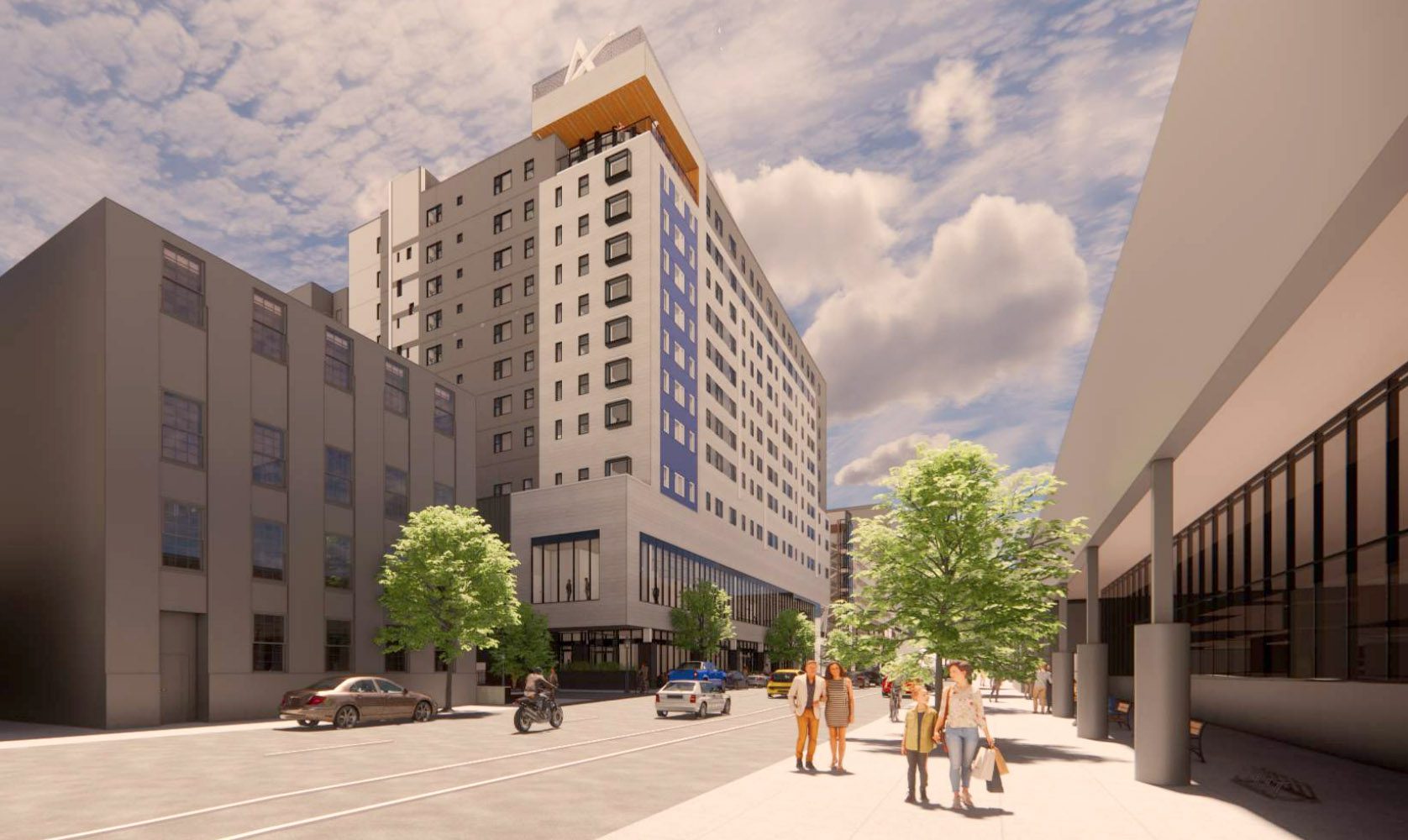
It’s a similar story for Asteri Ithaca, as Bruce Adib-Yazdi, vice president of development for the Vecino Group, explained.
“The project had and continues to proceed almost without a hiccup,” he said. “As far as it relates to COVID in general, it seems like that the team working on the project have adapted fairly quickly to working in remote environments.”
Moving onto projects not funded by the state that are under construction, projects like Arthaus and Harold’s Square experienced some difficulties because of the pandemic, but sources reported even those difficulties are minimal.
The Vecino Group is also behind Ithaca Arthaus, which includes on-site gallery space and 120 units of affordable housing to artists, at-risk youth and the community at large. Arthaus is currently under construction and slated for completion next year.
Because the project includes affordable housing, it was dubbed essential by the state early on, so there was little slowdown there. Some challenges include supply and labor shortages, though neither is as much of an issue now as it was earlier this year.
“We had some trades and some individuals who ended up not being able to perform some things, and that did cost us a little bit of time, but it seems like that was fairly minimal and short lived,” Adib-Yazdi said.
There was another small delay in the delivery of precast concrete, but the construction team told Adib-Yazdi that “[it’s] nothing that we haven’t been able to overcome or work around.”
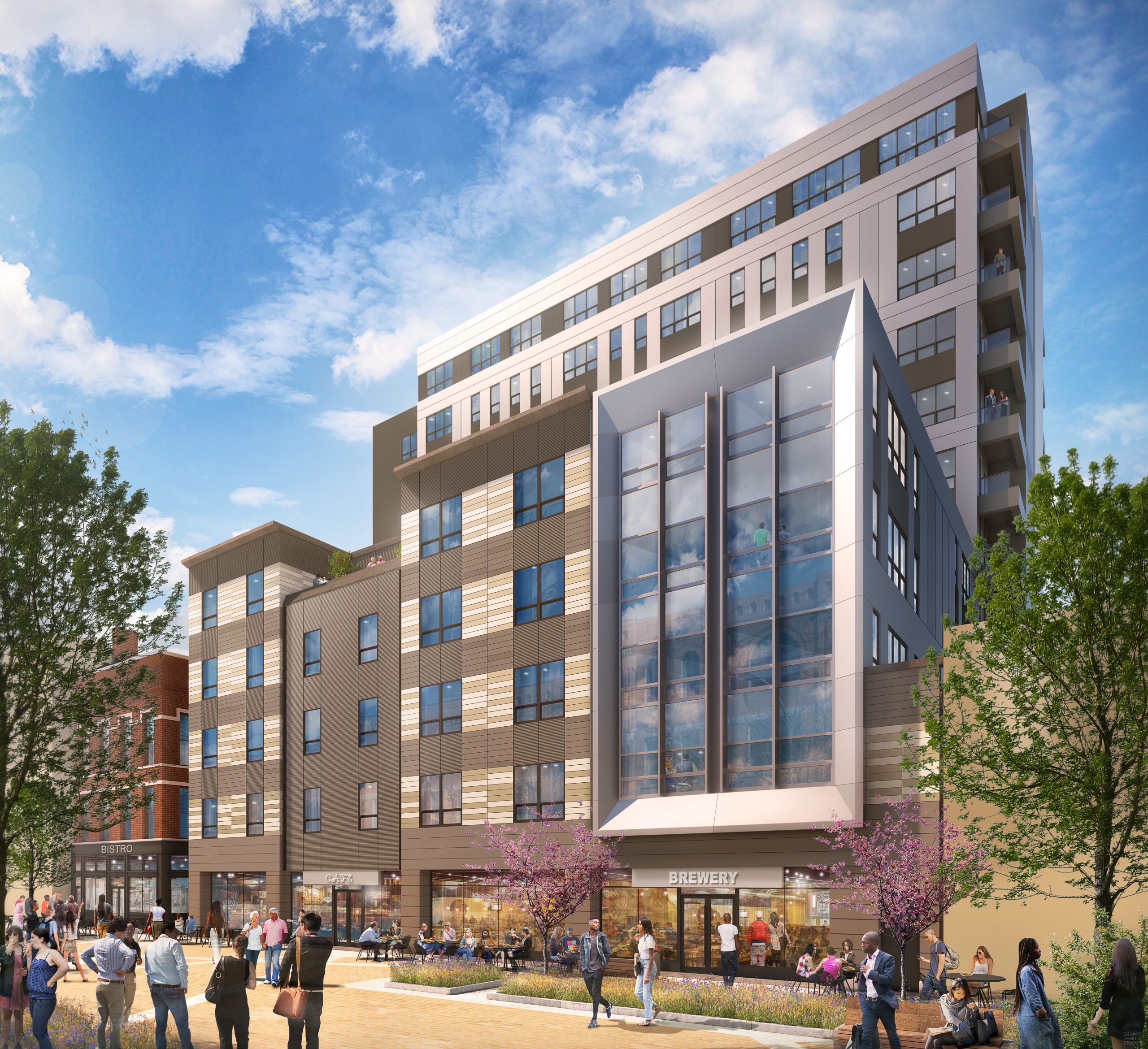
Harold’s Square tells a slightly different story, largely due to the fact that it’s not an affordable housing project; it includes luxury apartments, retail and offices on the Commons. Because of this, Harold’s Square had to stop construction once the pandemic hit, only able to resume once the county entered phase one of reopening in mid-May.
As Harold’s Square spokesperson Vicki Taylor Brous of Flair Strategic Communications explained, that delay did create some issues of its own.
“It was quite rainy this spring, and so, we had some water infiltration into the project,” she said. “The Southern Tier allowed us to begin work just to mitigate the issues that were forming from the water coming into the building. … We were able to fix those, and then, during the time that we were fixing that, they opened up the phase that allows construction to continue.”
Beyond the construction delay, Brous said the project did have to make some supply chain changes due to initial shortages, and there were some early fears about bringing workers back. But the team found creative solutions to bring workers back safely.
“We would use 3D imaging in order to show what the actual conditions were for people who were on staff,” she said. “We worked really well with the companies and came up with a really strong pandemic safety plan for the building so that people felt comfortable coming back.”
Moving onto our last category, state-funded projects like those by Ithaca Neighborhood Housing Services (INHS) are facing challenges due to the economic impact of the pandemic.
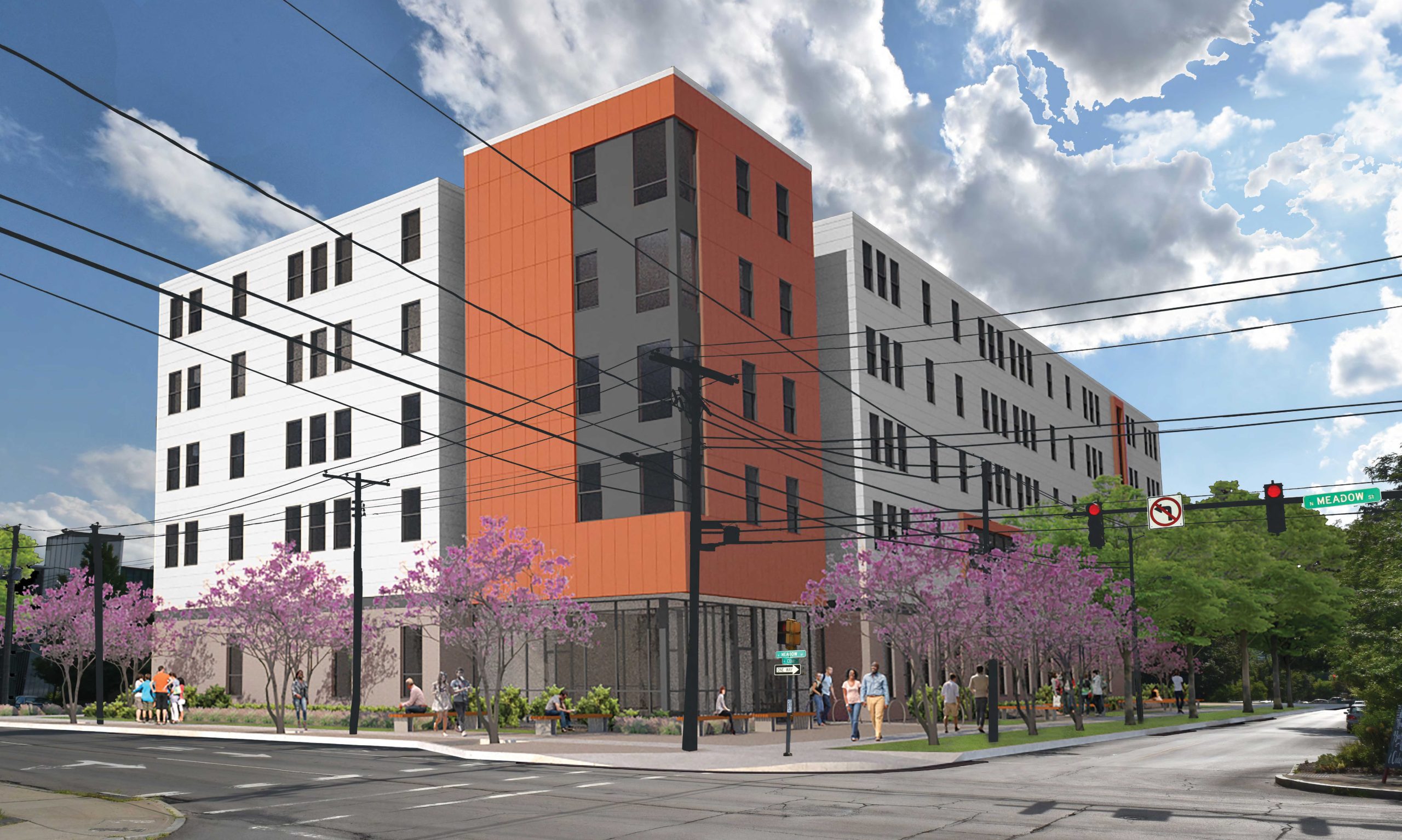
While some projects under construction in Watkins Glen have faced supply and workforce shortages, as INHS Director of Real Estate Development Joe Bowes explained, INHS’s Ithaca project currently under construction —West End Heights — hasn’t faced any considerable challenges. Challenges in Tompkins County projects are most seen in 320 W. Buffalo, which is currently in the planning stages.
Bowes said that INHS is getting ready to apply for funding for 320 W. Buffalo in August, a funding round that was already pushed back by the state due to budget issues caused by the pandemic. A sharp increase in lumber and steel pricing has also greatly increased the overall cost of the project. And further financial troubles have resulted from the Low-Income Housing Tax Credit program, where investors buy credits that help fund affordable housing projects.
“Before March, we’re looking at pricing in the upper 90s, like 93 to 98 cents on the dollar,” Bowes said. “Now, we’re down to between 81 cents and 88 cents on the dollar. And so, that drop of 10 cents means hundreds of thousands of dollars less for affordable housing on a project-by-project basis.”
While INHS’s projects are facing considerable financial challenges, Bowes explained that other projects like City Harbor have fared better because they aren’t state-funded.
“It’s extraordinarily cheap to borrow money right now,” he said. “Interest rates are down in the 2 and 3% range. So, if you’re doing market-rate projects, that’s a good thing. But if you’re trying to raise money from the state of New York or some tax credit program, because of the economy’s struggling, … our projects are facing challenges.”
Where these three categories mix is in an uncertainty about the future. As discussed in our workforce piece last edition, COVID-19 has greatly affected employment and has even shifted how some are doing business. Thus, some sources expressed concern that there might not be as high of a demand for office space as there was before the pandemic.
“We are seeing downtown less need for office space,” Tompkins County Area Development President Heather McDaniel said. “Some of the companies that are located downtown have said, ‘We’ve moved to remote work. And we might continue to do that for the foreseeable future. It’s working for us.’”
City of Ithaca Director of Planning and Development JoAnn Cornish also expressed a concern for the demand for residential projects, particularly because COVID-19 has led to increased remote learning.
“I worry that the market will soften,” Cornish said. “And it’s just so unpredictable. There really is no certainty. This is new for all of us.”
Despite the challenges and concerns, sources agreed that these projects are important for the community, so adaptation is crucial to ensuring their eventual success.
Peggy Coleman, vice president of tourism and community relations for the Ithaca/Tompkins County Convention and Visitors Bureau, said the conference center in particular helps to increase room and sales taxes.
“That supports every resident in Tompkins County because of the visitor spending,” she said. “That saves everyone on their property taxes. It also supports essential services through the sales tax that’s generated to the county, into the city to maintain our roads and our health and safety. So, honestly, these are important projects that will be integral to our recovery.”
Several sources shared Coleman’s outlook that these and other development projects will ultimately benefit the county in the long run. One is Steve Hugo, principal at HOLT Architects, which is working on projects like City Harbor and the under-construction project Library Place. Hugo said that the need for affordable housing in the county that existed well before the pandemic hasn’t gone away.
“It’s at least my belief that even the market-rate housing and affordable housing, that need is there now, and it’s going to be there in the future,” he said. “So, we need to just plow through.”
John Turner, vice president of public relations at Cayuga Medical Center, shared that sentiment. CMC proposed the mixed-use development project Carpenter Park in partnership with Park Grove Realty, a project that will include a new CMC medical office building and over 200 low-to-moderate-income apartments.
“There’s a need for healthcare services downtown,” Turner said. “There’s a need for housing downtown. Though we’re in a pandemic, the needs are still there. It does create some complexities as we move forward, obviously dealing with COVID-19, but we’re able to manage.”
Moving forward, several sources interviewed for this story expressed an optimism for the future, as Ithaca and Tompkins County’s reputation as a good place to invest and develop hasn’t changed during the pandemic.
“Tompkins County has been seen as a really good development bet,” Tompkins County Legislator Rich John said. “We’ve had a strong economy here, and the fundamentals that drove that really haven’t changed.”
City of Ithaca Deputy Director for Economic Development Thomas Knipe shared that sentiment.
“The underlying economic development in Ithaca remains strong, certainly in comparison to other communities,” he said. “We have a strong base industry here, education that’s here to stay, and we have some other growth industries as well. And so, I think folks are looking at the long term and seeing that it is still a good place to invest.”
Related Articles
Cayuga Medical Center nurses to rally, alleging anti-union tactics by hospital management
CMC nurses plan a rally, alleging unsafe staffing and illegal anti-union tactics as the hospital highlights recent patient-safety gains.
Beginnings Credit Union holds ribbon cutting
Beginnings Credit Union celebrates a branch rebrand in Ithaca, providing improved services and engaging with the local community.
Cailyn McMahon: From Brooklyn to Groton for the love of sweaters
Designer Cailyn McMahon moves from Brooklyn to Groton to raise sheep and pursue her dream of making American-made wool sweaters.