
Dryden Planning Board responds to Comprehensive Plan survey results
Earlier this year, the town of Dryden asked residents to share their thoughts on what the future of the area should look like as part of the planning process for the town’s new comprehensive plan, Dryden 2045. The results of the survey, released earlier this month, highlight residents’ desires for growth, sustainability and other issues.
At its Oct. 14 meeting, the Planning Board and Steering Committee reviewed the over 700 responses and discussed how residents’ priorities factor into the ideas the town leadership already had for Dryden 2045.
Dryden 2045 incorporates a 25-year planning horizon and updates the previous 2005 comprehensive plan, according to the Dryden 2045 website (dryden2045.org). The town of Dryden mailed out postcards and sent out e-newsletters toward the end of July encouraging participation in an online survey, which was open through Aug. 31. Paper copies of the survey were also made available.
While the 747 responses only represent about 5% of the town’s overall population, which is a lower response rate than past surveys, Senior Project Manager Sam Gordon said that that level of participation is impressive given the current circumstances.
“I would imagine that if we held a community meeting, if we got 100 people, that would be a lot,” he said during the meeting. “But in the process that we’ve gone through, … in the survey alone, we have well over 700 survey responses. So, to me, that does demonstrate our robust involvement at this stage, even though we’ve all been meeting virtually.”
The Board had previously conducted meetings with a series of focus groups — with a similar purpose of guiding the specifics of the plan — and Gordon said that the survey results are consistent with what the focus groups voiced.
The survey asked about many issues, including development, transportation, public services, the preservation of natural areas, the area’s small-town character and the livability of existing neighborhoods.
On the issue of development, including commercial and residential, the majority of respondents agreed that Dryden should concentrate new development around already-developed areas. Kyle Hatch, planner with Environmental Design and Research (EDR), which is working with the town on Dryden 2045, said in the meeting that residents’ views on development aren’t surprising.
“That corresponds with even the vision statement from 2005, which was focused on concentrating development around the existing villages and nodes,” he said. “So I think, to me, this kind of reinforces that people still feel that that’s a valid approach to guiding future growth and development in the town.”
In the open-answer section for this area, many residents emphasized that the growth of development shouldn’t compromise the area’s small-town feel, with some referencing a housing project proposed by Trinitas in Varna as an example of unwelcome development.
“It is critically important that the population growth in the hamlet [of Varna] be served by ample, truly affordable housing in a mix of configurations and styles, old and new, that foster community and maintain the rural small-town feel of the hamlet,” said one respondent. “It must not allow developers … to overwhelm the hamlet with projects for Cornell students and/or other high-end residents.”
As far as what kind of development residents would like to see, residents favored pedestrian-oriented main streets, public spaces, and outdoor seating for restaurants, bars and cafes.
“What this says to me when I’m looking at this is, if you’re looking at developing a pedestrian-oriented Main Street, … public spaces with plazas or parks are crucial components of that type of environment based on the desirability of these development characteristics,” Hatch said.
Related to density and population growth, there was a very strong relationship between people who wanted higher population density in the villages and hamlets and the desire for mixed-use buildings and smaller lot sizes, Hatch said.
“This paints a little bit of a picture [that] what normal development might look like, or concentrated development might look like in some of these areas, is a combination of these desirable features,” he said. “And so, hopefully, that gives us a little bit of guidance towards the questions of, what does that growth look like, specifically in these concentrated hubs or nodes within the town?”
Gordon added that infrastructure will also be crucial for population growth.
“One of the biggest challenges for the town is in order to accommodate growth of the kind that we’re talking about where you’re talking about accommodating somewhat higher densities … that will require infrastructure to support that level of development,” he said. “So, that’s going to limit where development can potentially take place.”
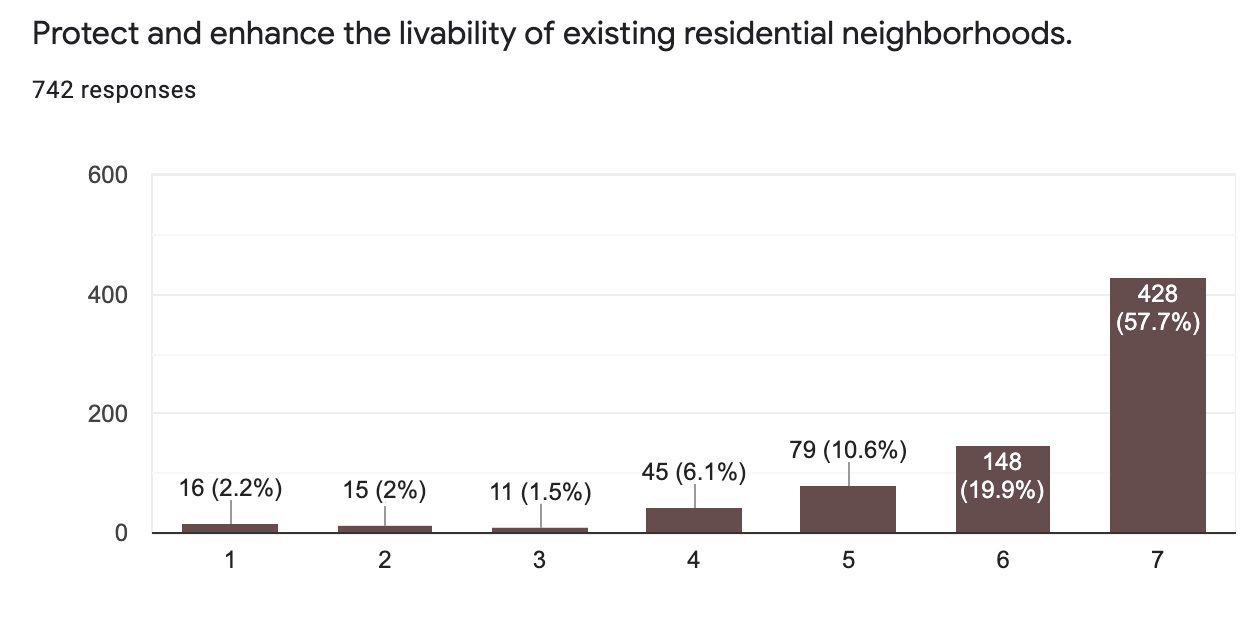
In another area, Hatch showed that there was a significant positive correlation between residents’ responses to the vision statement of protecting and enhancing the livability of existing neighborhoods and two other vision statements — protecting open spaces and ensuring a safe and diversified transportation system.
“These are significant because livability as a construct; it’s not clearly defined,” he said. “And so, this correlation might give us a little bit of insight into the things that are important for livability to the residents of the town. And … that would be the safe transportation system and the natural resources.”
Another significant relationship was between the vision statements around a safe and diversified transportation system and providing adequate and efficient public facilities and services, something also highlighted in the open-answer portion of the survey.
Related to agriculture, the survey showed that while residents want to ensure the long-term viability of agriculture within the town, they don’t see agriculture and farmland as part of the conservation of open space and conservation.
“So, as we look for ways to protect agriculture and ensure the long-term viability of farming in Dryden, those strategies … would not be as strong if they’re based in conservation efforts, as opposed to strategies specifically for agriculture,” Hatch said. “The residents might not necessarily see farmland as part of the wider conservation efforts in the town.”
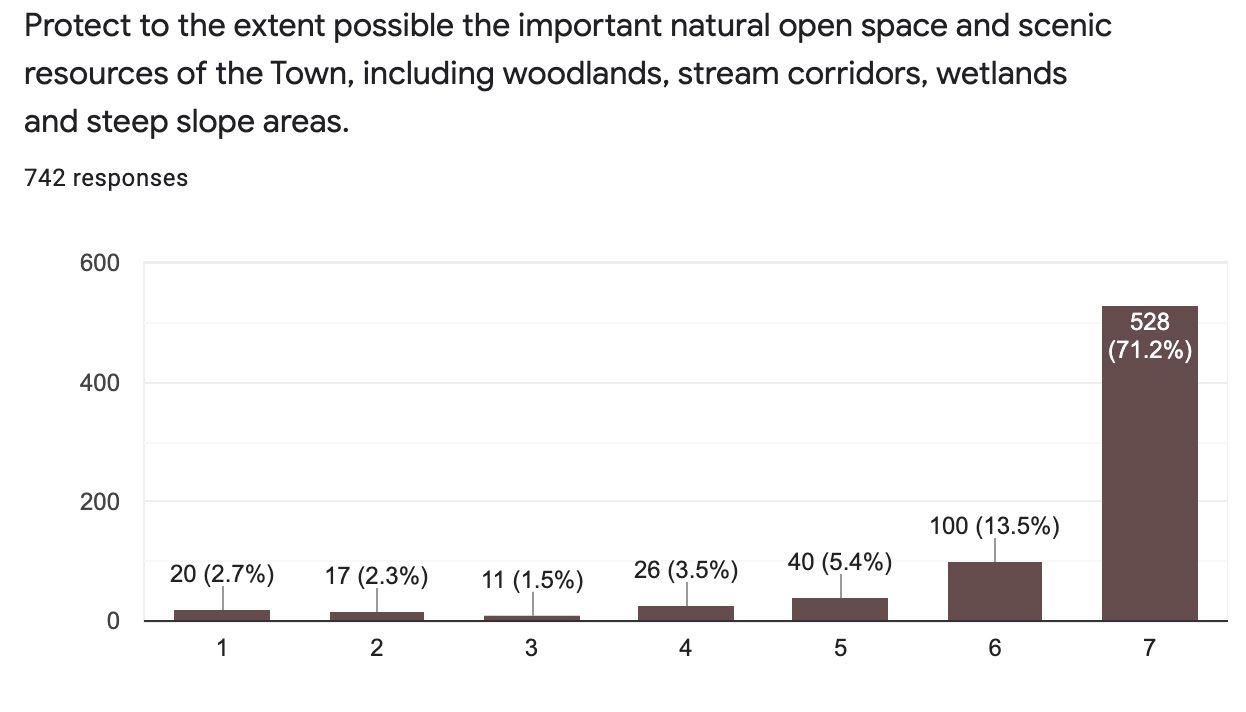
For land conservation, residents were most interested in having the town partner with nonprofit groups, such as the Finger Lakes Land Trust, to purchase and protect open space, as well as encourage landowners themselves to put conservation easements on their property.
“This is kind of an all-options-on-the-table approach,” Hatch said. “There’s a lot of room for creativity and how we come up with recommendations to conserve more land and protect more land.”
Gordon said that the next step from here is to identify a direction moving forward in each topic area. Jane Rice, principal and director of planning services at EDR, added that there will be more community outreach in the near future.
“We’ve done our initial steps in outreach to gather data and to understand, and now, we’re trying to make sense out of what we gathered,” she said. “And once we do that and feel comfortable with it, our next effort will be to share that back, create a feedback loop, share that back to your community and get confirmation … from your community if we’re on the right track.”
Board members emphasized that the next public hearing on Dryden 2045 needs to be accessible to any Dryden resident who wants to participate, which will likely mean having the meeting via a hybrid model of both virtual and in-person opportunities. No specifics were solidified during the Oct. 14 meeting.
The Steering Committee plans to further discuss survey results in its next meeting, the date of which hasn’t yet been announced.
Related Articles
FLLT purchases over 100 acres in the town of Dryden
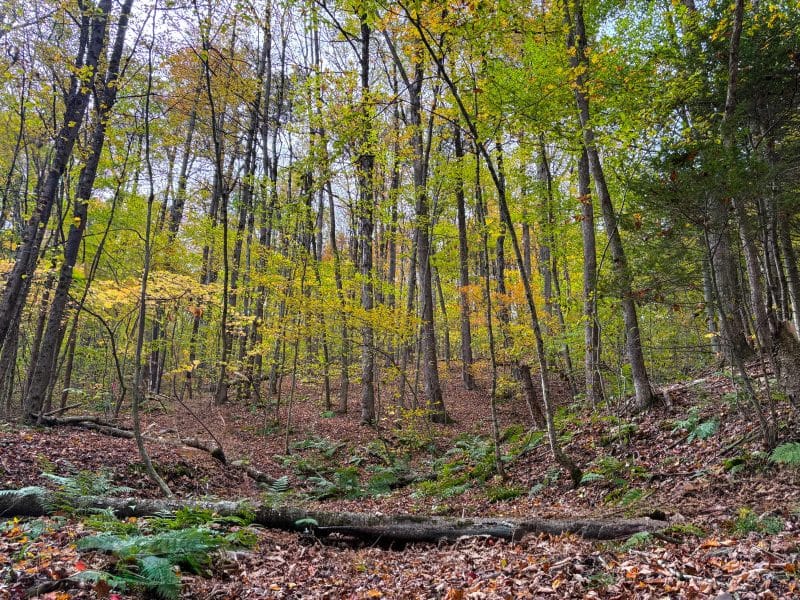
The FLLT Dryden land purchase protects 108 acres near Yellow Barn State Forest, expanding conservation and public access.

TC3 reaches transfer agreement with Hobart and William Smith Colleges
TC3 transfer agreement guarantees acceptance and scholarships for graduates entering bachelor’s degree programs at Hobart and William Smith Colleges.
Dryden Fiber looks back on another year of service
Dryden Fiber reflects on a year of growth as the municipal internet provider expands service across Dryden and Caroline.