
Dryden Rail Trail receives AARP grant
By Jamie Swinnerton
Tompkins Weekly
With the award of $8,000 in grant money from the AARP, the Dryden Rail Trail will soon be adding three new kiosks and seven new benches along the corridor of the trail between Dryden and Freeville. Really, really soon. The grant money comes with the stipulation that the projects done using the grant money must be completed by Nov. 5. Before the worst of winter sets in local hikers, and maybe some hikers traveling in from out of town will be able to enjoy the trail in comfort on brand new benches, or take a moment to stop at the train-themed kiosks and learn about some of Dryden’s train history.
The grant was spotted by Dan Lamb, a member of the Dryden Town Board. It was written by Chair of the Rail Trail taskforce, Bob Beck, and Alice Green (also a member of the Town Board) with help from the Office of the Aging. Dryden was one of 129 winners of the AARP Community Challenge grant, which distributed a total of $1.3 million to “quick action” projects across the country that make immediate community improvements to support residents of all ages staying active with a range of transportation and mobility options.
“What’s so neat about this particular grant is that it really helps make more visible what we have been working on for a couple of years now, in terms of the trail,” Green said. “Because the kiosks and the benches will be really visible symbols that we’re creating this trail that’s going to connect all the way across from the East part of our town to the West part of our town, eventually.”
The trail starts on Main Street in Dryden where the Jim Shug trail ends in front of the Dryden Agway. When completed it will stretch into the Village of Freeville, Etna, Varna, and Ithaca where it will connect with the East Hill Recreation Way on Game Farm Road. The Shug Trail starts at the Eastern boundary of the town. When completed together, the Rail Trail and Shug Trail will travel across the entire town.
After the railroad was decommissioned in the 1970s, Green said the town missed the opportunity to keep it open for recreation purposes, instead selling parts of it to private landowners. Now, convincing those private landowners to get easements for the trail is what the task force and town are working on.
“This has been a vision for our town for decades, to do this trail,” Green said. “It’s included in) our comprehensive plan for our town, and it’s also included in priority trail development plan for the Tompkins County Transportation Planning Council. So, the idea of having an off-road way to connect all the little hamlets and villages across our town has been a vision for many years.”
Green said that currently, the task force has about 80 percent of the easements needed for the 10.5 miles of the trail. The roughly 3-mile section of the trail between Dryden and Freeville is part of that 80 percent. Now, the task force is working on easements where the railroad bed crosses Route 13 toward the Cornell campus.
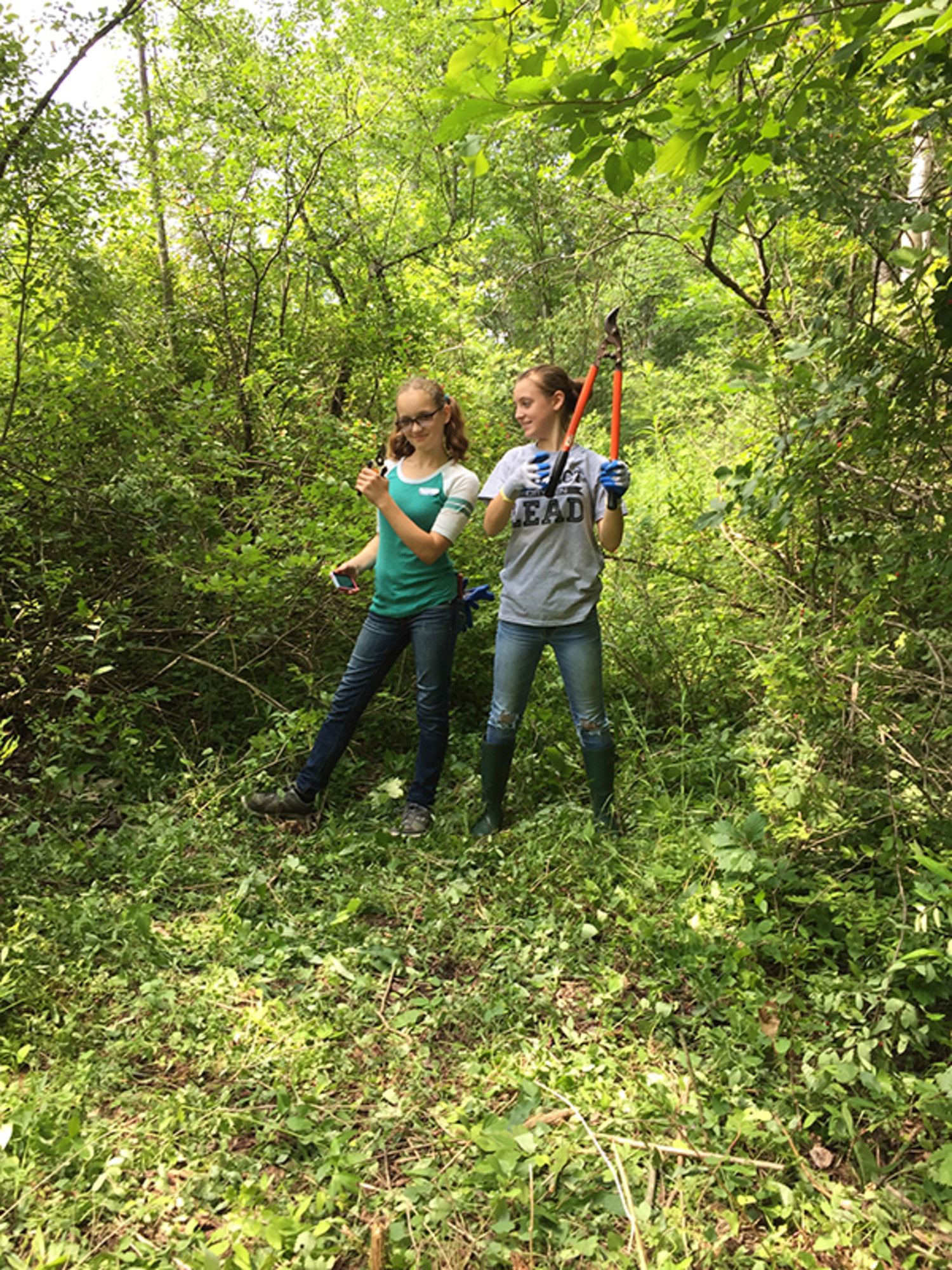
The kiosks and the benches will be constructed by volunteers, just like most of the trail has been at this point. The benches are expected to be put in next month and will be made up of a metal frame and a recycled plastic compound. A local Dryden company, Roscoe Brothers Millwork, has offered to donate their services to put lettering on the benches. Dryden resident Bruno Schickel designed the kiosks to include elements of the railroad stations of Dryden’s past and will lead the community volunteers in their assembly and installation in September.
“We hope to have multi-generational builds for the elements that this grant will provide for us,” Green said.
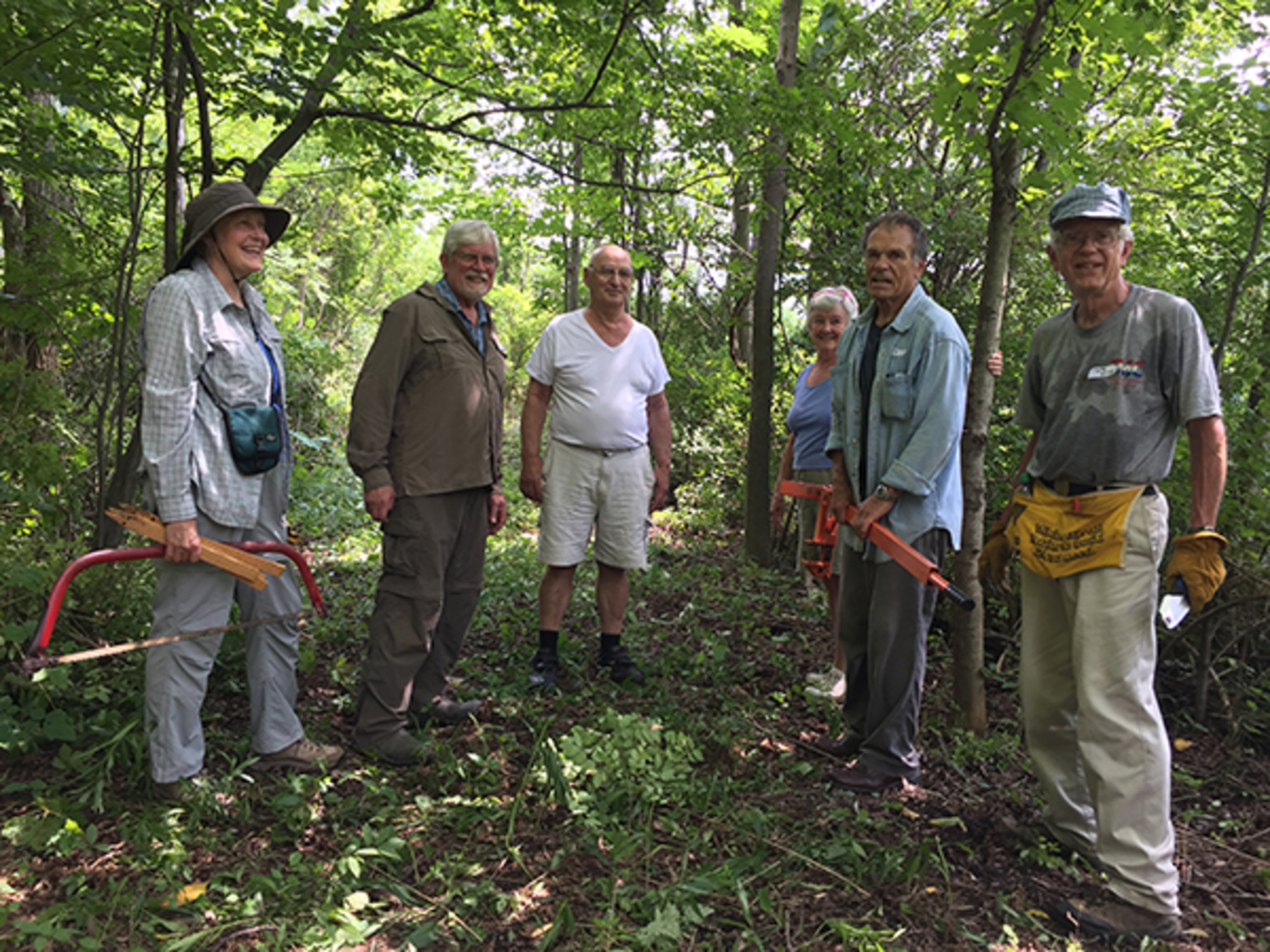
Although the grant comes from the AARP, the nation’s largest nonprofit organization dedicated to helping people age 50 and older, the Dryden Rail Trail is a community amenity meant for everyone. Completed trail projects have been done by volunteers spanning generations, from teenagers to grandparents. Many of the volunteers are mobilized by the Friends of the Rail Trail, a group dedicated to the construction of the 10.5 miles that will eventually make up the entire trail.
The design for the benches has already been done using community input from a meeting held last year. They will be built off-site and transferred to the trail to be sunk into concrete paths on the trail.
“We feel really lucky because we’re ready,” Green said of the turnaround time on the project.
This is not the first, or the largest, grant that the trail has received. Last year the project was granted $182,000 from the New York State Parks and Recreation Department for sections that already have easements but need to be cleaned up and maintained. Ultimately, Green said the goal is to put down a stone dust surface on the trail to make it ADA (Americans with Disabilities Act) accessible.
“When we’re done it will be finished for bicyclists, equestrians, hikers, bird watchers, people of all ages,” Green said.
Related Articles
Cayuga Medical Center nurses to rally, alleging anti-union tactics by hospital management
CMC nurses plan a rally, alleging unsafe staffing and illegal anti-union tactics as the hospital highlights recent patient-safety gains.
AmeriCU proudly connects students with annual scholarship opportunity
AmeriCU scholarship program awards $1,000 to students pursuing college or vocational education. Applications are open through March 15.
Street Beat: What’s one of the best holiday gifts you ever received?
We asked five random people. Here’s what they had to say.