East Hill Notes: Cornell senior on building opportunities within communities
By Greta Sloan
When I first arrived at Cornell University four years ago, I remember peering up at Donlon, my freshman year dorm, out the window of my mother’s rental car. I had just come from a summer working with kids and training to become a victim’s advocate at a shelter for victims of family violence. I had a deep passion for working with children and for working with victims of trauma but was unsure of where this passion would take me.
As I looked up at Donlon from that window, I never could have imagined how transformative and impactful these four years would be.
Finding my place at Cornell took time. I owe the discovery of what I have loved most here to the guidance of my friends who were older students. When I was a freshman, one of my friends who was a senior pushed me to get involved in her research lab, which focused on the psychological challenges of navigating the transition from childhood to the teenage years.
In the lab, both my thinking and abilities were often challenged. I learned to code, had the opportunity to administer a writing intervention to 10 to 13-year-old girls, and became passionate about psychological intervention research. The lab also introduced me to positive psychology.
Positive psychology is a bit like preventative medicine. For example, health practitioners can treat people when they come into a clinic sick. Or, they can work on making the community healthier by encouraging people to exercise, building green spaces and parks, or increasing access to healthy foods.
In the same way, I recognized that if I wanted to work on innovative trauma therapy, I did not just have to work in a clinic, treating only people who came in for care. Instead, I had the option to instead work on bringing positive opportunities and resources to communities, making communities and the people in them more resilient to any challenges that they might face.
This thinking led to the development of an idea. Because I recognized that people often perceive that they lack power in the wake of experiencing trauma, I was curious whether mentoring or business organizations had the potential to be therapeutic if people began to recognize their ability to lead or saw positive feedback from their work as a mentor or while running a small business.
I decided to study abroad in Uganda, India, and Brazil, on a program focused on social entrepreneurship to examine this idea, as well as to explore how organizations aimed at bringing about social change have the potential to make people psychologically better off.
My abroad experience, complemented by my work the following summer interning at a children’s behavioral health agency, really showed me that psychological intervention looks very different when it interacts with poverty. When people struggle with the threat of eviction or homelessness, don’t have enough food to eat, or are faced with immense structural injustice, it feels wrong to focus energy on looking at whether their perception of power can be artificially manipulated.
I came into my senior year realizing that I want to work on the intersection of children, trauma, and poverty, and I want to do this by building within communities.
Driven by this passion, I became president of Youth Outreach Undergraduates Reshaping Success (YOURS) this year, a mentoring organization I had been involved with since my freshman year. I have spent the past year deeply immersed in the organization and have tried to focus a lot of my energy exploring how the organization can evolve to better meet the needs of the youth we work with.
Next year, I am excited to dive into my work as an elementary school teacher in Oakland, CA. I plan to fully immerse myself in the work of building resiliency within communities and working on making the environments of children as strong and resource-rich as possible.
Cornell has given me a space to build upon my passions, taught me to be a self-advocate, inspired me to take initiative, and has connected me with the most amazing people. I am excited to take what I have learned here and carry it with me to take on some of the big social challenges I want to dedicate my career to fighting.
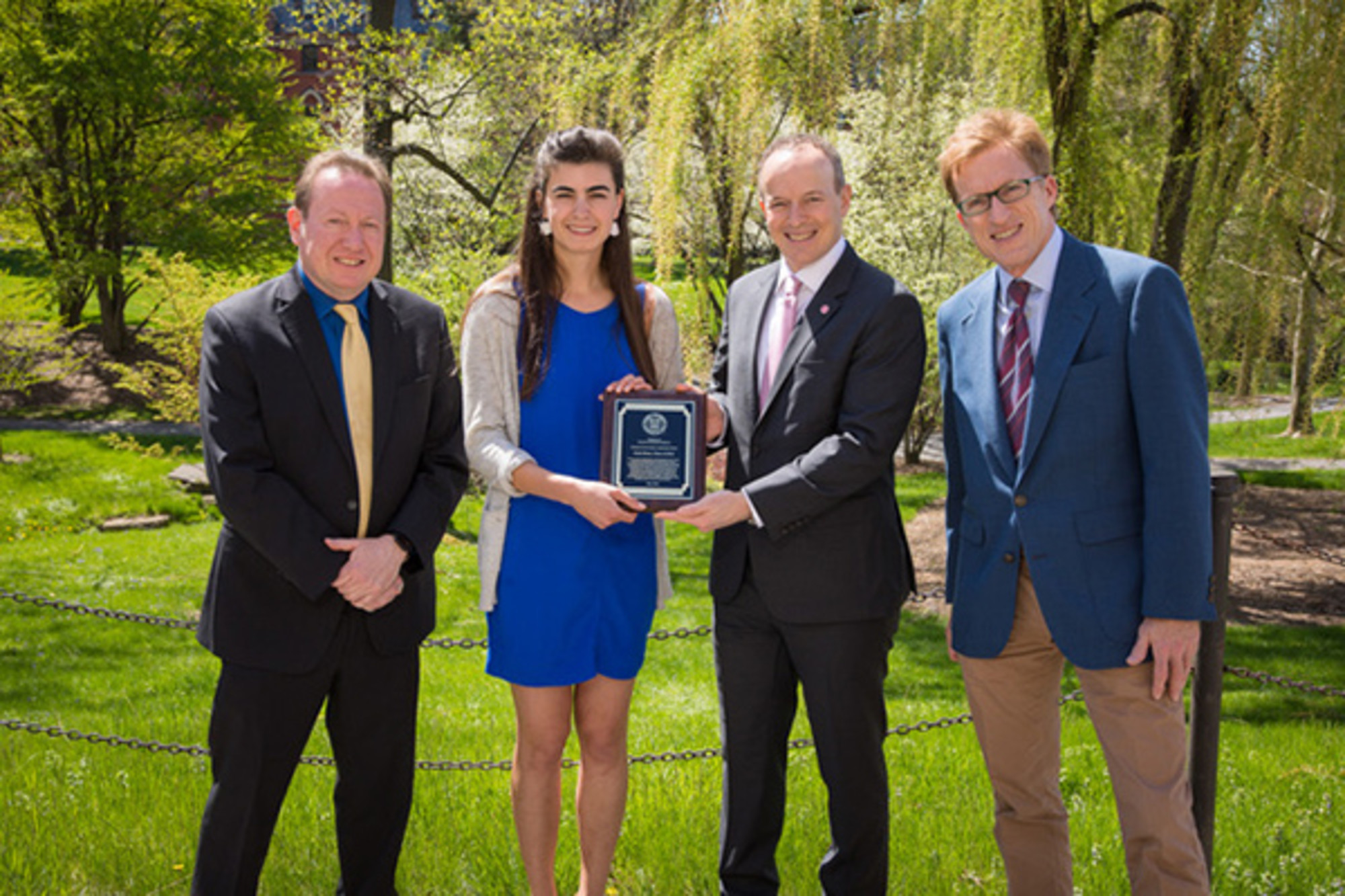
Cornell Senior Greta Sloan – College of Human Ecology, Human Development Major – will graduate from Cornell University May 27. East Hill Notes are published the second and fourth Monday of each month in Tompkins Weekly.
Related Articles

Affordable housing hiding in plain sight
Tompkins County Housing tackles affordability with MHCs. Explore solutions for 298 vacant pads in 2025!