East Hill Notes: Town-Gown Congratulations in Order
By Gary Stewart
The end of any academic year at Cornell features town-gown congratulations on a variety of platforms. Some snapshot examples:
— Among winners of the Cornell Public Service Center’s Robinson Appel Humanitarian Awards this year were rising seniors Sarah Aiken and Michele Garceau, who collaborated with TST BOCES’ Smith School to assist youth with life and career skills. Their program will be expanded in the coming year with an education component for students on how to prepare healthy, cost-effective meals.
An important part of their work this past year was a hands-on, confidence-building program at Cornell Outdoor Education’s Lindseth Climbing Center, captured in the inspirational video at tinyurl.com/yb65b5xp. In short, notes TST BOCES, “It helped build the self-esteem of students with developmental disabilities, while they gained physical strength, worked past their fears and reached personal goals.”
— The solid off-campus work of Cornell fraternities and sororities can sometimes get lost in the shuffle. The Sigma Phi Mu Chapter recently won the two highest annual awards from the Cornell Interfraternity Council. This included recognition for community service through its College Mentors for Kids program at Caroline Elementary School. (More information is available at tinyurl.com/yaf9hd6p.) This initiative focuses on one-on-one relationships and campus-community connections.
“The influence we have within the Cornell and Ithaca communities is unquestionable and will only grow in the future as we increase our campus presence and our capacity to mentor children,” said outgoing Cornell president of College Mentors for Kids and rising senior David Golding.
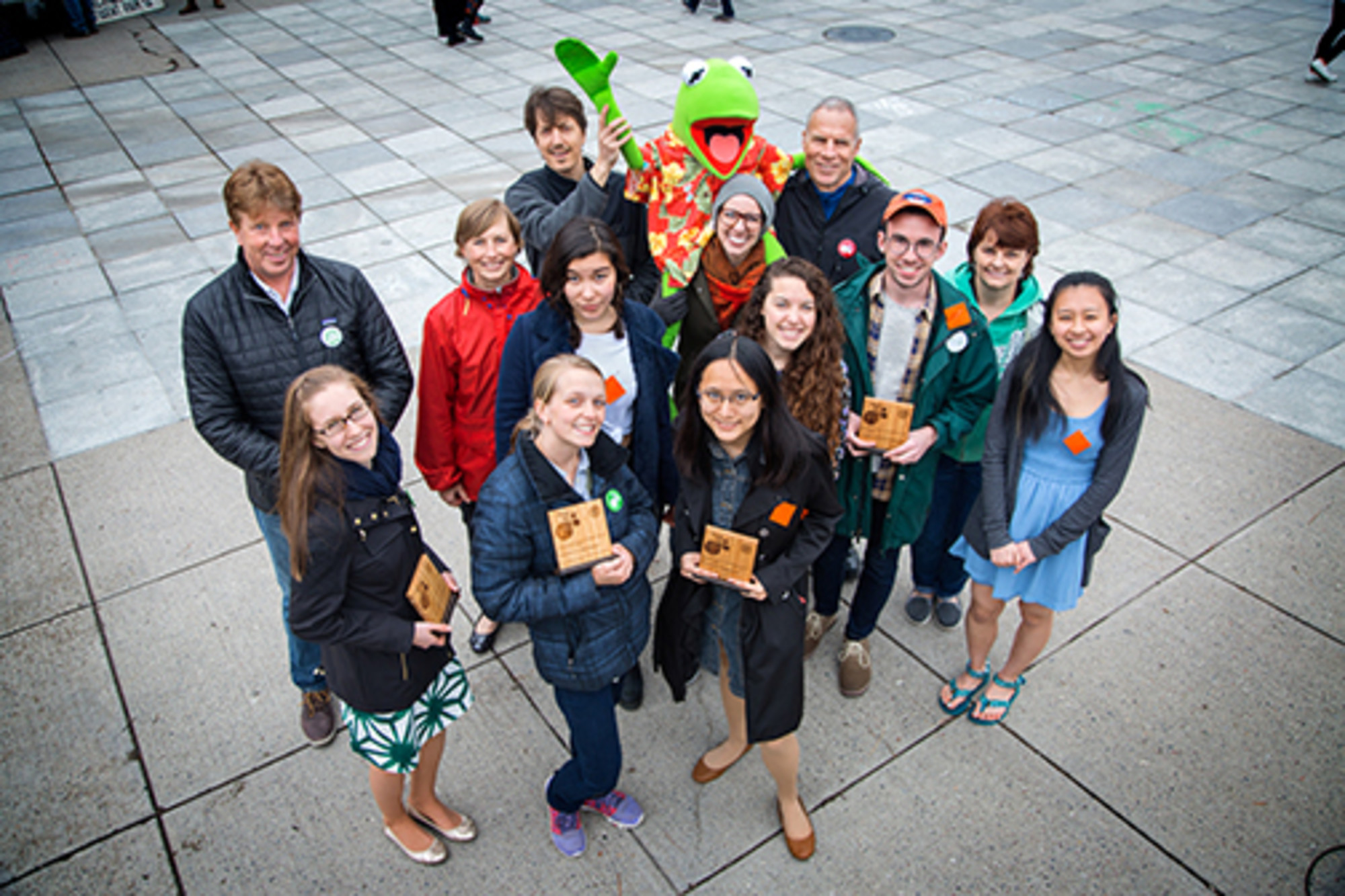
— The Cornell University Partners in Sustainability Award recognizes campus and community leaders who advance sustainability values and initiatives. Two of this year’s CUPSA winners:
— The Cornell Environmental Collaborative and its Environmental Justice Committee were founded in response to a call from leaders across campus for a stronger student alliance towards campus carbon neutrality. ECO serves as an umbrella organization for the 40-plus sustainability-focused student clubs. The committee collaborates with outside partners to organize and host events, and has engaged with the Talking Circle discussion series in partnership with the Tompkins County Climate Protection Initiative and the Multicultural Resource Center about race and racism within the context of the climate movement, and has helped to host conversations around other intersectional topics such as ecofeminism.
— Get Your GreenBack Tompkins works collaboratively to help people and organizations take key steps in the areas of food, transportation, waste and building energy that simultaneously reduce our community’s carbon emissions, save money and create a socially just local economy. GYGB has worked tirelessly to support and accelerate the adoption of sustainable behaviors by Cornell faculty, staff, and students as well as residents from the broader Tompkins County community. GYGB collaborated with Cornell’s Campus Sustainability Office to integrate practical sustainability tips into the Cornell Green Office Certification program. GYGB also assists in empowering, equipping and engaging Cornellians “to create and support a strong, community-oriented local economy that works for all.”
— Earlier this spring, dozens of community and campus representatives gathered to honor the civic engagement of Cornell students, including presentation of Cornell’s Student and Community Excellence in Community Engagement Awards.
The event also featured a panel discussion with student representatives from the Cornell Sober Housing Initiative and the ILR School’s High Roads Fellowship. George Ferrari, chief executive officer of the Community Foundation of Tompkins County, received the Community Engagement Trailblazer Award and gave the keynote address.
In his remarks, Ferrari said that community engagement groups “should be held accountable for the process as well as the result.”
Student and Community Excellence in Community Engagement Awards included a prize of $1,500 to be used for further development of their community projects.
Monroe Weber-Shirk, senior lecturer in civil and environmental engineering, was honored with the George D. Levy Faculty Award, which recognizes a Cornell faculty member whose contributions to a community project have resulted in tangible change. Weber-Shirk is the program director for AguaClara.
The event was sponsored by the Office of Engagement Initiatives, the Office of Academic Diversity Initiatives, the Public Service Center and the Community Learning and Service Partnership.
– – –
East Hill Notes are published the second and fourth Mondays in Tompkins Weekly. Gary Stewart is associate vice president of Cornell Community Relations.
Related Articles

Affordable housing hiding in plain sight
Tompkins County Housing tackles affordability with MHCs. Explore solutions for 298 vacant pads in 2025!