
Economic Summit reveals strengths and challenges

On Friday, March 3, The Tompkins County Chamber held the 2023 Tompkins County Economic Summit at Coltivare. The annual event featured speakers from the Tompkins County Chamber and Cayuga Health. Following the main presentation, a panel consisting of State Senator Lea Webb and Assemblymember Anna Kelles was moderated by Tompkins County Legislator Mike Sigler.
The summit presentation began with Jennifer Tavares, president of Tompkins County Chamber of Commerce, presenting the findings of a recent chamber member survey. The survey addressed challenges in Tompkins County, including the workforce, climate issues and the Climate Leadership and Community Protection Act (CLCPA), housing and retail.
Workforce
Eighty percent of chamber members surveyed feel that the county workforce is low and that few local employees have increased wages and bonus opportunities.
Survey respondents additionally believe that the local workforce is stable in the short term, but long-term indicators are not optimistic.
However, those surveyed also feel that Tompkins County is more likely to employ workers with social and physical barriers.
Kelles said that there are things in place to help revitalize and engage a larger workforce, but the funding for those programs is lacking.
“There is a bill that I think would help and support some of the workforce development by supporting funding for childcare services,” Kelles said. “But this is just a drop in the bucket. There is so much more that needs to happen, and there’s just not enough funding.”
Climate and CLCPA
When it comes to climate action, Tompkins County has been at the forefront, setting examples for the rest of the state and country through initiatives such as the CLCPA, building electrification and high-efficiency heat-pump initiatives for low- to moderate-income (LMI) households.
As part of the building electrification program within the Green New Deal, Ithaca has committed to allowing only those building projects that use renewable energy as the main power source. This is one of many projects that the deal has undertaken.
While survey results showed that Tompkins County is more open to such initiatives than surrounding areas, survey respondents expressed that they felt as though not enough was being done on an individual level to address the goals of the CLCPA and to effectively meet the goals that Ithaca has put in place.
Housing
Tavares also outlined general concerns for the county and its residents, which were elaborated on throughout the presentation.
The county, along with most of the United States, is facing difficult economic conditions such as inflation, rising housing and energy prices and supply-chain issues for businesses.
Housing has been a hot topic in Ithaca and Tompkins County for a long time. Currently, 58.8% of renters in Tompkins County are cost burdened, with 38% severely burdened. These statistics are high compared to the 24% of homeowners that are cost burdened.
In addition, the median monthly rent for a one-bedroom apartment is $1,234, while the surrounding counties have a median rate of $700-800 a month. The state average is $1,315.
During the panel, Assemblymember Anna Kelles noted that housing and rental prices in Tompkins County rival prices close to and within New York City.
“Fair market rent [FMR] prices in Ithaca are very high compared to the national average. This FMR area is more expensive than 95% of other FMR areas,” according torentdata.org. “Compared to the rest of New York, the Ithaca FMR area is more expensive than 85% of the state.”
The interactive maps provided by rentdata show rental information from every county in the nation. Users can search by state for their area of interest.
According to the chamber, the median rent has increased 50% over the past 10 years.
For those looking to buy a house, the market is difficult. The median sales price for homes in Tompkins County is $325,000, which is $100,000 above previous years. In the surrounding counties, homes sell for a median price around $225,000.
Additionally, the housing market’s inventory could last four or more months, which means houses were consistently for sale, with time for homeowners to look around, compare prices, and make the best decision for them.
Now, the county is seeing an inventory that may only last a month at a time, and houses are quickly being bought far above their original asking prices.
The number of individuals who own a home has risen by 11.3%. However, there are fewer people living in these homes, with the average household dropping from 2.7 people to 2.1 people. The state average is 2.55 persons per household.
Moving forward, one of the goals of the chamber is to have new housing projects that will result in homes and rentals available at all price points.
Tourism, retail & dining
As an area known for its tourism industry and vast array of activities, it is no surprise that Tompkins County made around $225 million from the tourism industry in 2021. This was an 81% increase from 2020 numbers.
It is important to note that while this is an increase from 2020 statistics, 2020 saw the start of the COVID-19 pandemic and many areas, globally, have not fully recovered. In fact, most economic experts do not expect a full global recovery until 2024.
However, Tompkins County has been able to make an impressive recovery compared to the surrounding areas, according to the chamber survey.
Tompkins County saw visitors from all 50 states and 79 different countries, with over 70,000 interactions with visitors. This data came directly from the county’s Visitor Center engagements with visitors.
As an area with plenty of restaurants in Ithaca alone, $70.2 million of the $225 million went to food, beverages and general dining. Around $72 million went to lodging.
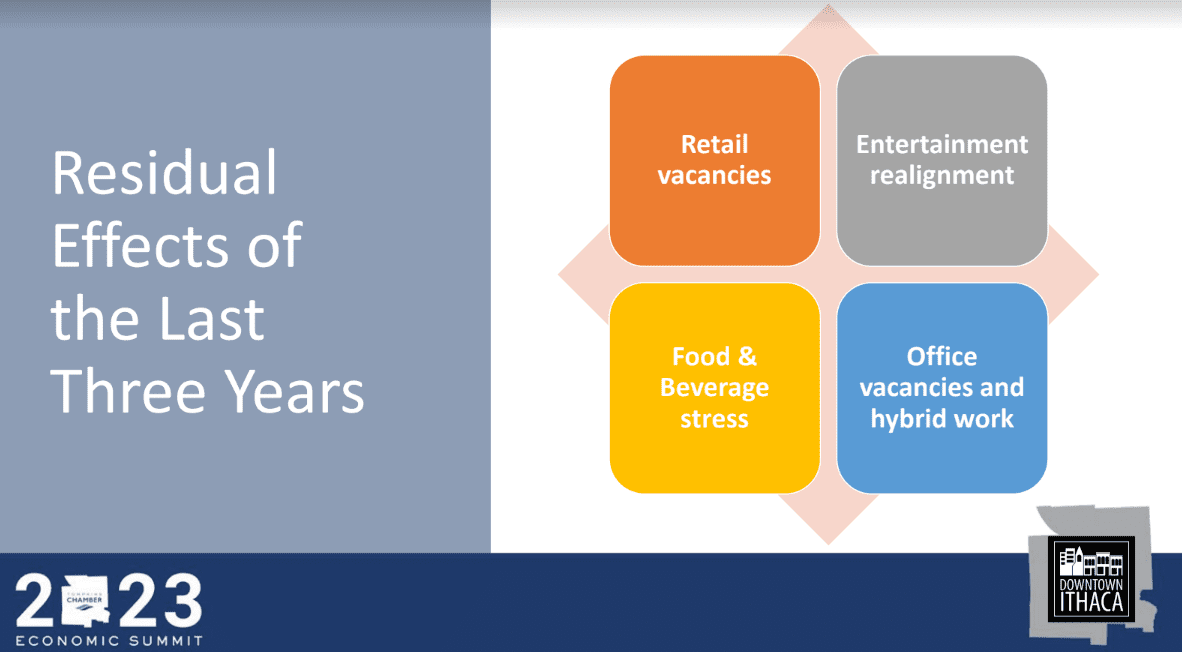
Despite these increased income levels, the food and beverage industry seems to be struggling. Menu prices continue to rise to new heights, and delivery prices also continue to rise. Delivery rates have been rising at the restaurants themselves and through third-party delivery apps.
The restaurant industry’s rising prices can be linked to many things. The most common reasons are supply-chain shortages and delivery disruptions that push owners to raise their menu prices. Restaurant owners are seeing minimal supplies with a high demand, which drives up the prices restaurants must pay for ingredients. This results in more expensive meals.
Another reason locals and tourists are seeing a rise in prices is the extensive use of third-party delivery apps such as GrubHub and DoorDash. Apps like these charge fees to the restaurants for every delivery, meaning that the restaurants see only a portion of the sale. It is usually much less than if a pickup order were placed on the restaurant’s website or if people chose to dine in.
This is also an industry that is experiencing staff shortages, making full service and consistent hours difficult for many. One walk through the Commons on a recent Monday evening showed many darkened signs and locked doors.
In addition to a challenged food industry, the retail market has hit bumps in the road, and some sectors are struggling to meet evolving consumer trends and online competition
Downtown Ithaca Alliance (DIA) Executive Director Gary Ferguson expressed concern about local retailers and the need to shift toward a “multi-channel market.”
Multi-channel means that while a brick-and-mortar store is important, an establishment’s online retail services need to be just as strong. Many small businesses also have partnerships with Amazon and Instagram, where users can order from a smaller retailer on a third-party platform with ease. This model also offers businesses easier marketing options and a wider potential audience.
For small local businesses, it can be difficult to navigate social platforms and create effective retail websites. The chamber plans to work with local businesses to address these concerns and offer services that will help them upgrade and navigate the digital market.
A goal of the chamber, in addition to helping businesses keep up with market trends, is to attract and support more diverse businesses and business owners. One way the chamber is already doing this is through the LGBTQ+ roundtable, open to all LGBTQ+ chamber members.
Summary
This year’s economic summit addressed issues that have affected people and hometowns across the county. The meeting ended on a hopeful note that emphasized how residents, the chamber and local politicians are working together to address these issues.
While Senator Webb and Assemblymember Kelles are supporting bills that address these issues at a local level, the chamber is in the planning process. Locals can expect to hear more about specific plans and meetings throughout the year as the chamber works to make our local economy more stable and dependable in the long term.
Related Articles
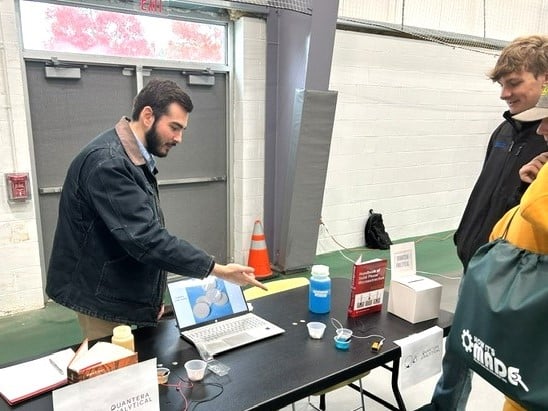
Quantera’s new tech promises faster, safer chemical testing
Quantera Analytical is developing faster, safer chemical testing technology in Ithaca with roots at Cornell University.
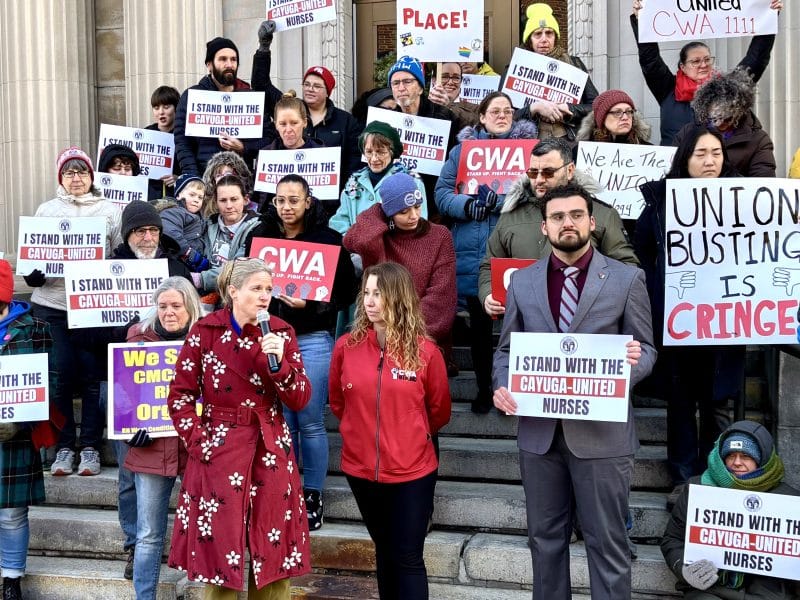
Cayuga Medical Center nurses’ vote for unionization approaches
The Cayuga Medical Center nurses union vote approaches as nurses cite workplace concerns, leadership changes, and national labor issues.
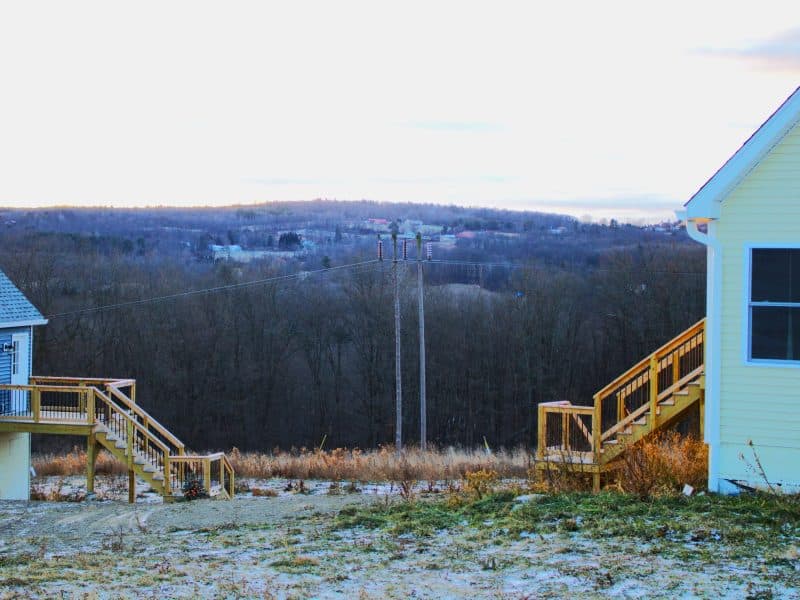
‘Gigantic monstrosity’: Newfield residents speak out against NYSEG infrastructure project
Newfield residents raise concerns over NYSEG’s infrastructure project, citing property impacts, aesthetics, safety, and communication issues.