
Federal funds to boost local infrastructure, development
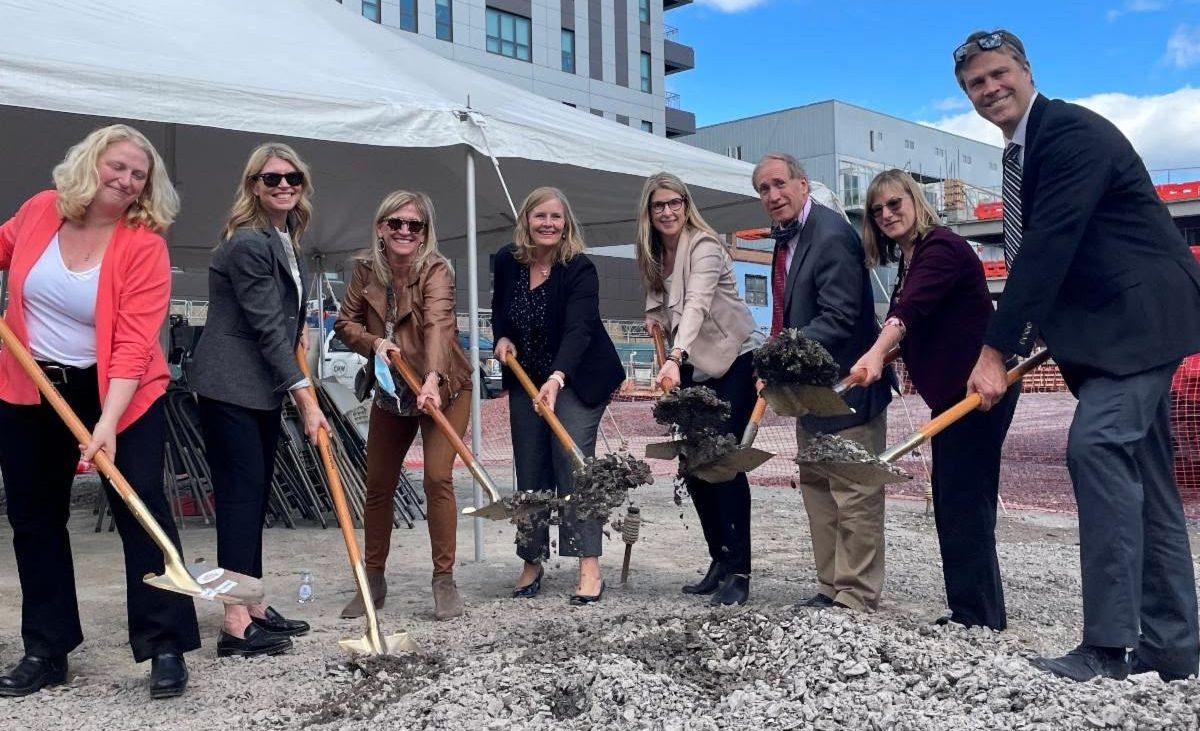
Late last month, U.S. Senate Majority Leader Charles Schumer and U.S. Sen. Kirsten Gillibrand announced that the city of Ithaca and other communities in Tompkins County will receive over $4 million in funding from the recently passed omnibus funding package, according to a recent press release.
The funding will go a long way to boost infrastructure and development projects throughout the county, particularly the downtown Ithaca conference center, and will help counteract some of the challenges many developers are still facing due to the pandemic and other factors.
“This investment in infrastructure truly benefits, on a long-term basis, the residents of our community, and we’ve been very fortunate to have strong advocacy from senators Gillibrand and Schumer,” said Laura Lewis, acting mayor for the city of Ithaca. “These are projects that the city could not, in and of itself, be able to move forward with because we have a limited budget, as I think our city budget is at $4 million. We are very cognizant of what costs are transferred to taxpayers, so it’s wonderful to have these infrastructure spending bills approved for community.”
The federal funds will mostly go toward four projects in the city of Ithaca — $1.4 million to replace the South Albany Street bridge over Six Mile Creek, $800,000 to transform the former Immaculate Conception gym next to the Greater Ithaca Activities Center (GIAC), $1 million to bolster Ithaca’s energy grid (see last week’s cover story at tinyurl.com/ycglol6a) and $2 million for the aforementioned conference center.
Tim Logue, director of engineering at the City of Ithaca Department of Public Works, has been well involved in the South Albany Street bridge and GIAC gym projects and spoke about the effects the federal aid will have. As he explained, the bridge on South Albany Street is long overdue for replacing.
“We got into the early design process and did more detailed inspections and realized the bridge [was] built in 1926, it had major rehabilitation in the ’80s, and it’s in pretty bad shape,” he said. “We could put some money into it and rehabilitate it, but in the end, it doesn’t make a whole lot of sense. It’s kind of at the end of its useful life. So, it’s time for reconstruction. So, that was probably sometime last year that we realized it was really going to be in that direction. So, when the earmark request … opportunity came by, it seemed like a really good opportunity to ask for that funding gap, which is hard to make up otherwise.”
On the GIAC gym side, Logue explained that that project got started about a year ago, when the city took over ownership of the former Immaculate Conception building. Logue said that GIAC is “bursting at the seams” with its current gym, so he’s glad to see federal funding coming to the new gym.
“The gym project’s just a large, expensive project, ultimately [will] probably be a multi-million-dollar project, so to not have that all funded locally makes a huge difference,” he said. “That will fit in very nicely in the funding scheme and take it off of all just local taxpayers. I mean, we all chip in for federal funding in some way or shape form. So, it’s just a broader group of people, I guess, helping to chip in for it.”
As far as the green energy advancements, in his talks with Tompkins Weekly for last week’s cover story, Luis Aguirre-Torres, director of sustainability for the city of Ithaca, said the city made an earmark request for the project about 10 months ago, so the federal aid has been a long time coming. He said that the omnibus spending allocation comes with the “implicit recognition that this is way beyond climate.”
“It has to do with economic development and economic resilience,” he said. “They gave us a million dollars for a project that has to do with increasing energy resilience in the city, has to do with sequestering carbon, has to do with testing out new technologies like hydrogen. But mostly, they’re asking us, ‘Check it out and see if you can increase economic resilience by doing what you do.’”
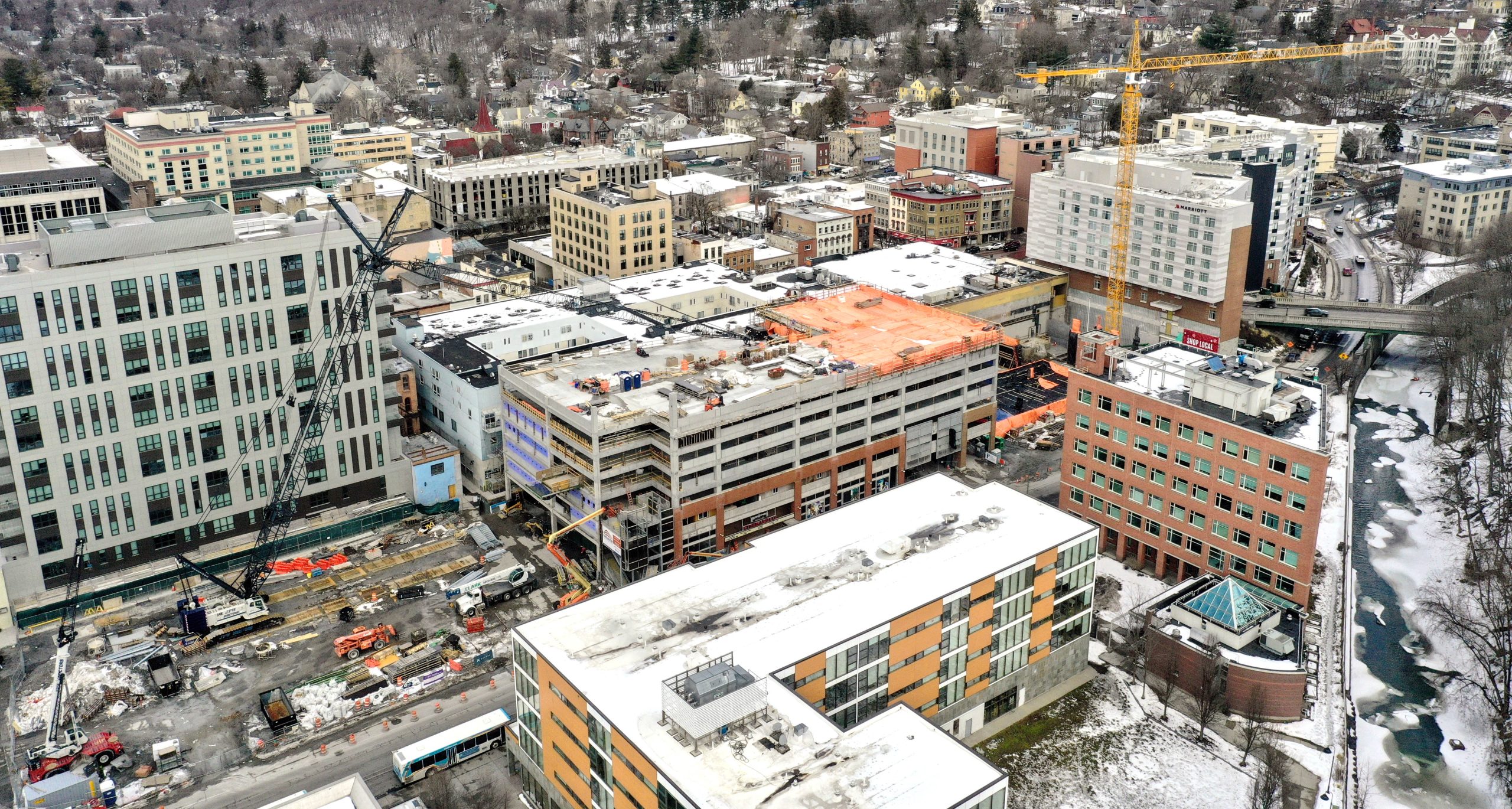
The biggest project among those outlined in the omnibus spending plan is the downtown Ithaca conference center. The center is part of the Asteri Ithaca project by the Vecino Group — located on the former western portion of the Green Street Garage — which also includes affordable housing units and other amenities. Construction to build a new parking garage began last year.
Tom Knipe, director of economic development for the city of Ithaca, explained that the conference center project is so substantial that it has a laundry list of funding sources, including the city’s new room tax, the Downtown Ithaca Alliance, Tompkins County administration, state development grants and, now, the federal government.
Knipe added that “this project, like all other projects are, [is] seeing cost escalation” due to recent design changes — including the addition of a fully electric kitchen — so the federal funds will help to offset those increased costs.
“This is a building which is all electric; however, the initial design and the current design does have a small amount of gas, natural gas, going into the kitchen, and so we are working to see if we can actually electrify that kitchen to make it a 100% electric project,” Knipe said. “There are some increased costs on the construction side associated with that change. And so, the earmark from Schumer … increases the likelihood of feasibility of an all-electric commercial kitchen for the conference center.”
State Assemblyperson Anna Kelles said that the conference center is an important project for a wide variety of reasons, one of the biggest being it will boost midweek tourism.
“That will really stabilize the hotels and the restaurants,” she said. “And the wage workers in the downtown area, … they’ve come out very strongly saying, ‘If we can stabilize the tourism in downtown so that it is across the whole week, instead of just the weekend, it will stabilize hours for us. It will increase our benefits. It’ll stabilize our families and our households.’ And that, to me, is a huge benefit of having a conference center.”
Jennifer Tavares, president of the Tompkins County Chamber of Commerce, said the Chamber and the Convention and Visitors Bureau (CVB) team is “already out there talking with people about hosting meetings and conferences in Ithaca in 2024 and beyond.”
“There’s a lot of interest in our destination, and so, that’s really exciting,” she said. “Bringing additional foot traffic brings additional visitor spending, particularly being able to finally focus in a meaningful way on this Sunday through Thursday, overnight-stay business, which has been one of the key goals of everyone related to the tourism program and the CVB for the last decade.”
Taking a wider view of infrastructure throughout the county, many projects and developers continue to face a host of challenges due mostly to lingering pandemic effects, which Tompkins Weekly has covered before (see tinyurl.com/y9oz6c54). Shawna Black, chair of the Tompkins County Legislature, summed up the problem best.
“The labor force continues to struggle to find workers, and construction costs are at an all-time high, as well as the materials needed,” she said. “We’re seeing a shortage of materials here in the county, and it’s a problem that we’re seeing throughout the United States.”
Heather McDaniel, president of Ithaca Area Economic Development, has worked with many developers over the years and said she’s seen several factors contributing to their current concerns, including the war in Ukraine upsetting worldwide financial markets.
“That has an impact on even local banks having the ability or the willingness to lend,” she said. “And we’re also seeing an increase in construction costs because of supply chain issues and talent, workforce issues on the construction side. So, we’ve still got some hurdles that we need to address. … I am seeing developers that thought they were ready to go, and now, the cost of financing has gone up, the cost of construction has gone up. So, they’re sort of trying to figure out how to still make those projects move forward.”
As for what’s on the horizon in terms of infrastructure and development, sources interviewed for this story said there’s a lot for residents to look forward to, with some major milestones coming soon. On the federal funding side, Black said the county will likely soon see additional funding aimed toward “roadways, railways, bridges, hopefully internet access, as well as clean water.”
“We just had a conversation with Sen. Gillibrand’s office, and it sounds like the contribution that they are making to clean water and replacing lead pipes is really going to be substantial,” she said. “The one thing that they talked about was they’re in the process of looking at the funding and how much it’s going to cost, and it’s going to have to be rolled out probably in a five- to seven-year process due to the need for labor such as steamfitters, pipe fitters as well as the materials that would be needed to replace the needed pipes.”
For the Green Street Garage and Asteri Ithaca projects, major progress has already been made. The new parking garage is set to open in May, Knipe said, with the goal being to have the garage open in time for college graduation weekends. The conference center is a bit farther out, with its projected opening being in 2024. Learn more about the Asteri Ithaca project at vecinogroup.com/communities/asteri/.
Jessica Wickham is the managing editor of Tompkins Weekly. Send story ideas to them at editorial@vizellamedia.com.
Related Articles
Street Beat: What are you looking forward to in the new year?
We asked five random people. Here’s what they had to say.

5 things to do in Tompkins County this weekend
Plan your visit and discover what’s happening this weekend.