FISH by Bill, a so-fish-ticated taxidermy shop
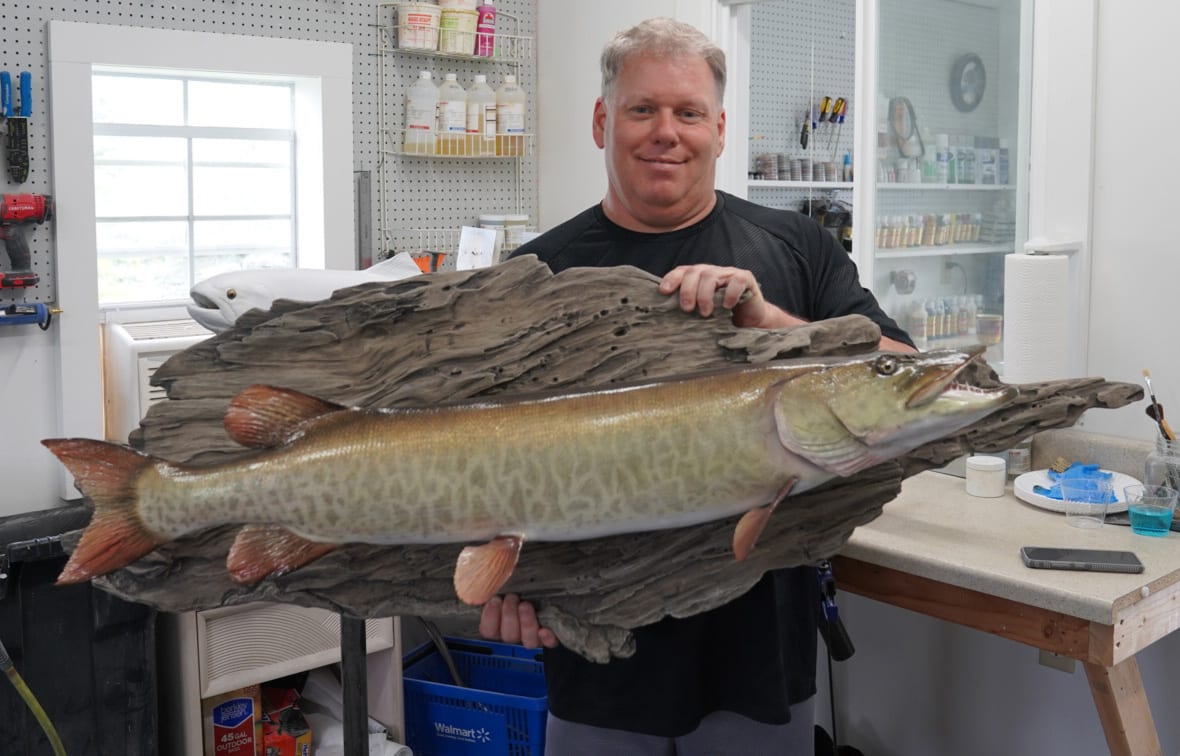
Driving around Lansing, you’ll see many unassuming houses, barns and fields, but there are secrets hidden within the walls. For example, in a little yellow garage on Buck Road sits FISH by Bill, a fish taxidermy studio.

For FISH by Bill owner and artist Bill Fish — yes, you read that right — taxidermy began as a pastime, combining Fish’s two loves, the outdoors and art.
“Well I did it for a hobby for 16 years, self-taught, and then I got to a point where I felt like I couldn’t really advance anymore,” he said. “So, I met with two master taxidermists. One was a World Champion, and the other one was actually his teacher. And I spent a week … with them, which then took my art to a new level.”
Fish went to Mansfield University for art, and before opening FISH by Bill, he “worked with kids for 30 years in group home settings,” he said.
FISH by Bill officially became a business in April 2020, during the pandemic, and though many businesses were hit hard by pandemic losses, Business Manager Jessica Best said they were lucky.
“COVID was really good for fishing, so there were a lot of people fishing during COVID,” she said. “It’s been pretty steady, surprisingly, because there’s a lot of people who do ice fishing too. So, I originally thought [the busiest season] would be now when people are actually at the lake.”
Currently, the majority of their work is from out of state as people find their services at fishbybill.com. And while all business is great, Fish most enjoys meeting his customers in person.
“So, it starts that, obviously, somebody calls, says they have a fish, ‘what do I do with it?’” Fish said. “I walk them through the process and whether they want a reproduction or to send it. If it’s skin mount, they have to freeze it and ship it to us or bring it. We haven’t had any across the country that were skin mounts. Right now, that’s mostly local.”
And shipping the completed projects is also a complicated, arduous process.
“Most of ours have been out of state, so we have to ship it, crate it,” Best explained. “The shipping on some of the fish, we’re paying about 100% for shipping for some of the stuff. We pay more than the product in some cases because depending on the fish and what’s coming through, they’re oversized and it’s really really expensive. And I would say we lose probably half of our customers because of that. .. It’s really been difficult from the economic aspect.”
Best said that in addition to all the financial- and business-related duties, the customer service side is often a learning experience for those involved.
“Sometimes people call, and they don’t know what they want too,” Best said. “Sometimes, they call and it’s their first time doing it, and I walk them through the process, timing, and then how they want it mounted and when. Do they want it just on a bracket or do they want it on some kind of habitat? I usually talk them through that piece, where they caught it. I try to actually get them to tell me their story so that we know a little bit more about them and make it a little more personal.”
According to Fish and Best, FISH by Bill stands out from other taxidermists in two major ways: its organization and turnaround time.
“I think another thing that sets me apart is that I’m pretty meticulous and clean,” Fish said. “Everything is organized. About 80 to 90% of other taxidermists I’ve ever been to, it’s a mess, so that’s important.”
“The one thing that’s unique about Bill’s business is that most taxidermists, even just the fish taxidermists, you’re looking at at least a 12-month period for it to actually be done,” Best said. “Ours, we guarantee within a four- to five-month period or we don’t take the job on.”
Fish is able to work in a shorter timeframe because he only takes on so many projects at a time to ensure that each gets the time and attention to detail that sets his work apart. And that shorter waiting period is also important in keeping the customer excited, happy and engaged.
“If it goes a year they’re missing, they’re all excited and they lose that,” Fish explained.
“Even the four or five months is a lot, because I’ll touch base with them along the way,” Best said. “We tell them when the blank comes in, sometimes send them a picture; it’s different for each person. People who have already done it, they know the process. They’re really happy to feel that it’s coming sooner. Other people don’t know the difference.”
Though FISH by Bill works at more than twice the speed of other taxidermists, Best said people come in looking for extremely quick, impossible turnarounds.
“We had some people that came in, two college guys from out of state were here probably about a month ago to go fishing, and they were thinking it’d be done in like a week, before they went back home,” Best said. “So, it is often an education process when talking to them.”
If you’re wondering what the process from catch to completed fish looks like, you’re in luck as Fish gave the full rundown. Usually, and hopefully, the fish are frozen when they’re brought in, so Fish cleans them and measures them, helping to establish a price. From there, he talks with the customer about what sort of positioning and habitat they want, and then he packages and refreezes the fish until he’s ready to get to work.
“I will lay the fish out when I’m ready, and I make patterns of the fish, then I take a block of foam … and then I’ll lay the tracing on top, trace it out, top and bottom, then I hand carve it,” he said. “And then I cut the fins off and make molds.”
Most taxidermists will use the fish’s real head, but heads tend to shrink over time due to decay. So, Fish prefers a different approach.
“I just mold the cast,” he said. “[I] put it together like a model, use epoxy to thin out the things, skin out the fish, fish skin around, a lot of carving and sanding. Lot’s of epoxy work in the junctions to make it look [right], so I use a lot of reference photos. I’m constantly on the computer looking at different fish and their species, just so you have a seamless transition. I actually hand paint the eyes. And then I paint it, with lots of reference photos, hopefully their reference photos.”
Best added that Fish often has to glue scales back on individually by hand or rebuild them, and even when a skin mount is used, Fish is painting the entire piece by hand, as the scales get whited out during the preservation process.
As for their favorite species and projects, Fish and Best had different takes.
“I like doing them all,” Fish said. “The variety helps.
“I like the bright-colored fish,” Best said. “We have a lot of the bass, which is common around here, the pike and muskies and all of those … and they’re not as fun, I think. But I think for me, for the business aspect, it’s like, the larger the fish order that comes in, it’s cool. And seeing him do something different all the time is really neat. … Really before I caught that fish two years ago [I had never been fishing], but I’m learning quickly thanks to Bill.”
Though taxidermy may not be what comes to mind when you hear the word art, Fish and Best want to emphasize that the preservation process and final product is more than a fish on the wall.
“So, in general, general taxidermy, I would say just that it does take a lot of time, that it really is an art piece,” Best said. “I think that’s what a lot of people don’t necessarily think about it or look at it that way. It’s really a piece of art.”
“That’s a personal thing that gets to me,” Fish said, “I don’t want people to look at this and just be like, I mass produce fish. It’s an art project for me. I mean I take a lot of pride, and I only do one fish at a time. I only paint one fish at a time. Most people don’t; they’ll paint five brown trout at a time. I’m not interested in that. That’s why we only take so many fish — because I want each piece to have its own ‘Bill.’”
For more information or to speak with Best about getting your prize catch preserved, send an email to fishbybill@gmail.com or call (607) 227-4194.
Related Articles
Village of Lansing wins more than $500K for new sidewalks
Lansing sidewalk funding exceeds $500K as the village earns state support through New York’s Climate Smart Communities program.
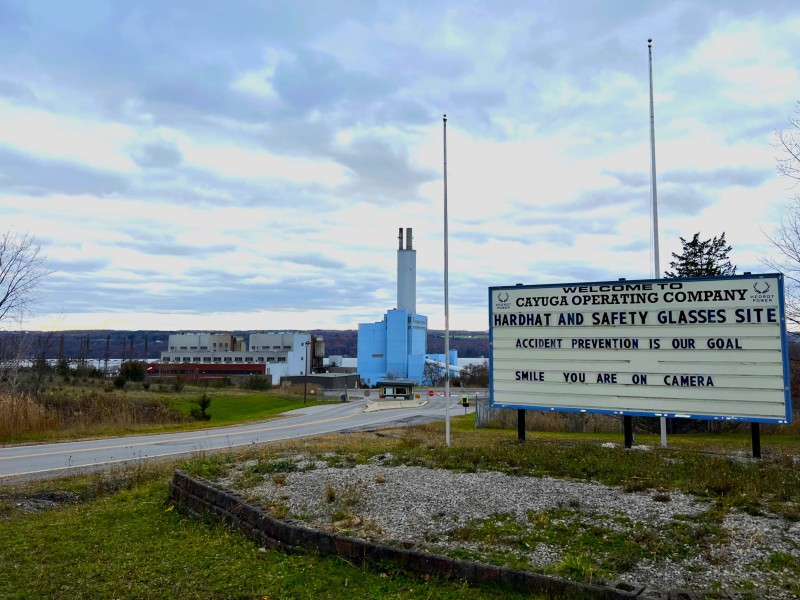
TeraWulf AI data center wins zoning appeal in Lansing
TeraWulf’s proposed AI data center at the former Cayuga Power Plant site in Lansing moves forward after winning a key zoning appeal on Dec. 22.