
Genie Solar Project moves through environmental review
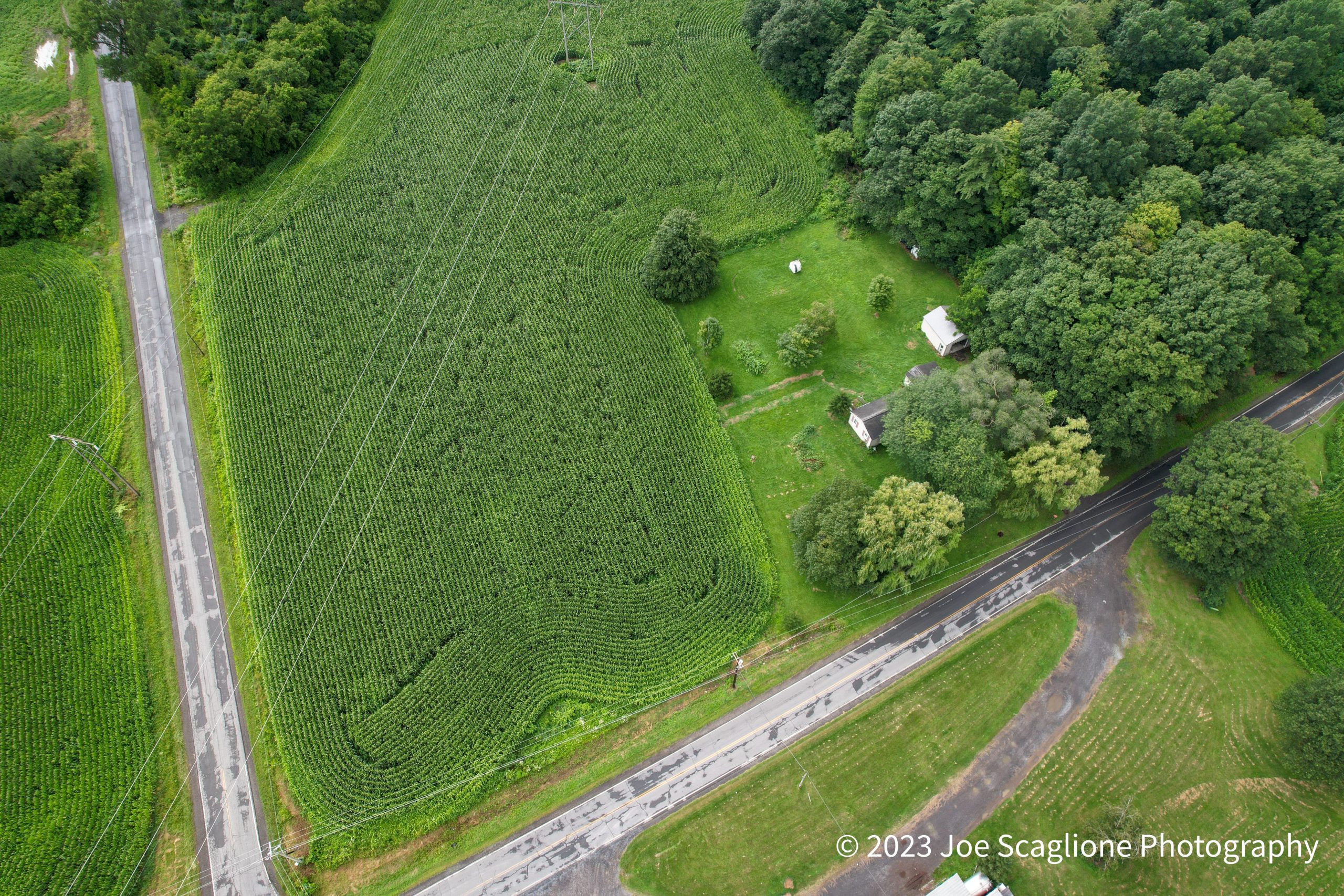
The Lansingville Road solar energy generation project, developed by Genie Solar, passed the State Environmental Review Quality benchmark after Town of Lansing Planning Board approval at their July 24 meeting.

Genie, a New Jersey-based energy company, is looking at a timeline where they would break ground on the project at a 107-acre parcel on Lansingville Road later this year. The project should be completed by next fall, Genie Solar Director of Community Solar Nathan Knapke said at the meeting.
The plan for the 5-megawatt alternating current ground-mounted community solar farm was unveiled at April’s planning board meeting. The solar farm is pitched by Genie officials as a generation facility that produces clean, renewable electricity that would add to the local electric grid and result in savings for residents. Officials also claim that the project will contribute to certain goals of the Tompkins County Energy Strategy and help advance state environmental goals.
The project will encompass 18 acres of the total 107 acres at the Lansingville Road parcel, which is owned by Turek Farms, and will be located on the west side of the road between Jerry Smith Road and Dublin Road, according to documents submitted to the planning board. It will be secured by an eight-foot-tall agricultural-style perimeter fence with a locking gate. The solar farm will be accessed via a proposed gravel access road on Lansingville Road that would be constructed at the location of an existing farm road in the northeast corner of the parcel.
At the July 24 meeting, planning board members and town officials inquired about some aspects of the planned site, but ultimately unanimously declared, through the State Environmental Review Quality form, that the project would not have significant environmental impacts for the area.
“I reviewed the application and concurred with the applicant’s findings,” said John Zepko, the town’s director of planning and code enforcement. “Areas where there were possibilities for small impacts such as stormwater and buffering, the applicant has adequately addressed in their submission to this board.”
Chris Koenig, an engineer with C.T. Male working on the project, noted Genie and its consultants, have worked on addressing concerns from the board.
“We went through it line by line, provided responses and made proper updates when needed,” Koenig said.
Some of those concerns stemmed from potential issues with water and soil. Specifically, Koenig said the board had asked about the company’s Stormwater Pollution Prevention Plan (SWPPP) and Genie’s soil decompaction process. Soil decompaction typically breaks up the soil and improves water flow, aeration, nutrient accessibility, root growth and microsite availability. Environmental engineers typically see decompaction as a boon to growing vegetation on a site.
“Board members had some comments about the lease parcel, the site control, maintenance of plantings and access roads,” Koenig said. “We updated the operation maintenance plan.”
Zepko said there was constant communication between the board and project applicants.
”The applicant has addressed all our considerations,” Zepko said. “With a 1 day turnaround time, which was pretty impressive.”
Board member Thomas Butler raised a question about the depth of the water table and depth of land before hitting bedrock.
“Was this actually measured?,” he asked.
In response, Koenig said Genie did a geotechnical analysis on the site and that the depth to bedrock is greater than 5 feet and the depth of the water table is greater than 3 feet.
“The study confirmed our assumptions when we filled out the form, which we made based on existing mapping and knowledge of the area,” Koenig noted.
Koenig also responded to a question from Butler about the effectiveness of the “buffer wall” of vegetation the company hopes to plant on the site.
“We stuck with white spruce plantings to provide some day-one screening,” Koenig said, adding that Genie plans to plant arrowwood shrubs in the interstitial space between each group of trees to provide two-layers of buffering.
“We also added a shrub willow hedge around the fence line itself which thrives in this soil,” Koenig noted. Studies from SUNY College Environmental Sciences and Forestry and Cornell University indicate that the shrub provides great screening and is cost effective.
“We did some research there and it felt like a good fit for this project,” Koenig said.
Once the project receives planning board site approval, the company will have some more work to do before breaking ground.
“We still need to do additional engineering and procurement of materials, and additional studies, for the site,” Koenig said.
The company will also have to negotiate a Payment in Lieu of Taxes (PILOT) agreement with the Tompkins County Industrial Development Agency (IDA) before operating the project.
Lansing at Large appears every week in Tompkins Weekly. Send story ideas to editorial@vizellamedia.com. Contact Eddie Velazquez at edvel37@gmail.com or on Twitter @ezvelazquez.
In brief
The Music in the Park concert series at Myers Park continues Thursday Aug. 3, as The Destination takes stage. The nine-person outfit has been around Central New York and The Finger Lakes for more than 25 years. They have played alongside Frank Sinatra Jr., Aretha Franklin and The Miles Davis Orchestra. Concert starts at 6:30 p.m.
Author

Related Articles

Local representatives push HEAP as winter nears
Lansing HEAP program applications are now open, helping low-income households cover heating costs and access energy assistance this winter.
Lansing’s $17M capital project advances amid construction challenges
Lansing Central School’s $17M BOBCAT capital project upgrades schools, athletic facilities, HVAC, and infrastructure.