
Green Facilities Project’s phase one sees large price hike

When Tompkins Weekly last checked in on the county’s ongoing Green Facilities Capital Project (tinyurl.com/ycglol6a), the first phase of the project had an approved budget of $7.3 million. This month, that cost has nearly doubled, with project leaders currently awaiting budget committee approval for an additional $7 million for phase one.
As Terry Carroll, Tompkins County’s chief sustainability officer, explained, the cost increase can be attributed to a multitude of different factors.
“It’s a change in project scope,” he said. “It’s pushing forward some individual projects that were maybe in later phases but became a little bit more pressing. It’s inflation. It’s the rising cost of materials, labor shortages, I think all of those elements.”
Back in March, Carroll and fellow leaders were still in the process of solidifying what phase one of the three-phase plan would look like. He explained that in the months since, significantly more research has been conducted, leading to a number of changes compared to spring expectations.
“There were some things that needed to be pushed forward,” he said. “And so, a good example of that is the rooftop unit at the public library is, I don’t want to say it’s imminently going to fail, but it’s expected to need replacement sooner than what was previously expected. And so, that was something that wasn’t originally planned for this initial phase of the Green Facilities Project.”
Carroll added that another change since spring is some changes in project scope.
“The original engineering assessment for the Public Works facility involves putting in a geothermal system, reducing the amount of gas that it was going to use significantly, but it was going to continue to use natural gas,” he said. “What we did through the more detailed assessment was to really take a look and say, ‘Hey, can we take this building completely off of natural gas? Can we look to make this building a net-zero facility, so to speak?’ And what we came back with was, ‘Yeah, we can do that.’ The cost to do isn’t incrementally outrageous, and it would open up the opportunity to get a lot of grant funding from the state and from NYSEG.”
As for other factors like supply shortages and cost increases, Carroll said that part of the problem is that “a lot of what we’re trying to do is suddenly very popular to do everywhere.”
“Going green is something that we’ve been working on, but we’re not unique in that there’s a lot of other places that are turning in this direction as well,” he said. “And so, the demand for heat pumps, the demand for insulation, things like that are skyrocketed. And so, along with that increased demand, there’s low supplies. It drives the costs up. Some of the things that we’re going to be ordering have a lead time of 30, 35 weeks. And so, we order them tomorrow — we’re still not getting them until almost halfway through next year.”
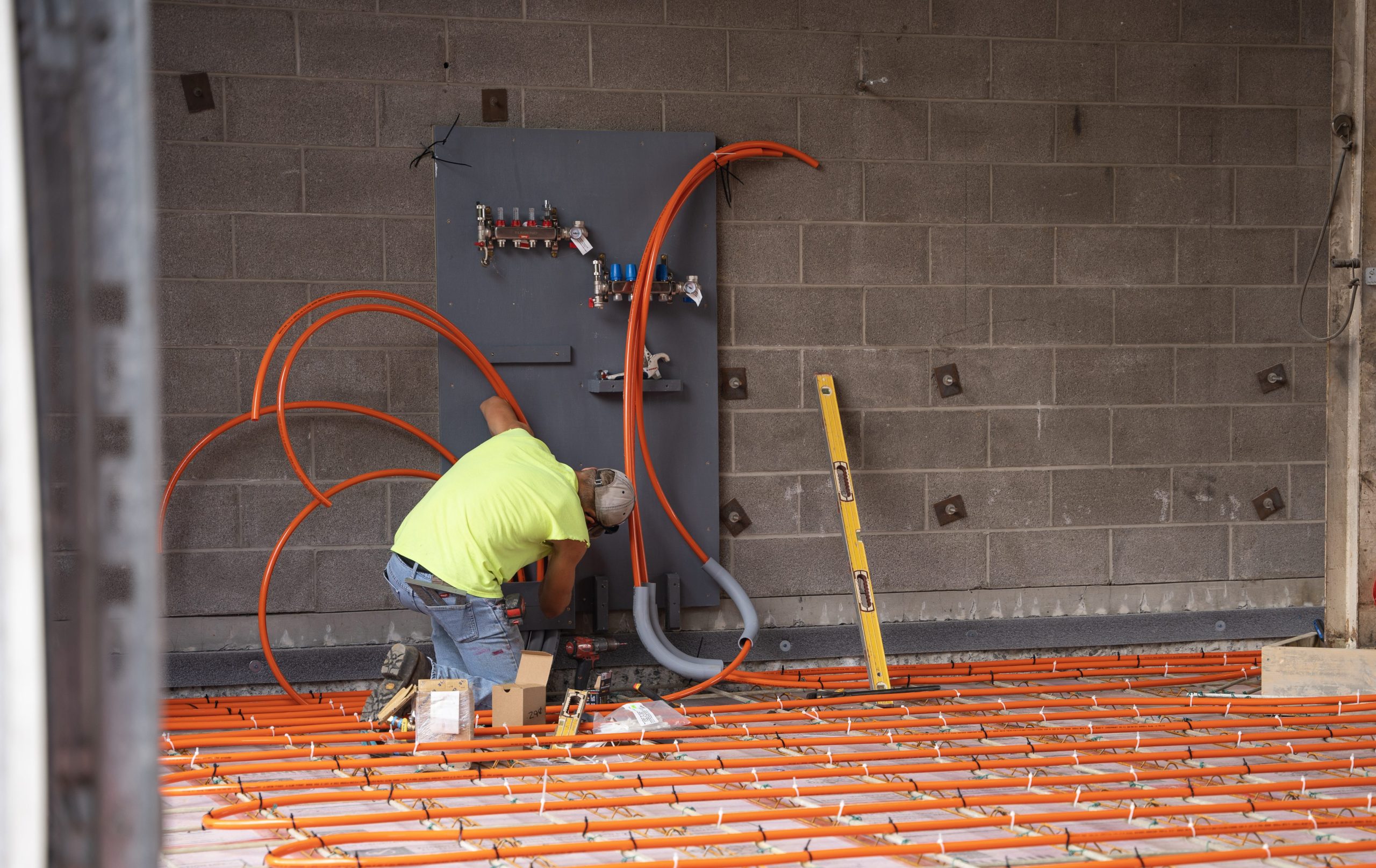
Despite the significant cost increase for phase one, Carroll said that he doesn’t expect the Green Facilities Capital Project’s cost as a whole to greatly increase. He cited a wide variety of reasons, one being that he expects supply chain challenges will subside as demand for green energy products continues to increase.
“Because this is becoming such a popular thing to do with heat pumps, … we think that there’s a lot of manufacturers that are going to start increasing production, that there will be larger amounts of supply, which will help them bring down costs,” he said.
In addition, because certain parts of the plan have simply been pushed forward, that means that the higher costs of phase one will be balanced out by cost cuts in phases two and three. On top of that, Carroll is optimistic that the project will receive significantly more state and federal aid. He cited aid like state grants as well as the federal bipartisan infrastructure bill, which will provide funding for these sorts of projects.
“We submitted a $2 million grant to New York state that we’re hopeful we’ll hear about later this year,” he said. “We’re working with NYSEG, our utility, to pursue hopefully a few thousand dollars in additional grant funding, and we’re looking for any opportunity that we can do to bring in more money and help offset the increased cost of this project.”
Carroll continued.
“And so, hopefully a combination of supply chains adjusting to the new reality, more manufacturers jumping on board with building heat pumps and solar and all of this stuff that is included in going green, and then just greater incentives from state and federal resources, will allow the project to maintain its original price tag of about $30 million,” he said.
Carroll also expects to maintain the current schedule of phase one — completion by 2023 — because the county’s partner on the project, Johnson Controls, has accounted for supply chain delays in its time estimates.
Carroll explained that as of now, the county hasn’t yet signed the contract with Johnson Controls “that would allow us to get started” on physical work, but he’s hoping that will happen sometime within the next month. Once the contract is signed, that will lock in prices to prevent future cost increases.
Deborah Dawson, county legislator and chair of the Budget, Capital and Personnel Committee, voiced that while the phase one cost increase is significant, she supports the move and doesn’t expect it to greatly affect the county’s overall budget.
“The administration is recommending that we bond, so I don’t think it’s going to have the kind of enormous impact on the current budget that it would if we were proposing that we would fork over that additional $7 million from funding, for example,” she said. “We’ve been told over and over again, by our staff and our consultants who are in a position to really understand, that this first phase of this Green Facilities Project is the one that is going to have the most impact on our ability to lower our carbon footprint and our emissions. And since that’s the main goal of transitioning to green facilities, we just have to pick up the tab and pay for it.”
Dawson emphasized the importance of the project.
“I think we benefit by being proactive because if and when we reach a point where Albany says to most of the municipalities and counties in New York state, ‘You have to do this and this and this in order to be compliant with our green facility policies,’ it’s going to all of a sudden become extremely expensive because the market for those services is going to be extremely competitive,” she said. “So, that was one reason that I really thought we ought to be proactive and back the Green Facilities Project now rather than later. And just overall, obviously, [it’s] the right thing to do for the planet.”
Carroll said that there’s been significant progress with the Green Facilities Capital Project since the spring, highlighting advancements like the hiring of a new sustainability coordinator, Hailley Delisle (tompkinscountyny.gov/planning).
“She’s fantastic,” Carroll said. “I’ve known her for a few years. She’s been doing a great job down in the Southern Tier, closer to the Binghamton area, working on community campaigns, working with homeowners to help them pursue energy efficiency. And I think she’s done a great job just stepping in and really bringing a lot to the table already in terms of unique ideas and helping to take on some of the things that we weren’t able to give our full attention to.”
The capital project’s phase one cost increase is expected to be considered by the Budget, Capital and Personnel Committee at its Sept. 12 meeting (tinyurl.com/2zb7ntd9). Dawson said she expects the proposal to pass without much issue, and from there, it will need to be approved by the full Legislature.
“I just hope that my colleagues in the Legislature will share my commitment to getting this phase of green facilities moving forward as quickly as possible and that they will understand that despite the unfortunate increase in costs, this is something you have to do,” Dawson said.
Local leaders involved in the Green Facilities Capital Project recently provided an update to the Legislature’s Facilities and Infrastructure Committee. To view the full recording, visit tinyurl.com/2hmp56ob. To view the full agenda packet, visit tinyurl.com/2l2fbx7m.
Jessica Wickham is the managing editor of Tompkins Weekly. Send story ideas to them at editorial@VizellaMedia.com.
Related Articles
Cayuga Medical Center nurses to rally, alleging anti-union tactics by hospital management
CMC nurses plan a rally, alleging unsafe staffing and illegal anti-union tactics as the hospital highlights recent patient-safety gains.
Design details unveiled for new Center of Government
Design details for the Tompkins County government building in downtown Ithaca are now public, with a county survey open for feedback.

Holiday traditions bring community cheer
Tompkins County holiday traditions light up homes, farms, and schools with festive cheer and community spirit.