
Green Party View: History’s test is here again
Explore the Green Party immigration policy as history’s test returns. Learn how ordinary people can resist injustice and protect human rights today.

Joe Wetmore
By Joe Wetmore
Editor’s note: The opinions expressed in this column are those of author Joe Wetmore and are not representative of the thoughts or opinions of Tompkins Weekly.
Most of us like to envision ourselves on the right side of history. We imagine that during the 19th century, we would have been abolitionists, that we would have hidden people fleeing slavery and opposed slave catchers. Yet history’s test has now returned in a form that is both familiar and troubling.
In 1850, the Fugitive Slave Act gave federal agents power to invade free states and drag people back into bondage. It required local officials to aid in slavery’s enforcement. New Yorkers resisted. In 1851, William “Jerry” Henry, a previously enslaved cooper who had escaped bondage eight years earlier, was arrested in Syracuse. Hundreds of citizens, Black and white, men and women, stormed the jail and freed him. This event was known as the “Jerry Rescue”. Regular citizens risked arrest and violence to do what was right. They chose conscience over law.
Today, ICE wields a similarly heavy hand in their raids on immigrants. Families are torn apart, even in so-called sanctuary cities. Washington enforces unjust laws and demands local compliance. The president deploys military force in American cities to instill fear. Once again, the question falls to ordinary people: Will we comply or resist? Resisters faced prison 175 years ago. Today, those who defend immigrants face similar punishment. The stakes and moral imperatives remain the same.
The language of dehumanization persists. Enslaved people were called “property,” “savages,” “beasts of burden.” Today, immigrants are labeled as “illegals,” “aliens,” “animals.” The purpose is the same: using pejorative labels to demonize these individuals until public compassion about their plight withers. Do we affirm our neighbors’ dignity, or echo the slurs that justify cruelty?
The Underground Railroad wasn’t a train. It was conscience in action. Homes, farms, and churches became safe houses. Neighbors hid fugitives, risking arrest. Their defiance became a movement. Today, cities and houses of worship declare sanctuary. Volunteers shelter those pursued by ICE. Lawyers fight to reunite families. But the spirit of compassion for humanity survives only if we keep it alive. Will we risk our freedom to protect someone else?
Throughout history, opponents of justice have decried “lawlessness.” Abolitionists were called radicals and traitors. Resisters were blamed for destroying order. Today, sanctuary cities and immigrant advocates face the same charges. Compassion is criminalized; people are punished for sheltering families.
Two centuries ago, when power structures tried to silence dissent, citizens raised their voices. In the 1830s, people flooded Congress with anti-slavery petitions. Congress enacted the “gag rule,” banning debate on slavery in the House. Before the gag rule, petitions were entered into the record or referred to committee. After the ban, there were even more petitions, and more demands for justice. Today, students and faculty who speak on immigration or Palestine face intimidation, sanctions, and even visa revocations. Where will this lead?
Just when courage is most needed, institutions falter. Schools are dismantling diversity programs and punishing dissent, and deporting students for speaking out. Universities, including Columbia, have accepted government oversight in exchange for funding; Cornell is in the throes of deciding its approach. The line between free speech and criminality has been blurred.
In the past, abolitionist presses were destroyed for challenging the intuition of slavery. Today, repression of the press is shaped in boardrooms and by algorithms and political pressure. The result is the same: fear, silence, and a misinformed public. Outlets once proud of defending free speech now self-censor to maintain access to information.
In the 1830s, antislavery literature was banned. Today, officials criticize museums for showing slavery’s brutality. References to Harriet Tubman and the Fugitive Slave Act are intentionally removed from museums and websites in efforts to erase the memory that injustices occurred and that ordinary people resisted those injustices.
In the 1850s, Americans had to choose: enforce slavery or resist? Today, the choice is just as distinct. Enforce cruelty against immigrants or resist?
History does not remember those who obeyed. It remembers those who resisted.
And just as Central New Yorkers rose during the Jerry Rescue, so must we rise today, and shelter, defend, speak, and refuse complicity. Laws may be unjust, but ultimately, conscience should be our North Star.
Which side of history will you be on?
To see the Green Party’s immigration policy visit:
https://www.gp.org/social_justice#pathway
Joe Wetmore is a retired small business owner, environmental advocate, community planner, and contributor to local historic marker projects in Lansing.
Author

Related Articles

World peace – one person at a time
Ithaca peace activism supports nonviolent solutions, nuclear disarmament, and global awareness through weekly corner gatherings.
Green Party View: Does this make sense?
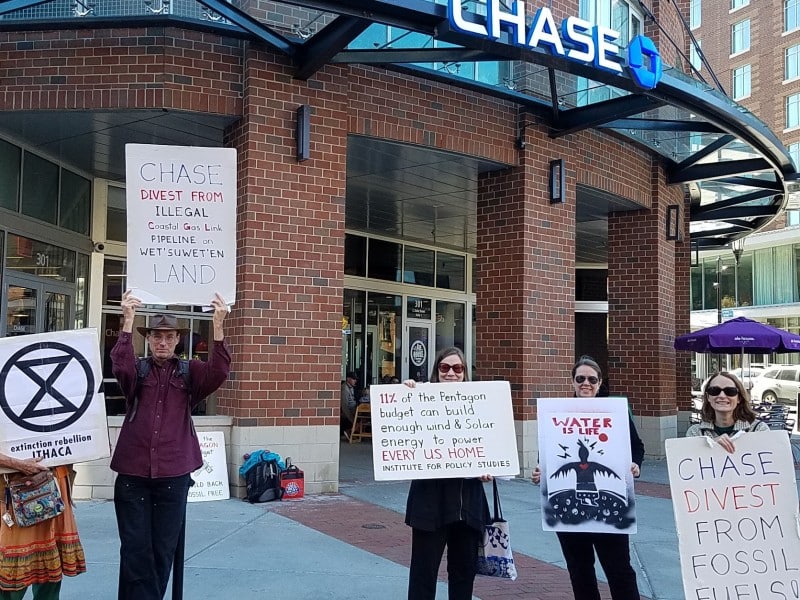
Todd Saddler leads the Chase Bank climate protest in Ithaca, highlighting fossil fuel investments and systemic climate issues.

Green Party View: Cornell’s panopticon, in defense of genocide
Explore Sriram Parasurama’s critique of Cornell surveillance and genocide, student activism, and university accountability.