
Rainy spring plus dry summer equals woes for Groton farmers
Groton farmers weather severe spring rains and summer droughts, impacting hay, corn, and overall crop yields for local dairy and beef farms.
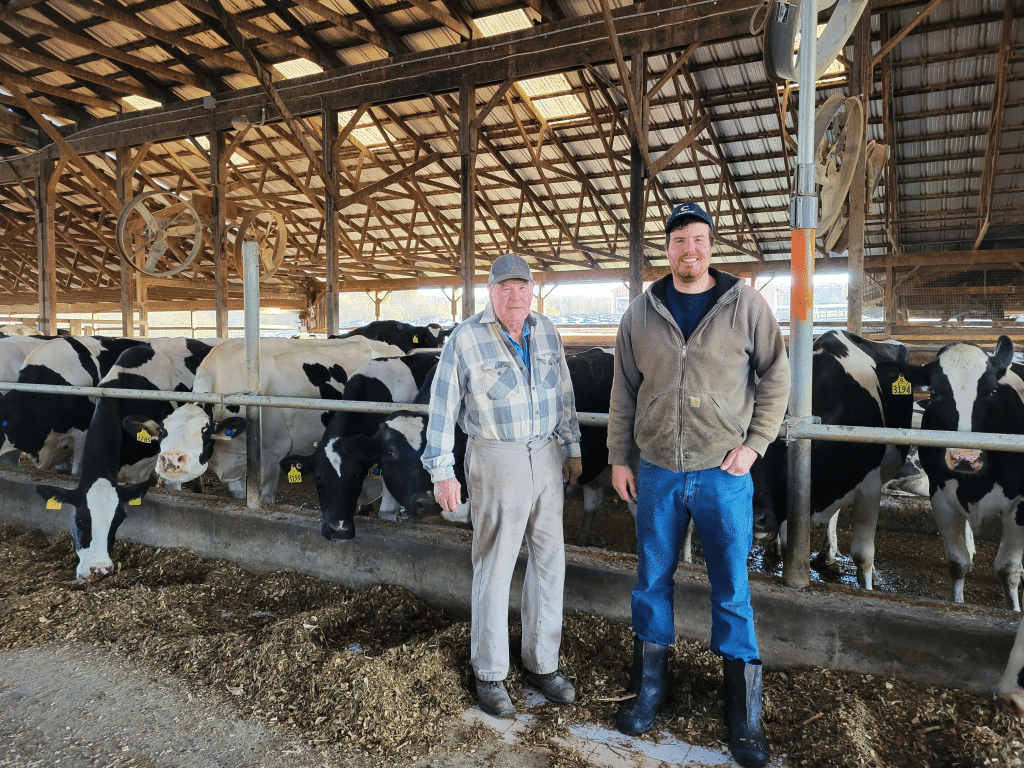
Dan Carey (left) and his son, Eric, are pictured here standing in one of their dairy barns. The Carey Farm in Groton is designated a New York State Dairy of Distinction. Weather has made things a bit challenging for the Careys and others in the area this year.
Most people who live in Tompkins County and the surrounding areas are certainly aware of the unusual spring and summer weather conditions we have experienced this year, but I asked a few of our local Groton farmers to explain what that has meant for them.
Dan and Eric Carey of Carey Farm on Lick Street have roughly 300 cows on their thriving dairy farm, while Sam Rose of Robert W. Rose & Sons farm on Chipman Corners Road has about 60 Angus beef cows. Although each herd serves a different purpose, both farms have similar stories.
The Careys plant their own corn, which usually yields 18 to 20 tons a year. This year, they harvested only 17 tons. The extremely wet spring delayed both their corn planting and their hay harvest.
“The first cutting of hay is critical,” Dan said. “We usually harvest in May, and this year that rolled into June. Quality is important, and that wetness causes a loss of protein and digestibility.”
“That late planting and the dry summer was a bad combination,” Eric added. “The Canadian smoke also played a role in the photosynthesis, particularly for the corn and for soybeans that others grow.”
The importance of hay
Rose explained the importance of hay cutting, as that is what ends up as baleage, which is food for cows. He said baleage is mowed grass that is allowed to cure in the sun for usually a day before it is placed into round bales and wrapped with plastic. If you drive around and see those large, white, round bales — that is what is inside them.
“Baleage cures inside the wrap and makes very good quality food for cows, which yields high milk production,” Rose said. “I normally have my baleage done by May. This year, it was June 10, and I was lucky I got it done by then, between the lack of sunshine and too much rain. I use my baleage for my own beef cows, but I mostly sell to organic dairy farmers. They only feed their cows baleage and fresh hay because they are grass-fed organic farmers.”
Rose further explained that the quality of this year’s baleage was 25% lower than a normal year, and that he normally strives for 40% to 50% moisture in it, but this year he was fortunate to get it down to almost 65%. The ideal is for it to be low, not high.
And then came the drought…
While the farmers don’t want it to be wet for hay harvesting, they do need enough rain to have more hay cuttings throughout the summer. That was rough this year.
“Every 28 to 30 days, I would usually do a second, third, fourth and maybe even a fifth cutting,” Rose said. “Based on the late start with the wetness, and then the drought, it didn’t grow enough to make it even worth cutting again. In a normal year, I would have gotten 125 to 150 more bales.”
Well water issues also became a problem this summer. Eric said neighbors had very low water levels. He said they have a pond, but even that was a good 30% lower than usual. Rose said he had not seen his creek so low since 2001!
“I was concerned the creek would dry up,” Rose said. “We all need water for our cows to drink. I also give my cows a little corn meal, but due to other farmers’ late planting and some fields rained out, the price is already up $38 a ton from last year. This will affect all farmers who feed grain to their cows.”
The importance of corn
Unlike the Rose farm, the Careys rely a great deal on corn for their animals. They usually plant corn throughout May and finish by Memorial Day. That did not happen this year.
“Because of the drought in the Northeast, a lot of corn that would traditionally be combined for grain will likely be sold as corn silage for dairy cows, which will cause a reduction in corn grain around here,” Eric said. “We will likely have to import it from the Midwest, which will cause an increase in price.”
“We need corn grain for cow feed,” Dan said. “Our 300 cows require 4,200 pounds a day of purchased corn meal to feed them. In a year like this, with such low corn silage yield, we’ll have to ration that silage throughout the year. We’ll feed more corn meal and less silage because it’s very important to budget our inventory.”
“But we dodged a lot of bullets,” Eric said. “You drive 20 minutes up to Genoa and the situation changes quite rapidly.”
“In my network of farmer friends, I know of many who had things worse than me,” Rose said. “I have heard of some whose wells dried up, and the ones who feed corn grain will all be affected.”
Despite the hardships for these two local farms, each remains grateful for what is, and they recognize their blessings.
Groton on the Inside appears every week in Tompkins Weekly. Submit story ideas toeditorial@vizellamedia.com or text or call Linda at 607-227-4922.
In brief:
Pizza Night at the Legion
Friday, Oct. 24 from 6 to 8 p.m. is Pizza Night at the Legion, sponsored by the Sons of the American Legion Post 800. Cost is $10 per cheese pizza, $12 per pepperoni pizza or $2 per slice. The event is cash only, dine-in only. Proceeds will support Groton American Legion programs.
Fall Bazaar in McLean
The McLean Fire Department Auxiliary Fall Bazaar will be held Saturday, Oct. 25 from 9 a.m. to 3 p.m. at the fire hall. Crafts, vendors and great food will all be available!
New Story Walk
Brian Wildsmith’s “Squirrels” is the new Family Reading Partnership Story Walk book on the trail behind Groton Memorial Park. This is a beautifully illustrated picture book all about squirrels.
Author

Related Articles
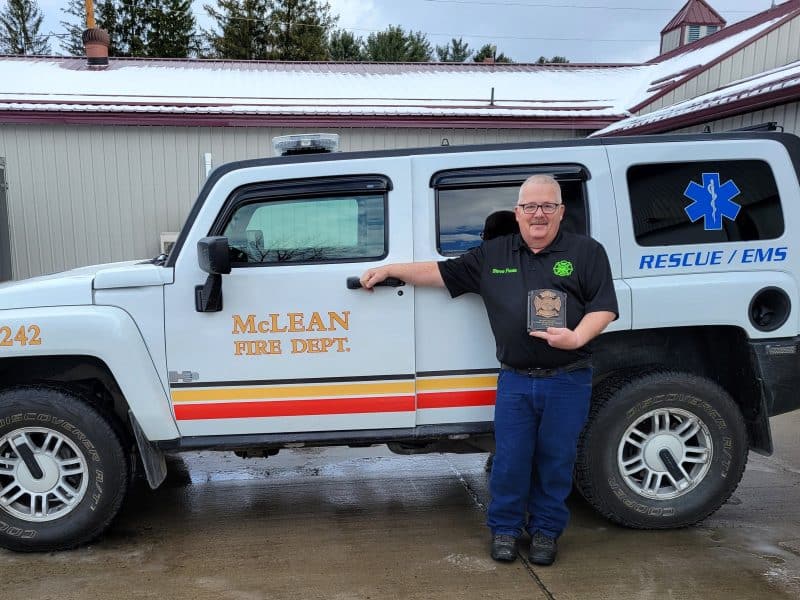
Steve Foote honored for 50 years of service to the McLean Fire Department
Steve Foote McLean Fire Department service spans 50 years as an EMT, firefighter, and mentor serving the McLean community.
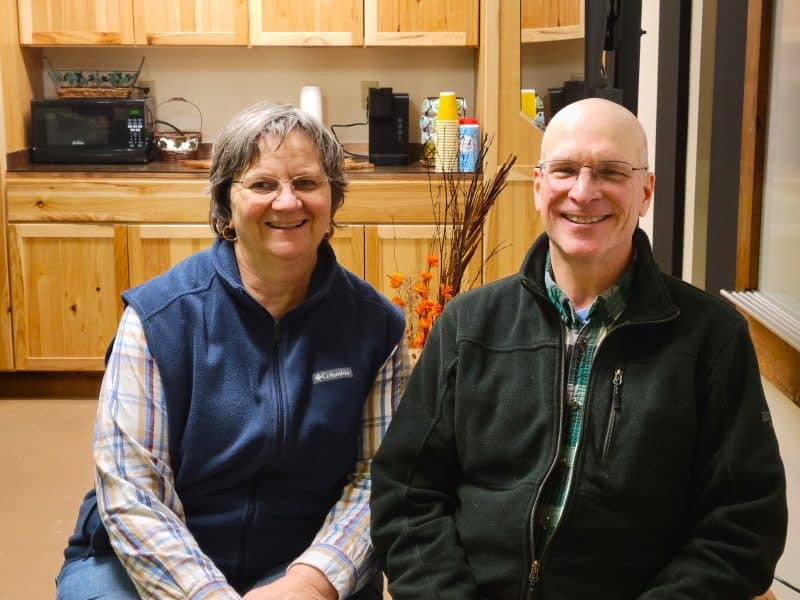
REBOOT Recovery offers help for those dealing with crisis or trauma
REBOOT Recovery in Groton helps community members heal from trauma through a faith-based, supportive 13-week course.
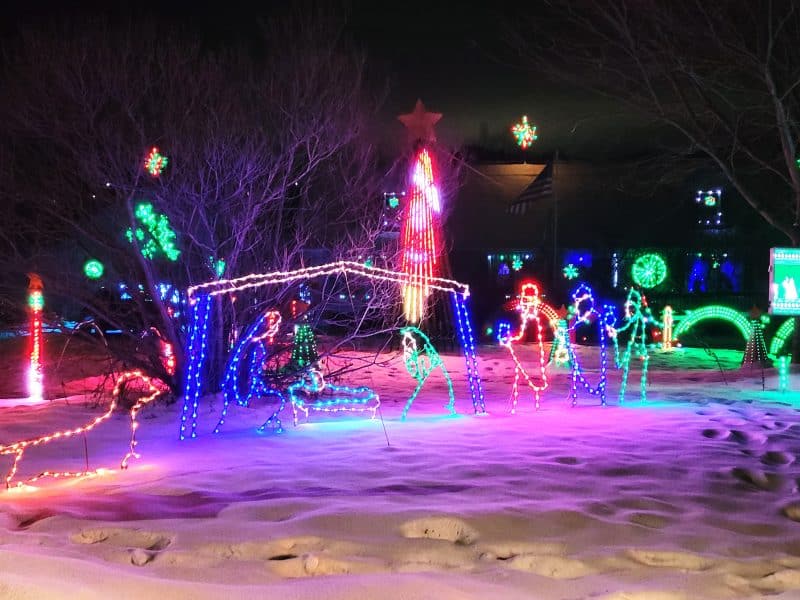
Scottland Lights: 15 years bringing Christmas in lights and music to Groton
Scottland Lights Groton offers 15 years of synchronized Christmas lights and music, a beloved holiday tradition in the Groton community.