
Growing by LEAPs and printers
By Jamie Swinnerton
Tompkins Weekly
It’s not uncommon for libraries to rely heavily on grant money to fund the numerous programs and events that make them the vital community centers that they are. After-school programs, writing workshops, visiting speakers, and the latest technology can all be found at your local library, and are more than likely funded by grant money as library budgets everywhere are forced to shrink. The Groton Public Library is no exception. But thankfully the library has been blessed with a number of sizable grants recently to stay at the forefront of programming that the Groton community wants and needs.
Within the last few months, the library has received a number of grants from several different funders. In early May, the library was awarded a grant from the Howland Foundation, administered by the Community Foundation of Tompkins County, for $3,745 to support the libraries highly successful Teen Thing youth program for sixth and seventh graders.
Back in March, the library received four different grants from The Bernard Carl and Shirley Rosen Library Fund of the Community Foundation of Tompkins County, totaling $18,137. The first was another grant for the Teen Thing Program, which features weekly presentations and free books each month for participants. The other three grants that were awarded went to the Library Elementary Assistance Program (LEAP) for third graders; a collaborative effort grant between six local libraries to bring author Daniel Kirk and his book “Library Mouse” on a tour of the participating libraries (with free copies of the book at each stop!); a grant to pay for a youth worker to man the library in the summer from 10 a.m. to 2 p.m. Monday through Thursday for kids-only hours.
Very soon, possibly as early as this week, the library will accept its very own 3D printer, purchased with $2,374.05 in grant funds from the Coordinated Outreach Services Advisory Council Outreach Mini Grant. Currently, the library shares a 3D printer with several other Finger Lakes libraries. Now that Groton will have its own printer the shared printer will be brought to the Southworth Library in Dryden where it is often put to good use in a popular STEM-themed book group.
Grant funding in Groton is firmly based in what the community tells the library that it wants, which helps tailor the grants that Library Director Sara Knobel goes for.
“It’s the need, I would say,” Knobel said of how she chooses which grants to chase down. “I would say ‘Is there something we need?’”
When the library noticed a need for youth programming the local kids who visited the library were surveyed to find out what would interest them that the library could provide. The scheduling of the programs, on Wednesdays and Thursdays, was chosen after the library contacted the school. Tuesday through Thursday is when the school provides a late bus that will pick up the kids from the library and take them home.
“We tend not to do Tuesday because that’s our free food giveaway,” Knobel said. “Then once a month we do the free meal, and I thought that would be too much chaos.”
The same thought process was taken when applying for a grant to get the library its very own 3D printer. A library worker set up an account on Tinkercad, an online 3D printing and design app, for kids to design what they wanted to print using the printer. It became so popular that local residents have started using the printer to make their own parts for small home repairs. Knobel herself finally tried it out when the kids begged her to turn it on when the library worker who usually helps them use it was not there.
The shared printer is owned by the Finger Lakes Library System and passed around between libraries once they are trained to use it. Knobel said Groton might have been the first library to be trained and borrowed it for about six months.
“It became like ours, then one of the other libraries we won it with wanted to borrow it,” she said. “And the kids were like ‘Where is it going? Why is it leaving?’”
With its own printer, the library can start to design more programming to use it. Knobel wants to expand the printer programming to not just kids, but also adults. While adults may have the interest, they have more limited time and might be warier than kids to try it out. Right now, the library can allow patrons the use of the printer for free. But down the line, it might have to start charging by how many grams of material patrons use for their projects.
As a community center and hub of activity for the area, the Groton Public Library has its finger on the community’s pulse. When the community needed fresh produce, the library partnered with the Friendship Donation Network to bring in food for free. When the community needed youth programming, the Teen Thing and LEAP were established. Now, the library needs to grow not just in activities, but in space.
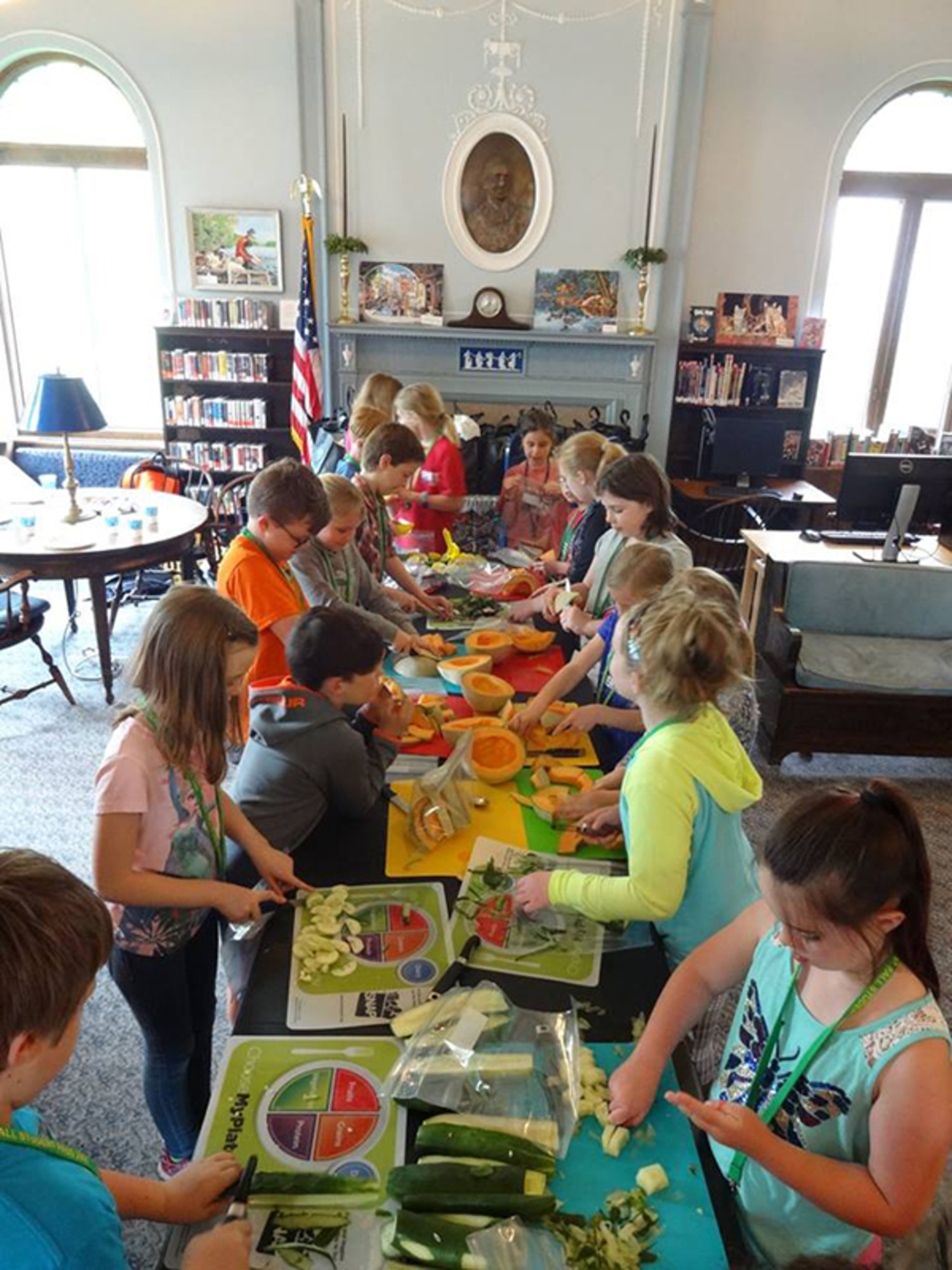
Although it is all in very early stages, the library plans on expanding. The teen space is currently relegated to a small corner of the front room, and some patrons would prefer that the library connect with its roots and become a quiet place of rest and contemplation. Hard to do when the local youth are learning to cook right next to the table you are studying at.
“That’s one of the things we need, why we need the expansion,” Knobel explained. “An area to do programming where people can make noise. And not just kids. Adults too. We’ve had great success with cooking classes.”
Several years ago, the library did a five-year strategic plan to expand programming and internet access, as well as reach out and nurture readers. But these goals need space before they can be accomplished. The 2,000 square-foot expansion is expected to break ground sometime next Spring. This, too, will be grant funded. At least in part. The library has a pending New York State Construction grant that they will have to match.
The library wouldn’t disappear without grant funding, but it also wouldn’t be as vibrant.
“We’d still be here, we have a good budget,” Knobel said. “But we wouldn’t be able to do all the youth programming that we do. Particularly the after-school grants… It would be really limited. We wouldn’t have the opportunities for everybody.”
Getting the money and spending it isn’t the hardest part, Knobel said. It’s writing the reports after that take up a lot of time and concentration. But, the success of each grant-funded opportunity must be measured.
“We collect as much statistics as possible,” she said. “Just every day, all the time. I’m so used to counting heads, getting numbers, because you never know when that will be useful.”
It’s this data collection that helps Knobel argue for grant money. She can demonstrate that the program, event, or tool is a successful use of the money. Thankfully, she’s had a lot of success.
Related Articles
5 things to do in Tompkins County this weekend
Plan your visit and discover what’s happening this weekend.


Tompkins Chamber announces Rob Montana as new vice president
Rob Montana, community leader and communications professional, has been appointed vice president of the Tompkins Chamber, where he will help drive economic growth, workforce development, and community engagement.