
Health officials navigate new COVID variant, guidelines
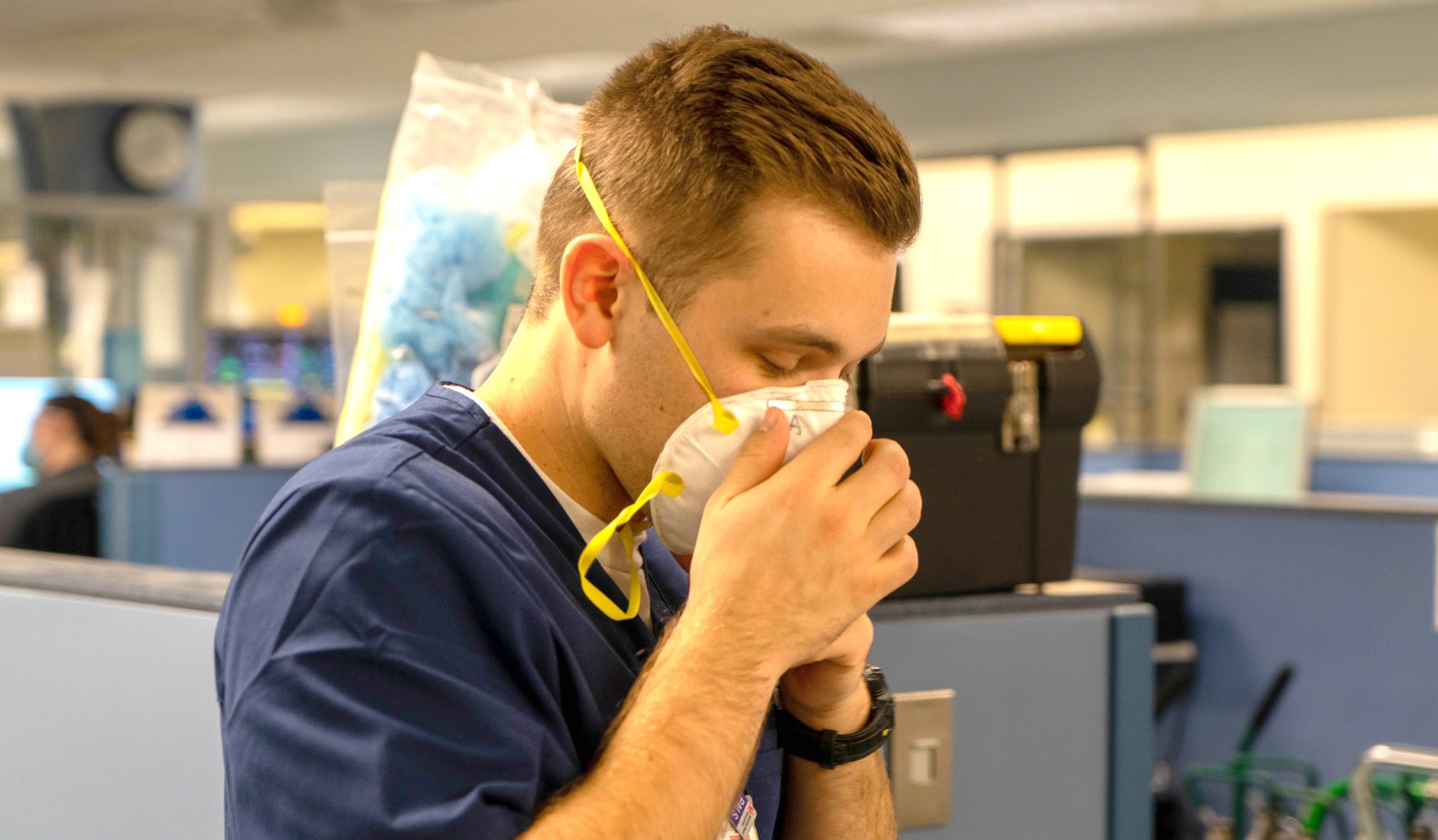
Though the situation surrounding the pandemic is an ever-changing one, it’s easy to feel like the past several weeks have seen more COVID-19 developments than much of last year. From the new omicron variant to controversial changes in the CDC’s isolation guidelines, Tompkins Weekly spoke with local health experts to help make sense of it all.
Omicron
By far the biggest piece of COVID-19 news lately is the arrival and prevalence of the omicron variant. The CDC reported that, as of Dec. 20 of last year, the new variant has spread to most U.S. states and territories and is “rapidly increasing the proportion of COVID-19 cases it is causing” (tinyurl.com/y6j4d33m).
Omicron is more contagious than the original strain of COVID-19, though there isn’t any indication that it causes more severe symptoms, the CDC said. All vaccine types currently available have been shown to protect against severe illness from all known strains of COVID-19, including the new omicron variant.
At the county level, medical experts like those at the Tompkins County Public Health Department and Cayuga Medical Center (CMC) have been monitoring the omicron situation and said this new variant shouldn’t be taken lightly.
“In infectious diseases, we think of [it] almost like a COVID-22 instead of a COVID-19,” said Dr. Doug MacQueen, an infectious disease expert at CMC. “It has enough differences, enough mutations in the virus compared to delta or the original strain of COVID-19 that it is resistant to some of the medications we’ve used to treat COVID. Some of the outpatient monoclonal antibodies don’t work as well. Though it’s essentially the same virus, we think about it a little bit differently from that perspective.”
Tompkins County was one of the first municipalities in the region to be hit the hardest by the omicron variant, with the Health Department announcing in December that there was a “a high rate of omicron transmission amongst the 18-24 Cornell University student population and additional prevalence amongst the wider community” (tinyurl.com/y6ceoaem).
Public Health Director Frank Kruppa said while this early standing wasn’t preferred, it did have some advantages.
“It was both a blessing and a curse in that we were blessed that Cornell has the capacity and was doing research around variants and was able to adjust to be able to provide us some real-time information about the omicron variant in our community, which really helped us understand why our cases were going as high as they were,” he said. “We were in a position to know more than a lot of other communities might have. So, it might be a good thing that we were first because we were able to put some context to what was happening.”
MacQueen said that part of why omicron has become a common COVID-19 strain in many areas, including Tompkins County, is because “society isn’t changing as much or responding in the same way that we did during the original phases of the pandemic.”
“Back then, we were having lockdowns and avoiding each other,” he said. “Today, we’re still pretty much at full tilt with a lot of how we interact. And so, the possibilities for transmission are much higher.”
MacQueen said that he and others at CMC see the omicron variant and other variants before it as a sign that society is in the pandemic for the long haul.
“For years to come, there’s always going to be new variants,” he said. “The biggest concern in my mind is [that] a variant comes along that’s as contagious as these are but that has a higher fatality rate. Thankfully, this strain seems to have a fatality rate that’s lower or similar to the prior variants, maybe a little bit less than delta, particularly in a population that’s more vaccinated like ours is. However, we still have a lot of people who are not vaccinated who are still very susceptible to bad outcomes.”
CDC isolation guidance
On Dec. 27 of last year, the CDC made an announcement that quickly had people across the country confused, including plenty of medical professionals.
“People with COVID-19 should isolate for 5 days and if they are asymptomatic or their symptoms are resolving (without fever for 24 hours), follow that by 5 days of wearing a mask when around others to minimize the risk of infecting people they encounter,” the CDC said in its release (tinyurl.com/yxatgc8f). “The change is motivated by science demonstrating that the majority of SARS-CoV-2 transmission occurs early in the course of illness, generally in the 1-2 days prior to onset of symptoms and the 2-3 days after.”
The previous isolation period recommended by the CDC was 10 days, so the drastic timeline cut understandably caught many by surprise. At first, many health agencies — including our county Health Department — issued statements saying that their guidance would still adhere to the 10-day rule rather than this new guidance out of a concern for residents’ health (see tinyurl.com/y5bcvhtt).
But since then, some health experts have changed their minds. The Tompkins County Health Department, for example, announced just two weeks ago (tinyurl.com/y442y37h) that its guidance now concurs with the CDC.
“We have to weigh the severity of the illness and what we do to intervene with that illness against the impacts those interventions will have on a broader community,” Kruppa said. “If we left it in 10 days, would that limit more spread of COVID? Yes, it probably would, but in this phase of the disease, because we know it is less severe and it is more transmissible, some of the other tools that we’ve been using, like isolation and quarantine being mandated, are not going to be as effective. So, this is a good step forward. And it’s an important one as the disease evolves and our response to it evolves.”
Others, however, haven’t been as quick to change. MacQueen said that CMC’s isolation policy remains to be 10 days to prevent possible transmission to other patients and CMC staff.
“Most people are going to stop transmitting the virus after five or six days, and probably the bulk of the transmission actually occurs within a day or two after developing symptoms,” MacQueen said. “So, hopefully, people won’t spread much virus after five days. However, that five-day mark depends on people being honest about when their symptoms actually started. But people may fudge that a little bit to try and get back to work or life a little bit sooner. So, there is still some risk of transmitting virus.”
Tools — boosters, tests and treatment
Booster shots have been out for several months now — since last September — but it wasn’t until last November that the CDC changed its guidelines to recommend booster shots for all adults who had received their second dose of the Pfizer or Moderna vaccine at least six months prior (tinyurl.com/yha4ow5e). As a result, the booster shot has been in high demand, and folks in Tompkins County are finding it hard to book an appointment close to home.
“The high demand here locally is both a good thing and a bad thing,” Kruppa said. “Throughout the last few months, when it’s been hard to get a vaccine booster appointment in Tompkins County, they’ve been readily available in counties around us. And I think that just goes to show that our community is responding. They want to be vaccinated. And so, it was unfortunate that it was difficult to get in here, but it’s also a good sign. It’s a sign that folks are interested.”
To help meet the high demand, the Health Department is holding weekly booster dose clinics at The Shops at Ithaca Mall throughout this month, with its first booster clinic held Jan. 8.
“I don’t want to become the vaccinator for the community at the Health Department,” Kruppa said. “We’ve got other things that we need to be prioritizing. But we want to get the backlog taken care of in our large-scale clinics so that we, the pharmacies and the primary care practices, the pediatricians have enough space and breathing room to be able to vaccinate the population.”
Another COVID-19-related item that’s been in high demand recently is at-home test kits. At-home tests for COVID-19 have been available for well over a year (tinyurl.com/yy62cdac), with two new brands of tests arriving to the market just last month. Still, in recent weeks, at-home tests have been selling out at pharmacies across the nation, including in Tompkins County.
Both Kruppa and MacQueen attribute the high demand to a few factors, especially the recent holiday season and folks wanting assurance that they wouldn’t endanger their family and friends at gatherings. To help keep up with the demand, the state government has released self-test kits throughout the region, including 4,600 distributed to Tompkins County through the Health Department two weeks ago (tinyurl.com/yxec8v6v).
Kruppa and MacQueen said at-home tests remain an important “tool in our toolbox” to fight COVID-19. MacQueen cautioned, however, that there are several kinds of at-home tests available, so he suggests folks not put too much weight on a negative result.
Another big “tool” to come out in recent months is the arrival of Pfizer’s new oral tablets to treat COVID-19, which the company has labeled as PAXLOVID. According to Pfizer, on Dec. 22, 2021, the Food and Drug Administration authorized the emergency use of PAXLOVID for the treatment of mild to moderate COVID-19 in adults and children 12 years and older (see tinyurl.com/y3q6s3g8 for the full announcement).
Prior to PAXLOVID, the main treatment for COVID-19 was IV infusions, which MacQueen said “just isn’t that effective.”
“These pills have the advantage of, if I see a patient … has COVID in my office or through telemedicine and they’re getting sicker, and they have diabetes and emphysema, and I know they have a chance of getting very ill, especially if they’re not vaccinated, I could send a prescription to their pharmacy, they would take these pills and have a reasonable response and decrease severe illness or death,” he said. “[It’s] not 100%, so vaccination is still a better answer than relying on this medication, but these pills are hopefully going to be better than those infusions.”
The big picture
All these recent changes have created significant challenges for many health care professionals trying to keep up with it all and educate the community along the way, MacQueen and Kruppa agreed. And complicating matters is a drastic shift in health care overall since the early stages of the pandemic.
One particular concern that MacQueen expressed about the health care system both in the county and beyond is that there have been significant staffing shortages at many health institutions, greatly reducing the capacity of some hospitals.
“People don’t understand that the health care system that they felt they can rely on two years ago in a lot of the bigger cities is no longer there,” he said.
To bring it to a county perspective, MacQueen explained that previously at CMC, staff could transfer patients to places like Rochester for serious procedures like open heart surgery.
“But now, because those hospitals are full, full because they have COVID patients, full because people have just, I think, put off some health care over the last couple of years and have gotten sicker, and then full because staffing levels are way down, we can’t transfer them patients anymore,” he said. “So, now, we’re looking to transfer patients to Buffalo or Albany, New York City to get those same services. And it’s not guaranteed.”
As a result, MacQueen is trying to raise awareness toward keeping up a good health care routine, including cancer screenings and regularly seeing your primary care physician. He also advocates for preventative measures like weight loss and exercise to help make infection less severe.
“I think it would make sense to encourage weight loss generally but, more importantly, to improve cardiovascular and pulmonary health to be able to help survive a severe case of COVID-19,” MacQueen said in an email. “This can be done by adding in 20 minutes of walking 3-4 times per week and slowly increasing activity, and cutting back or quitting smoking.”
Overall, while there have been many changes recently, Kruppa said that the county has done a considerably good job of fighting COVID-19 throughout the past two years, and he encourages residents to keep that up.
“I’m excited for our community to be moving in this direction,” he said. “COVID isn’t going away, and there are vulnerable members of our community — seniors and those that are immunocompromised — that we have to be watching out for. And so, there are still things like masking indoors [and] getting vaccinated that we need people to do because we have to protect those most vulnerable amongst us. But I’m feeling positive. I hope the community sees this transition, while bumpy, to be a positive step forward and that, ultimately, we continue to see the severity of illness continuing to decline.”
Keep up with Health Department updates at tompkinscountyny.gov/health. Learn more about CMC’s work at cayugamed.org.
Jessica Wickham is the managing editor of Tompkins Weekly. Send story ideas to them at editorial@vizellamedia.com.
Related Articles

AmeriCU proudly connects students with annual scholarship opportunity
AmeriCU scholarship program awards $1,000 to students pursuing college or vocational education. Applications are open through March 15.
Street Beat: What’s one of the best holiday gifts you ever received?
We asked five random people. Here’s what they had to say.

5 things to do in Tompkins County this weekend
Plan your visit and discover what’s happening this weekend.