Health officials warn of Delta variant’s effects on county
For several weeks, Tompkins County and some surrounding areas finally saw a significant decrease in COVID-19 cases, with the county seeing several days in a row with zero new cases. But that trend has since reversed, largely due to the rising prevalence of a far more contagious strain of COVID-19, the Delta variant.
The Tompkins County Health Department (TCHD) sent a community announcement last week in regard to the Delta variant, explaining that the CDC has designated it as a “variant of concern.” In his recent addresses to the state, Gov. Andrew Cuomo also shared his worries about the variant, reporting that over 80% of current COVID-19 cases in the state are the Delta variant.
The uptick in cases throughout the nation — coupled with a new study (t.ly/O76Z) showing that vaccinated individuals who got “breakthrough” infections from the Delta variant carried about the same amount of virus as unvaccinated — led to the CDC changing its mask guidance last week.
The CDC now recommends that all unvaccinated and most vaccinated individuals wear masks indoors. TCHD echoed the CDC, issuing a health advisory late last week encouraging all residents, regardless of vaccination status, to wear a mask while indoors around others.
“It’s become the predominant strain everywhere, and we expect that to be the case here in our community as we’ve mirrored other trends over time,” said Dominick Recckio, communications director for Tompkins County administration.
Dr. Andreia de Lima, vice president of medical affairs at Cayuga Medical Associates, explained how the Delta variant was able to become the predominant strain so quickly.
“It was identified in December, and now we are in July, and it’s already more than 80% of the cases that we have,” she said. “And what research has shown is this specific mutation, it multiplies faster. So, the amount of virus that you have in your nose and your throat is much higher. And that’s why it is more contagious.”
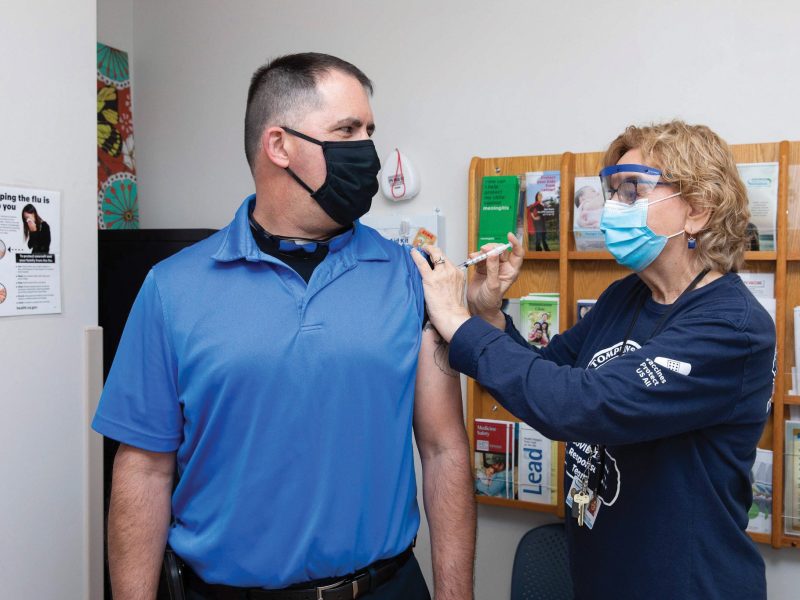
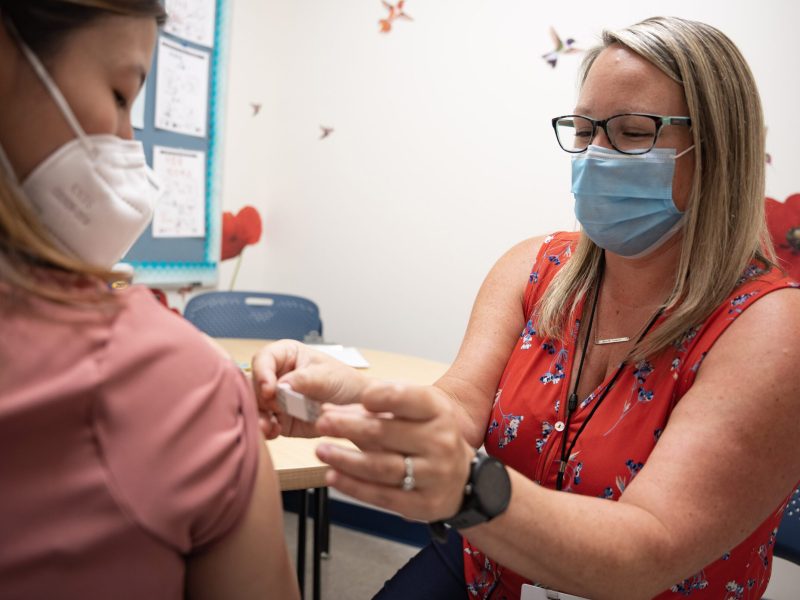
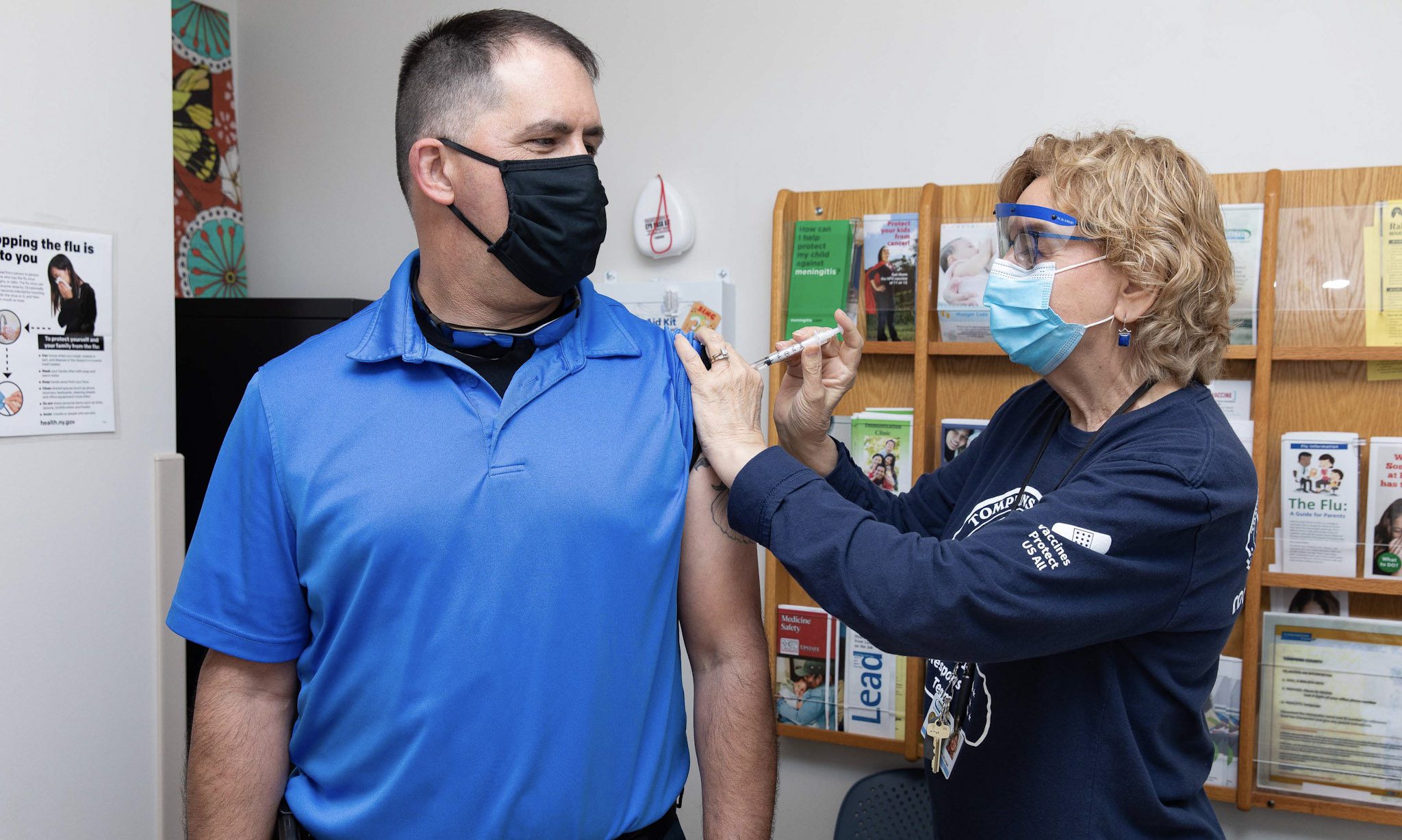
Fortunately, all three available vaccines — Pfizer, Moderna and Johnson & Johnson — are “extremely effective” at preventing serious illness from COVID-19, including the Delta variant, TCHD said. But unvaccinated individuals have the greatest risk of becoming seriously ill, which is why the New York State Department of Health is urging all who are eligible to get vaccinated as soon as possible.
As sources reported, the vaccine demand plateau Tompkins Weekly reported on back in May is persisting, with about 75% of county adults being fully vaccinated. There has been some progress, though, as Samantha Hillson, director of health promotion for TCHD, explained.
“We’ve tried lots of different strategies throughout the past couple months as the vaccine rolled out more readily in the community,” she said. “We’ve had lots of pop-ups in different areas of our county. And at all those, even the pop-ups, over the past couple weeks, when things really had slowed down in terms of that demand, we still had 20 to 30 people at some of the pop-ups. And that really was viewed as success in our eyes.”
Cayuga Health System is also focusing much of its efforts on reaching out to unvaccinated individuals to try to get more residents vaccinated.
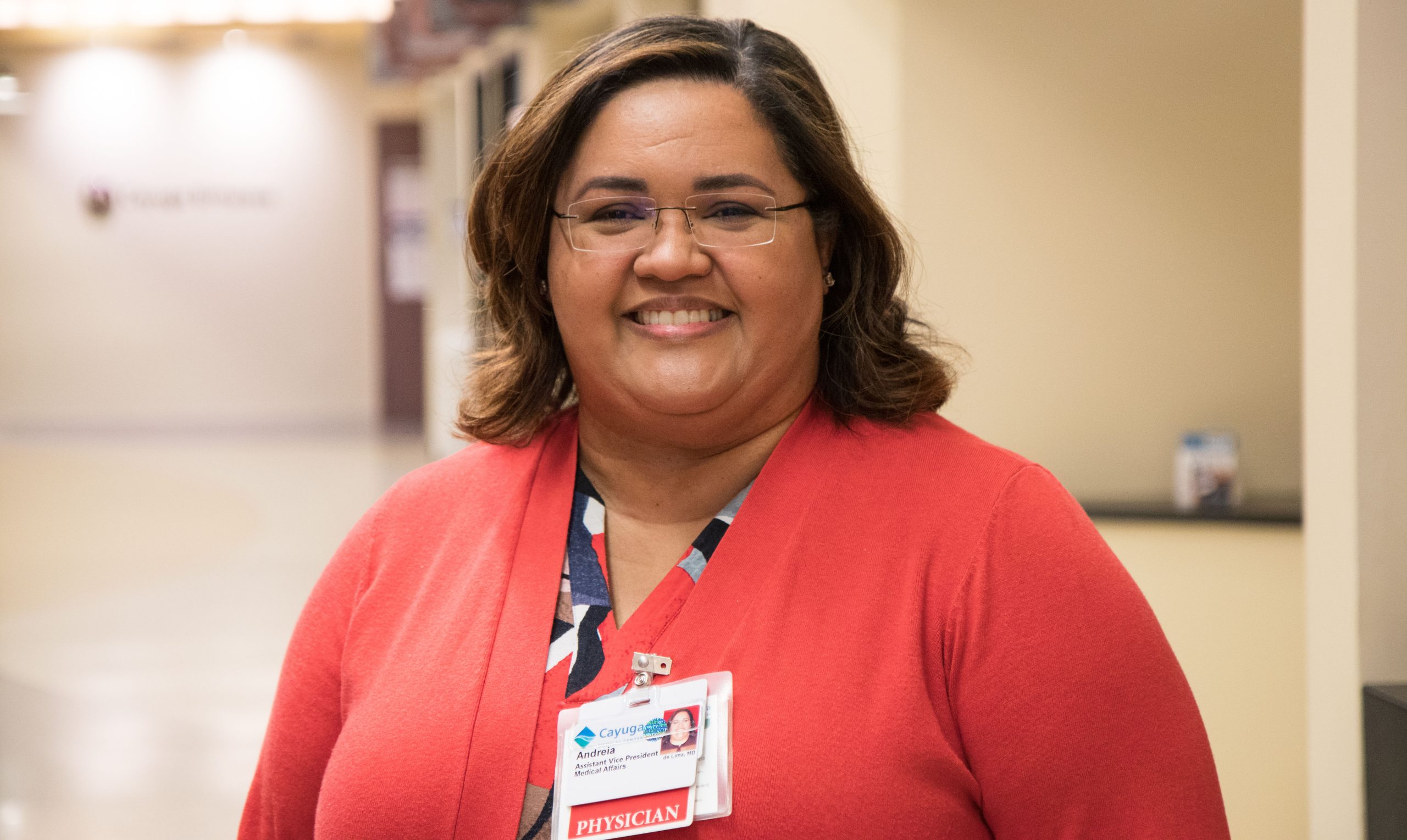
“Some of them will really not take this vaccine, but there’s part of that group that if they have their questions answered, they may consider, and that’s the population that we are trying to hit,” de Lima said. “We are working on this education group to try and reach out to people, initially employees, but also expanding into the community to try and answer questions and really show the community that the vaccination is safe and efficacious.”
Beyond the detrimental health effects unvaccinated and, to a lesser degree, vaccinated individuals could face due to the Delta variant, a big area of concern for officials is that a continued vaccine demand plateau could lead to even worse strains of COVID-19 developing.
“The major concern is what happens if the next mutation escapes the vaccine, and then we are back to where we started, where you have a virus that you really have no other weapon against,” de Lima said. “The way to avoid that is to get vaccinated. If the virus doesn’t have a host where it can multiply and mutate, it will eventually die down. Not disappear, but it will be like the flu, that because we have enough vaccinated people, it has a season, and then it dies.”
Sources said that county residents should be concerned about the consequences of the Delta variant being allowed to spread throughout the county and infect more people, so they urge several precautions. As stated previously, the first is to get vaccinated. Beyond that, sources referenced our line of defenses that have been around almost since the start — masking, social distancing and hygiene.
“For unvaccinated individuals, if they continue to be unvaccinated and choose not to get vaccinated, they should 100% be wearing a mask when around others,” Recckio said. “It is imperative that they do. So, we’re seeing spread or clusters or families or households or travel, these scenarios where people are getting infected. Because their vaccination rates are so high, people may perceive their risk as being lower. But if you’re unvaccinated, those risks persist in the similar way they had before.”
In addition, sources advise residents to continue to monitor the situation and follow any advice put out by the TCHD, Cayuga Health and health officials at the state or federal level.
“Even for those who are vaccinated, we all still need to be aware of the situation and be mindful, especially, of travel,” Hillson said. “You can look at the map of just our country and see where hot zones are and lower vaccination rates, etc. So, I think it’s still important to be aware of that even if vaccinated.”
Sources commended the community on its cooperation with efforts to fight COVID-19 so far and acknowledged that our vaccination rate wouldn’t be so high, or our disease numbers so low, if not for the hard work of residents, and that will be imperative to fighting this new strain.
Hillson said that TCHD will also be monitoring the evolving situation, just as it has throughout the past year and a half.
“We’re still doing very thorough case investigation. Our team has had a lot of practice and skills in this area,” she said. “We’ve had new staff come on to really support this ongoing effort. … We’re here for the long haul, and we’ll continue putting out messaging that’s current and reliable and the best information that we have to share with the public to keep people informed locally.”
TCHD continues to complete case investigations and contact tracing for all local positive cases and reports disease and vaccination data weekly on the TCHD website, tompkinscountyny.gov/health. The TCHD spreadsheet continues to be updated daily, Monday through Friday.
Call 2-1-1 during regular business hours, 8:30 a.m. to 5 p.m., or visit the TCHD website for more information about how to get vaccinated locally. Follow TCHD on Facebook at facebook.com/tompkinspublichealth and on Twitter at @TompkinsHealth.