
Home again
By Jamie Swinnerton
Tompkins Weekly
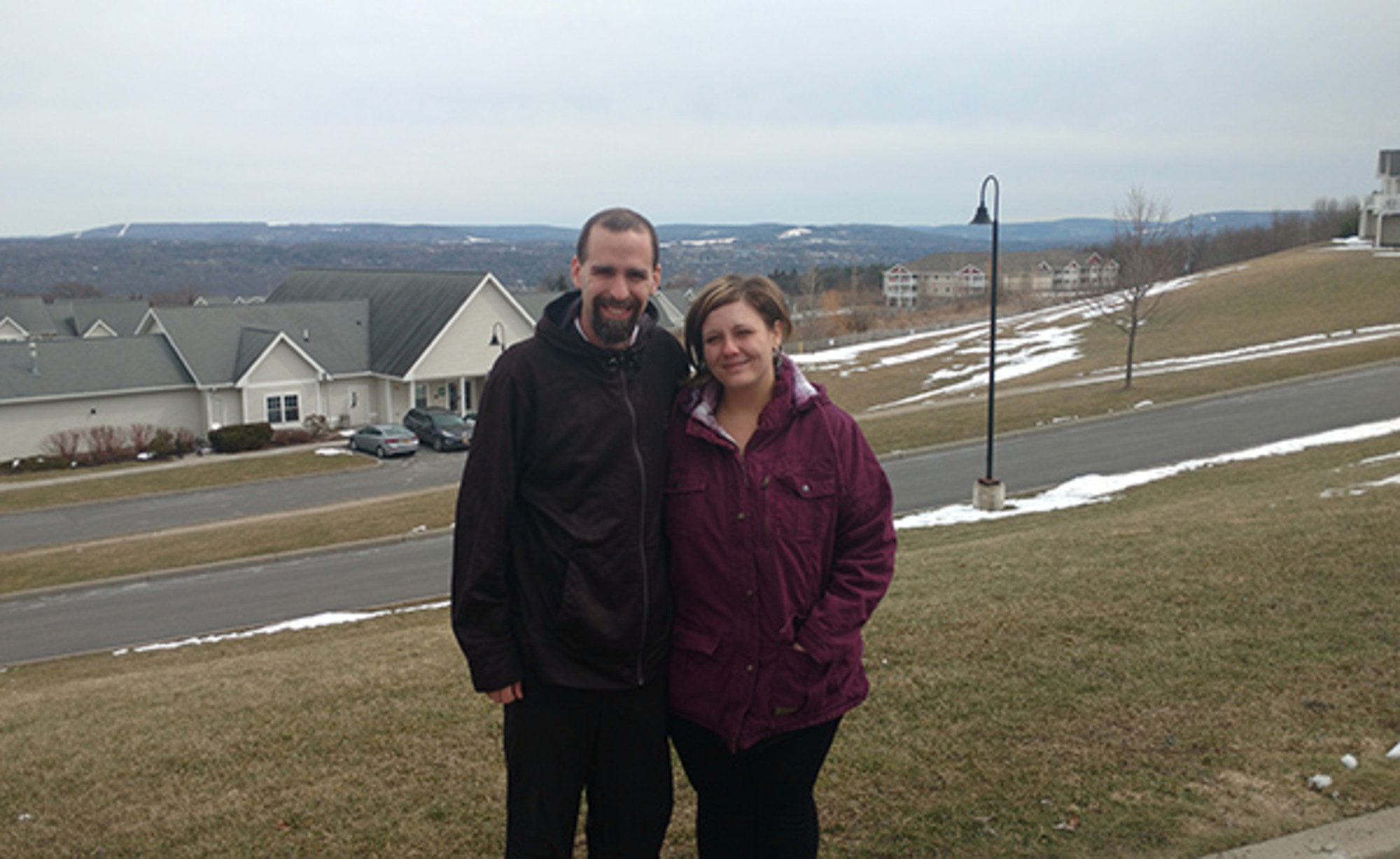
Thomas “TJ” Burlingame and Alyssa Perison never in a million years expected that they would be homeless. Perison had been living in unstable situations since she was about 18-years-old, but she always had a roof over her head. After they both lost their jobs at Denny’s they decided to go on what they thought was going to be a temporary adventure.
It was around Valentine’s Day of 2017 that Perison and a friend went to grab dinner at Denny’s. When Perison left her number for the cute waiter that had served them she had no idea if he would actually use it. Burlingame ended up texting her that night, wondering if she had left the number by mistake. He had assumed the man she had come in with was her boyfriend. It wasn’t long until they started dating and Perison also took a job at Denny’s.
After a few months, the couple both lost their living situations and moved into a camper owned by Burlingame’s adoptive parents. But they couldn’t stay there for long. The commute to Denny’s took several hours and the septic system wasn’t set up to handle more than two people on the property. The situation was made worse when they were both let go from Denny’s and couldn’t find jobs closer to the camper in Groton. When they tried to get help from the Department of Social Services (DSS) the couple said they were denied money for a security deposit on a new apartment because with their last checks from Denny’s they made too much money to be eligible.
“They turned us down because of our last paycheck,” Burlingame said. “They were like ‘Well you can support yourself,’ that’s exactly what they told us. They were like ‘Go rent a hotel’ when we’re trying to save that money for like a security deposit or first month’s rent somewhere.”
They couldn’t live in Burlingame’s parent’s camper, their job searches were coming up empty, and they couldn’t get help from DSS. With few options ahead of them they got a tent and moved to the Wild Flower Preserve.
“We were just really scared. We were worried that people were going to find us,” Perison said. “We’ve just got to be homeless, save money, get an apartment somehow, get better jobs. And then instead of consistently doing what we were doing, which was putting in applications for jobs, it just got really discouraging because we weren’t getting anything back.”
At one point, Perison said she applied to work at Subway and was told there would be no available positions for several months. By the time August rolled around the couple had moved to The Jungle, an encampment for people experiencing homelessness, situated behind the Ithaca Wal-Mart. Burlingame’s parents helped the couple build a small 10-foot by 8-foot hut, with a door that locked and a small window, to live in. Winter was fast approaching.
“The whole plan was to get some kind of shelter going and then we could then attempt to look for housing and at least have a place that we could go back to, like a bed where we could lay our heads at night,” Perison said of the hut.
In the beginning, the couple would go to the library to use the computers, but it’s not a short walk. They would apply to jobs on their phones but would have to go into Wal-Mart to recharge them several times a day and the wifi was not secure. Perison said she didn’t feel comfortable putting in her social security number on such a public wifi connection. They put in paper applications and did walk-ins, but their living situation was stressful and it often made them irritable, angry, and depressed.
Eventually, Burlingame got a job at McDonald’s. But after about a month he had to be checked into a mental health ward due to suicidal feelings. When he came back the job was gone.
Their days became routine. They would go to the Rescue Mission in the morning to get a bagel and maybe take a shower. They didn’t have the money or facilities to wash their clothes so they would have to change back into what they came in with. Then they would spend the day collecting cans to recycle for money for food later.
“We’d go to Taco Bell a lot too,” Perison said. “We’d go to the canning place, make like $20 and each get a $10 box and that was our dinner. We’d save the burrito for later. It was terrible.”
They would often go to Loaves and Fishes for whatever meal was being served that day. Then they would end up back at the camp where they collected firewood, maybe drank some beer, and would zone out.
“It’s easy to fall into addiction because you don’t have anything to do,” Burlingame said.
What they had hoped would be a temporary situation was stretching into months. Living in the Jungle was cold, difficult, and scary. Their hut had a small cooker for food but Perison said they would often end up eating food cold because the only way to wash their dishes was to bring them to Wal-Mart or find water to bring back to the camp.
“There’s almost zero motivation when you’re living like that,” Perison said. “And so, I turned to God and I basically started praying because things were getting terrible, like really terrible, like constant fighting, conflict, sadness, desperation. I was just praying for someone to come along to help TJ and I.”
She didn’t have to wait much longer. Carmen Guidi, the creator of Second Wind Cottages down in Newfield, whose mission is to get people out of homelessness, found Perison one night, brandishing her machete and afraid of who was approaching her. Soon they also met Chris Biehn, an organizer with Ithaca Homeless Crisis, a new group with the intention of ending homelessness by supporting local organizations like Second Wind and the Rescue Mission. They found a support system and started going to church and praying together. Both Perison and Burlingame, who admits he was skeptical of faith before, say their situation started to improve as they prayed.
But the biggest turning point came when they heard about a new housing program, Tenant-Based Rental Assistance Program, through Tompkins Community Action (TCA) that would pay for the couple’s first year of rent, and a security deposit until they found jobs. The only thing they had to do was find the apartment. Danielle Harrington, the Housing and Energy Services Director at TCA, helped the couple get into the program and went with them to look at apartments.
“We were awarded funding from New York State Homes and Community Renewal to run a tenant-based rental assistance program and we started that kind of end of December-beginning of January, screening people who were experiencing homelessness,” Harrington said. “Literally sleeping outside or extended shelter stays.”
TCA has enough funding for 15 households and the program will last two years. The program offers one year of rent with the ultimate goal of rolling it into the Section 8 rental assistance program. But what makes the program different, beyond the ongoing rental assistance, are the ongoing supportive services that come with it. Each household is assigned a care worker who is there to help them with a range of things, including talking to a landlord or writing a resume.
“It’s all about housing stability,” Harrington said, “pulling together all the community resources that are available. But help navigating those services because you’ve heard ‘No’ so many times that you don’t even try anymore.”
Once the participants in the program find employment they will start to pay 30 percent of the rent themselves.
Finding an apartment became a task full of hurdles. Some places denied the couple because of unpaid bills in their history or would simply never call them back.
Finally, they heard back from a local landlord willing to work with the program, with an apartment that fit their budget of $929 for rent and utilities, and called them back.
“It was actually the first apartment that we were able to view and Danielle went with us, we asked her to go with us and she did, and we went into this place and it was small. It was very tiny,” Perison said.
It was January, it was cold, and the couple was ready to no longer be homeless. So, despite the cramped quarters of the apartment, they were ready to take it.
“And then he ends up telling us that it’s not available until May and this is in January,” Perison said with frustration.
They started utilizing the cold weather policy through the Rescue Mission and spent a few nights in hotels, paid for through the Mission. But they didn’t want to leave their stuff in the Jungle for too long for fear that it would be taken.
Just as they were starting to become discouraged again they called Outlook at West Hill to check in on their application and found that they were at the top of the list. Several days later, after filling out a bit more paperwork, the couple was approved for their apartment. Before they moved in, the couple’s friends and support system filled the new place with furniture, food, and supplies, many of them donated through the Ithaca Homeless Crisis network.
“It makes us more motivated to do things,” Burlingame said of having a place to live. “Now there’s no doubt in my mind that we can do anything. Before, I felt like I was stuck in a rut. It was just so discouraging.”
Next step for these two is finding employment. Perison wants to find something that will allow her to work with people, she’s a people-person at heart. Burlingame said he will take employment wherever he finds it. They both agree, once they have saved up some money and gotten back on their feet they want to turn around and start giving the same kind of help they found when they were living in the Jungle.
In some ways, their experience changed their view of homelessness. Burlingame admits that before experiencing it he used to think that the homeless people he would see on the side of the road with signs should just go get a job. Now, he said he knows the situation is different for each person experiencing homelessness.
“What if you get into an accident and you have to pay out everything you have?” Burlingame said. “I never thought in a million years I would be homeless.”
Related Articles

5 things to do in Tompkins County this weekend
Plan your visit and discover what’s happening this weekend.


Tompkins Chamber announces Rob Montana as new vice president
Rob Montana, community leader and communications professional, has been appointed vice president of the Tompkins Chamber, where he will help drive economic growth, workforce development, and community engagement.