
Home Improvement: Increase energy efficiency before snow flies
Because of COVID-19, this winter will undoubtedly be filled with plenty of folks stuck in their homes for much of the day and week, and with colder weather on the way, that’s going to mean the heater will be almost constantly running in residents’ homes. Increased energy usage can drive up a homeowner’s or renter’s utility bill, but there are many things owners and renters can do to improve their energy efficiency and save some money this season.
One of the best ways to improve a home’s energy efficiency is by making sure the home is properly insulated, as Loralee Morrow, director of construction services at Ithaca Neighborhood Housing Services (INHS), explained.
David Mark, head of the painting department at Agway True Value Homecenter, explained that with some older homes, residents may even have to reseal around windows.
“If a homeowner has an old farmhouse that has windows, where the glazing around the window panes is cracking, … it’s a really good practice to remove that cracked glazing and to replace windows,” Mark said. “It would prevent [air] from infiltrating through the window.”
Mark explained why sealing is so important for improving energy efficiency.
“If you’re letting cold air in, your furnace is going to be running a lot harder,” Mark said. “So, in terms of energy efficiency, with how much energy is devoted to running a certain heating elements — whether it’s oil or natural gas or electricity — that air infiltration into your house, it’s going to hit your thermostat, and it’s money out the door.”
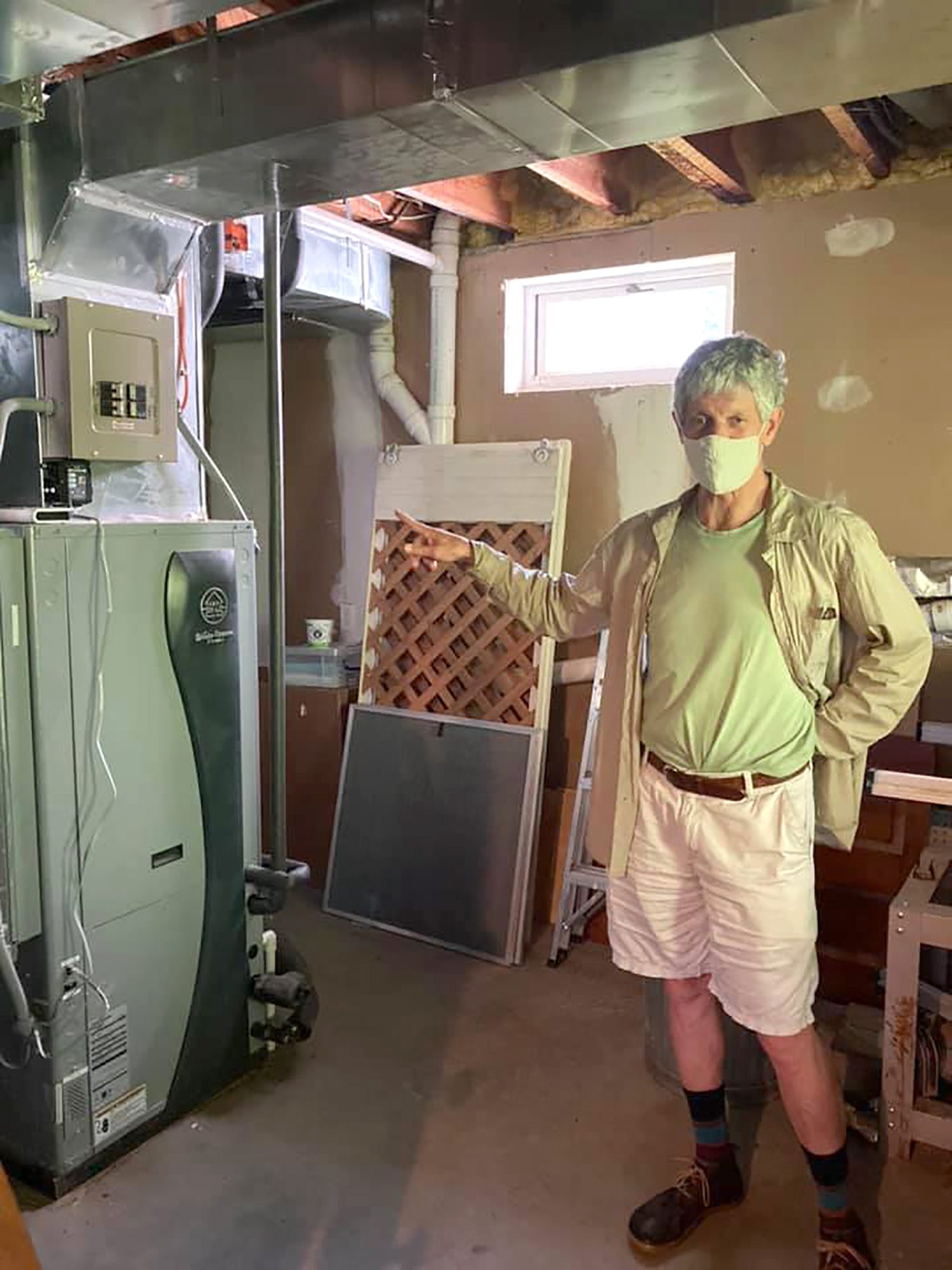
Lisa Marshall, program director at HeatSmart Tompkins, said another way to improve energy efficiency is to switch to more efficient forms of heating.
“The next step is to look at your heating and your hot water, and we highly recommend heat pumps for both of those functions,” Marshall said. “They’re by far the most efficient option out there. They’re very inexpensive to operate. And when you have heat pump heating, you also get cooling.”
For those with lower incomes, Marshall said there are avenues out there to help homeowners pay for a more efficient heat pump and other efficiency projects, like tax credits on the state and federal levels and grants provided through COVID-19 relief programs.
Another way to improve your energy efficiency is by properly insulating your attic, basement and other areas.
“If you think about it as like the old saying that you lose most of the heat to your head, so if you’re cold, put on a hat, it’s exactly like that for a house; the first thing to do is put on a hat,” Marshall said. “The second thing to do is put on those wool socks. In other words, first insulate the attic, then insulate your basement, your rim joist, which is the space between your house and the foundation that it sits on. And the very last thing is actually the conditioned space — so, the walls in between and the windows.”
For those with some DIY experience, sources said that many of these actions can be done by the homeowner, renter or landlord. But some projects will require a professional, as Morrow explained.
“The caulking, weather stripping, buying more efficient appliances, that can be done by either the homeowner or the landlord or the renter can do with the landlord’s permission,” she said. “Most landlords are not opposed to having energy efficiency upgrades. If they’re installing a larger HVAC system or a storm door or anything along those lines — new windows — they’re going to want a professional.”
For residents who are new to the energy efficiency game, sources offered some advice for getting started. First, visit NYSERDA’s website at nyserda.ny.gov. The website has advice and resources for various home improvements, including increasing energy efficiency.
“[NYSERDA] talks about everything from water conservation, to energy conservation, to what you need to do as a renter, as a homeowner, as a landlord,” Morrow said. “That’s really the best thing [homeowners] could do is just go out there and get familiar and educated with what’s best for this area because the Northeast has its own unique weather systems.”
Second, get an energy audit to know where you can make improvements most effectively. Morrow and Marshall agreed that an energy audit is a great first step for anyone looking to improve their energy efficiency, and getting one done is fairly easy and cost-effective.
The sources interviewed for this story all provide services or products that can help with energy efficiency. At Agway True Value Homecenter, residents can buy caulking, spray foam and other products for DIY improvements in the store, located at Cayuga Mall off North Triphammer Road.
HeatSmart (SolarTompkins.org) is a nonprofit that advocates for net-zero carbon homes in the county through outreach, education and consumer support. Team members forward leads for home energy projects to a vetted installer partner, who will then pursues sales and installations. HeatSmart makes no money from these sales.
INHS (IthacaNHS.org) is a nonprofit dedicated to expanding housing opportunities for low- and moderate-income county residents. INHS’s Home Improvement Program provides financial assistance to make large home repairs — including energy upgrades — and its Minor Repair Program provides high-quality repairs for seniors, those with disabilities and single heads of households with dependents, all for free.
Related Articles
Cayuga Medical Center nurses to rally, alleging anti-union tactics by hospital management
CMC nurses plan a rally, alleging unsafe staffing and illegal anti-union tactics as the hospital highlights recent patient-safety gains.

Beginnings Credit Union holds ribbon cutting
Beginnings Credit Union celebrates a branch rebrand in Ithaca, providing improved services and engaging with the local community.

Cailyn McMahon: From Brooklyn to Groton for the love of sweaters
Designer Cailyn McMahon moves from Brooklyn to Groton to raise sheep and pursue her dream of making American-made wool sweaters.