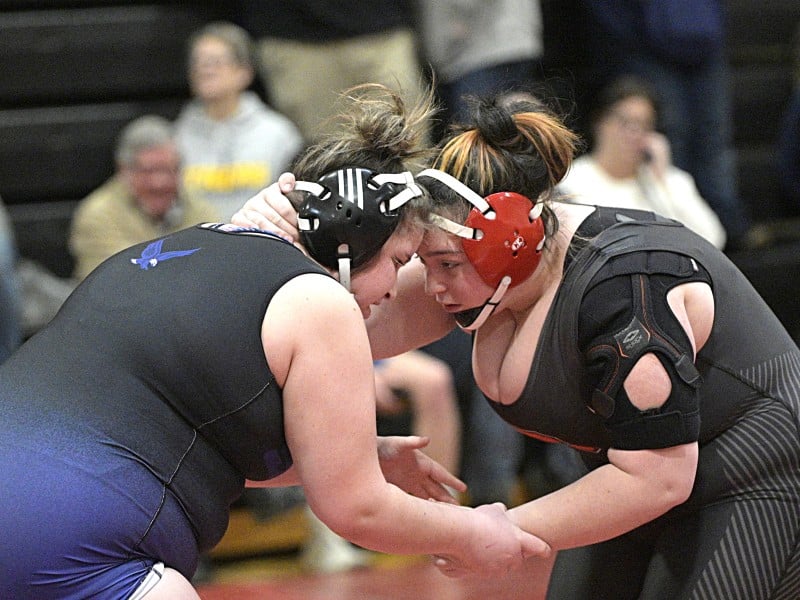
IAC postpones all fall sports

On Friday, Sept. 11, the athletic directors of the 19 Interscholastic Athletic Conference (IAC) member schools held a vote to determine the fate of the upcoming fall sports season. The postponement of the season until March 2021 was approved by 12 of the 19 schools, which means all fall sports, no matter the risk level, will not be played until next year.
The IAC encompasses all Tompkins County schools outside of Ithaca, which is part of the Southern Tier Athletic Conference (STAC). The STAC followed the IAC’s lead and postponed all sports until January just two days after the IAC made its decision.
IAC Executive Director Bill Bryant gave some insight into the Friday meeting. After the vote to postpone the fall season was finalized, another motion was approved to adopt New York state’s condensed season plan, in which all three athletic seasons would be held in the 2021 portion of the academic year with slight overlap. However, he added that the winter season could begin by the end of November if New York removes the high-risk designation from basketball and wrestling before then.
Essentially, it is now a waiting game for the league as decisions will be made at the state level regarding the solidifying of the condensed season plan as well as the status of high-risk sports.
Of course, it was not an easy call for the athletic directors to hold off the fall season. Student-athletes have been starving for competition ever since the cancellation of the fall season back in March.
“Having been a student-athlete myself many years ago, I just can’t imagine what those young student-athletes have had to bear through these difficult times,” Bryant said. “I think I speak for all of the athletic directors of our league. I know in our meetings, that seems to be one of our biggest topics, talking about hoping that what happened to the Class of 2020 doesn’t happen to the Class of ’21, ’22, ’23 down the road.”
Bryant addressed the challenges that the student-athletes have faced and had a message for those missing out on athletics currently. He explained the next checkpoint that will be met in the process of returning to athletics.
“We all need to be patient through these times,” Bryant said. “That day is going to come, and hopefully sooner rather than later we’re going to have some dates … and we’ll be able to put schedules together. That will be a good sign that we’re going to be able to move forward with the winter, fall and spring in 2021.”
Bryant truly sympathizes with the affected athletes and recalled his own experiences when acknowledging how crucial sports are to them.
“Having been a former student-athlete, I know how important that time together as teammates is and how close-knit those groups were,” Bryant said. “We will do everything that we can possibly do to make sure that we can get through this fall season and not have any more bumps in the road with the pandemic. Then, we’ll be able to move forward into at least a condensed sports season for our student-athletes. Again, I’ll just say, we have to be patient.”
No decision was going to make everyone happy, so Bryant and the IAC went the route that would keep student-athletes as safe as possible, considering the world’s knowledge of COVID-19 is still developing.
“This has been devastating to everybody involved, from the superintendents, to the athletic directors, to the student-athletes, to the families, to the communities,” Bryant said. “It’s had a trickle-down effect right from the top down, and no one wants to make those tough decisions. They’re very tough decisions. When making any type of a decision like what we’ve had to, number one is the safety of our young people.”
Again, there is a chance we’ll see winter sports before the new year. That decision will not be up to the IAC, but its decision to only postpone fall sports and not winter sports maintains hope for sports before the end of the year.
“If the state health department declares [high-risk sports] no longer high-risk, then that kind of opens a window and a door for us to be able to really consider the option of starting in the wintertime, Nov. 30,” Bryant said.
Bryant and the 19 IAC athletic directors have been meeting every other Wednesday throughout the pandemic. Considering the start of schools for districts in the area, the next meeting will be held Oct. 7, barring the need for an emergency meeting before then.
Related Articles
Ithaca Warriors football wins first title since 2018
The Ithaca Warriors football team captured the NFA AA championship, their first title since 2018, after a dramatic playoff run.