Immigrants find support, community in Ithaca
The Russia/Ukraine conflict that continues overseas has a lot of folks worldwide wondering how best they can support Ukrainians and other immigrants in their countries. Locally, many resources exist in Tompkins County to support immigrants who have made the county their home. TST BOCES is one such service provider, and staff and students alike welcome immigrants from all over to join their supportive community.
TST BOCES offers a variety of adult education programs (see the full list at tstboces.org/adulteducation), two of which are especially centered around helping immigrants adapt to life in the county: English as a second language (ESL) courses and high school equivalency classes. Both are held at the Tompkins Cortland Community College Ithaca Extension Center just off the Ithaca Commons.
The students in TST BOCES’s ESL courses can attest to how welcoming the Ithaca and BOCES communities have been to them so far.
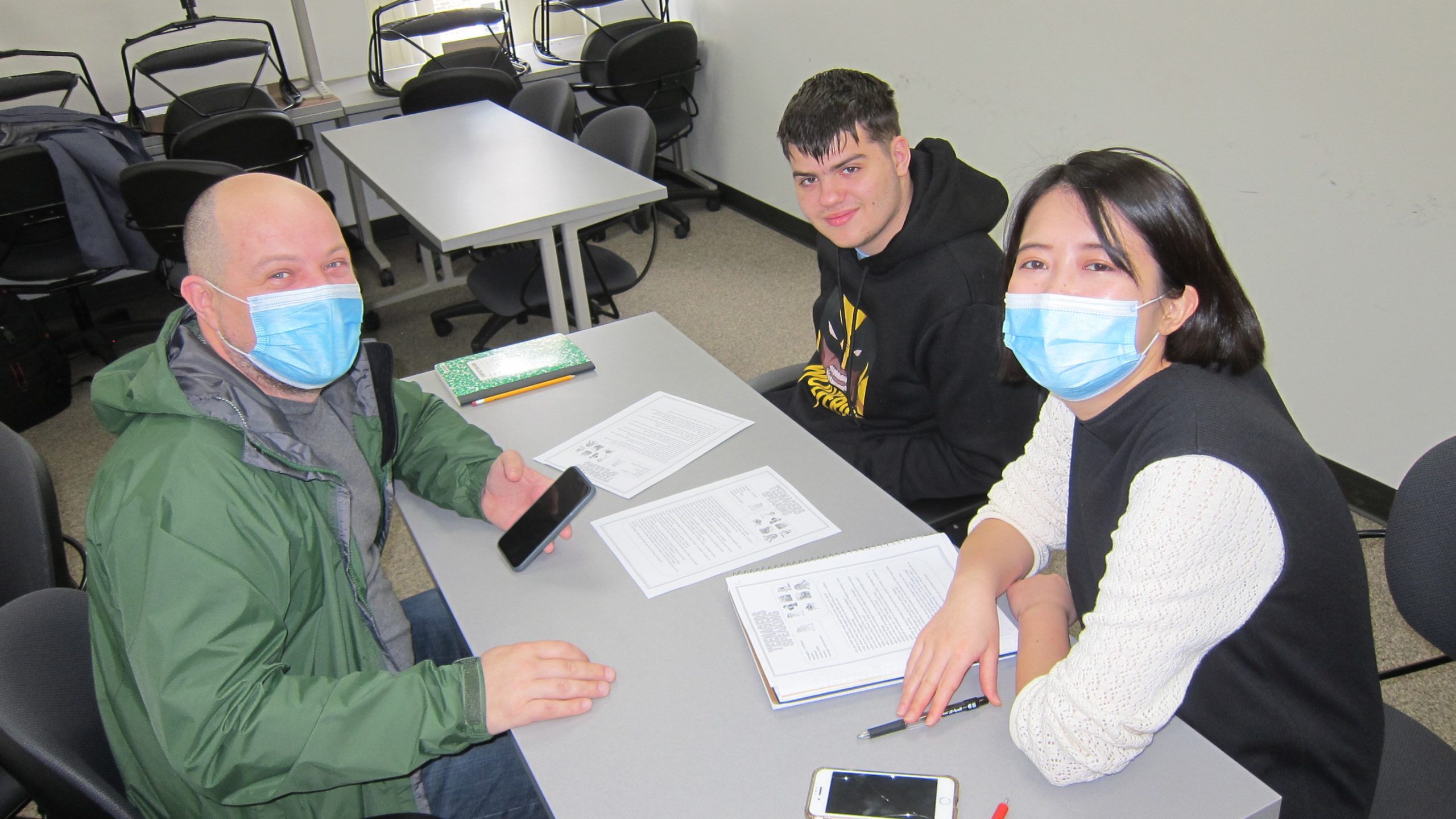
“I can speak English in my country very well, but once I came here, it’s a little difficult for me to understand you people,” said one ESL student, Nivedita Saravanan. “You people speak English fluently since it’s your first language and mother tongue. It’s very fluent for you. And I can’t get the meaning when you speak so fast, so I want to make my English little better, so I found here. And it’s very helpful for me. [Before], I would be really hesitant to speak and respond to people. Now, I’m a little more open and ready to speak.”
Saravanan immigrated to the county from India when her husband started working at Cornell University, she said, and she’s enjoying the literal change in scenery.
“In my country, there will be not be a lot of mountains and greenery,” she said. “Here, it’s more very green, and the air is very unpolluted. So, it’s very good.”
Another student, Haiyan Li, immigrated to Ithaca from China last September and now lives with her daughter, a Ph.D. student at Cornell.
“My daughter, her major is psychology, and she researched for the bilanguage,” Li said. “So, she look[ed] for some someone to speak English as a second language. So, she finds this school and recommends to me, and so, I come here.”
Li said that she has seen considerable success since joining the ESL course and enjoys meeting fellow immigrants.
“My English is not good before I come here,” she said. “And I realized I need to improve my English level because when I go to the supermarket, I can’t understand the stuff. I also want to take a local driver license [test] at Ithaca, but the DMV staff told me I need to take an online course. But for me, it’s too hard. … I don’t want my community circle [to be] only with Chinese. I want to make more friends, so I come here.”
Qiong He, another ESL student from China, shared a similar experience.
“I have come here to study English eight months [ago],” she said. “I feel I can study English and see progress. … Before, I can [only] say ‘hello.’”
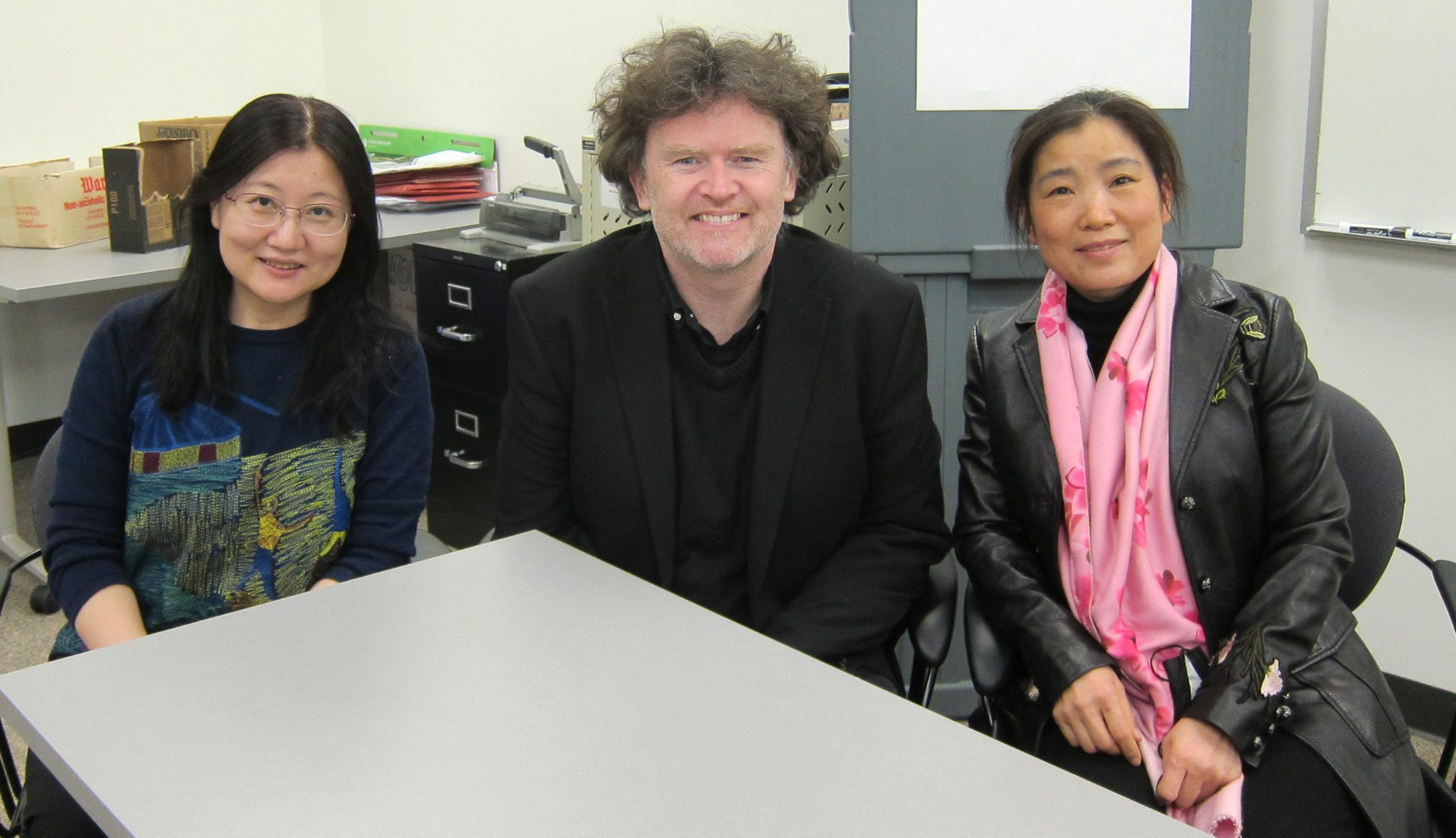
Gavin Donohoe is one of the adult ESL instructors at TST BOCES and an immigrant himself. Dedicated Tompkins Weekly readers may recall the coverage of Donohoe, an Irish immigrant, being awarded citizenship just before the pandemic hit in February of 2020 (tinyurl.com/y9cafqt9), and he’s come a long way since then. He’s taught ESL to immigrants in the U.S. and around the world for several years now — including in South Korea and New York City — but it wasn’t until the past few years that he started teaching in Ithaca.
He said both in South Korea and in New York City, he largely taught ESL to “very privileged people,” but it was the less fortunate students he’s really clicked with both in the Bronx and in Ithaca.
“When I went and taught in my favorite school, which was in the Bronx, and I was helping people that were just trying to get ahead, … that’s my favorite kind of group to teach,” he said. “And that’s what I found here in Ithaca. … Because it’s for free, because of the demographics of Ithaca, I end up helping the people who need help the most. And it’s not that I think I’m fantastic. It’s just that that’s what gives me the drive. When I walk home at night, I feel really good about helping these people.”
As far as what a typical ESL course at TST BOCES looks like, Donohoe explained that rather than students learning through direct translation — like how many English-speakers learn a second language in America — ESL students have a wide range of first languages and thus have to be “thrown into the deep end,” so to speak.
“It’s quite common in ESL that people won’t use any kind of translation or will speak just in English,” Donohoe said. “The idea is like when you’re learning to swim — you can learn to swim in the shallow end, and it might take a year [to learn], or you could be thrown into the deep end, and in that kind of panic, you learn so much. So, what we try to have every day is activities, projects, things where they’re working together and they have to use communication skills that maybe you can’t teach just on the board.”
To join the ESL course, many aspiring students first work with services advisers like Luke Sjolund. Sjolund has been working at TST BOCES for roughly three years now and regularly helps to guide residents to the programs that work best for their situation, whether that be ESL or high school equivalency programs.
As far as what his role includes, Sjolund said much of his days are spent talking to residents either over the phone or through email, getting their information and fielding any questions they may have. He said that while high school equivalency intakes are generally handled best over the phone, he’s found that email tends to work best for ESL students.
“It’s a little trickier because our phones were made probably in 1984, so if somebody calls in, there’s already a language barrier, and then there’s the phone barrier,” he said. “[With email], they can take their time and translate it. And they answer as many questions as they can through email. And then when they come in, there’s still some other papers that we ask them to fill out. I prepare them for that as much as they can to eliminate as many barriers because the state does require certain documents, which could be a barrier for English language learners.”
Sjolund said that the pandemic “really threw a wrench” in the ESL program, bringing participation numbers way down despite moving the classes to an online format.
“The numbers were climbing, and then — wham! — COVID hit,” he said. “I think a lot of people lost motivation. We were still providing services online, but a lot of people don’t have regular access. So, there was a dip. But that was kind of program-wide. All programs in our state, all education programs were affected.”
Since the return to in-person classes, participation has increased substantially, and staff tend to get lots of positive feedback. But, as Sjolund explained, the pandemic is continuing to have lingering effects on the staff and students.
“The mask wearing, catching sounds and syllables, I think, could be a barrier that we’re all just doing the best we can to work with because it’s so much bigger than any of us could ever prepare for and it all affects us individually,” he said. “So, it’s really about working with those individual concerns of the students, just creating as safe of an environment as we can. … It’s going to take a while, and we’re just creating that safe space.”
In the meantime, ESL students continue to show up and learn with enthusiasm. Li, Saravanan and He all shared that they’ve found a welcoming community here and are looking forward to more ways to get involved.
“It’s a nice opportunity for me to be friends with people of different countries,” Saravanan said. “It’s very exciting for me. And it’s good. First, I thought it was scary for me. I just came to a new place. And then joining a new class is a big challenge for me. But once I joined, it’s very easy. After two classes, I was waiting for the next class. So, it’s nice.”
To learn more about TST BOCES’s classes, visit the previously listed website. Some upcoming events to look out for include a Job Fair on The Commons April 20 from 11 a.m. to 2 p.m. and an Open House May 4 at 6 p.m. the Tompkins Cortland Community College Ithaca Extension Center, 118 N. Tioga St. in Ithaca. For more information, contact Sjolund at lsjolund@tstboces.org.
Jessica Wickham is the managing editor of Tompkins Weekly. Send story ideas to them at editorial@vizellamedia.com.
Related Articles
AmeriCU proudly connects students with annual scholarship opportunity
AmeriCU scholarship program awards $1,000 to students pursuing college or vocational education. Applications are open through March 15.
Trumansburg schools consider regionalization as TST BOCES plan advances
Trumansburg school regionalization remains undecided as TST BOCES outlines goals for shared services and student learning.