
Indigenous tradition honored in Cornell project
For six generations, Mohawk ironworkers have “walked the steel.” Indigenous people began ironworking in the 19th century when they were hired to build railroad bridges in Canada. They helped craft the New York City skyline, working on projects including the Empire State Building, the Chrysler Building and the World Trade Center.
That long tradition was evident in the North Campus Residential Expansion project, where a crew of mostly Indigenous ironworkers flew from their crane a cloth image of the Hiawatha wampum belt, which has been used to represent the sovereignty of the Six Nations of the Haudenosaunee Confederacy.
In December, the ironworkers presented the flag to representatives from the undergraduate organization Native American and Indigenous Students at Cornell (NAISAC).
The transfer acknowledged that they were creating buildings to house future generations of Indigenous students at Cornell University, that these buildings were constructed by Indigenous people and that all of it sits on Gayogo̱hó:nǫ’/Cayuga traditional territory.
“When we fly our flag on a job like this, we’re showing pride that Native Americans are here building this building,” said Brad Deere, Mohawk and foreman of a crew of ironworkers who are 90% Indigenous, including Mohawk, Onondaga and Cree. “I wanted to present to the students this flag that has been flying over their campus the whole job, and they were very happy and proud to see it. This is Cayuga land, and for the Native American students and faculty, this is their home, so they can keep it here and it can stay with them here.”
Colin Benedict ’21, a member of NAISAC, said he was excited when Deere reached out to the organization, not only because of the opportunity to receive and eventually display the flag, but because both of his grandfathers were Mohawk ironworkers.
“It’s important to recognize the impact that Mohawk and other Haudenosaunee ironworkers have had across the U.S. and in Canada,” said Benedict, a student in the ILR School. “I drove by the worksite every time I went to campus to get tested, and it was comforting to see the Six Nations flag.”
Flying the Hiawatha belt recognizes that the project was taking place in the Haudenosaunee homeland and that the Haudenosaunee nations are sovereign governments separate from New York state and the United States, said Kurt Jordan, associate professor of anthropology in the College of Arts and Sciences.
“The transfer of the flag to the students is a way to demonstrate to the Cornell community that the ironworkers were there, and it will be preserved in a way so that future Cornell students will know that this occurred,” said Jordan, who is also director of the American Indian and Indigenous Studies Program, housed in the College of Agriculture and Life Sciences. “The gesture was intergenerational, given that the Mohawk workers are working adults, and they are making a transfer to current students and those who are yet to come, even those who are unborn. So, I think this contained quite a bit of cultural resonance.”
“One Compelling Ithaca Story: 2020 in Review” set for Sunday
This United Way of Tompkins County fundraiser will feature leaders from around Tompkins County who will reflect on a challenging year and the spirit, intelligence, love and courage that have been essential for our shared communities throughout.
We hope you can join city of Ithaca Mayor Svante Myrick, GIAC Director and Tompkins County Legislature Chairwoman Leslyn McBean-Clairborne, Ithaca City School District Superintendent Luvelle Brown, Ithaca College President Shirley Collado, Tompkins Cortland Community College President Orinthia Montague, Cornell University President Martha Pollack, Tompkins Trust President/CEO Greg Hartz, Tompkins County Chamber of Commerce President/CEO Jennifer Tavares and United Way of Tompkins County President/CEO James Brown on Jan. 10.
For more information, visit www.uwtc.org.
East Hill Notes are published the first and third Wednesdays of each month in Tompkins Weekly. This article originally appeared in the Cornell Chronicle.
Related Articles

Town-Gown Awards honor housing, child care collaborations
Town-Gown Awards recognized Cornell and community partnerships supporting affordable housing and child care in Tompkins County.

Lorin Warnick to end term as Cornell Veterinary College dean
Warnick Cornell dean Lorin Warnick will step down in 2026 after leading the veterinary college through growth, innovation, and major public health milestones.
Cornell ash trees aim to beat back borer insects
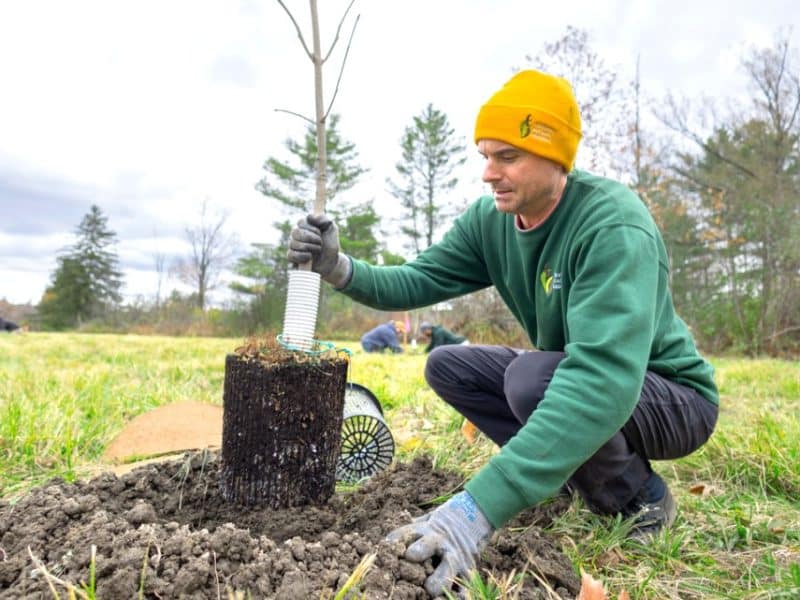
Cornell plants ash trees with potential resistance to emerald ash borers, advancing statewide restoration through the Trees in Peril project.