
Ithaca schools navigate first week of in-person classes
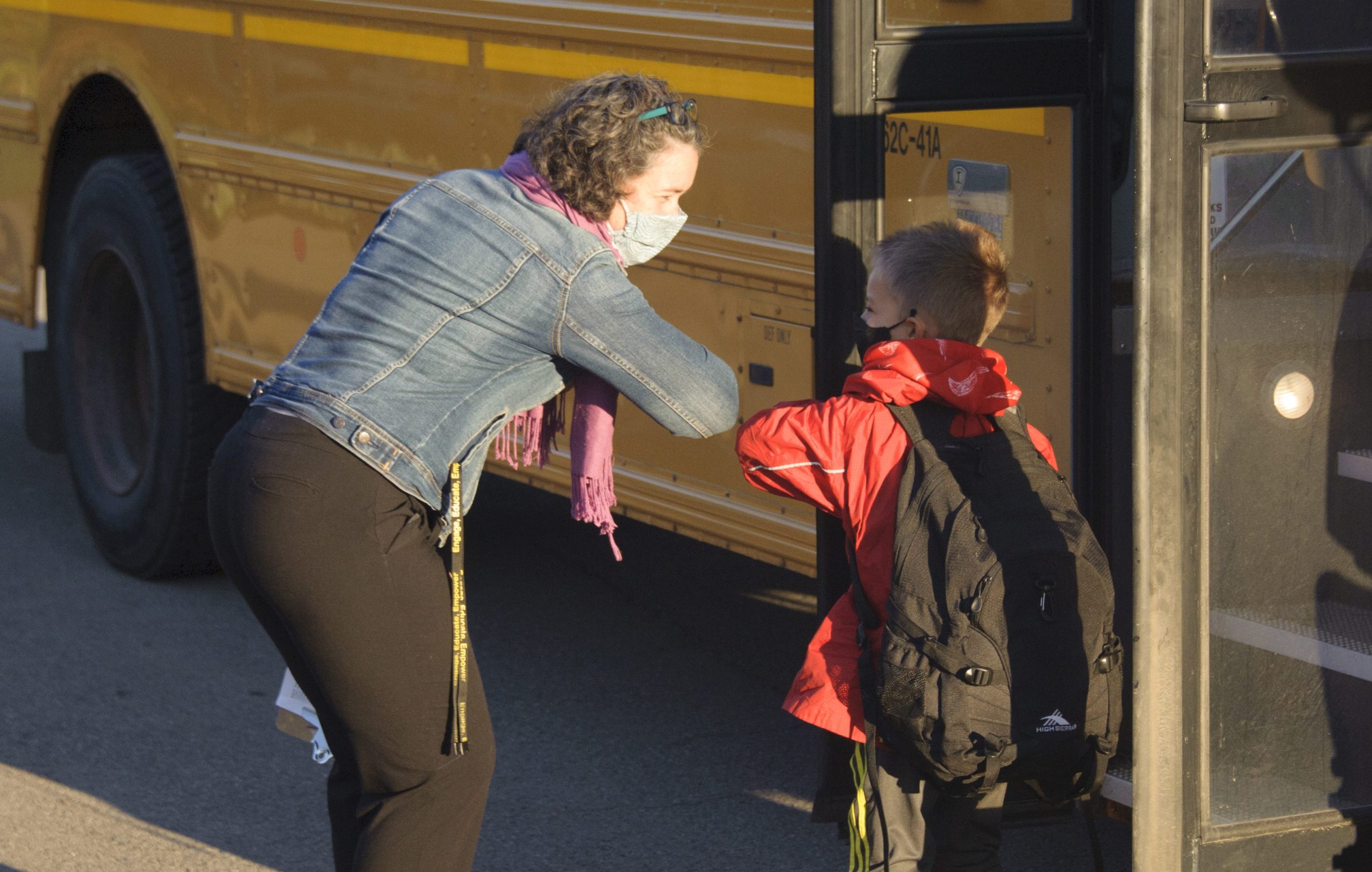
Last month, Tompkins Weekly asked area districts how the start of the 2020-21 school year was going and what challenges they’d been facing along the way. At the time of that article, the Ithaca City School District was the only area district that hadn’t yet started in-person classes.
Now, a few weeks later, ICSD has about a week of in-person classes under its belt, and while the district is facing many of the same challenges other districts faced last month, district leadership shared considerable success in that first week.
Helping ICSD have a smooth transition were several other local leaders, who provided everything from COVID-19 testing and masks to outdoor learning opportunities.
In-person classes resumed at ICSD on Monday, Oct. 5, and so far, things have gone well, as Superintendent Luvelle Brown explained.
“It has been refreshing and inspiring to be in a physical space with students and educators again,” Brown said. “That was a highlight.”
As expected, Brown explained, the district has had to make many adjustments to both in-person and virtual environments as administrators adapt to challenges caused by the pandemic.
“We’ve spent the last decade engineering learning spaces in the ICSD that included much movement, many hands-on experiences and a significant amount of collaboration amongst students and adults,” Brown said. “This pandemic has challenged us because of CDC guidelines requiring physical distancing and cohorting. … However, we will make the best of this current situation with hopes that we can soon be back to our preferred instructional approaches.”
Despite the difficulties, educational leaders have stepped up to the challenge to provide students with the best learning experience under the current circumstances.
“Teachers have been exceptional with their ongoing commitment and efforts to teach in a way they’ve never done before,” Brown said. “Students have also needed to learn in a way they’ve never been asked before.”
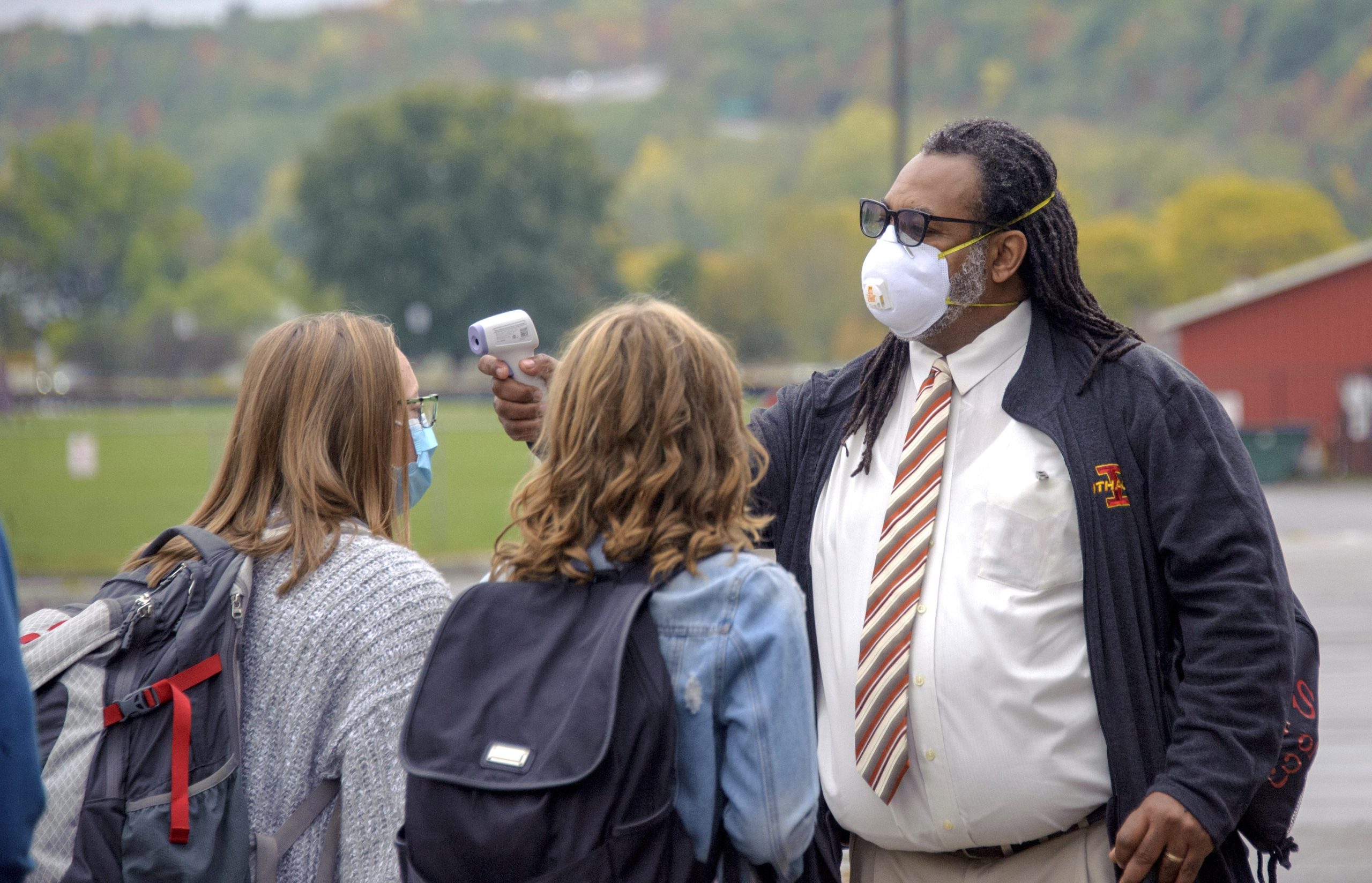
With about 5,300 students, ICSD is by far the largest district in the county. While that requires considerably more coordination than smaller districts, the essential aspects for a safe reopening are largely the same, as Public Health Director Frank Kruppa explained.
“Obviously, when you’re dealing with more people, more students, more families or staff, more buildings, it presents some unique challenges, mostly around dealing with density and where and how you’re going to meet the needs of all of those people,” he said. “But the basics are still there: mask-wearing, social distance, good hand washing, keeping densities low. It’s the same whether you’re a small district or large district.”
A few local collaborations and projects have helped the district with its reopening process, the first being a partnership with Cornell University and Cayuga Health System (CHS) to provide COVID-19 entry testing of students from Sept. 30 to Oct. 2.
While limited capacity meant that not all students could get tested, Cornell and CHS prioritized students returning for in-person instruction, particularly those whose parents or caregivers don’t already have access to regular surveillance testing. The testing went smoothly, Brown explained, and helped administration estimate viral prevalence among its student population prior to in-person classes resuming the following week.
“Offering this COVID-19 testing opportunity for ICSD students is good for our community and is an indication of outstanding partnerships,” Brown said in an interview with the Cornell Chronicle. “We truly are all in this together.”
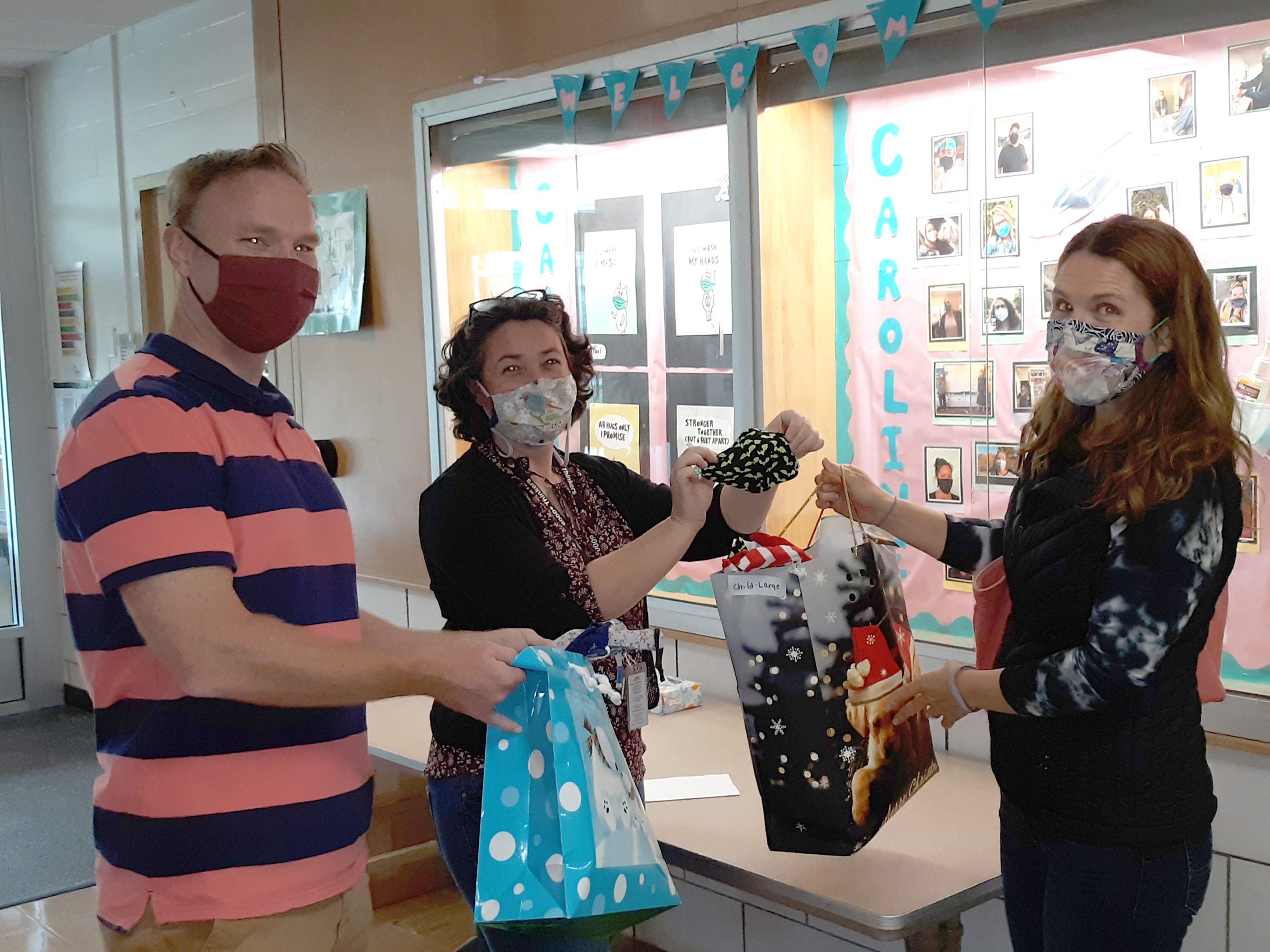
Another project initiated ahead of in-person classes provided masks for incoming students, an effort spearheaded by the Ithaca Public Education Initiative (IPEI) and the PTA Council (PTAC). As Jonathan Butcher, former PTAC president, explained, the PTAC — made up of all district PTAs — had been aiding the district since the pandemic hit, and as the 2020-21 school year got closer, members looked for more ways to help.
“All throughout the summer, the hope and expectation was for us to have every kid in person that wanted to be,” he said. “One of the ways that we thought that we would help support that effort was to provide meaningful PPE for the children that are going to attend school. And so, that’s actually what nucleated the campaign that we set out to do.”
Steven Manley, IPEI executive director, explained how the conversation turned into a full-on project.
“Jonathan and I both realized that we had no ability to make the things that were being discussed in the meeting between the two of us,” Manley said. “We were able to use the skill sets and the relationships that each group has to benefit not just one school, or not just one community, but all communities and all of our schools that would receive masks.”
Not long after announcing their effort to the community earlier this year, dozens of community members and organizations got on board, eager to help in whatever way they could. Jo-Ann Fabrics donated a generous supply of fabric, and all that was needed from there was elastic and volunteers to make the masks.
Over the following three weeks, Butcher and Manley coordinated house pickups and drop-offs, with multiple people carting supplies back and forth as they ran low. The response from school leaders was universally positive, Butcher and Manley said.
“I have a second-grader, and I know for sure that she’s going to need a throwaway mask, a disposable, within a day or two,” Manley said. “But on day one, she wants to look like everybody with their own mask, and we wanted to make that available to all the students. So, it was a really positive response from our principals who said, ‘This is a fantastic outreach and a generous donation from the community to support our students.’”
In another effort to help ICSD reopen, Cornell’s Masters of Public Health program partnered with the Ithaca Children’s Garden (ICG) to support outdoor learning at all eight ICSD elementary schools.

The outdoor learning opportunities are provided through a multi-year Farm to Table grant, with support from the Cornell Atkinson Center for Sustainability and Engaged Cornell, according to ICG’s website. As Gen Meredith, associate director of the Masters of Public Health program, explained, the project had its roots in research she and others at Cornell had done on the benefits of outdoor learning for kids.
“The teachers that we interviewed and the teachers that we were engaged with at a number of schools, even though they had great intentions and great desire to take their students outside during the school day, often they weren’t able to get that plan into action,” she said. “So, we actually took a step back in this research and began to elucidate or describe the array of teacher-identified challenges that they were experiencing in taking kids outside during the school day.”
ICG Director Erin Marteal and Landscape Designer Liz Fabis surveyed all eight elementary campuses for outdoor learning space possibilities and barriers through site visits and walkabouts with principals and teachers, according to the ICG. They subsequently provided renderings and recommendations, taking each school’s setting and capabilities into account.
Marteal explained that the collaboration was in line with the ICG’s overall mission.
“The project is evolving in a natural, yet intentional and substantive way and with more focus on the backdrop of the pandemic,” she said. “Being able to support ICSD’s outdoor learning addresses our passion for outdoor learning and commitment to equitable access to the outdoors, which is huge.”
Mary Grover, inclusion officer at ICSD, said that the district appreciated ICG and Cornell’s efforts, and the project will help ICSD build upon programs it was already offering.
“We have had a commitment to project-based learning and interdisciplinary units of study that really engaged kids in an authentic problem and then culminates in a celebration of learning,” she said. “By taking Gen’s research and the toolkit and the findings, it was just this really great serendipitous moment to look at Gen’s work, look at this grant and see how we could collaborate and learn from the Children’s Garden.”
With the assessment and recommendations phases complete, the ICG is helping ICSD elementary schools implement their plan, which ICG said will likely include a great deal of community engagement over time.
Overall, the community has helped ICSD reopen effectively, and further efforts will help ensure continued success, as Kruppa explained.
“My hope is that our disease incidence continues to be low and our students and families are able to continue learning in person or remotely, whichever they’re more most comfortable with, and we continue to move back towards as much normalcy as we can,” he said. “Our kids deserve it. And I think our community has worked hard to make that available to them.”
Related Articles

Holiday traditions bring community cheer
Tompkins County holiday traditions light up homes, farms, and schools with festive cheer and community spirit.

Design details unveiled for new Center of Government
Design details for the Tompkins County government building in downtown Ithaca are now public, with a county survey open for feedback.
Cayuga Medical Center improves patient safety score
Cayuga Medical Center Leapfrog Grade rises to “B,” showing improved patient safety and nursing care quality.