
James Brown, longtime United Way CEO, retires
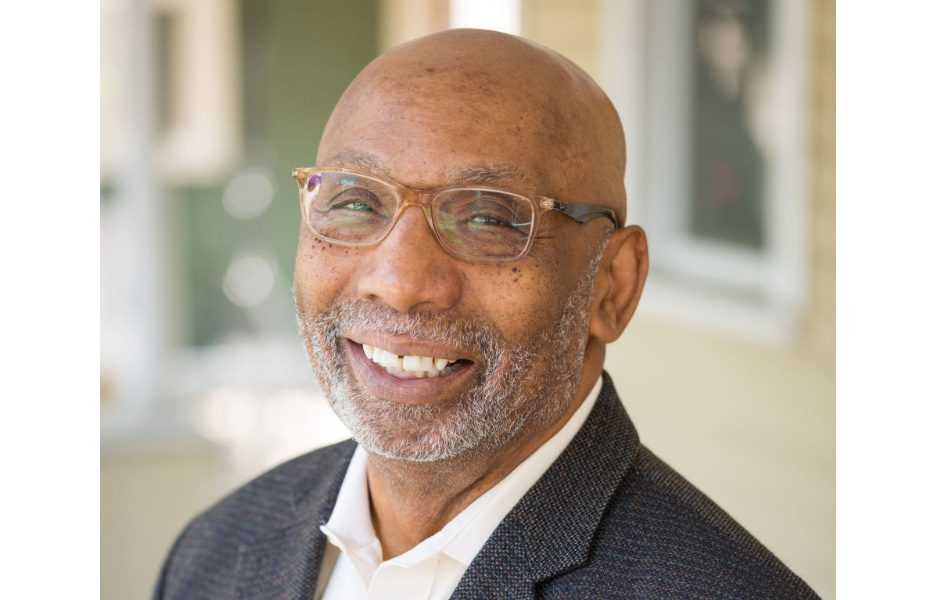
Earlier this month, the United Way of Tompkins County announced the retirement of longtime President and CEO James Brown, which took effect Aug. 5. Brown retired with nearly 45 years’ worth of experience working for United Way — with 25 of those years being in Tompkins County — and said he’s looking forward to his next chapter.
Before Brown started working for United Way, his first exposure to the national nonprofit was through his mother.
“Probably at 8 years old, I went to my first United Way meeting, where my mom presented the budget for a children’s agency and made a request for funding,” he said. “They’re asking her like, ‘OK, what are you going to do with the money? Why do you need the money?’, … which were totally appropriate, but for an 8-year-old, it’s just like, ‘Wow, you’re being mean to my mom. I don’t like that. I’m going to get you guys in the future,’ or something like that.”
By the time Brown was a teenager and he learned more about what United Way was really about, his attitude toward it softened. In high school, he volunteered at his hometown United Way — in St. Louis, Missouri — and in college, he had the opportunity to work part time in its new planning department, so he took it.
“After being there for a little over five years, … I wanted to see the country,” he said. “I had never seen a gathering of people this diverse coming together to talk about the community and talk to each other respectfully with giving each other dignity in that room, and that was fascinating to me. And so, one of the things I wanted to see was, was this unique to my hometown, … or is this what United Way was really about?”
Brown wanted to go to a bigger city to get the full scope of United Way, so he went to the United Way in Houston, Texas. Later, he moved on to the United Way in Colorado Springs, Colorado, where he stayed until his boss made him aware of a new opportunity — a leadership opening at the United Way of Tompkins County (UWTC).
“I came to the county in 1997,” Brown said. “I lived west of the Mississippi for all of my life. I knew New York City. I knew a little about Buffalo and Rochester, but I didn’t know a whole lot about Ithaca. I knew Cornell was here, but that was it. And so, I came, and it was an interesting place and it caught my attention. And so, I thought this would be a good place, and I spoke with my wife, and she was fine with it. My son, he was OK, and so we decided to come here.”
Brown began his career at UWTC in 1997 as interim CEO and was named permanent CEO in 1998, according to a recent UTWTC press release. In the time since, the organization has grown considerably.
“UWTC has raised over $47 million and leveraged financial and other resources to make an even greater impact on a wide and diverse range of people,” according to the release. “Programs such as Youth and Philanthropy, Summers of Service, Student United Ways, Hunger & Food Security Initiatives and Urgent Rx were conceived and developed under his leadership. These efforts, and more, have changed UWTC foundationally, and strengthened local lives and communities.”
Those changes came partially as a result of Brown’s approach to his leadership role, as he described.
“I came at a time when United Ways were changing, and they were moving away from being an agency that raises money and gives that money to member agencies — really great member agencies, but to a small group of member agencies — and to looking at being able to serve the community in more ways and to serve it more broadly,” he said. “And so, that was happening around the country, and I had the good fortune of working in St. Louis and working in Houston, where those changes had begun.”
Brown explained that “my leadership was followership.”
“It was engaging people and following and having a board who was willing to support change and who was willing to support [and] accept failure,” he said. “They were willing to go beyond just giving, raising money and giving money out. They were willing to change the way that we do business. And that made us, I think, more relevant in the community and that allowed us to connect with people that we had connected with and to connect more deeply with people who we had relationships with.”
Under Brown’s leadership, UWTC conducted a series of community assessments throughout the 2000s to better understand the community’s needs. That information then helped to change how UWTC worked in the community, which Brown said brought its goals much closer to its namesake.
“The whole concept of United Way was it was united, and united can’t be a third of the community or half of the community,” he said. “And I’m not naive enough to think that everybody wants to be involved or can be involved and there aren’t other things that people need to do in their lives and other ways to make a difference. But to really be concerted to have the broadest level of engagement at some level, if not all levels, is really important.”
Brown added that what ultimately helped that change to happen as quickly as it did was the willingness of the county community to embrace new opportunities and possibilities (see tinyurl.com/2koko5hx).
“The thing that I think is really unique is that people here are willing to be engaged; they’re willing to engage — they’re willing to hold their hand up and say, ‘I don’t like this, and I’m willing to do something about it,’” he said. “And in many instances, they’re willing to work with others to do something about it and be open to change and changing objectively.”
That’s why Brown said what he’ll remember most about his time at UWTC is the people.
“I have met people that will be a part of my life for the rest of my life and people whose level of engagement as volunteers will frame the level of engagement that I try to have now that I’m a volunteer solely,” he said.
As much as the past 25 years have been filled with progress, there have been plenty of challenges along the way, especially when the pandemic hit. Brown said that the past two years have been a big learning experience for the organization, and UWTC has been able to survive and even thrive thanks to its adaptiveness.
“I think one of the things that made it possible for us to be effective is that we had developed a level of trust with a large number of people … who trusted and had confidence in being able to give us funding to identify [and] support needs in the community,” he said. “We also added to that the ability for people and companies to run campaigns solely online. And so, the fact that we had the ability to raise funds online made all the difference in the world.”
As much as he’s enjoyed his time at UWTC, Brown said he retired this year because it’s simply the right time for more change.
“United Way — and I think the community, and I think our society — is to the point where we need to make some significant change,” he said. “And I think the people leading those changes need to be the people who will carry them forward into the future. And there needs to be a changing of the guard in many ways. And I think that that’s very important. Like I said, I came at a time where change was needed. I think now, for different reasons, there’s change that is needed, and the people leading that change need to be the people who will be invested in living and building that change over the next 10 years. And that’s probably not me.”
In addition to his role at UWTC, Brown has gotten involved with numerous other county organizations and groups, including serving on the boards of Cayuga Health System, the Tompkins Charitable Gift Fund, the Legacy Foundation, Hospicare & Palliative Care Services, Kendal at Ithaca, Ithaca Area Economic Development, Human Services Coalition and the Tompkins County Chamber of Commerce. He was also very active with the Ithaca Rotary Club, including serving as its president twice.
With all that community service under his belt, Brown expressed that he does plan to continue volunteering in the county, but ultimately, the future is uncertain right now.
“I just want to figure out how to be how to be James without being a part of United Way, which I really haven’t done,” he said. “For 44 years, this is what I’ve done. And so, [I’ll be] just rediscovering, what it is, who I am and just starting over again. … How can I be involved in my community in a different way at this point of my life? And, it sounds selfish, but how do I get to be me as a human being?”
As for UWTC, the Board of Directors is creating a committee to conduct the search for the CEO position. In the meantime, Gail Belokur, chief administrative officer, has accepted the role of interim CEO. Learn more about the organization at uwtc.org.
Jessica Wickham is the managing editor of Tompkins Weekly. Send story ideas to them at editorial@VizellaMedia.com.
Related Articles
Cayuga Medical Center nurses to rally, alleging anti-union tactics by hospital management
CMC nurses plan a rally, alleging unsafe staffing and illegal anti-union tactics as the hospital highlights recent patient-safety gains.
Holiday traditions bring community cheer
Tompkins County holiday traditions light up homes, farms, and schools with festive cheer and community spirit.

Design details unveiled for new Center of Government
Design details for the Tompkins County government building in downtown Ithaca are now public, with a county survey open for feedback.