
Lack of providers means no respite for families of children with developmental disabilities
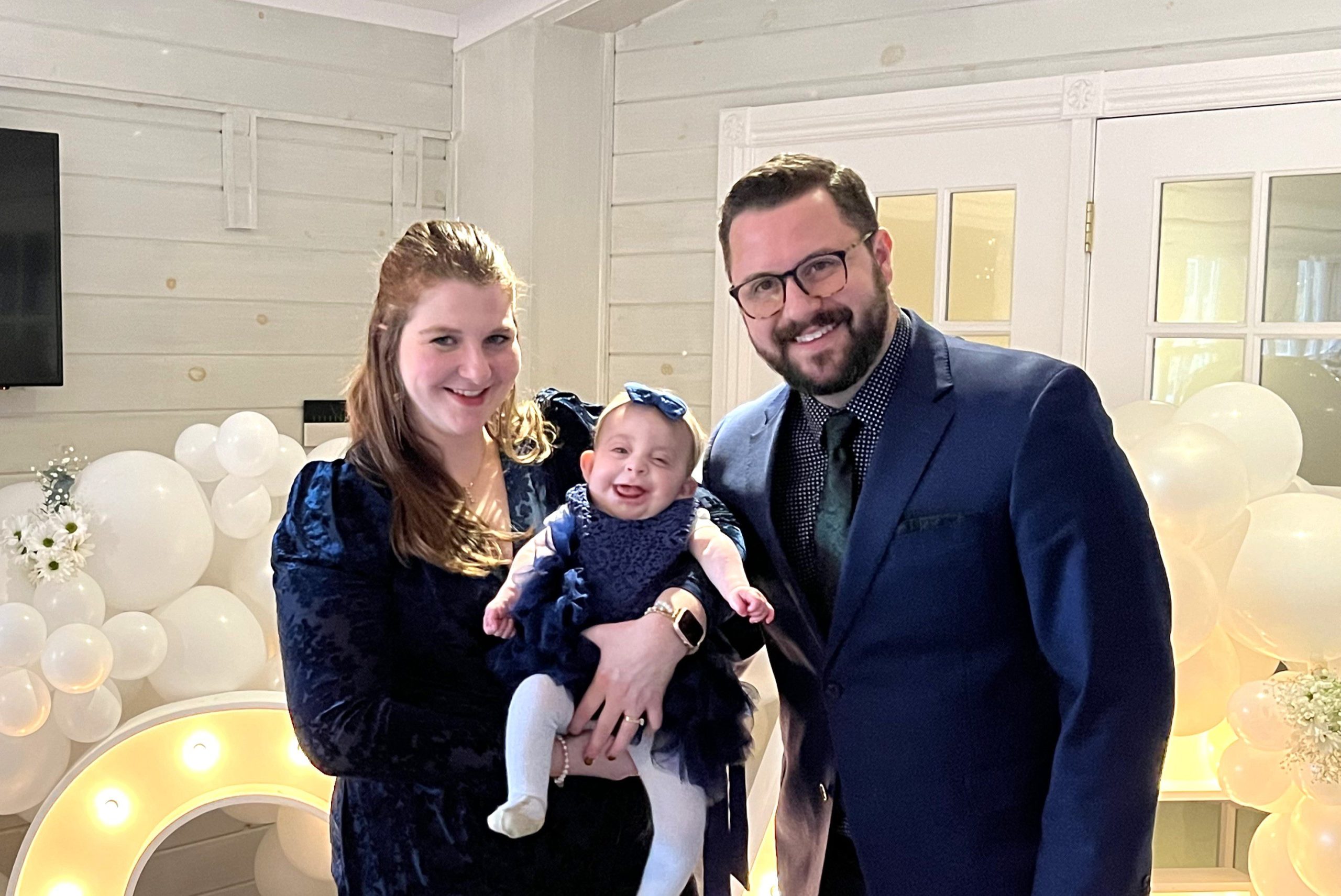
Two months ago, Thena Lindhorst of Freeville was feeling very frustrated with the process of obtaining services for her 16-month-old daughter, Ivy — services that were supposed to help make new motherhood a little easier. Though becoming first-time parents comes with unique challenges for every family, Ivy’s developmental disabilities require an extra level of care, and a respite aide was supposed to help alleviate some of the strain on the family.
Lindhorst works full time as executive director of Love Living at Home, and her husband, Erich, also has a full-time job. Respite care is meant to enhance a family/primary caregiver’s ability to support a child’s functional, developmental, behavioral health and/or health care needs — something Thena said her family greatly needed.
Managing Editor
The program’s caregivers are paid $16 to $17 an hour, which, combined with the fact that respite hours are only up to 25 hours per week — far from a full-time schedule — leads to a severe shortage of providers and a 90-person waitlist for a provider. Many families, the Lindhorsts included, have found themselves rejected from the program just because there are no caregivers to assign.
All of these factors combined create a situation that is at its breaking point, said New York State Assemblymember Anna Kelles. “OPWED [Office of People with Developmental Disability] parents, specifically, are getting lost in the system,” Kelles said. “That is part of my job, is to help people who are beating their heads against the wall and not able to get through the system.”
In the midst of a broken system, Thena was left hoping she would either move up on the waitlist, which seemed unlikely, or that she would be able to come up with some other solution that would help meet her family’s needs. Part of what kept her going was the inspiration and support provided by another local mother of a child with special needs.
‘We got exceptionally lucky’
W., a resident of Tompkins County and parent of a toddler with developmental disabilities, was told that her child may never eat, talk or have social-emotional interactions. Years later, her child is thriving, and W. attributes this to the many programs provided by Tompkins County.
“She signs and speaks, plays with others, and one of the best things about her is her smile — and all of that is because of her therapists,” said W., who for the safety and privacy of her family declined to use her full name.
With the availability of occupational therapy, speech therapy, special education and other programs, her child is able to have a full schedule of stimulating activities.
“I have talked to other parents of similar children, and our program is unparalleled compared to what they have in equally wealthy counties,” W. said.
One crucial element of her child’s care could have easily fallen through the cracks, however. W.’s child is enrolled in a large traditional day care center — an opportunity for learning and interaction that would likely not be possible without the assistance of the respite aide that accompanies the child at the daycare, W. said, due to her child’s need for someone to help her steer her walker, eat and use the toilet, among other special needs.
To make the day care arrangement possible, W. said that she needed to take it upon herself to find an individual who was interested in being her respite aide, a strategy recommended by the agency because of the scarcity of providers.
“We were told there was a shortage of over 90 cases, and the solution, they said, is if you can find someone, we will vet and train and hire them. But you’re 90th in line,” W. said.
W. pays her child’s aide for hours that she works each day above and beyond the five hours a day that is covered by the DSP program.
“We are lucky we have people we trust with our daughter while we go to dinner, grocery shopping or work,” W. added “That is rare.”
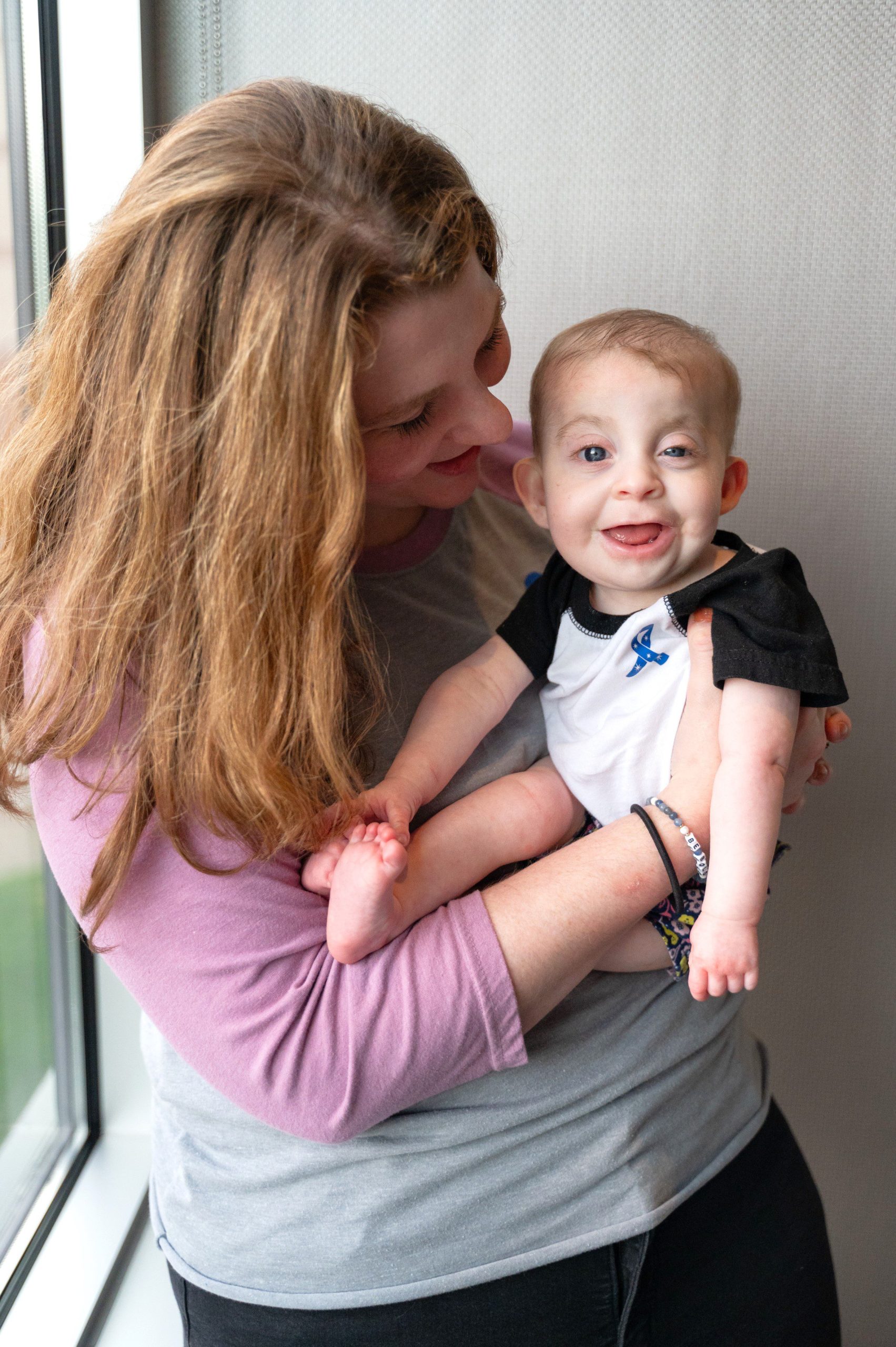
She said her child weighs 35 pounds and requires much more vigilance and constant supervision than the average child of the same age. “You literally cannot take your eyes off the child,” she said.
It is a part-time job for just a few dollars an hour above minimum wage that requires days full of caregiving and heavy lifting, and W. said that her family just happened to come across a dedicated individual who is now fully devoted to her child. “The position isn’t desirable, and they are struggling to fill those positions,” W. said. “We are exceptionally lucky in that we found someone who loves — loves — our child.”
‘It’s so cool to watch her explore and learn and grow’
Thena said that a respite aide would alleviate some of the stress that comes with caring for a baby with special needs. She and her husband have been juggling full-time jobs while caring for their daughter, who Thena said would most likely not be admitted to regular day care due to her medical needs.
For a while, a nanny who came to the house to watch Ivy was a temporary solution. But it was expensive, and a respite aide, who would have been provided through Children and Youth Evaluation Services (C-YES), would have provided between 5 and 25 hours per week of assistance for the family.
The Lindhorst family applied for a respite aide, but after months of waiting and being rejected from multiple agencies due to the lack of providers, they have now accepted that the family may never receive one.
“I don’t know if I have at this point given up on it,” Thena said. “Of course, I would be open to [an aide] if there was that availability, but the fact is that [Ivy] is 16 months and [the] C-YES [aide program] is only up to age 3, so she may age out of it before we would even be able to take advantage of that as a service, so it’s frustrating.”
Kelles said that she has received similar feedback from many parents of children with developmental disabilities. The various programs designed to provide assistance for families can be difficult to navigate because there is one program for children under the age of 3, another for pre-K-age children and another for those who are of kindergarten age or older.
“Besides reimbursement not being enough, there is also a continuum of care where someone could take forever to get care because there are not enough providers and they age out before they have access, but then have to start all over again, so it can feel defeatist for parents,” Kelles said.
This was distressing for Thena and Erich, as they had become friends with W. and heard her story about her daughter and her bright outlook. They wondered if their daughter, who is the couple’s first child, would be at a disadvantage for not being able to experience day care and daily exposure to other children.
Recently, that fear has been quelled considerably, as they found a daycare facility five minutes from their home, hosted by a nurse who cares for only five children, three of whom are her own.
It is a dream scenario that Thena knows she was lucky to come across. “It is the best thing for [Ivy],” Thena said. “In the last three weeks, it has been so good for her. She has been rolling over and putting herself into tummy time.”
“But,” she said, “if [the provider] wasn’t a nurse, then I don’t know I would have felt comfortable with Ivy being there.”
Thena said Ivy is a happy baby. “She’s super social and smiley,” she said, “and she’s finally playing with toys. It’s so cool to watch her explore and learn and grow — on her own timeline.”
It was apparent that Ivy had developmental disabilities from the time she was born, but it took a few months for her parents to receive a diagnosis of Coffin-Siris syndrome (CSS).
“We had no idea until she was born,” Thena said. Doctors informed the Lindhorsts that their child had what they described as dysmorphic features and an untraditional cry, and at four days old she was transported by ambulance to a hospital in Syracuse.
Upon looking at Ivy, one of the doctors at the hospital immediately leapt to a diagnosis of Trisomy 19, a rare genetic condition with a very short life expectancy. The couple was devastated until their daughter started to meet some milestones that indicated she probably did not have such a serious disorder. She started smiling, and nurses finally found a bottle she would latch onto, and at three weeks she was discharged from the hospital.
Months later, the family received the results of genetic testing that showed Ivy had CSS with one of the more severe variants, SMARCB-1. They were told they should expect moderate to severe physical and developmental delays.
Ivy will most likely be nonverbal, Thena said, but there are many modern modes of communication that those with CSS can use to express themselves, something that Thena was able to see for herself when she went to a conference attended by 70 children with CSS.
“It was absolutely life changing,” she said. “I could go on forever about how lucky we were to be able to do that.”
Ivy has not had a hospital stay since she had heart surgery last November. “We finally feel like we can settle in and do normal things with her,” Thena said. “We’re really taking it one day at a time. Anything she does, we’re thrilled by. We’re not setting expectations, and now she is surpassing a lot of the things that we thought she may or may not do.”
Author

Related Articles

From the market to kitchen to trails, community gives thanks
From free meals to Turkey Trot and farmers market, Ithaca Thanksgiving community giving highlights generosity across the city.
‘Weaponizing hunger’: County residents, nonprofits and officials brace for federal SNAP, Medicaid cuts
SNAP and Medicaid cuts may affect thousands in Tompkins County as demand for services rises.

Conference center operator sues Asteri developer over safety, security issues and lost revenue
Asteri Ithaca conference center sues Vecino Group for unsafe conditions, lost revenue, and repeated security issues.