Land Trust acquires 4,000 feet of Lansing shoreline
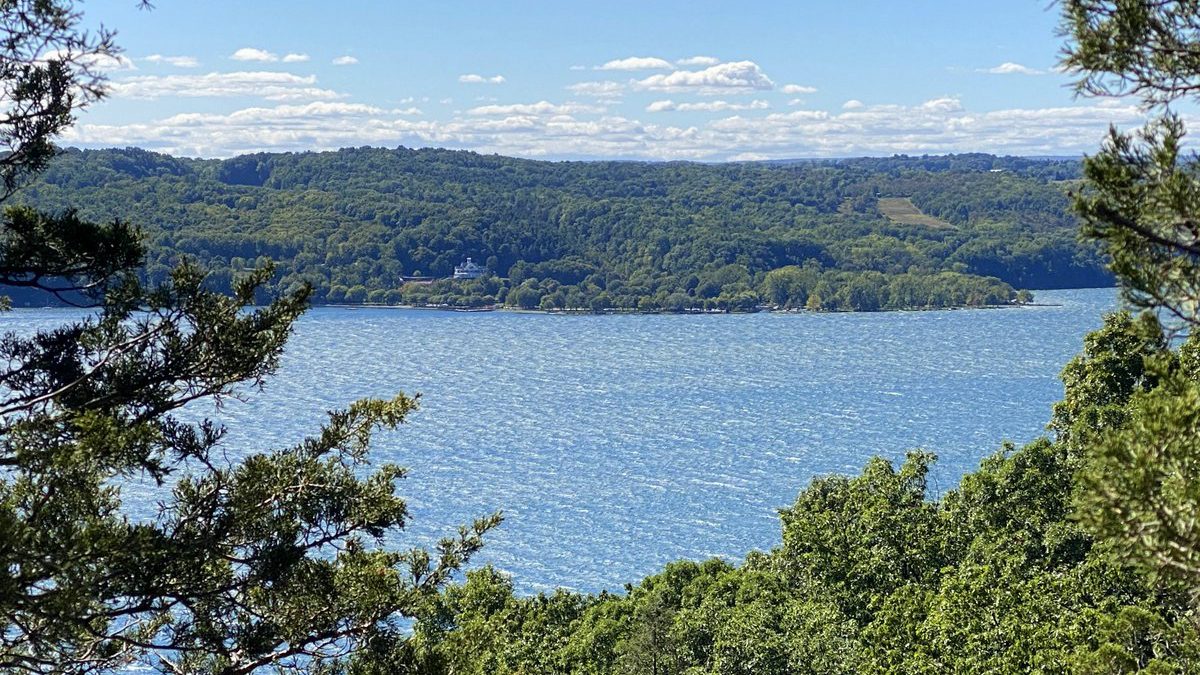
Last week, the Finger Lakes Land Trust (FLLT) announced its acquisition of 200 acres of land in Lansing, including 4,000 feet of shoreline. The land, directly across from Taughannock Falls State Park, is slated to be opened to the public in 2023 as a nature preserve.
“It’s just a fantastic property and a rare opportunity to protect that much shoreline,” FLLT Executive Director Andrew Zepp said.

The property includes “meadows, woodlands, gorges, waterfalls and panoramic lake views from several locations,” according to a recent press release. “Pitch pine and red cedar trees stand above exposed ledges while mature hardwood forest covers a prominent ridge overlooking the lake. Multiple creeks and streams flow through hemlock studded gorges on their way to Cayuga Lake.”
The acquisition has been in the works for several years now, Zepp explained, and the landowners, William and Jean Sims, agreed to sell the 200 acres for less than its appraised value.
“Much of our work is reaching out to landowners and then, kind of on their timeline, coming up with a conservation strategy that also meets their personal and financial goals,” Zepp said. “So, we have recognized the importance of this property to Cayuga Lake, in particular, for a number of years. But we’ve been working on this project more intensely for the last several years. So, we started the actual fundraising campaign before we owned the property.”
While the land is not developed and there will not be any major demolition, there is still much work to be done to make it a safe place for hiking, wildlife observation and cross-country skiing.
“During the next year and a half, we will complete a natural resource inventory and development management plan and then create a trail system, public parking area, put in some scenic overlooks, an interpretive kiosk and so on,” Zepp explained. “So, this particular property won’t be open to the public yet. … We need first to create safe access, so we’re going to create a parking lot on State Route 34B that doesn’t exist yet. And then also, there are some areas where there are actual cliffs and hazards, so we want to plan carefully how to guide the public on the property before it’s open.”
Even with obtaining two public grants, Zepp explained how funding is still underway, as there are continual costs even after the land is purchased.
“We’re still raising the funds both to acquire the land, and then the big issue for us is being able to manage it because this is an area where we’re going to invite the public onto the lands,” he said. “With a project like this, we expect a lot of visitation in the future and have to plan for owning it at times, say 50 years from now when Lansing will likely have a lot more residents and the cost of managing it will be higher, so we also have to add to our endowment. And that campaign is still underway.”
For the remainder of this year, the FLLT will work on assessments of the land and planning, with physical work on the preserve beginning in 2022. This will include volunteer workdays through FLLT’s Trailblazer program to create trails, make the preserve safe for visitors and restore vernal pools and small wetlands.
Zepp explained why this property in particular is so important to the region.
“Securing that much shoreline is particularly important to the health of the lake because the slopes above it are steep, but if we hadn’t acquired, we’d presume it would have been developed. And developing those steep hillsides, particularly as with climate change, we’re getting more intense rain events, it is likely to lead to more runoff to the lake that could feed the algal blooms,” he said. “This is a big win for the health of the lake.”
Zepp explained further that the 4,300 feet of “railroad shoreline” mean that the railroad occupies the shoreline via a right of way. However, this railroad is connected to the Milliken Station coal power plant, which has not been in use for several years.
The FLLT works in 12 counties and all 11 Finger Lakes to identify priority areas for conservation, and there is another major property in Lansing it is working toward preserving.
“We’re in the midst of conversations with a number of partners about another lakeshore property in Lansing, and that is the Bell Station property owned by New York State Electric and Gas,” he explained. “That’s in North Lansing, and we have been in discussions about that property for many years. And it is our hope, and I think this is supported by the town as well, to facilitate acquisition of the shoreline when that passes out of NYSEG’s hands but not by ownership — long-term ownership of the land trust — but instead to create a New York state conservation land there. So, to facilitate the creation of, probably, the state wildlife management area.”
Zepp reiterated the importance of this acquisition and what it means for Cayuga Lake and this region.
“Not just on Cayuga Lake, but throughout all 11 Finger Lakes, it is a very rare opportunity to be able to conserve 4,000 feet of shoreline,” Zepp said. “We have very little undeveloped shoreline left, so that’s why we’re so excited about this property. And not only that, but knowing that, I think there’s literally hundreds of thousands of people per year [who] visit and enjoy Taughannock Falls State Park, and this is the scenic backdrop you see from Taughannock point. So, that’s just an additional plus from the property.”
Visit fllt.org/cayugacliffs to learn more about the project, and those looking to get involved with the FLLT are encouraged to sign up to be a Trailblazer, more available at fllt.org/savemoreland/volunteer-with-fllt.