
Land Trust easements protect Six Mile Creek
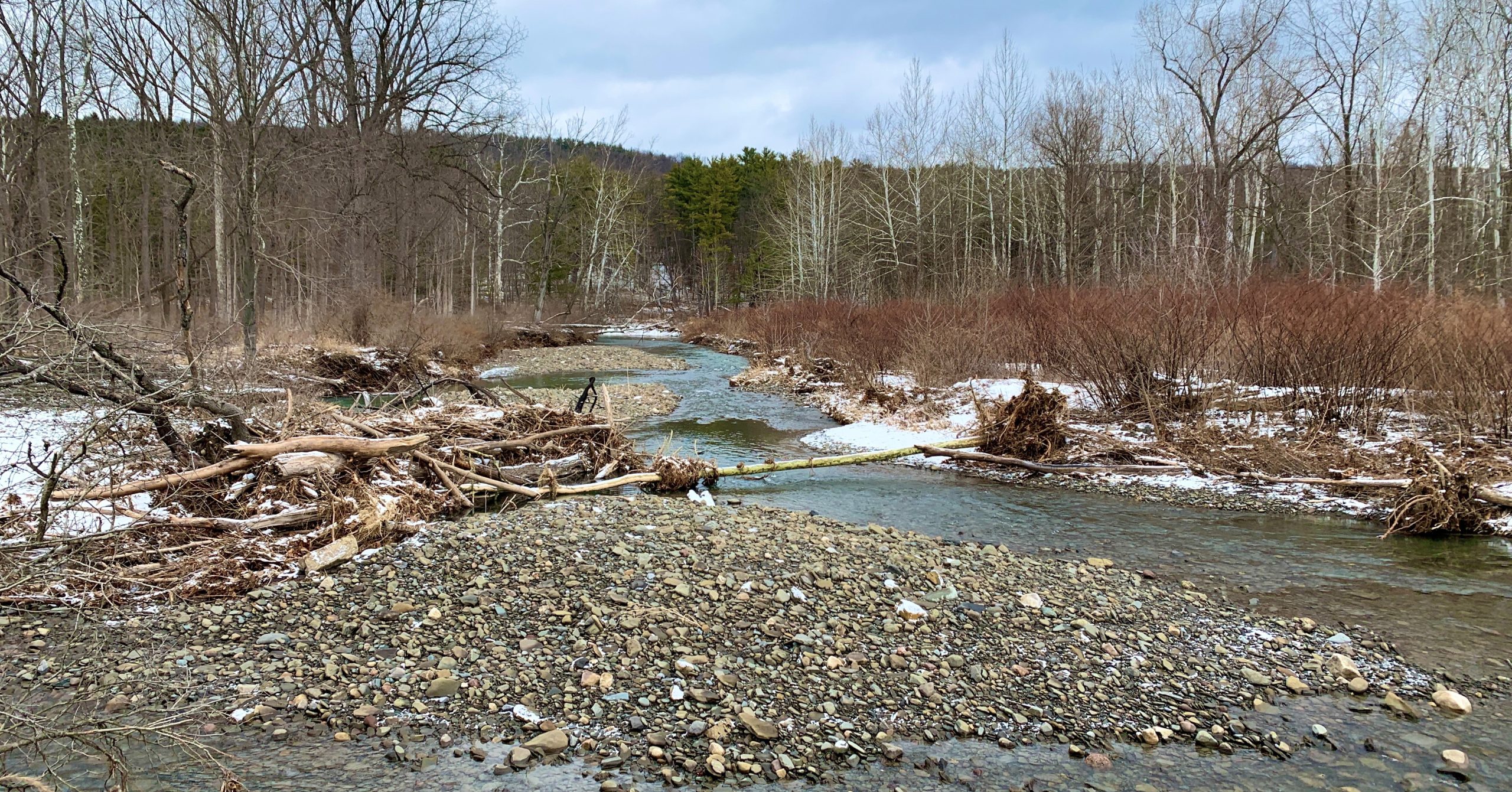
Late last month, the Finger Lakes Land Trust secured nearly 200 acres of land within the Six Mile Creek watershed under land easements, and the nonprofit plans to secure another 125 acres before the end of the month. The land easements go a long way toward helping the Land Trust in its ongoing efforts to protect one of Ithaca’s largest drinking water sources.
Two easements were secured last month — 170 acres on Besemer Hill Road in Ithaca and 13 acres just off State Route 79.
The Besemer Hill Road easement was a donation from the Walcott family and involved financial support for the project from the Walcotts and the city of Ithaca’s Six Mile Creek Watershed Protection Fund. The Walcott property is mostly wooded hillside.
The Route 79 easement was a purchase through funding from the state’s Drinking Water Source Protection Program. The property features 1,000 feet of frontage on Six Mile Creek. The land was sold by owner Lenore Boris for less than its appraised value.
Andrew Zepp, executive director of the Land Trust, explained that the recent easements are two big steps in what has been an effort over three decades in the making. He said immediately after the Land Trust was founded 32 years ago, the nonprofit began reaching out to landowners along Six Mile Creek.
“All of our past efforts involving conservation easements were based on donations,” Zepp said. “So, these were people who are really passionate about their land. And while they receive tax incentives, they had to be so committed that they were donating the development rights, essentially.”
Several years ago, that system changed, Zepp explained. The Land Trust, along with others across the county, reached out to state administration to ask for some kind of state program to help fund land easements in Tompkins County. Their efforts led to the creation of the Drinking Water Source Protection Program.
“Now, with a combination of primarily state funding, but also some funding from the city’s Watershed Protection Fund in Tompkins County, we can actually purchase easements, which of course, makes it appeal to many more people,” Zepp said. “And that allows us to be more systematic, and that’s really important as Ithaca’s real estate market has really heated up and we have a window of opportunity to secure those lands.”
Despite any challenges the pandemic created, the Land Trust’s protection efforts continue. What’s more, Zepp said the pandemic has only increased activity on Land Trust land.
“We’ve actually done well, and I think, in part, that’s because we’ve seen record use of our preserves,” Zepp said. “So, in terms of our supporters, they’ve gotten out. And we’ve actually gotten new supporters who appreciate the land we’ve set aside for use by the public.”
The two most recent easements along Six Mile Creek were more bright spots for the organization. As Zepp explained, the recent easements serve to benefit not just the Land Trust but the whole county.
“The value to the Land Trust is, one, serving a community need to protect our drinking water — which also helps the quality of water into the lake,” Zepp said. “But as we do that, we also are protecting a remarkable ecological resource that’s really rich in wildlife and amazingly accessible. Ithaca’s really fortunate that we have these areas that are literally up into the city where people can go enjoy nature that are all too rare if you go to other places.”
Boris also shares this passion for protecting Ithaca’s natural areas. As she explained, she purchased the 13 acres she recently donated to the Land Trust several years ago. She intended to build a house within three of the 13 acres, leaving the remaining 10 acres relatively untouched. But when that plan didn’t pan out, she approached the Land Trust.
“About six or seven years ago, … they were having an open meeting for the community and pitching the idea that they were trying to protect Six Mile Creek,” Boris said. “And so, I went to this presentation and I said to them, ‘Well, I own property on Six Mile Creek, but I only own 13 acres. So, I don’t know if you’re interested in that small a parcel of land.’”
With larger projects along the creek in the works at the time, the Land Trust put Boris’s offer on hold. But the organization reached out to her just a couple of years later.
“They said that they potentially had a grant that would help offset the cost of that conservation easement,” she said. “This was of great interest to me because I wanted to protect the land, but at the same time, I was paying for my son’s law school expenses. So, I was not in a financial position to really pay the cost of that.”
Boris was happy to sell the land for less than its appraised value because she shared the Land Trust’s overall goals of protecting Six Mile Creek, she said.
“One of their goals is to protect the whole Six Mile Creek watershed, and this just adds a portion of it,” Boris said. “Although my piece of property was fairly narrow, where the creek crosses, it meanders, and so, it’s actually much more frontage on Six Mile Creek than you would have thought if it had gone straight across my property. So, it’s quite a contribution to the protection of the Six Mile Creek watershed. And I’m happy to be able to add that additional part to their overall effort to protect the whole watershed.”
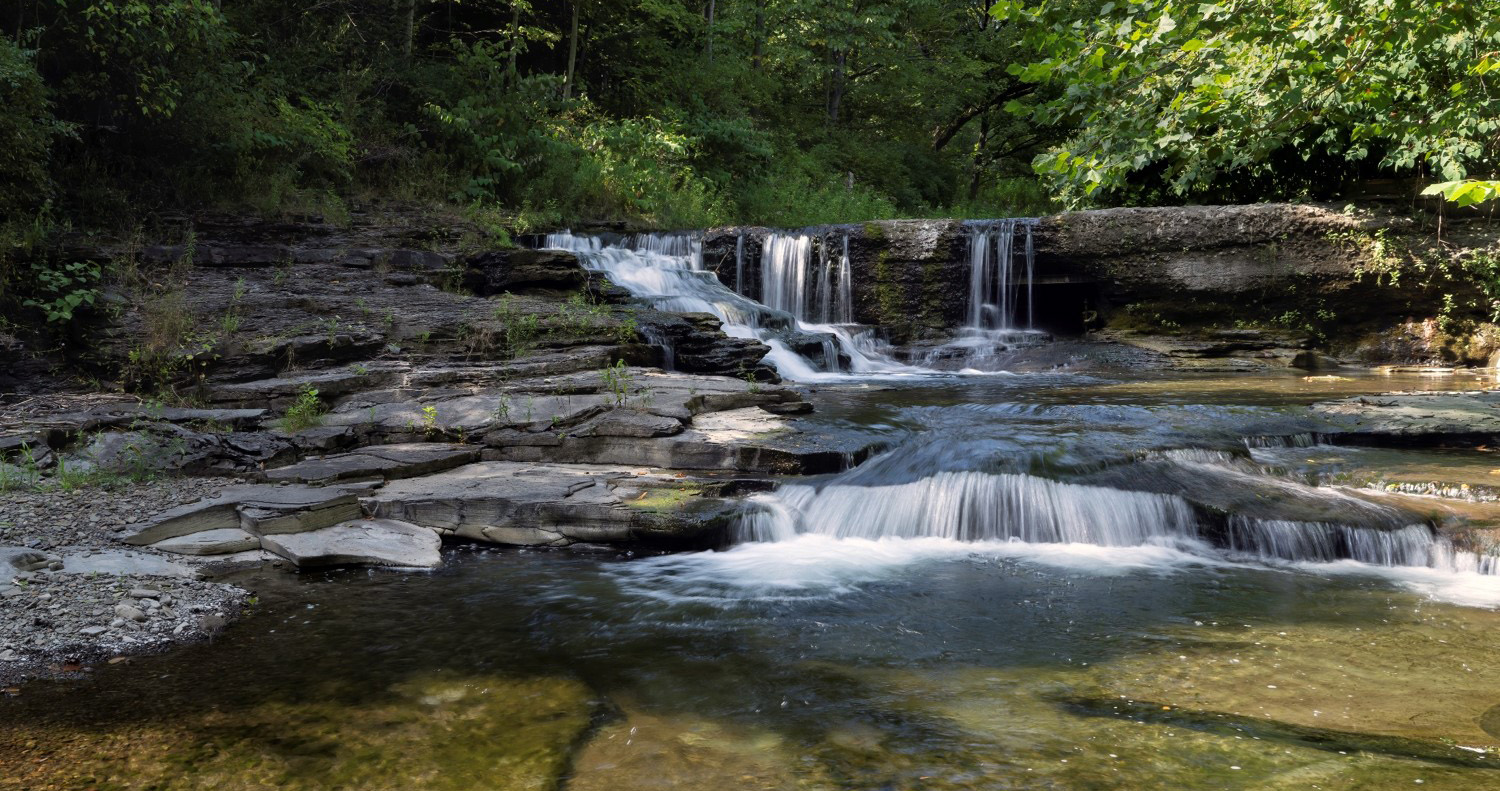
Moving forward, another project along Six Mile Creek is in the works. The Land Trust is currently seeking $15,000 from Tompkins County’s Natural Infrastructure Program and $250,000 from New York state’s Water Quality Improvement Project to support the acquisition of a perpetual conservation easement on the Lounsbery Tract in the town of Caroline.
The owner of the property, Lois Lounsbery, is very interested in conserving her land but is not able to consider donating a conservation easement. The property includes 125 acres and 4,000 feet of creek frontage.
“It’s not just any 4,000 feet,” Zepp said. “It’s the creek right behind Brooktondale. So, anybody who’s ever been in Brooktondale, you look at this beautiful little wooded backdrop — that’s it. So, it’s a great water-quality protection project, but it also really conserves the community character that a lot of people at Brooktondale really value.”
The proposed conservation easement would ensure the protection of existing stream buffers while preventing large-scale subdivision and development of the property, according to a recent press release.
“A lot of times, we unintentionally impact the stream by our usage,” Zepp said. “These streams are complex, and whether it’s roads or buildings or other things, we tend to like permanence. That is not a good match with a dynamic stream. And so, that’s where this easement essentially tries to steer development to the area that’s most suitable.”
The Land Trust is also working on efforts to protect Fall Creek, Cornell University’s drinking water source. For more information about these efforts and more, visit fllt.org.
Related Articles
First Baptist Church in Ithaca receives Sacred Sites grant
First Baptist Church Ithaca receives $7,500 Sacred Sites grant to restore historic stained glass and preserve its community programs.
Cady Fontana: Inspiring creative confidence
Cady Fontana, Makerspace librarian at TCPL, helps community members explore creative projects and build skills for free.

From the market to kitchen to trails, community gives thanks
From free meals to Turkey Trot and farmers market, Ithaca Thanksgiving community giving highlights generosity across the city.