
Lansing officials defend proposed construction pause
Lansing construction projects face a moratorium as officials revise zoning laws, balancing development with community priorities and environmental concerns.
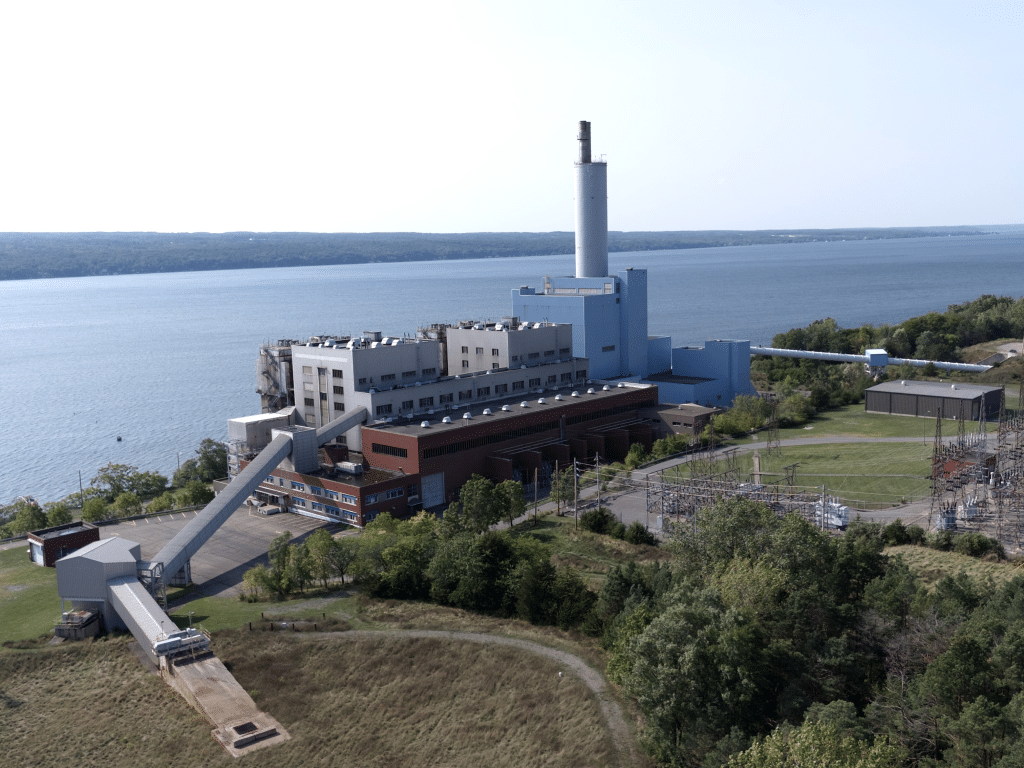
A proposed artificial intelligence data center that could be built at this site on the shores of Cayuga Lake is at the center of a debate about a potential construction moratorium for the town of Lansing.
The town of Lansing’s proposed moratorium on some construction projects for the next year remains in the eye of the storm in Lansing, as the public conversation continues to center around a proposed artificial intelligence (AI) data center that could be built on the shores of Cayuga Lake.
The moratorium would halt the construction of some new projects. It is a byproduct of the town’s process of overhauling its zoning laws — an endeavor the town board has had in its sights for the last seven years, Town Supervisor Ruth Groff said at the town board’s Oct. 15 meeting.
Groff has said that the move to rezone Lansing has been in the works since 2018 and has been propelled by $100,000 in state funding, refuting claims that local officials’ plans to further overhaul zoning laws are a direct response to the proposal to build the AI data center at the former Cayuga Power Plant.
The moratorium on some new construction stems from a provision of the town’s comprehensive plan that calls for updates to the zoning laws in Lansing. That process started in 2018 and moved forward in 2019, when the town board created a Conservation Advisory Council, a body of volunteers that helped create an Open Space Conservation Plan and other conservation tools.
The town was then granted the $100,000 in February as part of state funding from the New York Department of State’s Smart Growth Community Planning Zoning Grant program for a full rewrite of the zoning code. There will be a public hearing on the moratorium at the town board’s November meeting.
“Every member of this board understands the weight of this decision. We take it seriously,” Groff said at the town board’s meeting on Oct. 15. “The moratorium is not about stopping growth; it is about ensuring that development during this transitional period does not conflict with the town’s evolving vision. I understand that the idea of a moratorium raises questions and concerns, especially when people are already deeply invested emotionally, financially and personally.”
Part of the considerations the town will have to keep in mind as it rewrites its zoning code, Groff said, is encouraging denser development in areas with existing sewer and water infrastructure to ensure that areas without those services are appropriately zoned to manage growth responsibly.
New development will also have to consider the character of the community in the design phase, Groff said.
“This would apply to multifamily housing, commercial projects and scenic byways, helping to preserve the rural and small town character that so many of us value,” she noted.
Deputy Supervisor Joseph Wetmore said that the moratorium should be minimally disruptive to the Lansing economy. Similarly, Groff said that the town board has met with the area’s business community to discuss the impacts of the moratorium.
“Smaller projects, which make up the vast majority of those reviewed by the planning board, will continue to move forward,” Wetmore said. “The pause applies to only larger developments. I’m recommending a threshold of projects over 6,000 square feet. In recent years, developments of this scale have sparked widespread public frustration over the community’s limited ability to shape outcomes. Allowing such projects to proceed under outdated zoning would ignore these concerns and risk permanently undermining the shared vision we spent years to build.”
Wetmore argued that the moratorium could be a pre-emptive move given that, so far, no large-scale projects have been recently proposed to the planning board.
“Those arguments ignore the real risks we face in a town with sizable parcels of undeveloped land; a large-scale development application could be submitted at any moment,” he noted. “Developers are well aware that the new zoning rules are coming, and they have every incentive to rush projects forward under the current code, locking in developments that may directly conflict with the goals we have established as a community.”
You can read Tompkins Weekly’s more robust coverage of the moratorium here: https://tompkinsweekly.com/articles/lansing-ai-data-center-moratorium/
The town board’s proposal of a halt on some large-scale construction projects has coincided with the arrival of TeraWulf — a former crypto mining company now outfitting data centers for companies like Google and Core42, a company backed by one of the United Arab Emirates’ investment funds — in Lansing.
The company has proposed turning a portion of the site of the former Cayuga Power Plant into an AI data center, which has generated enthusiasm among some residents, as well skepticism among others living around Cayuga Lake.
Residents who have spoken out against TeraWulf’s proposal remain skeptical of the company’s claims of sustainability, minimal impacts to energy bills, tax relief, job creation and little-to-no noise disturbances. In some instances, residents have called for the town to institute the moratorium to delay or outright block the arrival of TeraWulf’s data center.
Proponents of the data center have done the opposite.
In a meeting last month, TeraWulf employees and executives, construction trades unionists and residents of the village where TeraWulf’s other New York-based data center is located flooded the town hall to decry the moratorium and insinuate that it is a response to block the company’s project.
Those insinuations became more direct at the Oct. 15 town board meeting, when Jerry Goodenough, a project management executive at TeraWulf, said the moratorium felt targeted.
Goodenough is the vice president of project management at Beowulf, a company acquired by TeraWulf earlier this year. In an article on Hunterbrook, Goodenough, the former plant manager at Cayuga Power Plant, is also identified as TeraWulf’s “upstate director.”
At the Oct. 15 meeting, Goodenough responded to comments from town residents who have expressed skepticism about transparency surrounding the company’s plans.
“We cannot be accused of not being transparent. Every single one of you was invited to the site. We showed you everything,” Goodenough said, addressing town board members. “After what I heard tonight, [the moratorium] appears to be targeting a single property, a site that has been zoned industrial for decades for precisely the type of use we’re pursuing. We simply are repurposing an existing infrastructure for a quieter, cleaner and more sustainable operation.”
Goodenough said that similar moratoria have sometimes ended up challenged and overturned in court.
“[Moratoria] are intended to provide a short, good faith pause for a legitimate reason, not to single out a lawful project,” he said. “Courts have repeatedly overturned [moratoria] that lack a clear, evidence-based planning purpose or are applied nearly to one site. Such accidents only erode public confidence, but can also expose towns to unnecessary legal and financial risks. But this doesn’t have to happen. TeraWulf wants to work collaboratively with the town to ensure transparency, trust and shared oversight.”
Preceding Goodenough’s comments were almost two hours of public input. At least an hour of that time featured the comments of Lansing residents.
“The moratorium is not about stopping growth; it’s about making sure the growth we welcome strengthens the town we love and protects what drew us, or our parents, grandparents or great-grandparents here in the first place,” said Aimee Caffrey, a resident of the town. “Lansing is a community that doesn’t get pushed or rushed by outside pressure. This is about ensuring that the benefits of our hard work stay with Lansing families and do not flow away from them to big tech or any other singularly profit-oriented enterprise whose interests do not and will not prioritize ours. And let’s be clear, Lansing holds tremendous leverage right now.”
Author

Related Articles

Local representatives push HEAP as winter nears
Lansing HEAP program applications are now open, helping low-income households cover heating costs and access energy assistance this winter.
Lansing’s $17M capital project advances amid construction challenges
Lansing Central School’s $17M BOBCAT capital project upgrades schools, athletic facilities, HVAC, and infrastructure.