
Lansing Town Board moves forward with construction moratorium
Lansing construction moratorium debate continues as the town board considers impacts on zoning, development, and future projects.
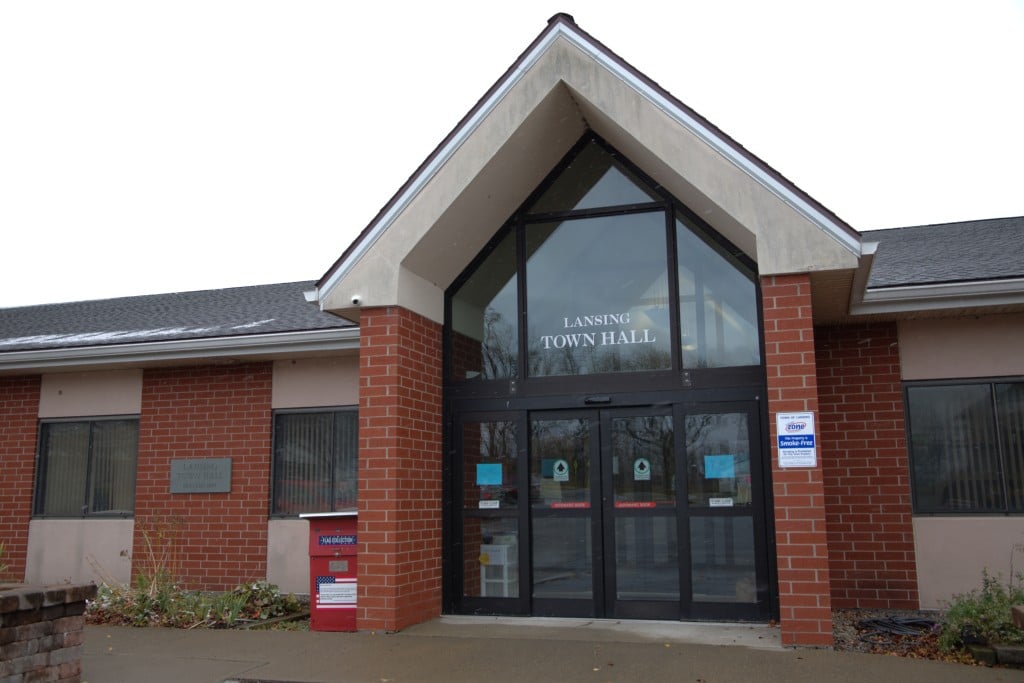
The Lansing Town Board voted to continue refining a proposed local law that would establish a construction moratorium and is expected to vote on it before the end of the year.
Update: In the time since this article was published, Lansing Town Planner John Zepko tendered his resignation.
The Lansing Town Board will move forward with a local law that would halt some construction projects in Lansing, following a lengthy discussion at the board’s Nov. 5 meeting on whether the moratorium would be the subject of a public hearing and potential vote on Nov. 19.
The town board also adopted a series of recommendations prescribed by the town’s planning board that would change some of the local law’s language, including the types of projects it could impact.
The moratorium has been a divisive issue among town residents and town board members alike, eliciting hundreds of public comments across hours of meetings since September. The arrival of an artificial intelligence data center company, TeraWulf, in Lansing, has imprinted on the discussion of the moratorium.
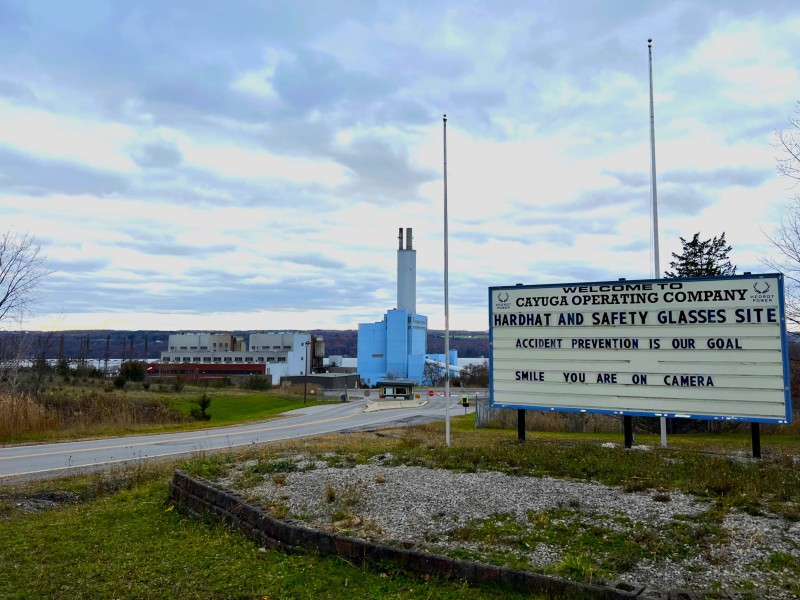
Among community residents, much of the discussion about the local law has centered on TeraWulf’s proposal to build an AI data center at the former Cayuga Power Station on the shores of Cayuga Lake, but some town board members say that the moratorium is part of a project to overhaul the town’s zoning laws that has been in the works since 2018.
The political maelstrom also inspired two residents, Joe Lovejoy and John Duthie, to run for two erstwhile safe seats on the town board as write-in candidates. Lovejoy and Duthie challenged board member Judy Drake and Deputy Town Supervisor Joseph Wetmore, both Democrats who had seen no opposition until September, when the challengers announced their candidacy.
Both incumbents won their re-election bids, but Duthie came close to unseating Wetmore, whose margin of victory was 44 votes, according to unofficial election results.
Now, the town board seems poised to move forward with a vote on the moratorium before the end of the year. Town Supervisor Ruth Groff said she did not know if the board will vote on it in November or December, based on the 10 changes the board adopted stemming from the planning board’s recommendations.
“This has been really a tough struggle for a lot of us on this board,” Groff said. “We’ve listened to people, listened to both sides, and it’s really challenging.”
But at the Nov. 5 meeting, the board voted 3-2 to continue considering the moratorium. Drake and fellow board member Christine Montague voted to withdraw the local law encompassing the moratorium altogether.
The board made some modifications to the local law, which will be drafted by town attorney Guy Krogh. But the town’s planning board and zoning board of appeals, according to Town Director of Planning John Zepko, recommended that the town scrap the moratorium. Zepko said the 10 recommendations from the planning board were sent only in case the town board feels they need to move forward with the moratorium.
One of the most transformative recommendations to the moratorium, which town board members say they want to enact, is the type of projects that would be impacted by the local law. The planning board recommended the moratorium be limited to projects subject to type 1 action of the State Environmental Quality Review Act (SEQR). This would supplant other parameters that would block construction under the unamended moratorium, such as square footage.
“The planning board’s recommendation was to not have this moratorium,” said Wetmore. “They thought if the moratorium were greatly relaxed, for example, only doing … type 1 actions … it seemed like there was much more support for a moratorium on that kind of level.”
Board member Laurie Hemmings said a type 1 action before a planning board would be something that is an action with a presumption of having significant adverse environmental impact, requiring further review under SEQR.
Examples of projects that would qualify as a type 1 action include the proposed Dandy Mini Mart near Rogues Harbor and solar development proposed on Lansingville Road by Genie Solar.
The town board also recommended the town allow construction of projects that require a special use permit.
“There are uses that are permitted by right. So that means you just apply for a building permit,” Zepko said. “There’s uses that are permitted by site plan approval, and so in the town that would be the planning board. And then there’s uses that are permitted through special conditions or special use permits as well. So it’s an additional layer of review with very particular conditions, and that’s handled by the town board.”
But for Drake, the recommendations from the planning board were a reflection of one of her points of contention with the moratorium.
“We’re not being specific to what we want to fix; we’re being very broad,” she said.
Hemmings asked if delineating the moratorium to target type 1 actions would make it sufficiently clear.
“I think the type 1 action is going to be targeted to keep a certain kind of development from happening,” Drake said in response, alluding to TeraWulf’s proposed data center. “Two of our boards have said we don’t think we need to do it. We’ve had staff that says we don’t think we need to do it. So, why are we doing it? What are we targeting? What are we trying to prevent?”
Montague said she doesn’t understand the moratorium and similarly insinuated that the moratorium is being used to stop TeraWulf.
“A lot of the people who are for the moratorium have written to us thinking that this one-year moratorium will somehow magically make TeraWulf disappear,” Montague said. “The thing that I don’t get is, why are we trying to put through something that almost seems geared to one company if, in a year, then they’ll be allowed to apply.”
Wetmore responded to Montague, clarifying that the moratorium is not about targeting the TeraWulf project. Montague chuckled and dismissed Wetmore’s comments.
“You can disagree all you want,” Wetmore said in response. “This is about trying to keep a zoning rewrite process focused on zoning rewrite, and I think we’re seeing exactly the problem here with the TeraWulf project. The moratorium has stopped being a discussion about the moratorium. There has been a discussion about a specific project, and that’s what’s going to happen with big projects that come forward during the zoning rewrite.”
Hemmings said that the moratorium will be helpful in allowing the town to continue to overhaul its zoning laws. Hemmings is a former planning board member, who was on the board when Dandy Mini Mart applied to open a gas station near Rogues Harbor.
“There are limitations on what the planning board can do, and they absolutely must approve an allowed use, despite the fact that we had hundreds of petitions asking us not to approve [Dandy Mini Mart], and the community is still pretty sore about that,” she said. “I think that we are trying to do the moratorium to prevent another situation like that, because everybody can petition the planning board, but the planning board has to follow the zoning law as written.”
Limiting the moratorium to type 1 actions, Hemmings said, gives the town’s zoning advisory committee time to work on rezoning the town.
“We do have priorities. We have talked about what we would like to see addressed,” she said. “And I think mostly what happens is we don’t want to see another project that divides the town from itself and makes people very upset.”
Author

Related Articles
TeraWulf AI data center wins zoning appeal in Lansing
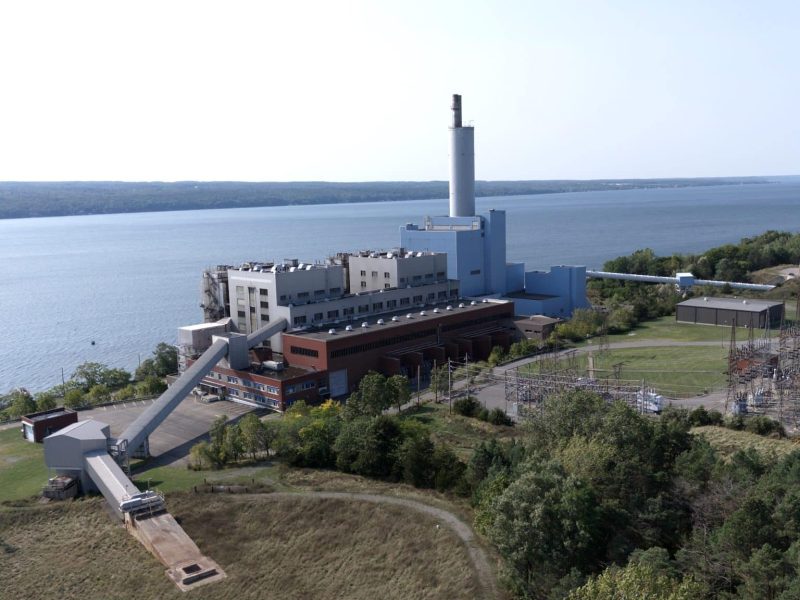
TeraWulf’s proposed AI data center at the former Cayuga Power Plant site in Lansing moves forward after winning a key zoning appeal on Dec. 22.

Local representatives push HEAP as winter nears
Lansing HEAP program applications are now open, helping low-income households cover heating costs and access energy assistance this winter.