
Lansing school board ramps up outreach ahead of May 20 vote
Lansing Central School District’s $39.7 million budget and bus proposition, pivotal for maintaining programs and modernizing equipment, awaits voter approval on May 20 at R. C. Buckley Elementary.
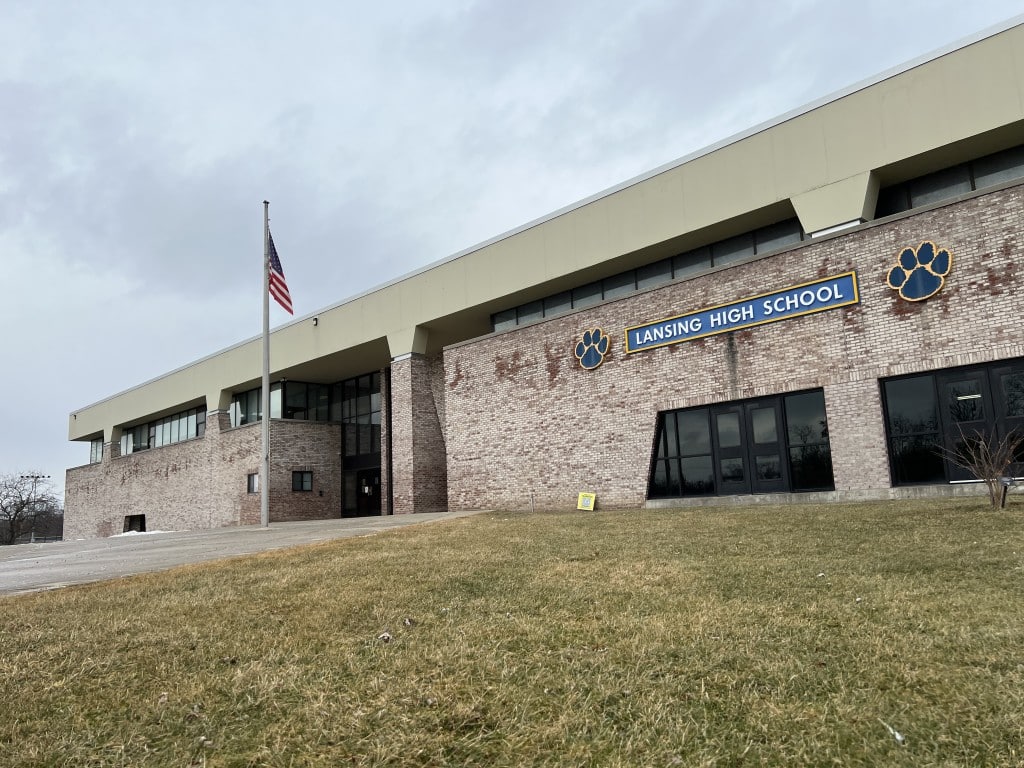
The Lansing Central School District budget, along with the district bus proposition, will be on the ballot on May 20. District residents can vote at the R. C. Buckley Elementary School cafeteria from 7 a.m. to 9 p.m.
Editor’s note: This article was written before the May 12 budget hearing and published on the day of the May 14 community conversations; therefore, it does not reflect community input on the 2025-2026 school year budget.
The Lansing Central School District (LCSD) Board of Education is ramping up its community outreach campaign before the community votes on the district’s almost $39.7 million budget.
The budget, along with the district bus proposition, will be on the ballot on May 20. District residents can vote on the budget and the bus proposition at the R. C. Buckley Elementary School cafeteria from 7 a.m. to 9 p.m.
That day, the district will host an art show from 8 a.m. to 8:30 p.m. The LCSD book fair will also run from 8 a.m. to 8 p.m. Instruction for students pre-K through eighth grade will be virtual that day.
Prior to the vote, LCSD will host two community conversations virtually on May 14: one at 10 a.m. and the other at 5 p.m. Secretary to the superintendent Debbie Todd can be emailed for links to the conversation at dtodd@lcsd.k12.ny.us. Todd can also be reached at 607-533-3020, ext. 4000.
At the April 23 meeting, LCSD officials discussed the budget for a final time before the public could weigh in on May 12, when the district hosted a budget public hearing.
LCSD Assistant Superintendent of Business Administration Kathryn Heath said the $39.7 million budget signifies a year-over-year increase of 2.86%. That is under the consumer price index (CPI) number of 2.95%, a metric that is used to measure inflation.
“We’re typically right around the CPI, depending on what the needs are for the district,” she said.
Heath also reviewed key takeaways from the budget process.
“We’re maintaining our programmatic needs,” she said. “We do have contractual obligations. Those are our bargained agreements, so salary, benefits and our debt service — those are what we’re required to pay no matter what our budget comes in at.”
Part of Heath’s comments are linked to the threat of the district being forced to adopt a contingency budget. That is a bare-bones spending plan that mainly covers some programs and whatever union contracts the district has with employees.
Board of Education President Aziza Benson warned against the potential of a contingency budget at the meeting. The district would be forced to enact a contingency budget if voters reject a proposed LCSD budget twice.
“[A contingency budget] freezes administrative programs, limits programs and capital investment,” Benson said. “[It] eliminates funding for extracurricular activities like sports and enrichment programs. While some may see a contingency budget as a fiscally conservative option during economic uncertainty, it has long-term consequences and limits our district far into the future.”
A contingency budget would limit the district’s ability to raise property taxes. The district estimates levying almost $24.9 million from taxes for the budget, with an additional amount of approximately $82,389 coming in from PILOTs, or payments in lieu of taxes. The estimated tax rate based on these projections would be $3,584.54 on a $200,000 home, or a rate of $17.92 per thousand in assessed property values.
“We would not be able to raise necessary taxes, forcing cuts to enrichment and underusing infrastructure that we have already invested in,” Benson noted in the event of a potential contingency budget.
The budget is also a way by which the district is seeking to modernize, Heath said.
“We’re replacing equipment, we’re modernizing technology and we are leveraging additional fund balance to try to support this, to offset this impact to the taxpayer,” she noted.
Part of that includes transportation. The bus proposition, which voters will decide on during the budget vote, states the following:
“Do the voters approve the school district to borrow monies up to $385,000 for the purchase of school buses and to collect the necessary taxes to repay the debt.”
Heath said that approval would result in the purchase of four vehicles: a large diesel bus, a small diesel bus, a van and a “suburban” style vehicle.
“So that’s to keep us on cycle with our replacement of our vehicles,” Heath said. “We typically are on a 10-year cycle for each of those. And these are the vehicles that are coming off our fleet, and we’re replacing those.”
Lansing at Large appears every week in Tompkins Weekly. Send story ideas to editorial@vizellamedia.com. Contact Eddie Velazquez at edvel37@gmail.com or on X (formerly Twitter): @ezvelazquez.
In brief:
The Lansing Community Library is hosting free gardening classes every Monday until June 9. The classes are free to adults who want to learn how to garden on a budget. The lessons run from 5:30 to 7 p.m.
“Learn the basics of growing your own vegetables — from healthy soil to harvest — with guidance from master gardener volunteers,” reads a post on the library’s website. To register, interested parties can email Aly Trombitas at art228@cornell.edu or call 607-272-2292.
Author

Related Articles
Local representatives push HEAP as winter nears
Lansing HEAP program applications are now open, helping low-income households cover heating costs and access energy assistance this winter.
Lansing’s $17M capital project advances amid construction challenges
Lansing Central School’s $17M BOBCAT capital project upgrades schools, athletic facilities, HVAC, and infrastructure.