
Lansing highway department project cost balloons to $25M
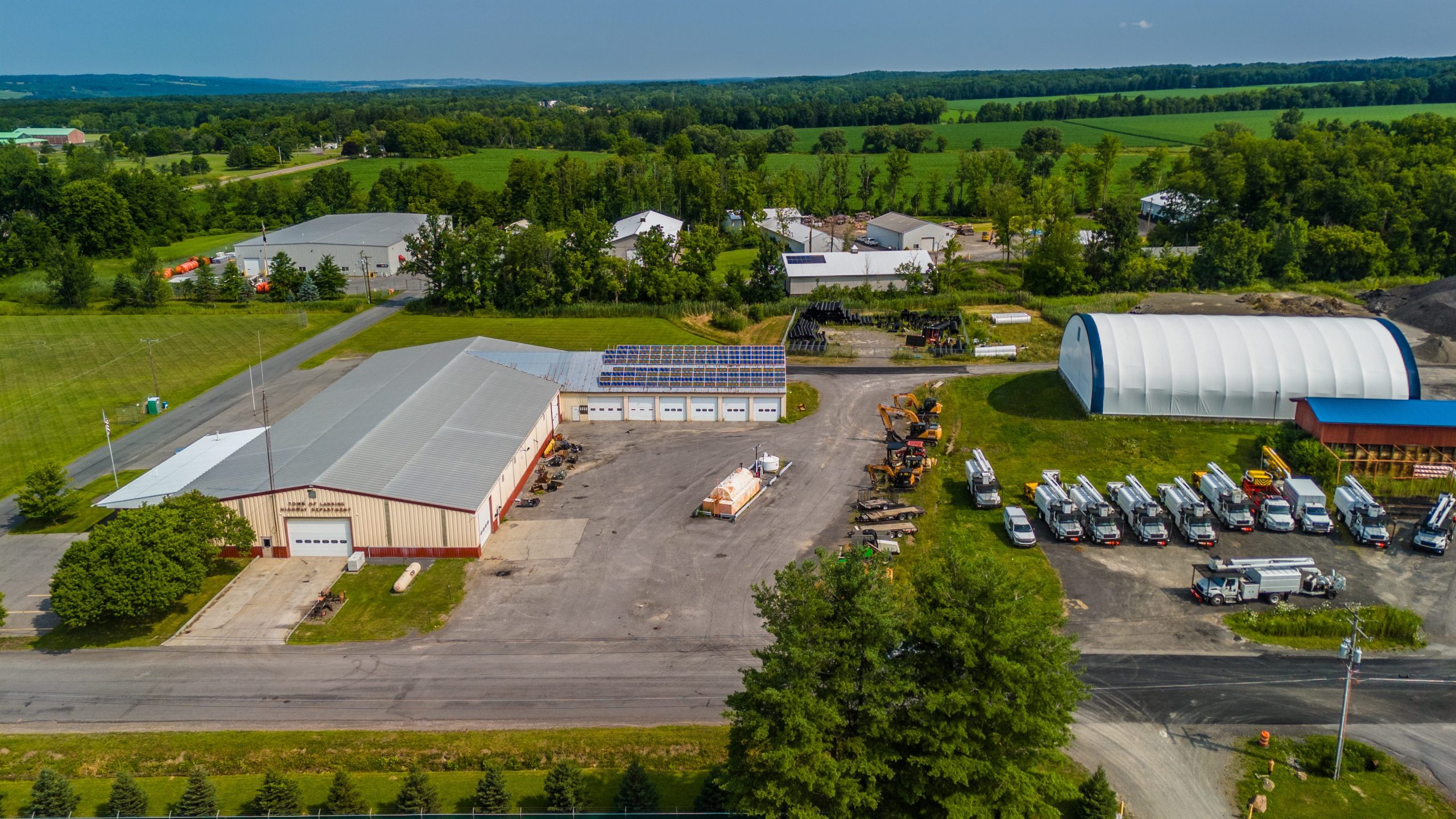
A project to overhaul the town of Lansing’s highway department is projected to be $10 million over budget, project managers said at a recent town board meeting.
The project was meant to cost around $13 million, based on estimates calculated by national engineering firm Colliers Engineering and Design back in 2021. Then, the town board moved to bond $15 million in taxpayer funds to cover the price of the project.

At the June 26 town board meeting, architects and project managers managing and designing the project presented a new reality. Three years into the project’s life cycle, the costs of construction and materials have risen to such a degree that the project’s final price tag is now $25 million.
The project would address issues at the highway department, such as fixing up the primary garage, which has been plagued by disrepair and is in need of significant updates, according to a report from 2021 compiled by Colliers.
The 50-plus-year-old structure contains a small office space, maintenance bay, truck storage and attached pole barn. The office also needs some work, as it does not comply with accessibility requirements found in the Americans with Disabilities Act.
There is also visible water damage and leakage on the compound’s facade, as well as doors that are dilapidated. Colliers’ report also indicates that the insulation beneath the main garage roof is aged and damaged and may contain hazardous materials. The maintenance bays, which include a welding bay, are crowded and have limited overhead space for vehicle repair, and many areas of the concrete floor have visible large cracks. There is also visible flooding throughout the facility, primarily in the pole barn.
To stay operational, the department has had to improvise short-term solutions for roof leaks, cracked concrete and equipment breakdowns over the years.
A video released by the town showcasing the scope of the project can be found here: https://www.youtube.com/watch?v=cG1AovWgaeU.
“It has run its life for sure,” said Scott Bova, a principal at Colliers who specializes in working with local governments. Part of that, he noted, is because equipment and vehicles are significantly bigger than they were in the 1960s, when the 21,000-square-foot building was built.
The added costs to the project’s budget come mostly from escalating prices in labor, materials and other construction costs. Bova estimates that projects typically have to budget about an extra 5-6% in escalation costs for every year that passes. This is on top of contingency accounts that the town has to maintain for unforeseen costs. An example of that could be finding issues with plumbing after digging up a building’s pipes.
Laird Updyke — a regional operations manager at LeChase, the construction company overseeing the project — said that construction costs in the northeast have grown 40% since 2021, including materials and labor.
Updyke noted the construction costs on the project alone currently sit at approximately $16.3 million. He added that the firm is also budgeting around $1.5 million in trade soft costs, typically allocated toward legal, design, financing and miscellaneous fees. Another almost $1.8 million in design contingency is to account for unforeseen design costs. Then, close to another $1 million in projected escalation contingency and another $2 million in soft costs for the town, which includes worksite inspections, insurance and other fees, are needed.
“There is a large discrepancy there,” Updyke said regarding the initial budget vs. the projections delivered on June 26.
Updyke added that the firms have started to look at potential savings areas.
“Typically, [that entails] reducing the amount of work done, reducing or modifying material types, reducing scope items,” he noted.
Lee Stepp, a senior construction manager at LeChase, presented some of the potential reductions. These include:
- Reducing the planned generator to a capacity of 150 kW (saves $473,000)
- Eliminating the photovoltaic energy array on the roof (saves $459,000)
- Eliminating an electric vehicle charger (saves $104,000)
- Reducing the scope of the salt barn (saves $335,000)
- Reducing the quality of the proposed lighting fixtures (saves $60,000)
- Eliminating the planned fuel island (saves around $1 million)
- Revising the scope of the site (could save around $1 or $2 million, but Bova said that is still yet to be determined by the firm)
- Removing the existing administrative office (saves $211,000)
- Deleting the clerestory windows (saves $100,000)
- Reducing the amount of planned fencing around the project by half (saves $194,000)
- Making the building efficiency hybrid instead of a fully electrified building (saves $138,000)
Town board member Laurie Hemmings expressed her frustration about the ballooning of the project’s budget.
“You’re $10 million over budget. I cannot tell you how disappointed I am on behalf of the taxpayers of Lansing that you came to us with this proposal like this,” she said, addressing Bova and Stepp. “I appreciate that you’re working very hard to find the [cost cutting list], but I am very disappointed in this proposal.”
Highway Supervisor Mike Moseley said he felt sticker shock when he learned of the new price tag.
“But it is our job to bring you up to speed where we are at,” he added.
Moseley also recommended that the town study the possibility of moving the salt barn from the highway department site. He said that could bring another $1 million in savings.
Lansing at Large appears every week in Tompkins Weekly. Send story ideas to editorial@vizellamedia.com. Contact Eddie Velazquez at edvel37@gmail.com or on X (formerly Twitter) @ezvelazquez.
Editor’s note: This article has been changed from its original version due to an error. The size of the current Lansing Town Highway Department building is 21,000 square feet. Tompkins Weekly regrets the error.
Author

Related Articles
Local representatives push HEAP as winter nears
Lansing HEAP program applications are now open, helping low-income households cover heating costs and access energy assistance this winter.
Lansing’s $17M capital project advances amid construction challenges
Lansing Central School’s $17M BOBCAT capital project upgrades schools, athletic facilities, HVAC, and infrastructure.