
Lansing superintendent breaks down projects ahead of Nov. 1 vote
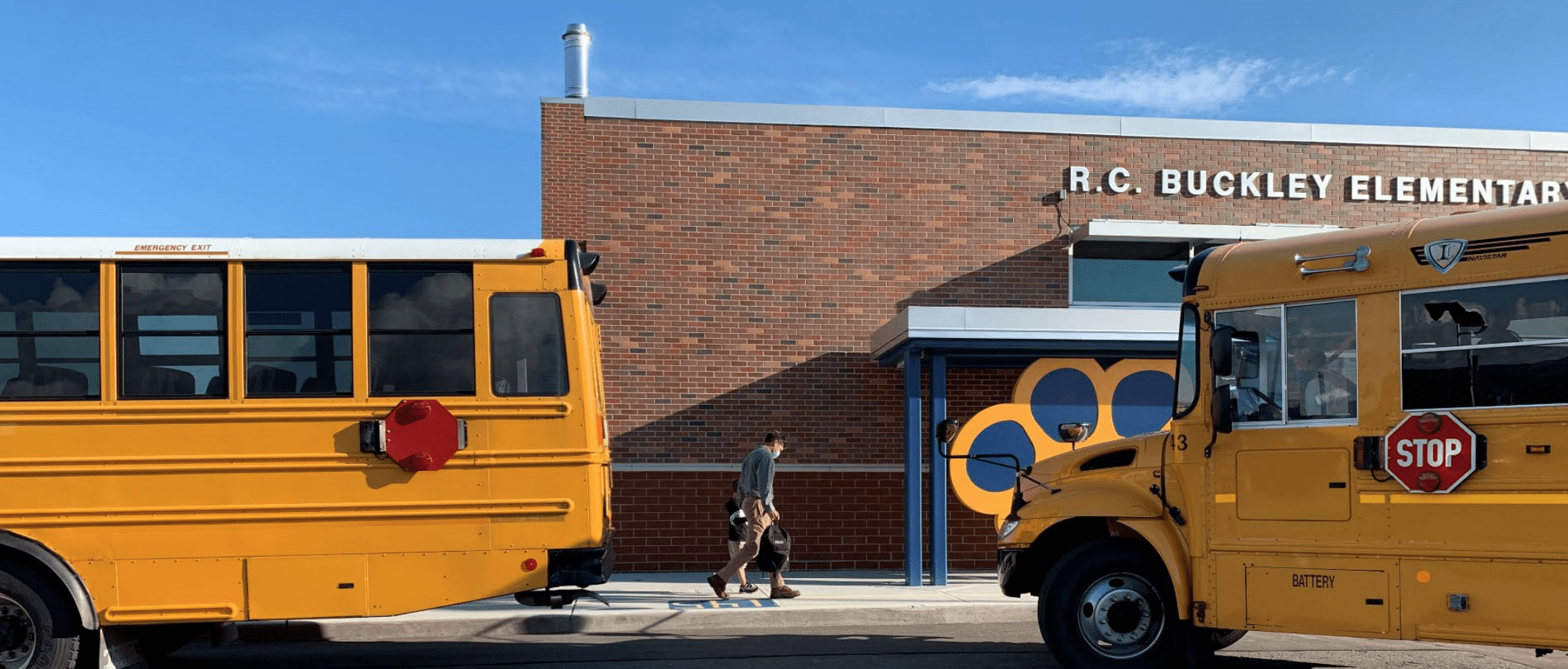
On Nov. 1, Lansing Central School District is holding a vote for two propositions — the Non-Pipeline Alternative (NPA) Project and a capital project dubbed Building Opportunities for Branding, Capital improvements, Athletics & Teaching (BOBCAT). Voting runs from 7 a.m. to 9 p.m. at the District Office, located in the parking lot of the elementary school at 284 Ridge Rd. More information is available at lansingschools.org/Page/162.
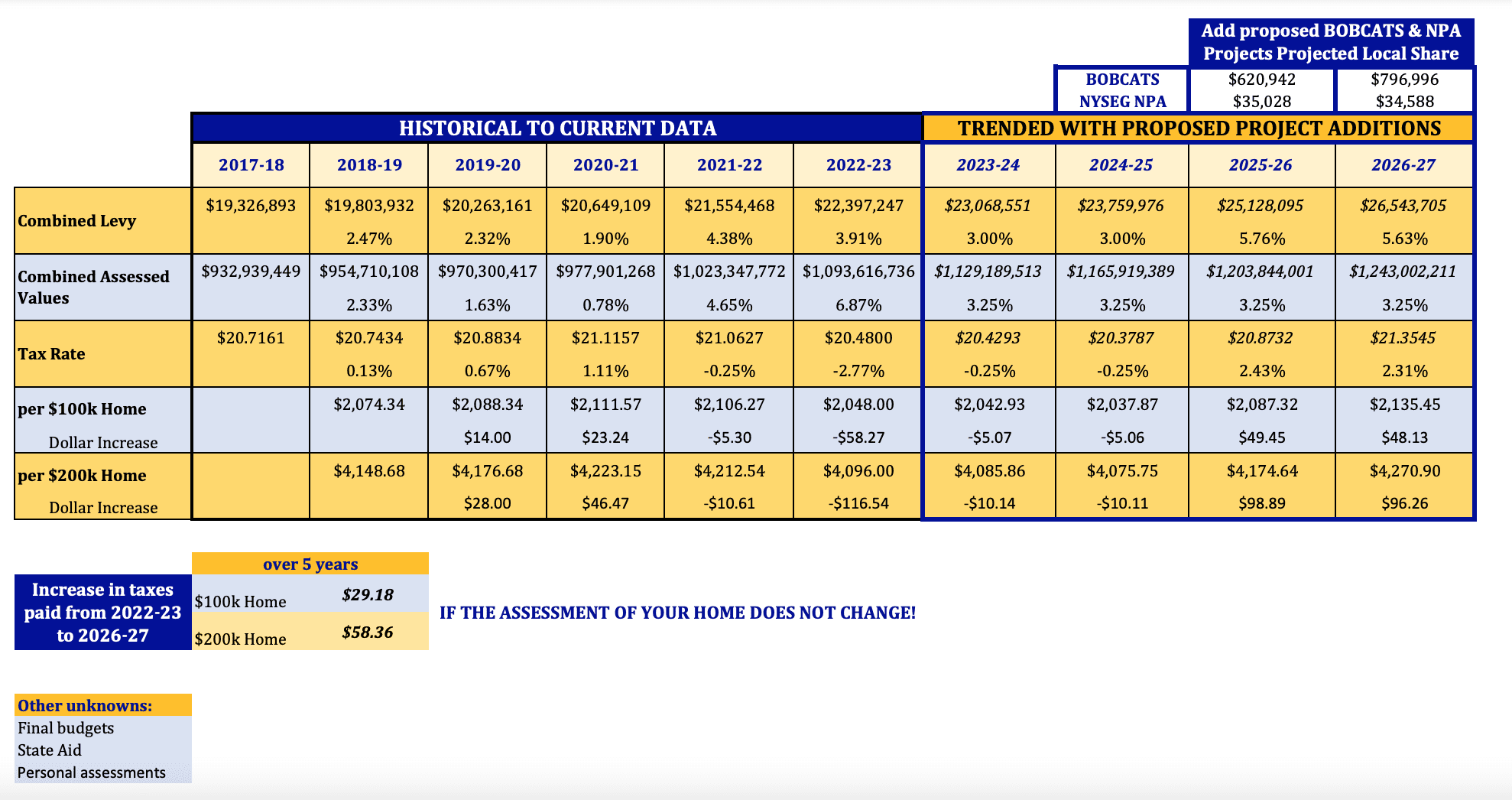
The two projects together are expected to increase homeowners’ taxes paid from the 2022-23 school year through the 2026-27 school year by $29.18 for a $100,000 home and $58.36 for a $200,000 home, provided the home’s assessment doesn’t change, according to the school district (tinyurl.com/25t4psya).
Ahead of the vote, Tompkins Weekly spoke with Superintendent Chris Pettograsso, who shared her thoughts on the projects’ main goals and the reception from community members so far.
As Pettograsso explained, the NPA Project got its start in December of 2019, when NYSEG issued requests for proposals due to the closing of the power plant and the moratorium on natural gas creating “a little bit of an energy crisis situation in Lansing,” she said.
“NYSEG put out requests for proposals to find any type of energy efficiencies within Lansing that would help release some of the pressure on natural gas and be able to support energy use in Lansing in general,” she said. “The middle school itself is just at the end of the natural gas pipeline. And for us, the middle school is the biggest user of natural gas for heat in the building. So, we put a few different proposals into NYSEG, but the one that was finally approved was really redoing a great deal of the HVAC in the middle school.”
Improvements proposed under the NPA Project include two boiler replacements ($420,000), 42 classroom unit ventilators ($840,000), a rooftop unit for the auditorium ($280,000), two gymnasium rooftop units ($320,000) and a new cafeteria furnace ($25,000), totaling roughly $1.89 million.
“With that project, we’ll be able to get a significant amount done,” Pettograsso said. “And I believe NYSEG is supporting $710,000 of all the costs associated with that. So, we’re really wanting to move forward with that. We want to support the community with taking away some of the pressure on natural gas by improving all of our infrastructure at the middle school and also take advantage of the financial incentive to do the work.”
Pettograsso added that the NPA project has received support throughout its development process.
Around the same time the NPA Project got its start, BOBCAT began its journey. Just before COVID-19 hit, the district was in the process of putting out a capital project to community members, which at the time included a significant number of improvements related to HVAC that are now included in the NPA Project. However, one large element of the capital project, now known as BOBCAT, has stayed the same since its early days — improvements to the district’s athletic facilities.
Pettograsso explained that Sobus Field and the facilities therein, home of countless activities, games and events for the school district and others in the community, have been in need of attention for some time now.
“Our track has been sealed over and refilled many times, and that has managed to kind of prolong the life expectancy, but now, it’s really falling apart, and we’re unable to seal it. So, the track has to be removed and replaced,” she said. “[Sobus Field is] currently a grass field, and with the weather and the amount of usage, because all of our teams use it especially in fall, it’s gotten really hard over the years and, … especially with the type of removal that we’ll be doing with the track, minimally would need to be replaced with artificial turf or continue with a natural turf.”
After surveying the community and conducting research into various factors like weather, athletics and others, Pettograsso said she and others discovered that, in the long run, a turf field will be far more economical than a new grass field, hence why the district is proposing an artificial turf in BOBCAT.
What also came out during the community input period was a large push for more Lansing pride, like more widespread branding.
“And we’ve been doing that over the years with having our pawprint more present and more prevalent in front, having some positive signage that has to do with being a Bobcat and home of the Bobcats,” Pettograsso said, “And we’ve kind of adopted an ‘It’s a great day to be a Bobcat’ slogan.”
Also included in BOBCAT are general improvement upgrades like refinishing the floor of the high school’s gym, reconstructing some walls and windows, replacing the vintage roof and more. BOBCAT in its entirety is projected to cost $22.8 million, split into two phases costing roughly $19.2 million and $3.6 million.
“It’s phasing in over two years, rather than just … one year as far as funding,” Pettograsso said. “And it just also made sense because we have past projects and past debt falling off between the years of 2025 and ’29, just different debts falling off, which helps [lessen] the impact cost-wise of the project on the community.”
Pettograsso said that if the NPA Project and BOBCAT get approved Nov. 1, the district is hoping to start work on them between 2023 and 2024, with completion over the following couple of years.
So far, community input on the project has been positive, especially input obtained throughout the plans’ crafting processes. However, Pettograsso said it’s been difficult to engage community members since the plans were finalized.
“[During COVID-19], people were not on campus, so … to get the community back involved in our deeper-level, longer planning activities has been more of a challenge for us on, I think, everybody because there’s so much going on and we’re kind of getting back into it,” she said. “So, we’ve been really trying to get the word out through social media. We just had a mailer go out, posting things throughout town and certainly our website. We do have listservs that include all our school members and some community members that have signed up but not the community as a whole.”
Pettograsso said these challenges have required some “out-of-the-box thinking” to make sure that “everybody feels informed.” Among these reach-out methods was an informational meeting held Oct. 18; the recording for which is available at tinyurl.com/24rum982. Pettograsso said that that meeting wasn’t as well-attended as she and others were hoping, but the feedback meeting organizers did receive was positive.
“We didn’t have many questions,” she said. “The people that were on were grateful. And as far as [what] I hear from walking around the school and talking to different people, people are really excited for the kind of overhaul of Sobus Field because it will be the first time it will look different.”
Other challenges facing the two projects are largely related to supply costs and shortages. Pettograsso said the biggest reason the district is pushing for a vote on the projects now is to ensure the district is “one of the first people to get out there” when bidding time comes.
“We’re really strategic with our timeline so hopefully, there’s enough employers and employees in this in the field of construction to make it happen,” she said.
Pettograsso said that while the biggest parts of the projects will take considerable time to get started and complete, the district plans to spend considerable time over the next several months to further increase its branding and otherwise boost Lansing spirit.
“Like most communities, we have very strong traditions, very strong community ties, people that want and understand the importance of being a Bobcat in Lansing,” she said. “We have a lot of resources we can use and support to keep us at the top-notch education that we offer while still maintaining our small-town values. So, through the branding, we’re trying to do that. We’re trying to keep that close-knit community, make sure that everybody knows that they are welcome on our camp.”
Jessica Wickham is the managing editor of Tompkins Weekly. Send story ideas to them at editorial@VizellaMedia.com.
Related Articles

Meinig Fieldhouse built to protect iconic red-tailed hawks
The Meinig Fieldhouse hawks project shows how Cornell protected Big Red and other red-tailed hawks during construction.

TC3 reaches transfer agreement with Hobart and William Smith Colleges
TC3 transfer agreement guarantees acceptance and scholarships for graduates entering bachelor’s degree programs at Hobart and William Smith Colleges.
AmeriCU proudly connects students with annual scholarship opportunity
AmeriCU scholarship program awards $1,000 to students pursuing college or vocational education. Applications are open through March 15.