Leaders address vaccine demand plateau
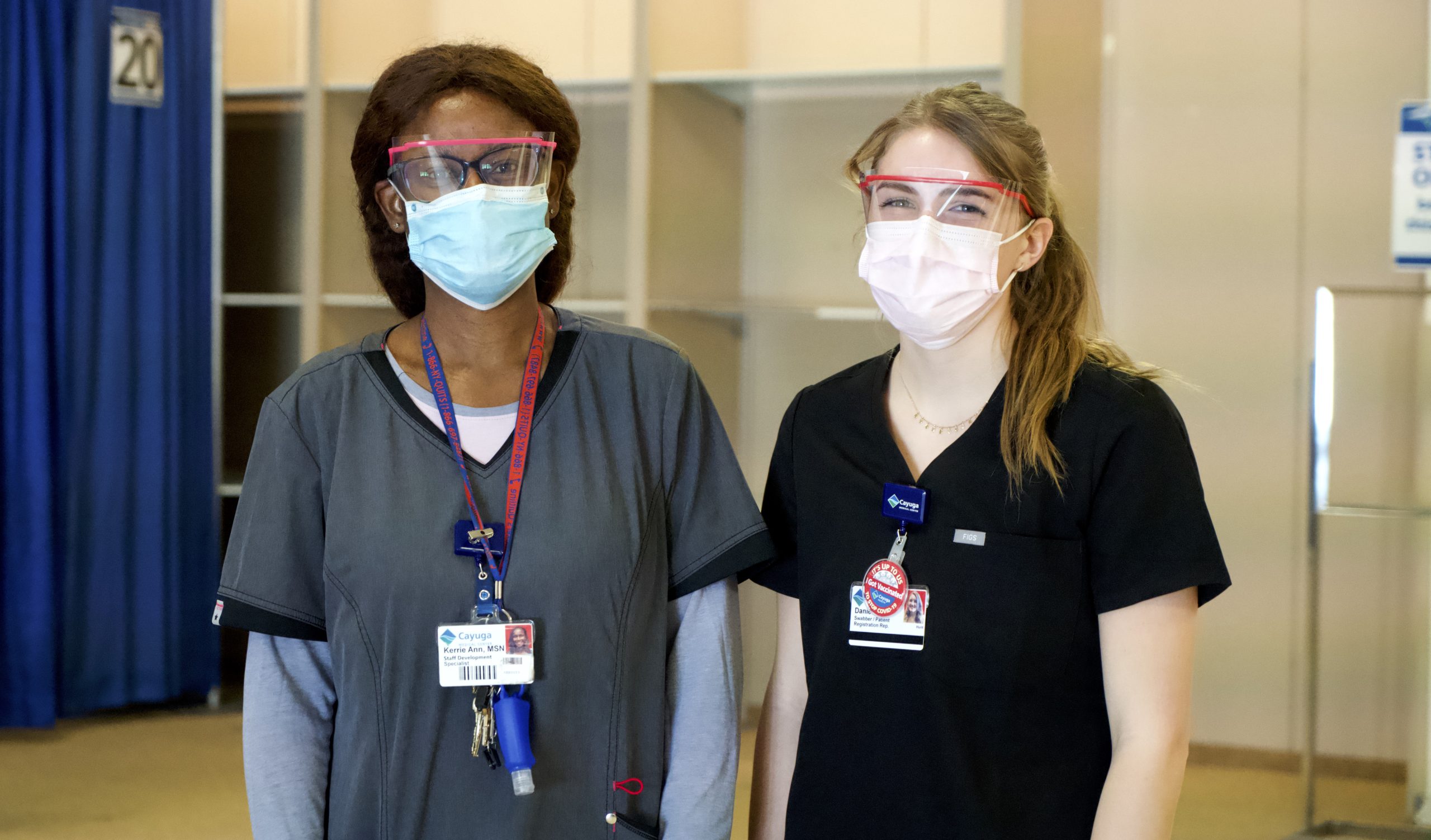
Nicole Roulstin has been the contact center manager at 2-1-1 Tompkins/Cortland since 2014, so when the pandemic hit the county, she had the experience needed to guide the help center.
Roulstin said that at the beginning of the pandemic, 2-1-1 was already well poised to handle remote work, so the biggest challenge for 2-1-1 during COVID-19 was and still is staffing, especially since vaccines first became available in the county.
“Over the past couple of months, of course, we’ve been very focused on providing information to the public around the vaccine,” she said. “And that really came fast and furious. It just kind of hit us like a pile of bricks.”
During that initial vaccination period, 2-1-1 received a big spike in call volume, with calls related to vaccinations — over 6,000 since January, Roulstin said — more than doubling the center’s usual daily numbers. But that spike has since greatly decreased, and while it’s made things easier on 2-1-1 staff, the large drop in vaccine calls points to a larger issue that 2-1-1 and other community leaders are working to address: vaccine demand plateau.
Across the country, many communities are facing less demand for vaccines than supply, the opposite problem to what most faced earlier in the year. Though Tompkins County is no exception to that trend, as sources interviewed for this story explained, the county is in much better shape than some surrounding communities to lower the demand gap.
Addressing the plateau
The vaccine demand plateau is evident not just at 2-1-1 but also at vaccination sites, where there are more slots left unfilled than in past months, particularly at Cayuga Medical Center’s mass vaccination site in The Shops at the Ithaca Mall.
Amie Hendrix, deputy county administrator and coordinator of the county’s Emergency Operations Center (EOC), explained that, at the start of vaccinations, “we would have clinics fill in minutes for 1,000 [slots]. And then, it got slower.”
County Public Health Director Frank Kruppa said that county officials knew to expect a demand plateau at some point in the vaccination process, but what sets the county apart is how many people were vaccinated before hitting that point.
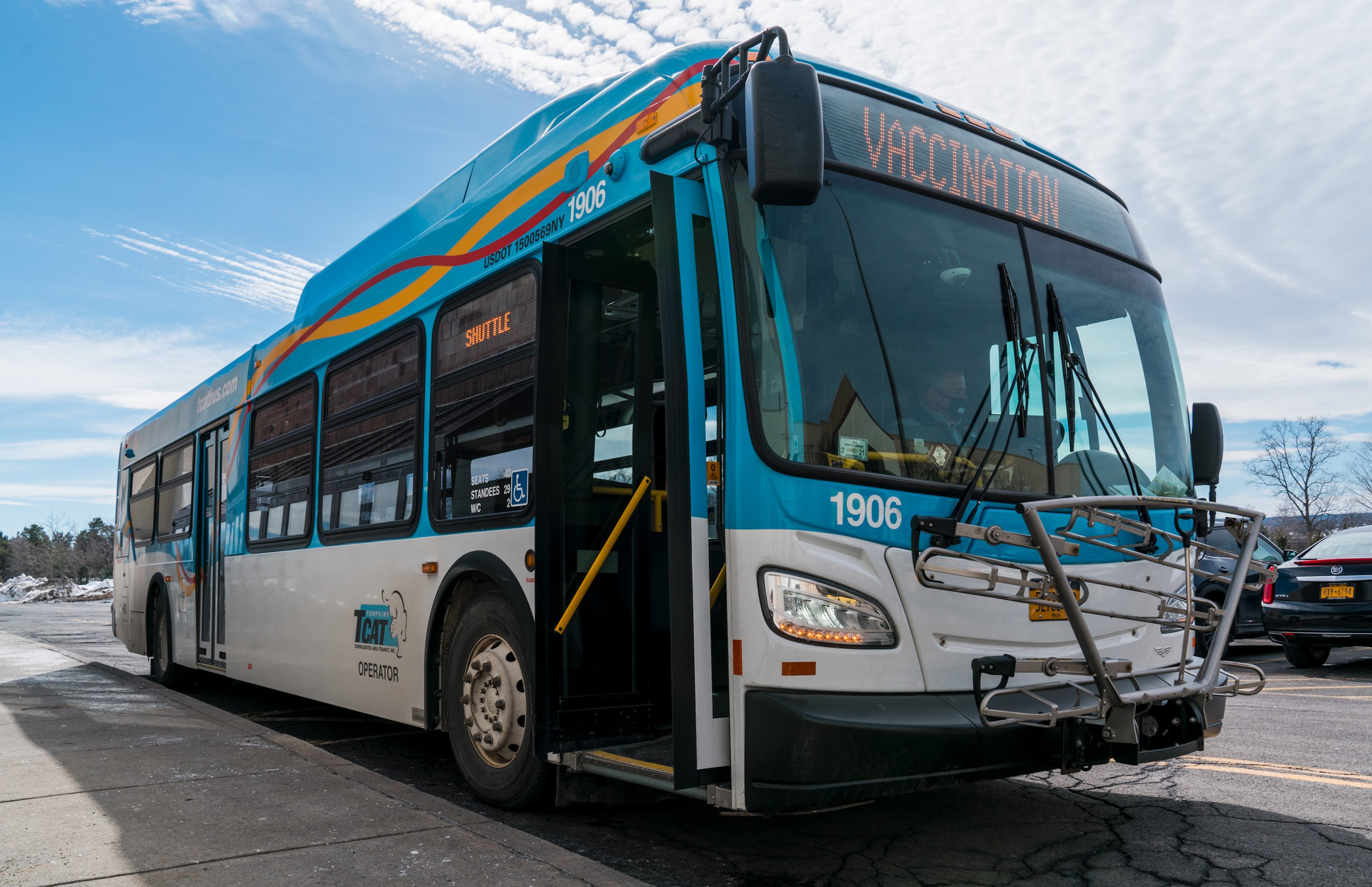
“Having roughly 70% of our population over 18 with the first dose and 60% of our total population, that’s a good place to be plateauing,” Kruppa said. “And it’s certainly stronger than the counties around us in our region. So, we’re happy about that. But we’re not all the way where we need to be. And we still need to vaccinate more folks.”
Kruppa said that there are multiple reasons the county is seeing this plateau, especially vaccine hesitancy and lack of access. As a result, the Health Department has taken a different approach to the vaccination process compared to the start of this year, focusing on bringing vaccines to the county’s rural communities through efforts like small, pop-up vaccine clinics.
Already, Kruppa has seen those efforts pay off.
“We’ve seen, as we’ve gone out into our rural communities, folks stopping in after work that might not have otherwise been able to get to the mass vaccination site, folks that have been thinking about it and have been on the fence but when it came close to home finally said, ‘I’m going to go ahead and get vaccinated now,’” he said.
Hendrix said that another key feature of the Health Department and EOC’s new approach is education, working through people in rural communities whom community members trust.
“That’s key because we can provide information, we can bring people to that information, but it’s going to come down to those personal conversations when you hit that plateau,” she said.
The Health Department and EOC will continue to hold office hours to help answer resident questions about the vaccine and help show those that haven’t gotten vaccinated that the vaccine is safe and effective.
Additional vaccine progress
Another big shift in the vaccination process is Pfizer’s vaccine being approved for 12- to 15-year-olds. Almost immediately after the news was announced, the Health Department got in touch with local schools, Cayuga Health Systems and Northeast Pediatrics to help coordinate vaccinations for a younger population, and those efforts have been well received.
So far, Roulstin, Kruppa and Hendrix have received a lot of positive responses from community members on the increased eligibility. At 2-1-1, for example, Roulstin said that vaccine calls have increased, with many new calls centered around getting young teenagers vaccinated.
“We are poised and ready to handle those calls and are excited about being able to make appointments for those families and for the teenagers,” she said.
In addition, Northeast Pediatrics ran out of slots in the first round of vaccinations for this age group earlier this month, Hendrix said.
“That’s exciting for us because I think it also shows that here in this community, and in Tompkins County, there’s still a willingness to continue to vaccinate,” she said. “Of course, these are some difficult conversations because we’re now talking about vaccinating someone’s children, and ‘how does that all work?’”
While there is still work to be done to get teenagers vaccinated, all sources view the eligibility increase as a crucial milestone in the county’s recovery journey.
And another milestone came late last month when Gov. Andrew Cuomo announced that the state is adopting the CDC’s new guidance for mask use for fully vaccinated people. Under these new guidelines, “fully vaccinated people can resume activities without wearing a mask or physically distancing, except where required by federal, state, local, tribal, or territorial laws, rules, and regulations, including local business and workplace guidance,” according to the CDC.
The mask guidance around unvaccinated individuals hasn’t changed, Cuomo said.
Sources interviewed for this story largely support the measure, as Roulstin shared.
“People in general have really come to get used to wearing masks, and our positive case rate has been really coming down and coming down over the past few months, so I think it’s a smart decision for the state to allow some more loosening of some of the regulations so that businesses can get back to their life as usual or something more normal, as well as people being able to get out and do things and enjoy their lives,” she said.
Around the same time as Cuomo’s mask announcement, he also announced that capacity at indoor facilities like restaurants and gyms could increase to 100% — with social distancing still in place — starting May 19. Kruppa said that, because of these announcements, the Health Department has received a lot of questions on how the guidance applies to them.
“Our environmental health division has been doing a lot of work in trying to help provide as much clarity as we can as people are trying to interpret the changing guidance as we move forward,” he said. “But I think generally, everyone’s been receptive. They’re excited to be moving back towards reopening more and are thankful that we’ve done the work that needed to be done to get us to this point.”
Hendrix also shared Kruppa’s viewpoint but added that the mask regulation changes have the potential to create more logistical challenges, raising questions around how to determine who’s vaccinated and unvaccinated in public spaces.
Looking ahead
Overall, despite the many changes recently surrounding vaccines, health leaders are still optimistic about the county’s pandemic recovery. Hendrix said that while managing everything the pandemic throws our way has been difficult, the community has shown that it can work together to benefit everyone, and that hasn’t changed.
“We’ve had loss. We’ve definitely seen some of the impacts of the pandemic here. But we’ve also found ways to overcome all of those things,” she said. “So, I’m hoping that as we start to pull out of this, we continue to lean on each other and know that there’s going to be blips, there’s going to be setbacks, but there’s still a lot of growth and progress when we look back a year.”
Kruppa expressed a similar sentiment. There’s more work to be done before the county can fully recover, he said, which means people will have to continue to be patient and follow health guidelines. But he’s still looking forward to what lies ahead.
“I’m excited that we’re going to be reopening more for the summer,” he said. “And hopefully, our disease numbers will stay low, people will continue to get vaccinated and we’re moving towards returning to as much normal as we can.”
Related Articles
Quantera’s new tech promises faster, safer chemical testing
Quantera Analytical is developing faster, safer chemical testing technology in Ithaca with roots at Cornell University.

“A Silent Force”: Gail Belokur brings creative leadership to the United Way
Gail Belokur, a Hometown Hero, brings compassionate and creative leadership to the United Way of Tompkins County.