
Legislators, City Council members share post-retirement plans
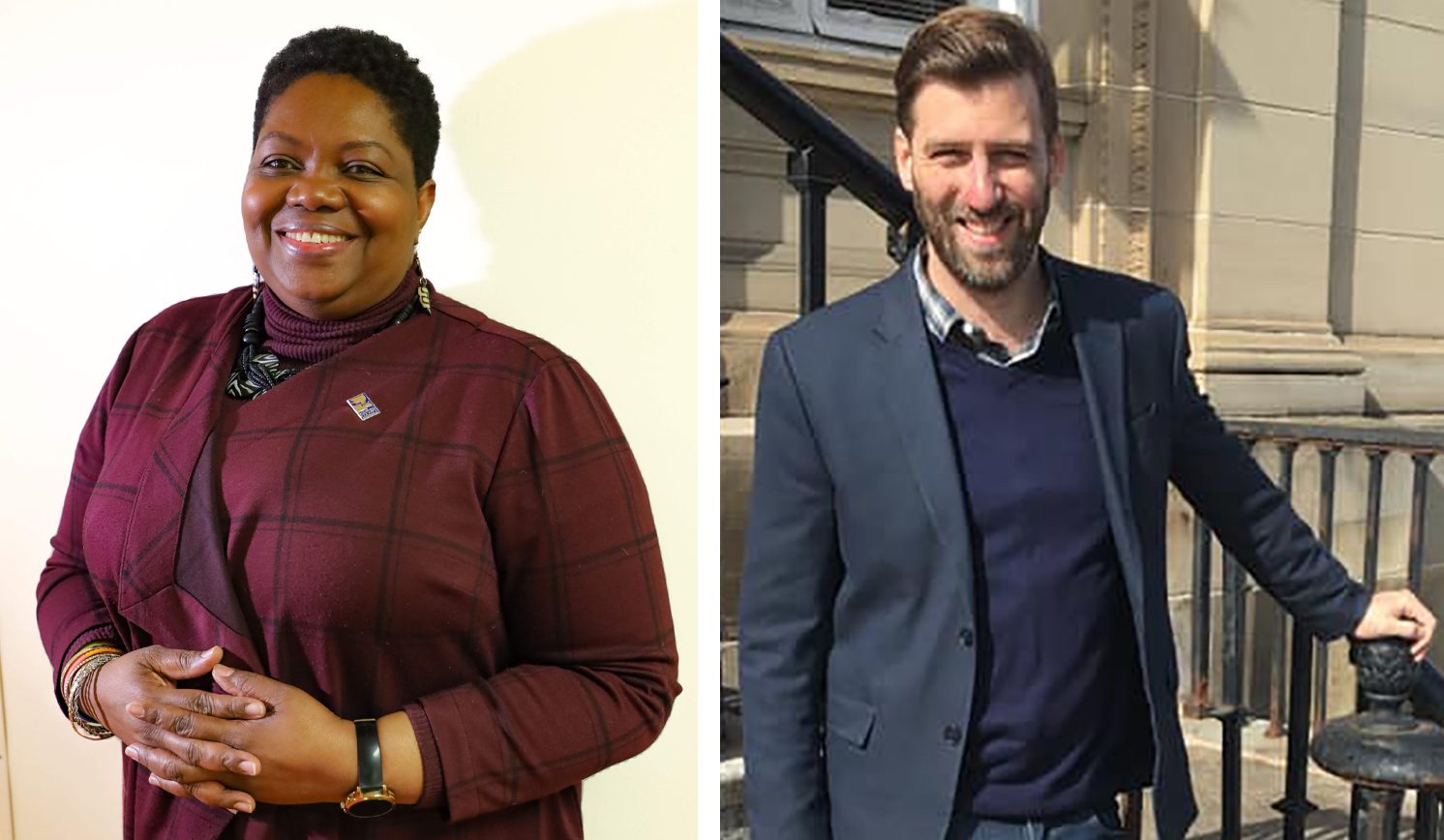
Recently, County Legislators Martha Robertson and Leslyn McBean-Clairborne and Ithaca Common Council members Donna Fleming, Deborah Mohlenhoff and Seph Murtagh all announced that they will not be running for reelection following the conclusion of their terms this year. Reflecting on their tenures, they shared the progress they’ve made so far and what’s on their agendas for their last year in office.
Robertson, who represents the western portion of the town of Dryden, has served on the Legislature for 20 years. Her first involvement in community government was in the late 1990s when the county was considering building a beltway from The Shops at Ithaca Mall to Route 79.
Robertson, concerned about the sprawl the road would create, organized a group that fought against the new road, and her efforts were eventually successful. After which, a member of the Dryden Town Board told her about a retirement in the Legislature and said she should run. She has served on the Legislature ever since, serving as chair for six years.
McBean-Clairborne, current chair of the Legislature, has also served for two decades. As she shared with Tompkins Weekly early last year, she joined the Legislature in 2001 after much encouragement from her mentor, Diann Sams (full article at https://tinyurl.com/y44fpurr).
Fleming, current 3rd Ward alderperson, moved to Ithaca in 1986 after her husband started a teaching position at Ithaca College. She quickly became involved in the community, becoming a member of her local PTA and the Ithaca Community Chorus and president of the Civic Association.
“It seemed to me like sort of one thing led to another,” she said. “When a neighbor and a friend of mine, who was on Common Council, urged me to run for Common Council in 2011, I was convinced. I thought it was a natural next step for me since I was interested in serving the community.”
Fifth Ward Alderperson Mohlenhoff, who is also the associate vice president of college relations at Tompkins Cortland Community College, said her journey to the Common Council began in 2009 when the previous alderperson stepped down in the middle of her term. The Ithaca mayor at the time, Carolyn Peterson, appointed Mohlenhoff to fill the position.
“The decision was sort of made for me because I became interested in it,” she said. “I thought it was great, so I ended up running for that seat myself and served my first four-year term, and then ran again and was elected for a second term and ran again and was elected for a third term.”
Murtagh started at the Common Council in 2011, partially motivated by the push for affordable housing in the community and efforts to revitalize Ithaca’s downtown at the time.
“It was kind of a crazy time because when I ran, the city was still in the throes of the recession because it tended to hit municipalities a bit later than it hit the markets with the whole financial crash,” he said. “Cities were really feeling a lot of pain around 2011, 2012, so also part of the motivation was to try to be part of the city’s economic and financial recovery.”
With decades of service among them, it’s no surprise these legislators and Council members have plenty of experience handling various community issues. Reflecting on some of their proudest moments, both Murtagh and Fleming said their work on the city’s Sidewalk Improvement Program in 2014 especially stood out.
“Because of that, we’ve been able to build and repair miles of sidewalk in the city, which has been a huge enhancement to the city and to pedestrian access,” Fleming said. “So, I’m very proud that I was part of the task force that did that.”
For Mohlenhoff, the rebuilding of the Commons was a defining time. In addition, she’s proud of the work she put in to overhaul various city boards and committees. She chaired a working group that performed a comprehensive analysis of government structures, which led to the reorganization of the Council into four overarching commissions and a big change in how the Council modified and amended the mayor’s budget.
“I’ve set it up in such a way that there’s lots of systems in place so that whoever comes in to take on this role after me will have all the tools they need in order to keep this process moving along,” she said. “And that’s really boring and tedious work to put infrastructure together internally and all of those pieces, but that’s kind of the place that I thrive.”
For McBean-Clairborne, her biggest achievement was simply joining the Legislature. Prior to her joining, the appointment process for filling a Legislature vacancy representing the city of Ithaca was that the ward committees would elect somebody to fill out the remaining term and would make that recommendation to City Council, who would then approve the recommendation. Then, McBean-Clairborne came along, and “all of a sudden, the rules changed,” she said.
The City Council at the time decided to abandon that procedure, opting to wait until the elections to fill the vacancy. But when, around the same time, a vacancy opened ?on City Council, the Council members who opposed her appointment wanted to appoint a white male candidate to fill the role via the previous procedure.
As a result, Council members couldn’t justify appointing him to Council without also appointing McBean-Clairborne to the Legislature, so they also appointed her to fill the Legislature vacancy. Also by that time, the elections had occurred, and McBean-Clairborne had won her seat.
“Ordinarily, I’d be like, ‘OK, they don’t want me. I’m out. I am not even going to put myself through this. It would be embarrassing. It would be hurtful.’ And it was all of those things,” she said. “But there were people in this community who said, ‘we want you there.’ … For me, my biggest accomplishment was sticking, hanging in there and getting on the Legislature.”

Robertson shared numerous standout moments, with one of her biggest being her efforts toward alternatives to incarceration. In the early 2000s, the state commissioner of corrections was pushing counties to build bigger jails, but Robertson and other legislators pushed back.
“It was an 8 to 7 vote not to build a jail for 135 people, and instead, we pledged to invest in alternatives to incarceration, drug courts, that sort of thing, and it’s truly worked,” she said. “We now have about 30, 35 people instead of 135 inmates in the jail. So, that was a key moment and helped me to reinforce the idea that one person can really make a big difference.”
All sources said that adjusting to service during the pandemic was challenging at first, but the crisis ultimately showed just how important their work was. This was especially true for McBean-Clairborne, whose term as chair began just as the pandemic hit the county.
“What I thought was going to be a year of routine turned out to be a year of amazing challenge of my leadership,” she said. “Seeing people come together, working with our administration and our public health and our community partners and legislatures, constituents, all of whom are scared and don’t know which end is up? Well, we made it happen. And I’m very proud of that.”
On their decisions not to run for reelection, all sources shared the sentiment that, while they greatly enjoyed their tenure, it’s time to move on and let someone else take on their roles. Murtagh shared the mentality for himself and other retiring Council members.
“We’re all feeling the same thing, which is … everything has a season, and it just kind of feels like it’s time for some new blood,” he said. “I just think that that kind of fresh perspective is important.”
Robertson and McBean-Clairborne both expressed a similar sentiment toward their two decades of service.
“Twenty is a good round number, and my husband’s been retired already for two years, and it just feels like it’s time to join him,” Robertson said. “As soon as everybody’s vaccinated, we can take off and do some traveling and just have a lot more free time.”
For what’s left in their terms, legislators and Council members said most of their agendas center around continuing to help the community through the pandemic and the numerous challenges COVID-19 has created.
Looking beyond 2021, all sources said that they will likely stay involved in local issues and policy-making and are open to helping their replacements succeed. Mohlenhoff and McBean-Clairborne said leaving office will allow them to focus more on their other leadership positions at TC3 and the Greater Ithaca Activities Center, respectively.
For now, sources encouraged residents to get involved in their local government and even run for office.
“I would just urge people who are curious about what’s involved and what it takes to call one of us and get more information, and I think we would urge people to run, give it a try,” Fleming said. “It’s a little bit daunting at first, but curious, good-hearted people will catch on, and I think people will find it really rewarding.”
Related Articles
Cayuga Medical Center nurses to rally, alleging anti-union tactics by hospital management
CMC nurses plan a rally, alleging unsafe staffing and illegal anti-union tactics as the hospital highlights recent patient-safety gains.

AmeriCU proudly connects students with annual scholarship opportunity
AmeriCU scholarship program awards $1,000 to students pursuing college or vocational education. Applications are open through March 15.
Street Beat: What’s one of the best holiday gifts you ever received?
We asked five random people. Here’s what they had to say.