
Locals, visitors see benefits as tourism bounces back
It’s been over a year since Tompkins Weekly last delved into the county’s tourism sector (tinyurl.com/2y2paf9w), and a lot has changed since then. While local businesses that rely on tourism saw significant recovery last year compared to 2020, there’s been even more progress this year, with some reporting sales returning to pre-pandemic levels. The industry’s success is also having a beneficial effect on locals, particularly with community investments.
Industry leaders spoke with Tompkins Weekly about the changes they’ve seen, as well as some remaining hurdles many businesses still face.
Progress
Across the board, sources interviewed for this story agreed that the local tourism sector has seen great improvement since last year and especially since 2020. Tom Knipe, director of economic development for the city of Ithaca, said that “there’s a lot of pent-up demand for travel.”
“People are eager to get out and have those experiences that they haven’t been able to have for the last couple of years,” he said. “We’re actually hearing that this summer is likely to be a big summer for travel. And certainly, Ithaca is a popular destination in the summer. And so, we’re actually expecting a really strong summer for tourism in Ithaca because of that.”
Last year, the city of Ithaca established a hotel room occupancy tax to fund the upcoming conference center downtown, and Knipe said that “we now have a year of returns from that tax, and the revenues are currently outpacing our projections by quite a lot.”
It’s a similar story at the region’s parks, as Fred Bonn, Finger Lakes regional director of the New York State Office of Parks, Recreation and Historic Preservation (parks.ny.gov), explained.
“Camping reservations, as always, are very strong this summer,” he said. “Weekends are booked. We’re fully booked out on all of our camping reservations, cottages and cabins across the region. That’s pretty typical, pretty normal. We had a very, very strong day on Memorial Day weekend. We had some temporary closures in place at Taughannock and some other parks across the region, but that’s normal operation for a very busy weekend.”
Mark Dorr, president of the New York State Hospitality and Tourism Association (nyshta.org), added that even increasing gas prices haven’t greatly affected visitors’ plans, though that may change as the months go on.
“Gas prices aren’t impacting people’s travel plans, per se,” he said. “When I talk to our members, because these are trips that have already been booked, they may have been postponed, so people are going no matter what, in spite of [gas prices]. The trouble is going to be the fall and next summer. If the inflation continues on, people are going to start to pull back on what they do.”
Challenges
While the visitor increase has been a welcome one, it hasn’t kept some businesses from facing their fair share of challenges. And while Tompkins Weekly has covered many times in the past the effects businesses have seen due to the pandemic, now, most of those challenges aren’t pandemic related.
For example, several sources interviewed are struggling with workforce issues, which Tompkins Weekly has reported on before (tinyurl.com/2ybln4r7).
“I’ve never seen so many people applying for jobs, setting up appointments for interviews and then just not showing up,” said Cathy Hart, general manager for Ithaca Marriott Downtown (tinyurl.com/238h6h83). “They just don’t even show up for interviews. I’ve never seen an environment like it. So, we’re lucky to have a really good core group of employees that kind of keeps us going. But yeah, any of the new staff, we struggle with getting good candidates in the door.”
Peggy Coleman, vice president of tourism and community relations for Visit Ithaca (visitithaca.com), said that this challenge is also impacting businesses’ hours and availability.
“People are traveling, but they also have that same expectation of service level as before the pandemic,” said. “And so, that has created a challenge for many of our tourism businesses. … People really want to give that stellar guest experience and guest service, but they’ve had to, in some cases, actually close down part of their business or restrict their operational hours because they just haven’t had the staff to be able to do that.”
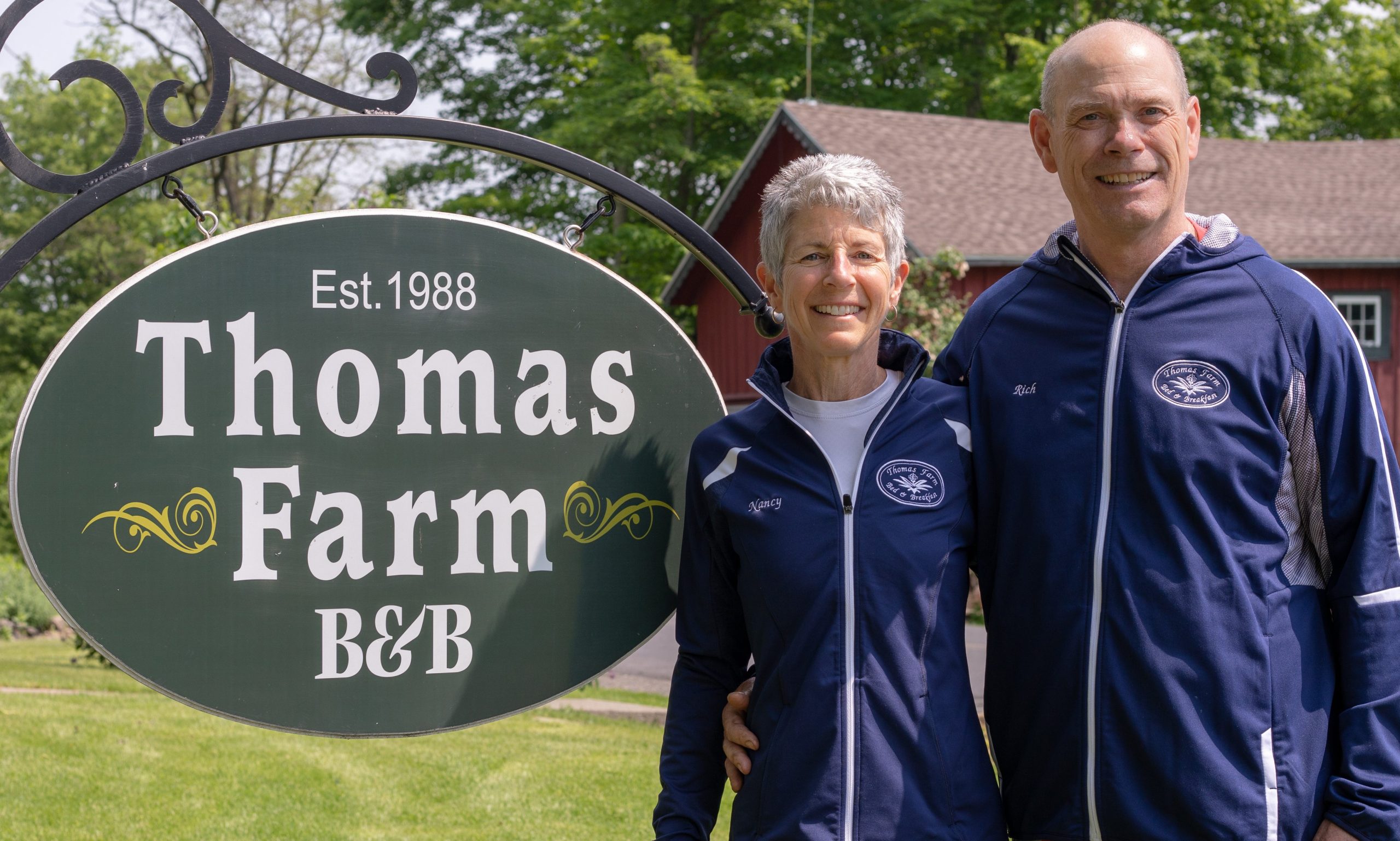
Rich and Nancy Belisle, owners of Thomas Farm Bed & Breakfast in Ithaca (thomasfarmbb.com), know this issue well.
“I’d say the biggest challenge for us last year, and I foresee it happening again this year, is a lot of the restaurants are closed — because of their staffing — on Mondays,” Rich said. “So, that’s been real tough, and even Tuesdays, that’s been real tough. You’ve got guests that come to the Ithaca area, and everybody wants to go out for dinner, and it’s a very smaller, much smaller subset on Mondays and Tuesdays that you can point them towards. I don’t know how to fix that because… it’s hard to get good folks. And you don’t want to work them to death to keep them as they are.”
Another significant struggle for many business owners, both within and outside the tourism industry, is rising costs — on everything from food to fuel.
“There’s no question that the price of tasting fees everywhere have gone up in order for all the producers to be able to account for their cost increases in terms of both labor increases as well as materials,” said Laura Winter Falk, Experience! The Finger Lakes (experiencefingerlakes.com) president and co-owner. “Prices have gone up significantly for producers in that area. And so, our prices had to go up to just to accommodate the increase in our costs. … No one wants to do that. And it’s definitely having an impact all around, I think, and certainly in the hospitality industry, I’m seeing it everywhere.”
Kim Nitchman, co-owner of Tenwood Lodge in Danby (tenwoodlodge.com), shared a similar experience.
“Fuel oil is going to be an issue,” she said. “We heat part of the time with oil. When we’re around, we do as much woodstove as we can. And our energy supplier just told us they’re making our budget billing more than double what we paid at the high point this past year, so that’s going to be a big ouch. So, we’ll see what happens with that. I don’t really want to pass the price on to our guests.”
Effects on local residents
While tourism can certainly make the county more crowded, sources interviewed were unanimous in saying that a boost for tourism also means a boost for local residents. For one, more visitors means more county income from things like sales tax and, as mentioned previously, the new room tax.
“We have 8% sales tax on everything,” Rich said. “So, whatever we sell for rooms goes into that general state fund, but then Tompkins County also puts a 5% occupancy tax on. And so, that gets significant. When you have $20,000 of quarterly revenue, that’s $1,000 into the coffers that wouldn’t be there. It doesn’t sound [like] much for one business. But you add in 10 B&Bs, you add in … how many more hotels are there.”
Knipe added that, because of the county’s focus on arts and culture attractions, more tourists also means more opportunities for locals to enjoy.
“One of the things that we are somewhat unique in — in terms of how the county invests the hotel room occupancy tax dollars, which come from visitors and tourism — is [we invest] directly in arts and culture organizations and local festivals and events, in local theaters and attractions and outdoor recreation and downtown itself,” he said. “Those are all things that locals benefit from, as well, those investments. And so, I think that’s something we can all feel proud of and feel good that tourism is helping benefit things that we value locally here, as well.”
Plus, plenty of locals help boost tourism by inviting their loved ones into the county, as Nancy pointed out.
“We do get a fair amount of people that, they’ve got family coming in, they don’t have enough space, or … their guests, … they’re visiting grandchildren, and they need a little time to chill out or whatever the case may be,” she said. “So, that is helping, that people drive by and say, ‘Oh, Thomas,’ let’s call them,’ and ‘So and so’s coming to visit and we don’t have enough space’ or whatever the case may be. So, we’ve seen a lot of that. And I think that’s a great way to connect with the community.”
Looking ahead
Seeing these and other benefits, many local and state leaders are working to further boost the region’s tourism industry over the next several months. At the state level, Dorr said a significant portion of this year’s budget is dedicated to tourism (nyshta.org/nys-budget-tourism-items.html)
“In the state budget that we advocated for to try to grow back tourism, there was some federal money allocated, and Gov. Hochul put it in their budget and it wound up in the final budget of $18 million, of which $[16] million of it will be spent regionally on tourism, marketing and promotion, trying to bring people back in,” he said. “So, that was a pretty good chunk of change for the promotion people to use.”
Knipe added that there are ongoing efforts locally as well, particularly related to workforce.
“We’re in a planning stage right now, but we do expect to roll out some workforce development initiatives to support local businesses in the hospitality and food and beverage and retail sectors that are facing those challenges,” he said.
As far as how locals can help, sources said the best way to support local businesses that depend on tourism is to go on plenty of staycations and enjoy everything the county has to offer.
“I know a lot of folks are still working from home, but our local businesses really, really still need you to invest in them and support them,” Coleman said. “And so, don’t be afraid to invite those friends and family to come and visit you. As you’re planning your evenings out on the town, why not take advantage of some of those free Thursday night concerts and go out to dinner Thursday night, instead of Friday night? The lines will be shorter, you’ll be able to get a table sooner, and it’s a way to keep supporting our local businesses. And if it’s ever possible, shop local.”
And when you go out, always remember to stay safe, as Bonn said.
“In the hot summer weather, gorges and waterfalls are very attractive places to try and cool off, but they’re incredibly dangerous,” he said. “Please obey the signage, stay on the trail. Swimming under waterfalls is [an] allowable, life-guarded experience at Robert Treman. Take advantage of that, and don’t go off trail and into unsupervised swim areas.”
Jessica Wickham is the managing editor of Tompkins Weekly. Send story ideas to them at editorial@VizellaMedia.com.
Related Articles
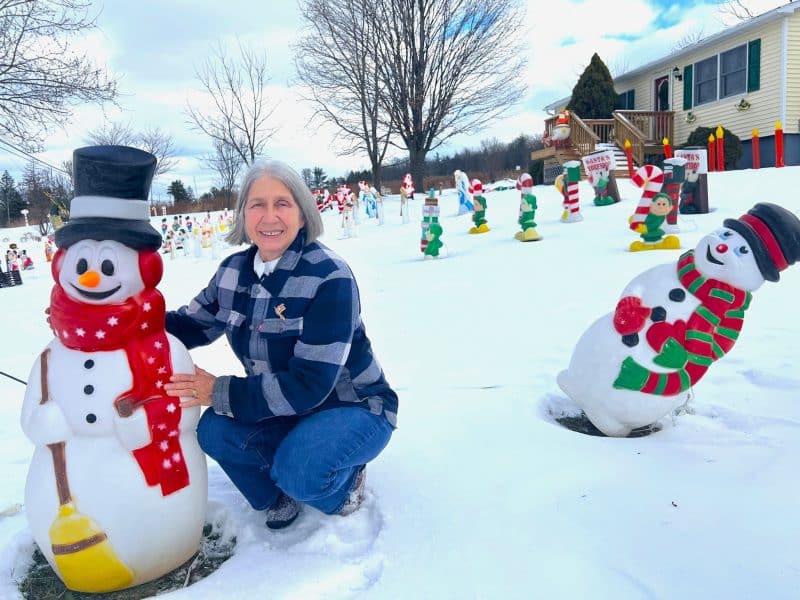
Holiday traditions bring community cheer
Tompkins County holiday traditions light up homes, farms, and schools with festive cheer and community spirit.
The gift of an experience: Local businesses offer hands-on holiday fun
Holiday experience gifts in Tompkins County include candle making, gourd crafts, and pottery workshops for creative seasonal fun.
Code Blue shelter opens amid praise, concerns and ongoing debate
Ithaca’s Code Blue shelter opens with larger space, showers, and case management to help residents during cold weather.