Looking back on 2022 in Tompkins County
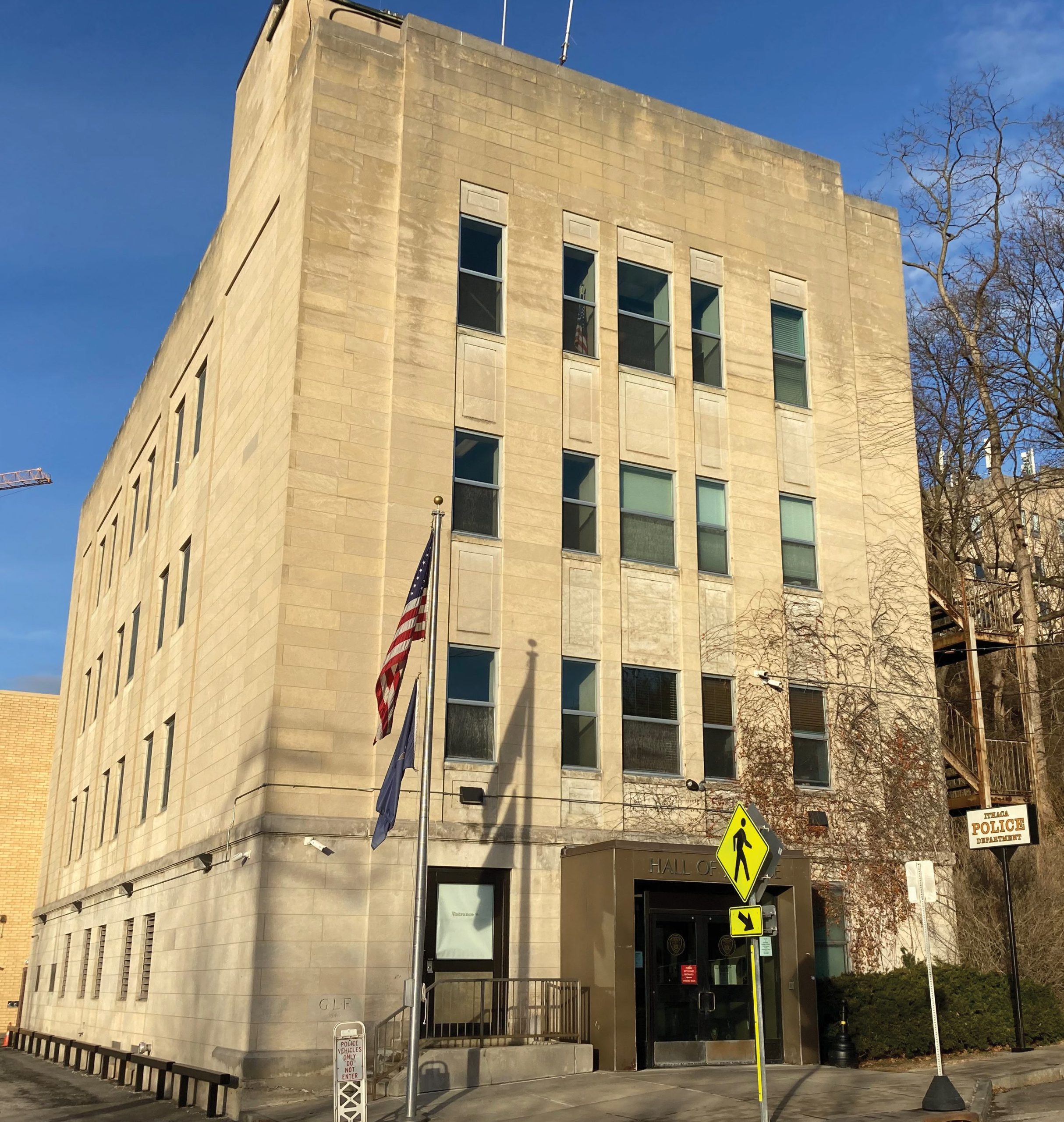
Ithaca Police Department and Reimagining Public Safety were in the headlines in 2022. Photo by Geoff Preston
2022 saw joy, sadness and change throughout Tompkins County.
From a look at how policing throughout the county hit milestones and speedbumps, to the death of a politician admired by many, to small-town residents voicing concerns about what their town will look like in the future, 2022 threw a lot at Tompkins County residents.
Here is a recap of five stories that shaped the county in the past 365 days and that will continue to be talked about in 2023.
- Reimagining Public Safety
One topic that residents of Tompkins County and Ithaca couldn’t stop talking about in 2022 was the city’s Reimagining Public Safety report.
The report, which came out in 2021, looked at reforms to the criminal justice system in Tompkins County and the city of Ithaca.
In Ithaca, the report suggested forming a new public safety organization called the Department of Community Safety, which would feature two divisions: the Division of Police and the Division of Community Solutions.
In March, the city announced that the Reimagining Public Safety Working Group had released its report, which set guidelines to put in place the goals of the initial Reimagining Public Safety report.
Included in the guidelines were recommendations that the Division of Police be staffed by current members of the Ithaca Police Department, while the Division of Community Solutions should be staffed by unarmed, civilian first responders.
The guidelines went on to specify that the Division of Police should respond to situations that required the called officer to “retain key law enforcement responsibilities,” and the Division of Community Solutions should be called to respond to “quality of life situations.”
Examples of when the IPD would be called included intoxication, shots fired, stabbing, weapons, bomb threat, burglary and dead body, among others. The Division of Community Solutions might be called in cases of welfare checks, animal bites, property checks, collisions, vehicle fires and child abuse, among others.
Some situations fell into the category of “it depends.” Those included domestic, drugs, harassment and missing person, among others.
In June, Tompkins Weekly spoke to community leaders about the report’s progress and saw that while steps had been taken in the right direction, there was still a way to go to achieve the goals of the multi-year plan.
Tompkins County Sheriff Derek Osborne said that he has been happy with a program the department has implemented that would send an unarmed sheriff’s clerk to calls that don’t require an armed officer.
He said in October that the program has successfully expanded in the county.
“This is a win-win situation whereby we can lessen the load on our deputies while also handing some calls differently,” County Sheriff Derek Osborne said in an email to Tompkins Weekly in June. “It’s a plan that those who are for or against reimagination can both appreciate. It provides an alternative unarmed response, while at the same time freeing up valuable time for our deputies to focus on more important things.”
The city also saw some positives from the program, but in June those changes to policing in Ithaca were happening at the same time that the Tompkins County Ethics Advisory Board was conducting an investigation into the Reimaging Public Safety initiative and former mayor Svante Myrick regarding allegations listed by Ithaca Alderperson Cynthia Brock, including possible third-party financial influence during the Reimagining process.
Brock said in June that she didn’t expect the investigation to stop the initiative’s progress, but to possibly reshape what that progress looks like.
“I fully anticipate police reform to proceed and the reimagining public safety recommendations to move forward, but I believe it will take a different form,” she said. “The feedback I have gotten from leaders in the community, city and county staff, elected officials have all been in support of ensuring that we have the highest level of transparency and accountability in city processes. So, I have received overwhelming support in regards to the importance of the investigation.”
In August, then-acting Mayor Laura Lewis appointed members to the Reimagining Public Safety Special Committee, led by Alderperson George McGonigal.
- Tompkins County Legislature loses one of its own
On Oct. 31 the Tompkins County Legislature was rocked by the announcement that Henry Granison had resigned from the legislature for health reasons. On Nov. 5, Granison died from cancer. He was 60 years old.
Granison was regarded by his family, colleagues and friends as a man who devoted his life to promoting diversity, inclusion, improvements to problems and the New York Mets.
Granison grew up in Jersey City, New Jersey and studied at Harvard College during his undergraduate years.
He then attended Cornell University for law school, where he met his wife Mary Beth “MB” Grant. Following his time at Cornell, he spent his career practicing and teaching law in Boston and Minneapolis before coming back to Ithaca to work for the Cornell Law School admissions team in 1999.
During his career with Cornell Law School admissions, Granison aimed to improve diversity within the law school ranks by building pipelines to underserved communities.
“He really spent a lot of time trying to figure out how to expand the profession so that it wasn’t the stereotypical patriarchy of rich white men. … And he spent a lot of time trying to learn why were there performance gaps on some of these standardized tests, for example,” Grant said. “Or how could we get pipelines to communities of color so we weren’t just looking at people who were seniors in college for admission to law school, but start looking at them in high school or even younger.”
Granison and Grant had two daughters, Charlotte and Samantha Granison.
The presidential election of 2016 caused Granison to change paths and run for public office, with the support of friends, family and local officials.
He was first elected in 2017 and won re-election in 2021.
Granison was a member of a group of new county legislators that called itself the “Fab Five,” consisting of Anne Koreman, Deborah Dawson, Amanda Champion and Shawna Black.
Koreman spoke to Tompkins Weekly in November about the lead-up to the 2017 election, when she would observe legislature meetings with Granison. She said she was always impressed with his kindness, but also his inquisitiveness.
“He was very committed,” she said. “We had a lot of discussions about watching the Legislature, and he’s very thoughtful of, ‘why are they doing this?’ or ‘why are they voting on this?’ or ‘why isn’t this question asked?’ So, he was very curious. And him and I had a lot of process questions and then started off really early with the values of things that he thought were important. And I think he kind of reconfirmed that he wanted to run for office to get in there and make a difference.”
Granison was essential to getting Tompkins County to fly the Pan-African Flag over different buildings in the county during African-American History Month in 2019, and in 2022 he fought to make Juneteenth a paid employee holiday.
- Laura Lewis takes new role as Ithaca mayor
During the first week of 2022, Svante Myrick announced he was stepping down as Ithaca mayor to become the executive director for the liberal think tank People for the American Way.
Myrick was mayor from 2011 until 2022 and left with two years remaining in his term. It was alderperson Laura Lewis who was asked to step in and guide the city as it transitioned away from the mayor it had known for a decade.
“I am really honored, incredibly honored, that Svante asked me to serve as acting mayor,” Lewis said during a conversation with Tompkins Weekly in January. “He will be available during the transition to answer questions, to offer guidance. I’ve received a number of very positive comments, people offering well wishes, offering to provide assistance. … I’ve had very positive, encouraging comments from others. And that’s heartening.”
Lewis, who is originally from Buffalo, would go on to win the mayoral election in November by receiving 65.33 percent of the vote. She will serve for the year that remains on Myrick’s term.
- Omicron hits Tompkins County
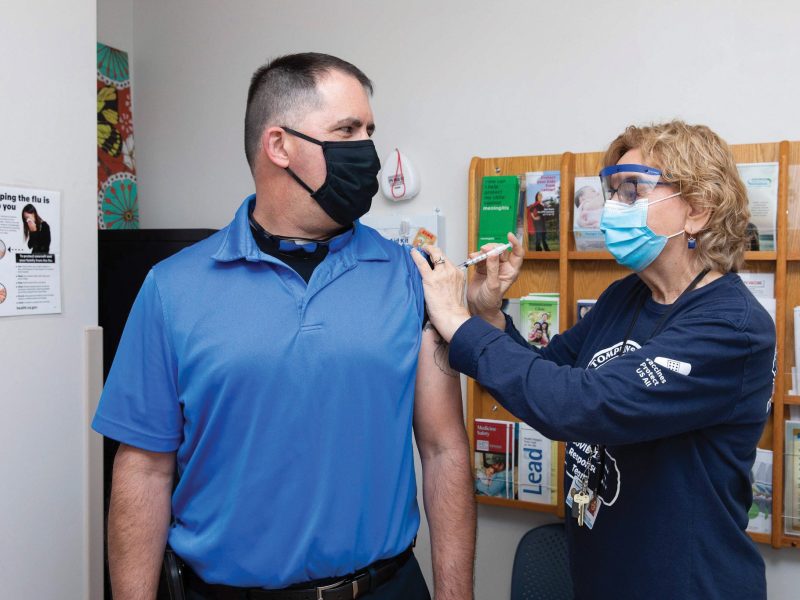
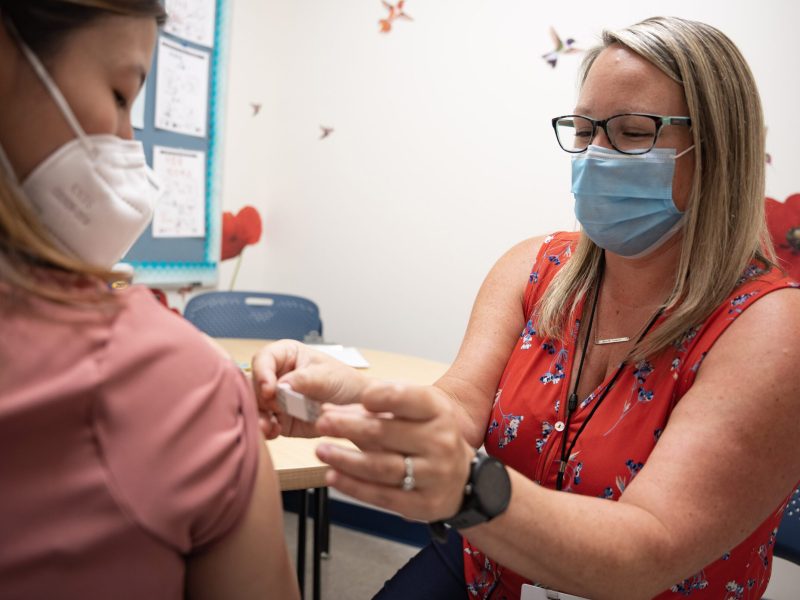
In December 2021 a new strain of COVID-19 spread across the nation, just in time for the holidays. In this region, Tompkins County was hit early — and especially hard.
County health officials told Tompkins Weekly in January that the college student population at Cornell University, Ithaca College and Tompkins Cortland Community College caused cases in 18- to 24-year-olds to spike across the county.
“It was both a blessing and a curse in that we were blessed that Cornell has the capacity and was doing research around variants and was able to adjust to be able to provide us some real-time information about the Omicron variant in our community, which really helped us understand why our cases were going as high as they were,” Public Health Director Frank Kruppa said in January. “We were in a position to know more than a lot of other communities might have. So, it might be a good thing that we were first because we were able to put some context to what was happening.”
- Proposed Dandy Mini-Mart in Lansing causes community concern
At the corner of Route 34 and Route 34B in Lansing is an undeveloped plot of land that sits across the street from the historic Rogues Harbor Inn. In June and July at public hearings, residents clashed with town officials and representatives of Dandy Mini-Mart about a proposed gas station on the property.
Lansing residents and business owners like Eileen Stout, who owns Rogues Harbor, said the noise, pollution and increased traffic for an already-taxed street corner would not be in the spirit of Lansing’s small-town charm.
“I think [Lansing residents are] beyond not happy,” she said. “Lansing has a voter-approved comprehensive plan that dictates future development in a number of ways — size, aesthetics, clustering of commercial versus residential — not unusual for a small town. However, this kind of flies in the face of that entire comprehensive plan.”
In addition to numerous other community members, State Assemblyperson Anna Kelles also voiced her concerns about the project.
“A quarter of a mile away is a large minimarket and gas station,” Kelles said. “Basically, this is duplicating something that’s already there, that is locally owned and will be put out of business because of this Dandy Mart. They’re not gaining property tax. They’re not even gaining jobs. They’re replacing one for the other.”
Dandy spokesperson Bill Bustin said in an interview with Tompkins Weekly in June that the convenience store could serve as a town center, as it has in other communities that are similar in size to Lansing.
“The majority of Dandy stores are located in towns just like Lansing, and we’ve made our mark for nearly 40 years serving rural communities in Pennsylvania and New York,” he said. “In many communities, Dandy is the town center — whether that means the local grocery store, or a place for students to hang out like in Dundee or Waverly, NY, or the many seniors who enjoy their ‘coffee clubs’ at our stores in the morning.”