
Looking back on MLK, Jr.’s, role in the long history of minimum wage
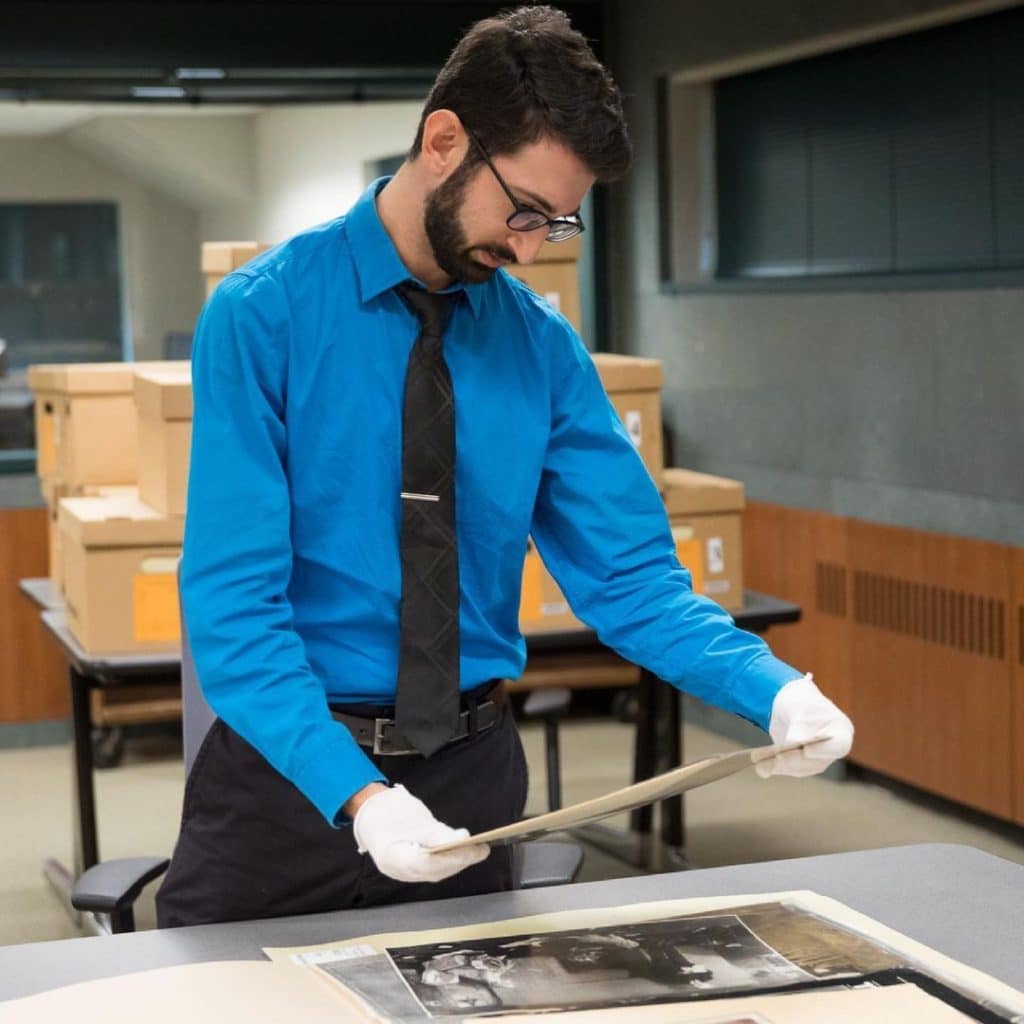
Steven Calco, interim assistant director of the Kheel Center, researches rare pamphlets addressing the more than 100-year-old fight for a fair minimum wage.
Upon discharge from the Army after World War II Sam Zagoria was selected to organize the National Committee for a Fair Minimum Wage in Washington, D.C. Eleanor Roosevelt and fellow committee members were advocating an increase the minimum wage from 60¢ to 65¢.

Twenty-three years later 1963 Sam Zagoria and his family were mesmerized by Dr. Martin Luther King, Jr’s I Have a Dream sermon at the Lincoln Memorial, at the end of Dr. King and fellow workers’ long, hot, challenging March on Washington for Jobs and Freedom.
Dr. King and other evocative speakers called for an increase in the national minimum wage, so that all workers could live in dignity. They noted that discrimination in educational resources and in the labor market left Black Americans laboring in the lowest-paid occupations, where their arduous jobs did not even enable them to provide food, shelter, education for their families. In 1963, half of all Black Americans lived in poverty.
60 years later Steven Calco, Interim Assistant Director of the Kheel Center, researched and prepared Sam Zagoria’s archive. Both the young archivist and Sam were first-born Americans. Growing up in struggling immigrant families, and later marrying newly arrived immigrants, they observed that working long and hard did not provide a living wage, much less savings for medical care and higher education and comfortable housing.
Sam, who had become a Washington Post reporter, before becoming a member of the National Labor Relations Board, and federal arbitrator, remained a champion for working men and women until his death, when his family received his lifetime achievement award for his work advocating equity for workers.
Today, Steven Calco, perusing the Kheel Center’s vast archive, ticks off rare pamphlets addressing the 100 +year-old fight for a fair minimum wage.
“The earliest minimum wage pamphlets at Kheel are from the early 1900s from groups such as the National Anti-Sweating League in England inspired by the success in minimum wage laws in New Zealand and Australia. In 1912, Massachusetts became the first state to adopt a minimum wage and in 1938, the Fair Labor Standards Act, led by Secretary of Labor Frances Perkins, created a statutory minimum wage at the national level for certain industries.”
“Throughout the 20th and 21st century, unions, advocacy groups, and progressive leaders advocated that workers deserve to be provided a living wage for their work in a safe and sanitary environment. The Triangle Shirtwaist Co. fire in 1911 when 146 mostly young immigrant women perished was a turning point for workers’ rights in this country, shedding light on the harsh conditions facing workers. The Factory Investigating Commission and Frances Perkins, investigated the factories of New York State, and recommended that states adopt a minimum wage during their general wage investigation, as did progressive groups like the National Consumers’ League, (where Sylvia Zagoria worked).”
“Management groups continued to fight against the early adoption of minimum wage. One pamphlet describes garment workers’ demands for fair wages and safe conditions in 1937 as “Communist, Nazism, Bolshevism, Fascism!”
Eventually, Steven notes, the Fair Labor Standards Act did provide a minimum wage which did increase purchasing power. “However, it has not accounted for inflation and the cost of living over time. New issues in labor have developed with a shift to contingency work in the gig economy and employers continue to hire more part-time workers with fewer benefits, sick pay, or overtime. In response, we’re seeing more activism from groups such as the Fight for Fifteen and increased union organizing in the country. Locally in Ithaca, one can see workers frustrated with low wages and turning to unions in recent strikes with UAW Local 2300 and Teamsters Local 317 at BorgWarner for better wages and working conditions.”
The economic insecurity faced by workers today was something Dr. King spoke frequently with unions about. In 1965, speaking to the AFL-CIO he spoke:
“The answer is a guaranteed annual wage, an adequate minimum wage for all who work without exclusions, and guaranteed employment for all willing to work. These reforms are entirely within our reach-they are entirely practical in a society so rich and productively so abundant. Why should the most affluent and the most powerful nation on earth have unemployment today when most industrial nations of Europe have none at all?”
Calco notes “As we look through our historical collections at Kheel, we see unions, activists, and progressives at the forefront of fighting for economic justice. Using these successful campaigns and tactics, we can look to the past as a blueprint for ways to move forward.”
Related Articles
Street Beat: What are you looking forward to in the new year?
We asked five random people. Here’s what they had to say.

5 things to do in Tompkins County this weekend
Plan your visit and discover what’s happening this weekend.