
Looking to alleviate the local child care crisis
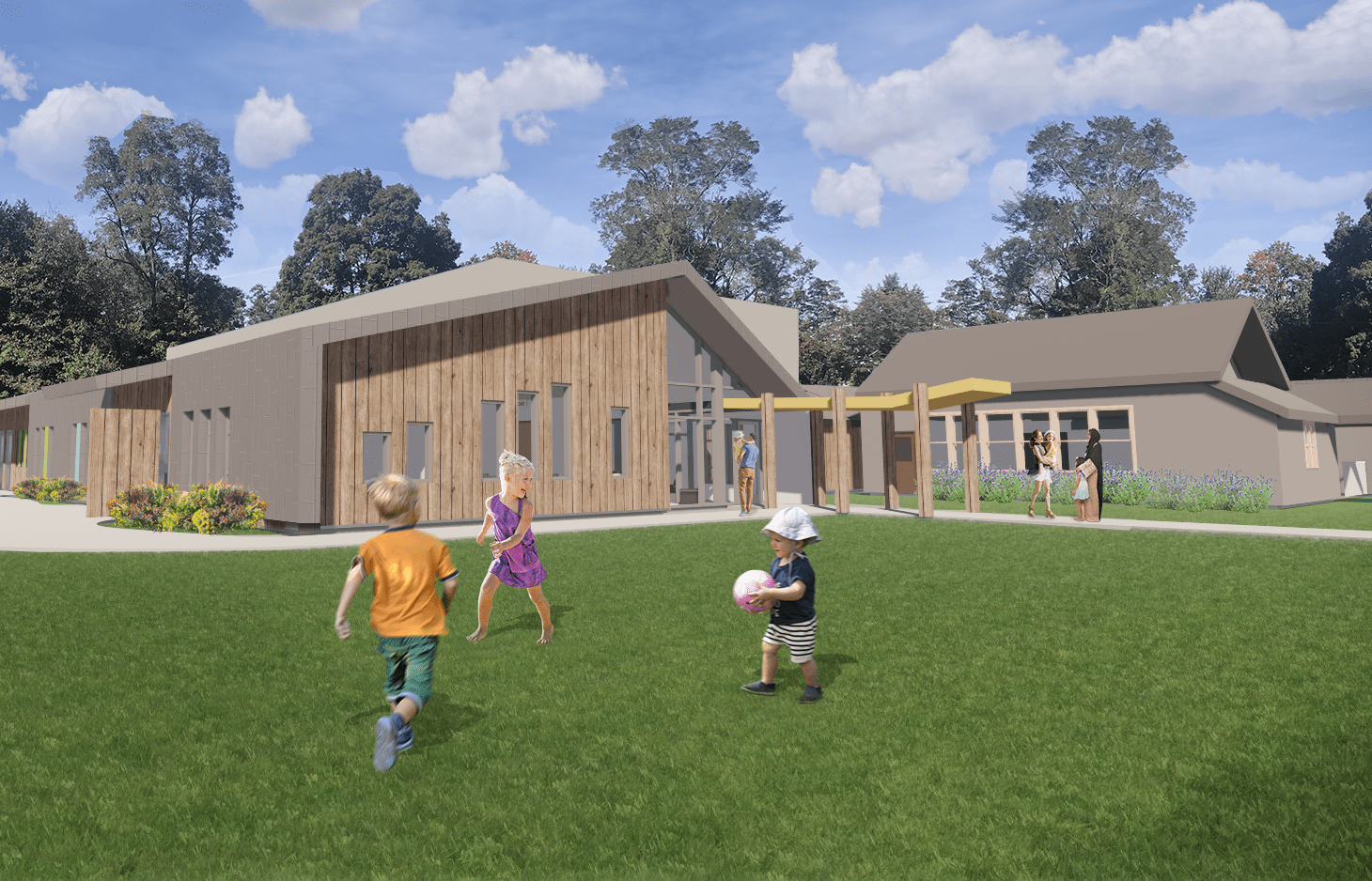
Coddington Road Community Center, which has a day care program, recently received a total of $5.3 million from the state and county, with $4.2 million coming from the Capital Assistance Program award through Assemblymember Anna Kelles, $700,000 through a grant from the Southern Tier Regional Economic Development Council and $400,000 from the Tompkins Community Recovery Fund.

Managing editor
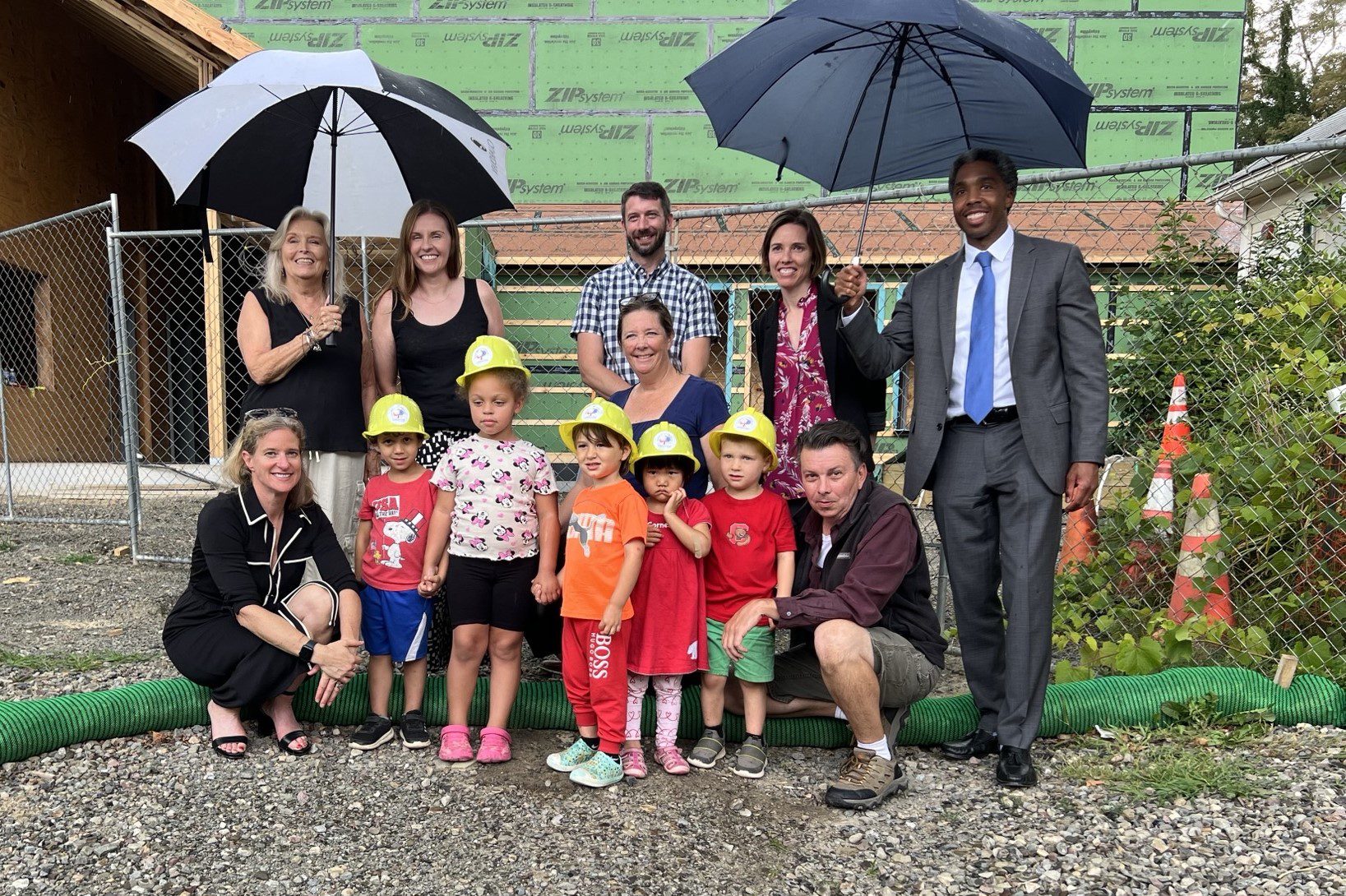
Heather Mount, Coddington Road Community Center executive director, said that the child care center is about halfway done with phase 1 of its project, which includes four new classrooms, a gymnasium, office spaces, a commercial kitchen and general upgrades, including accessibility measures, solar panels and heat pumps.
The building design was completed by HOLT Architects and Associates, with Edger Enterprises serving as the lead construction firm.
This is Mount’s 30th year in child and youth programming at Coddington, which provides day care for infants, toddlers and pre-K-age children, and she said she has seen how difficult obtaining proper child care can be for families.
“I’ve seen my own kids go through that, and even being in the field it took me over a year to find child care for my own child,” Mount said. “Personally, I can tell you it has always been rough.”
When the community center leaders first started talking about another expansion back in 2014, they brought a temporary structure onto the property to help increase revenue stream while trying to raise funds for the project.
“Unfortunately, as what happens with large projects for nonprofits, it took longer than we expected to get the funding together,” Mount explained.
What happened next illustrates the need within the community for more child care, said Mount.
“In 2015 we drew down our wait list in order to fill that building, and it immediately filled back up,” she said. “It went from over 100 to less than 50, and currently we’re back up to 350, so the need for child care has grown exponentially just in that 10-year period.”
What led to Tompkins County’s current child care crisis?
“One of the big shifts has been the pandemic,” Mount said. “When the decision was made to have all nonessential employment go virtual, that wasn’t a reality for child care.” Essential staff needed continued child care, and Coddington Road made the difficult decision to remain open while most other day cares closed.
The experience was very difficult, Mount said, but it did allow for employees to maintain their jobs throughout the pandemic, putting Coddington Road in a position to resume regular operations more quickly once more children returned.
At the Child Development Council, Chief Executive Officer Melissa Perry said that the organization is working to increase the number of family day care programs in the area. These child care programs are located within the caregiver’s primary residence and used to be much more prominent in Tompkins County, Perry said.
While 20 years ago there were roughly 120 family day cares within the county, the recent addition of one new one has brought the total number to just 13 registered providers. Combined, they provide about 77 slots for local children six weeks to five years of age. At the same time, the number of licensed day care centers has risen, but all of the day care providers combined are nowhere near enough to meet demand.
Tompkins County has about 4,500 children under the age of five and 1,400 child care slots, meaning there are enough registered slots for only one-third of young children, Perry said.
She said she has seen the effects of the local child care crisis firsthand, as the council covers all aspects of child care, including providing a list of providers for families in need of care for their children.

The council also provides guidance for those looking to open a family day care.
“If somebody wants to become a child care provider, we can support them through that process,” Perry said. “We can look at their space even before they fill out an application to make sure they meet requirements, then help them through the application process.”
The council also has funding available to help with the cost of starting up a new day care.
“We do have a new pot of funding for eligible individuals to offset some expenses,” Perry said. “We feel very fortunate to be able to provide that.”
Perry said the struggle families go through to secure and pay for child care has a wider effect on the whole community.
“We know that there are some families that can make other arrangements, whether that is a nanny share, or friends or family,” Perry said, “but most families are not able to access adequate child care for their children. So parents end up reducing work hours, or not being able to participate in the workforce at all, and this has implications down the road with retirement.”
Sometimes families are left in really tight spots and end up leaving their children in unsafe situations, she said.
Currently, at Coddington Road, maintaining services at a reasonable cost to families continues to be a serious challenge.
“Operating child care is not affordable,” Mount said. “Infant care does not pay for itself. The reality is, if you are providing care for infants and toddlers, you need some added revenue to support that.”
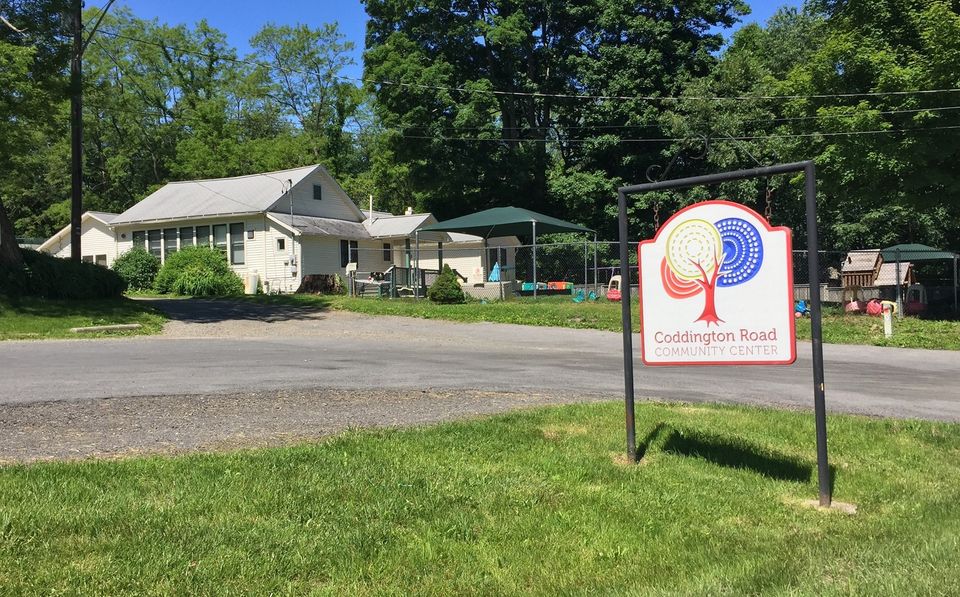
The center runs programs that cross all age ranges to help balance its budget, “so we can stay afloat,” Mount said. “We’re constantly looking for grant sources to offset costs, plus we’re a living wage employer; how do we honor what our work staff is doing by paying a living wage while providing affordable child care?”
“Child care,” she said, “and living wage salaries don’t go hand in hand naturally.”
“With the child care desert we have right now, where it’s estimated at six children for every one child care slot, we only make a dent in that need, but we’re happy to be putting a dent in it at all,” she added.
The Coddington Road child care center began as one room in 1949 and underwent one expansion in the 1980s and another in the early 2000s.
“When we envisioned this expansion, we said, ‘Let’s look further ahead into the foreseeable future, instead of one classroom at a time.’ We decided to shoot for the stars and write grants and tell our stories, and it’s amazing — it worked out, and we were able to maintain a grant and state funding awards to cover the full cost of the project. That’s not anything I thought would really come to fruition,” Mount said.
The center not only provides care for younger children but also provides youth employment training programs that teach young people how to look for a job, the kinds of skills that are needed to be employable and the skills needed to be a good employee, such as the proper way to speak to a supervisor or manage conflict at the workplace.
“I think part of what helped us get this funding is that we’re really working with children right up through adulthood,” Mount said. “We have current staff who were kids who participated in our preschool program and continued their employment now into adulthood, so it’s really kind of a fun, intergenerational story. We’re able to work with young kids and see them grow up and see them become productive citizens.”
The full expansion will happen next July, and the facility will go from three classrooms to seven.
The new gymnasium will provide space for community programming such as Boy Scouts and Girl Scouts, Soccer Shots and youth community sports teams practices. Currently, the community center is undergoing efforts to engage with the community regarding the best use of the additional space.
“That’s the work we’re doing now: envisioning with the community,” Mount said.
She hopes decision makers understand that even with the recent funding for her child care center, the local child care community as a whole is facing an extreme uphill battle.
“We have an exciting project going on right now, but we are not unique in the sense that every entity offering child care is going through the same struggles and same decision-making processes of how to maintain good programming and pay staff good wages,” Mount said. “I hope that the takeaway from the public is that we have found a way to grow and help, but the pandemic and where we’re at right now with the child care deserts out there, it’s telling a story that we need state and federal investments in child care same way we receive it for universal pre-K and public education.”
Author

Related Articles

Holiday traditions bring community cheer
Tompkins County holiday traditions light up homes, farms, and schools with festive cheer and community spirit.

The gift of an experience: Local businesses offer hands-on holiday fun
Holiday experience gifts in Tompkins County include candle making, gourd crafts, and pottery workshops for creative seasonal fun.
Code Blue shelter opens amid praise, concerns and ongoing debate
Ithaca’s Code Blue shelter opens with larger space, showers, and case management to help residents during cold weather.