
Making way for the Tompkins County Center of Government Building
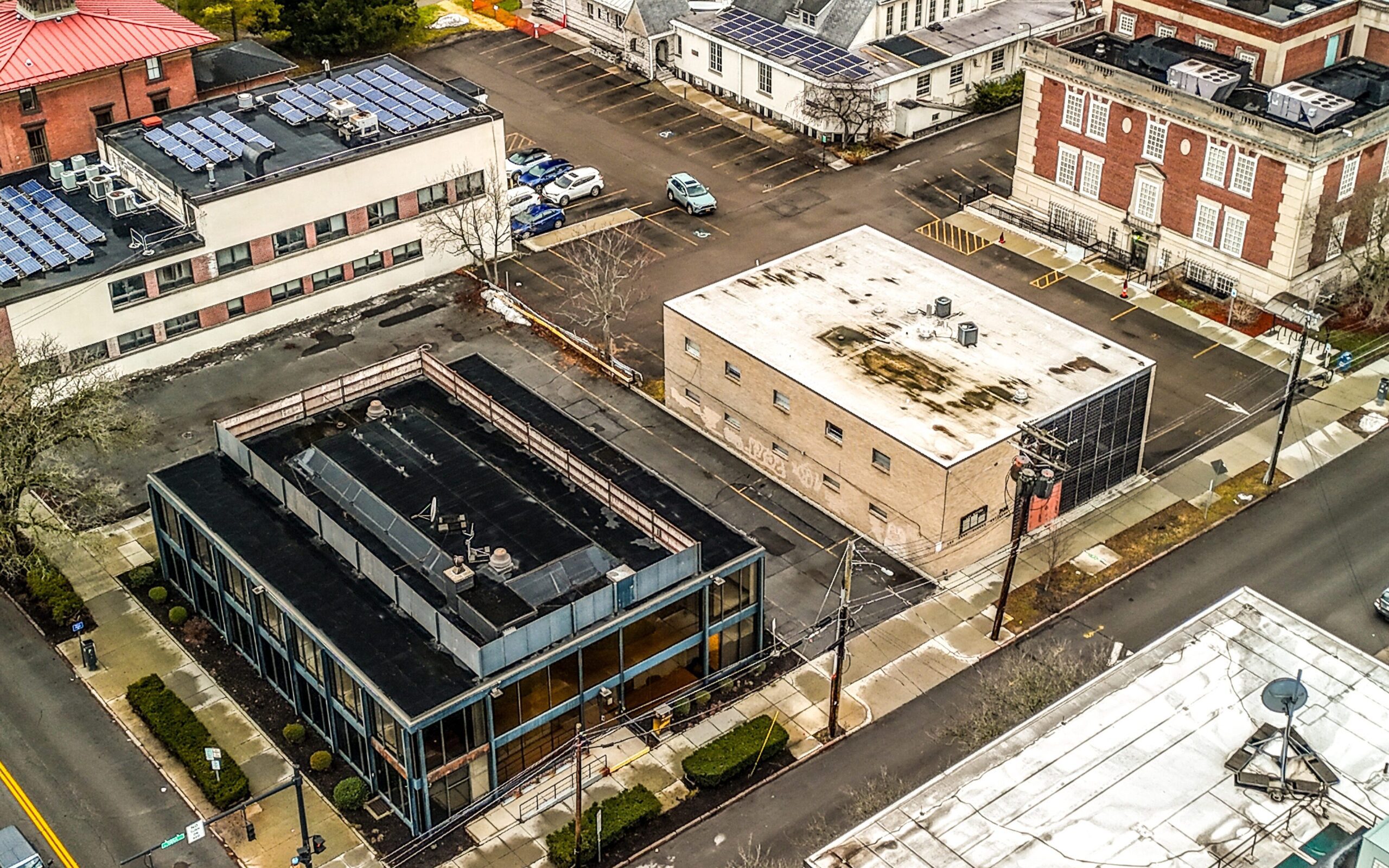
Tompkins County legislators and staff are working on plans for a substantial new building that will change the landscape of Downtown Ithaca. Before those plans come to fruition, though, it is likely the streetscape near Dewitt Park will spend the next couple years sporting two big empty lots.
County legislators have expressed eagerness to advance plans for the long-awaited Tompkins County Center of Government Building, agreeing at a committee meeting earlier this month that the county should move forward with the deconstruction of two old buildings in downtown Ithaca to make room for the project.

Managing Editor
“I think in our last meeting we discussed that we didn’t want to wait until we had plans to build a new building. We wanted to move forward as expeditiously as possible,” said Michael Lane, D-Dryden, member of the Downtown Facilities Special Committee of the Tompkins County Legislature, during the meeting, held Jan. 9.
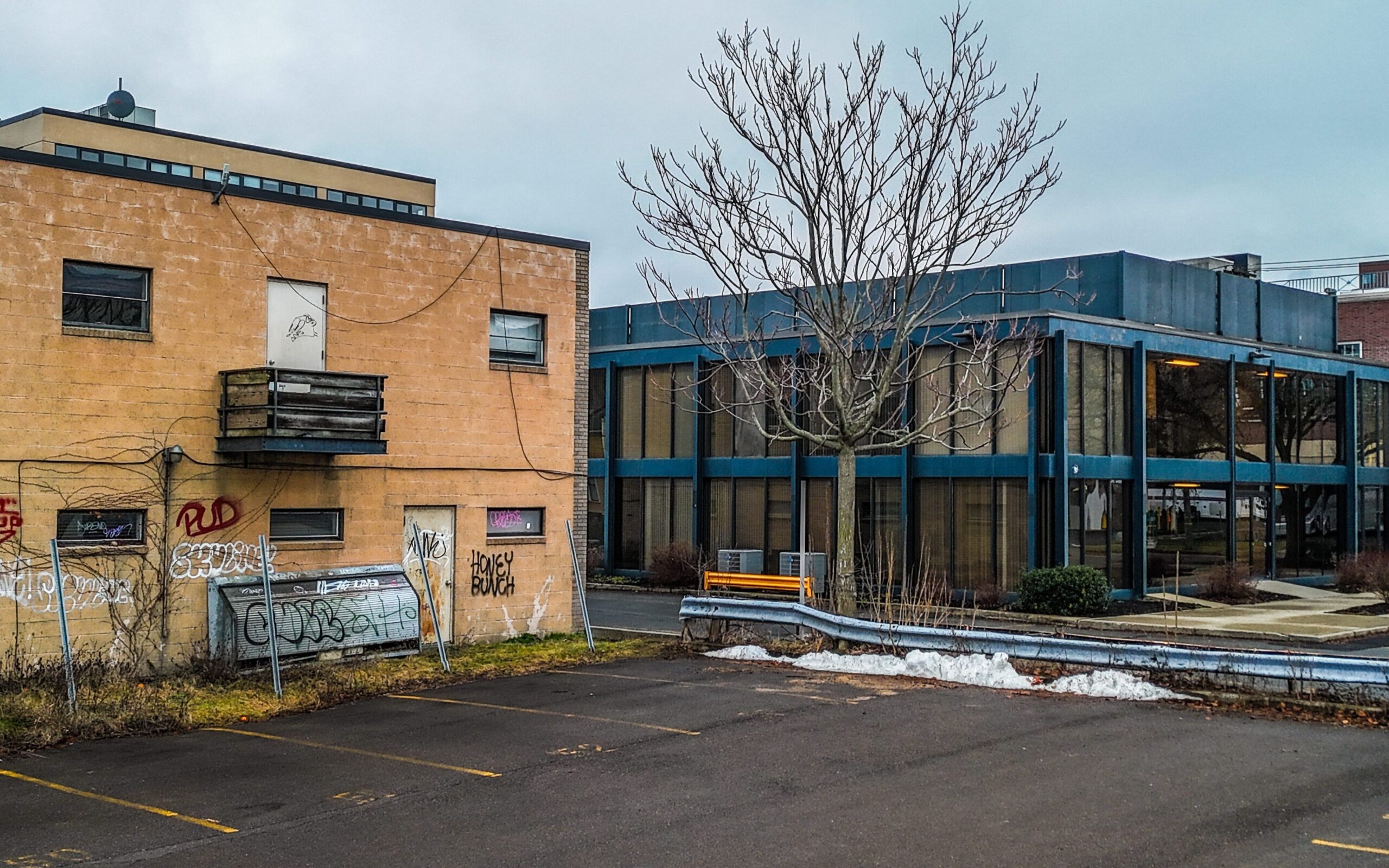
In 2021, Tompkins County purchased 300 and 308 N. Tioga Street and investigated the possibility of reusing the buildings, ultimately determining that a new municipal building should be constructed in their place. The old Key Bank and professional law offices would have to come down.
The building project is expected to cost somewhere between $30 and $40 million, Lane said.
The new building would be designed to include the Tompkins County departments of Assessment, Assigned Counsel, Board of Elections and election machine storage, County Administration, County Attorney, County Clerk, Finance, Human Resources, Information Technology Services, Department of Planning and Sustainability, and Workforce Development/Department of Labor, stated a resolution on the agenda for the Jan. 9 committee meeting. The resolution was ultimately tabled and not brought to a vote at that meeting.
In a report by the special committee, released in December, a rough timeline states that construction is slated to begin in 2026 or 2027 with occupancy of the new building in 2028.
“We’re really transparent in what we’re doing,” said Randy Brown, R-Newfield, chair of the Downtown Facilities Special Committee of the Tompkins County Legislature. He said the Legislature plans to devote a separate webpage to the project to keep the public informed.
“I think it’s the right thing to move forward with this project, and I want to make sure we’re doing it right,” Brown said. “I also want to get it done as quickly as possible, though there are some hurdles we have to go through.”
Much work remains to be done, from the demolition of the two existing buildings to figuring out the size and budget for the new building and choosing the architect.
At the Dec. 12, 2023, meeting of the special committee, legislators discussed the possibility of the new building being either four or five stories and weighed the pros and cons of both options.
The Legislature members are invested in hiring architects and engineers of a minority or marginalized group-owned firm if they are able to find one that can fit the project’s needs, Brown said, adding that although the county has worked with “good’ architects in the past, “it’s important to see who else is out there.”
Brown believes now is the right time to embark on this large undertaking.
“The county is strong financially, which is great,” Brown said. “We have good credit ratings, and there is a need.”
Brown said the county has delayed work on several of its buildings, including 128 E. Buffalo St., which houses the Tompkins County Department of Assessment and the county’s Information Technology Services Department, in anticipation of those departments potentially finding a new home in the Center of Government Building.
There is also the issue of New York State requiring several departments to relocate from the Tompkins County Courthouse to make more room for state-mandated court operations.
“We’ve got to find a place for these folks,” Brown said. The courthouse is owned by the county but primarily occupied by the state court system, and they pay to use the facilities, Brown explained, calling it “an interesting relationship,” and reiterating that the relocation of employees is required, not optional, and that the new building will play a large role in housing those displaced offices.
“But we also have to focus on not spending too much money on it,” he said. “That’s going to be tough.”
Lane has some misgivings.
“I’ve been very concerned all along about the huge capital cost here,” Lane said. “I think we need to do this building; I’ve thought that for 20 years. But it’s pretty expensive, and are we ready to do it at this point?”
“I don’t mean to throw cold water on it, but it’s expensive, and the taxpayers are going to get hit with it,” Lane said. “And we have other needs. We need to do something about our public safety building. Our jail has been sidelined for two years, as far as putting an addition on it, for example, that would improve programming and the way prisoners are housed.”
“It’s much more exciting to work on an important office building than it is a jail,” Lane said, “even though the jail and its programming are pretty important to our community.”
For Brown, one exciting part of the project is the potential for geothermal heating. “We’re trying to work with other property owners around the area to see if they want to coordinate with us,” Brown said. “I think it makes sense to do that from a cost savings standpoint, and it’s good for the environment.” The county is currently exploring grant opportunities to help fund the geothermal project, he said, adding, “I think there’s a lot of good in this.”
At the next meeting, the committee members plan to vote on a resolution that would determine the square footage of the building, Brown said.
One of the other immediate next steps is passing a resolution on tearing down the two existing buildings. At the Jan. 9 meeting of the committee it was generally agreed upon by the members that it seemed as though demolition of the buildings could happen by the end of 2024 and that this would be ideal in terms of moving the project forward.
“This is after we have discussions with the City [of Ithaca],” Brown said. “We want to be as minimal in our impact to the city and our surroundings as possible. The county always takes the high road in doing things correctly.”
There was discussion at the most recent committee meeting in which Lane was careful to draw a certain distinction regarding the communication of the county’s intentions to the city.
Lane expanded on his view Jan. 25, saying, “I’ve been here long enough to remember a dispute that took place with another municipality in the county when we were making improvements to our own Department of Public Works building on Bostwick Road,” Lane said. In that instance, the Town of Ithaca had asked for a building permit.
“Our position was, ‘this is our building. We are the larger municipality, and we aren’t required to submit a permit,’” Lane said, adding that the same goes for this project. “We’re not trying to tear down these buildings to sell to some developer,” he said. “We’re talking about using this property for our own purposes.”
The special committee members agreed that a resolution regarding decommissioning the buildings should be brought before the full legislature for a vote. It was not on the agenda at the Legislature’s Jan. 17 meeting.
Downtown Facilities Special Committee Member Rich John, D-Ithaca, said he does not want to rush into the construction phase and that he believes most legislators feel the same way. The committee members all received copies of the 2023 book “How Big Projects Get Done,” by Bent Flyvbjerg and Dan Gardner.
John said the book uses real-life examples that demonstrate there is a proven way to avoid mistakes and reduce construction costs.
“One of the lessons or takeaways from the book is: spend way more time planning then you think you need, going over and over it and driving everyone crazy,” John said. “Then, when you’re building, build it fast.”
Author

Related Articles
Holiday traditions bring community cheer
Tompkins County holiday traditions light up homes, farms, and schools with festive cheer and community spirit.
The gift of an experience: Local businesses offer hands-on holiday fun
Holiday experience gifts in Tompkins County include candle making, gourd crafts, and pottery workshops for creative seasonal fun.
Code Blue shelter opens amid praise, concerns and ongoing debate
Ithaca’s Code Blue shelter opens with larger space, showers, and case management to help residents during cold weather.