
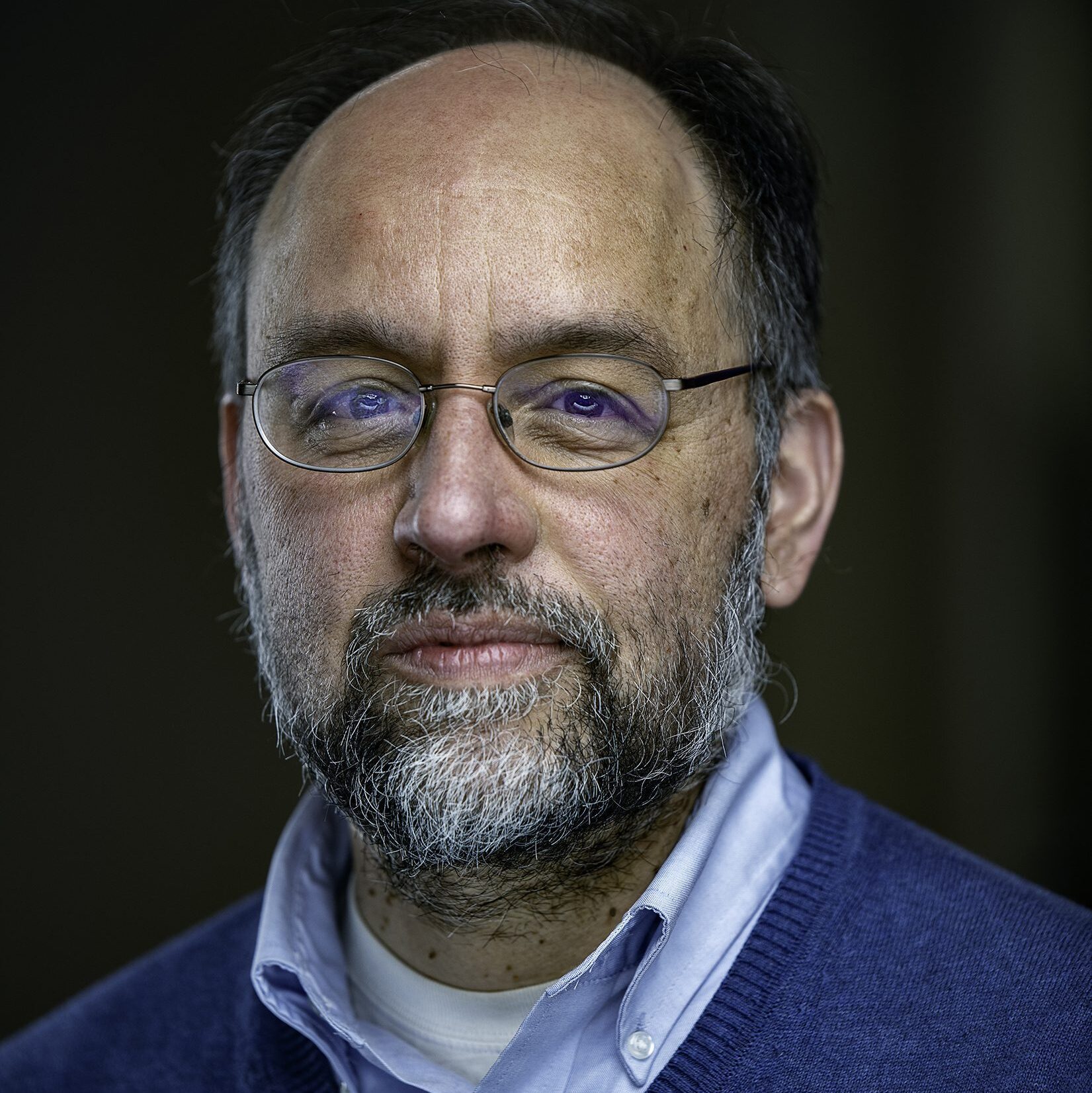
Michael Ramos: Room at the Table
In the midst of uncertainty in our lives (grey smoky air with scary fires, heatwaves, storms), health centers in need of workers, classes without teachers, so many displaced people and creatures with no safety net, we realize that all living creatures worldwide are affected.
But in Ithaca, we can take comfort that our safety net endures. United Way of Tompkins County is there for all of us with renewed plans and leadership.
Supported by outstanding leaders, expert board members and a wide array of dedicated volunteers, year after year the United Way supports the agencies that are our safety net and help our community members to thrive despite unremitting challenges. We could not picture UWTC without James Brown, when we learned he was retiring. But, how visionary that UWTC found Michael Ramos to lead us forward.
Growing up in NYC, Ramos studied the intersection of religion and social justice at Columbia University. There he saw the link between the beauty of the world’s major religions and the power each brings to transform social reality toward more just outcomes.
“I believed then, as I believe today, that social justice is a manifestation of our spirituality, so powerfully entwined,” Michael said. “The challenge for people of compassion is how to address locally the economic and environmental issues which affect us globally?”
Heading to the Northwest for a year with the Jesuit Volunteer Corps, Michael was deeply engaged in bringing his spiritual beliefs to life wherever communities were seeking sustenance to survive and flourish. This led him to the struggle for economic justice. He drew inspiration from studying “labor priests” who had advocated for living wages since the early 1900s.
Michael: “People like Monsignor George Higgins urged making faith active by coming alongside those who are not able to make ends meet and organizing for a living wage. Through a living wage, workers will be able to lead more just, dignified, and productive lives, so workers and employers will both benefit…Until we together adopt a fair living wage for all, our work will not be done.”
Recalling the Reverend Dr. Martin Luther King Jr.’s focused efforts to confront poverty, including supporting striking sanitation workers right before his death, Michael echoed Dr. King’s conviction that “ALL work has dignity.” And all workers deserve a living wage.
Embracing the suffering of others (people who experience homelessness, migration, mental illness, lack of food, affordable housing, medical care, education), Michael encouraged the community to rally to confront poverty.
“When we work with the disenfranchised in a spirit of humility, we discover pathways. As we realize that we all have an important part in this economy, ‘them’ becomes ‘us,’” Michael said. “To have a just economy, we must create the opportunity for all members of the workforce, from lowest paid on up, to have a say in how the workplace functions, and have an opportunity to grow in one’s career. Employers and employees alike have a shared interest in access to affordable childcare, secure housing, and adequate transportation.”
“In order to build trust amongst sectors, historically unfamiliar with and isolated from each other, we come to see that communities who traditionally have access to power can only fashion successful solutions to unjust situations, when we realize the need for a deeper understanding of the experiences of those most affected by systemic injustice…” he said. “We have to step away from privilege, to listen to the voices of the underserved. From this perspective we can learn a lot, no matter how much we think we know. With cultural humility and the building of trust, those impacted may tell us their solutions, since they are the experts on their situations, so that we can together shape solutions that will be useful and effective. As we move from statements about equity to practicing equity, we can strengthen resources in impacted communities—Black, Indigenous, People of Color, and grow in collective power for justice.”
Michael is heartened by Ithaca and Tompkins County’s vision for just wages and economic opportunity.
“Still, we face challenges,” he said. “The lowest paid workers often perform the hardest, most essential tasks upon which we all depend…And now post-pandemic we understand essential workers still earn too little, while they serve in our senior citizen residences, in health care, when they deliver food and drive buses, and do so much to meet human need. Through United Way, member agencies and the wider community, a sufficient, sustainable livelihood for all is possible.”
United Way’s current campaign, United in Action: Engage, Organize, Transform, is an ideal vehicle for partners to share in community-centered advocacy.
“When we come together to intentionally address a human need, we must be open to looking at the root causes and ensure that the solutions we shape are derived collectively, so that they will be more likely to succeed,” Michael said. “When agencies, with a history of compassionate support, work with people and communities that have not been included at the table, the result can be uplifting.”
Related Articles

Why accessibility is not an option, but a responsibility
TCAT accessibility in Ithaca leaves disabled residents struggling. Community advocacy is essential to improve public transit for all.
World peace – one person at a time
Ithaca peace activism supports nonviolent solutions, nuclear disarmament, and global awareness through weekly corner gatherings.
Signs of Sustainability: Growing trust and resilience in Danby
Danby community resilience grows as neighbors build relationships, share resources, and create supportive local networks.